The 2018 global launch race plus predictions for 2019

In 2018 the global launch industry turned a significant corner. While there have been strong signs in 2016 and 2017 that we were about to see the arrival of a boom, it was not until this past year that we finally saw the beginnings of this boom.

Below is my updated launch graph showing what was accomplished in 2018. To put what was done in context, the graph shows all launches by every nation and private company for each year beginning in 1980, with 1968 added to provide a sense of what the launch industry was like during the height of the Cold War space race.

Before reading further, however, it is worthwhile to review what I wrote in my 2017 launch industry assessment, written in January 2018. My assessment then, as well as my predictions, provide some worthwhile context for understanding what actually happened this past year.
» Read more

11 comments

India’s 2019 space plans

The new colonial movement: In outlining India’s plans for space in 2019, the head of India’s space agency ISRO revealed that they are going to try to complete fourteen launches, more than one per month and a pace that would double that nation’s previous annual record.

For the last two years ISRO has been making this same prediction. They failed to come close in either year. I suspect however that in 2019 they will have better luck.

2 comments

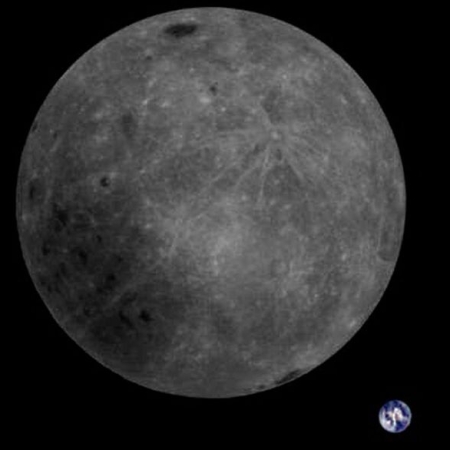
Engineers adjust Chang’e-4’s orbit

The new colonial movement: Engineers have adjusted Chang’e-4’s lunar orbit in preparation for landing.on the Moon’s far side.

The probe has entered an elliptical lunar orbit, with the perilune at about 15 km and the apolune at about 100 km, at 8:55 a.m. Beijing Time, said CNSA.

Since the Chang’e-4 entered the lunar orbit on Dec. 12, the ground control center in Beijing has trimmed the probe’s orbit twice and tested the communication link between the probe and the relay satellite Queqiao, or Magpie Bridge, which is operating in the halo orbit around the second Lagrangian (L2) point of the earth-moon system.

The space engineers also checked the imaging instruments and ranging detectors on the probe to prepare for the landing.

They need to time the landing so that it comes down in the Moon’s early morning. This will not only provide better visuals, with shadows to see surface details, but more importantly will give them 14 Earth days before sunset to get settled on the surface and initiate rover operations.

26 comments

India’s government approves manned space program

The new colonial movement: India’s government yesterday approved the proposed manned space program put forth by ISRO, that nation’s space agency.

The Union Cabinet on Friday approved the Gaganyaan Programme with demonstration of Indian Human Spaceflight capability to low earth orbit for a mission duration ranging from one orbital period to a maximum of seven days. A human rated Geosynchronous Satellite Launch Vehicle Mark III (GSLV MK-III) will be used to carry the orbital module which have the necessary provisions for sustaining a 3 member crew for the duration of the mission. Reportedly, India plans to call its astronauts โ€œVyomnautsโ€.

The total fund requirement for the programme is Rs 10,000 crore and will include the cost of technology development, flight hardware realization and essential infrastructure elements. So far, ISRO has spent Rs 173 crore in developing critical technologies needed for the for human space flight. Two unmanned flights and one manned flight will be undertaken as part of this programme.

The approval includes a deadline for the first manned mission of 40 months from today, or April 2022. This is an extremely tight schedule. I would not be surprised if they fail to meet it.

3 comments

China launches first of planned 320 communications satellite constellation

The new colonial movement: China today used its Long March 2D rocket to launch the first satellite in a proposed 320 satellite constellation designed to provide worldwide phone service.

The Hongyan constellation is composed of more than 320 satellites, along with data processing centers, and will be built in three stages. The orbital group will consist of 54 main satellites, accompanied by another 270 smaller satellites for coordination of the system.

Six or nine satellites will be launched before the end of 2020 for network testing. The 54 larger first phase satellites will be placed in orbit by the year 2023 and the 270 smaller satellites will be placed into orbits to supplement the main satellites.

Once completed, the satellite communication network will take the place of the ground-based network and allow a mobile phones to be connected everywhere on the planet, either in a remote desert or at sea, according to CASC. The project has drawn an investment of about 20 billion yuan (about 2.9 billion U.S. dollars) for its first phase, making it the largest investment for a single commercial aerospace program in China.

This constellation is essentially in direct competition with Iridium.

This is likely China’s last launch for 2018. It is also likely to be the last launch this year, since the ULA launch that had been planned for December 30 has now been pushed back a week. The leaders in the launch race:

38 China
21 SpaceX
15 Russia
11 Europe (Arianespace)
8 ULA

In the national rankings, China tops the U.S. 38 to 34. It also came only two launches short of meeting its ambitious goal of 40 launches in 2018, an achievement that pretty much doubled its previous launch record.

I am preparing my annual launch report. Stay tuned.

0 comments

Russia faces launchpad bottleneck in 2020

Because of the decommissioning of one of their two Soyuz launchpads at Baikonur in late 2019, the Russians will have a significant launchpad bottleneck in 2020.

According to the official, the so-called Gagarin’s Start launch launchpad at the site number 1 would be put out of exploitation due to the upcoming decommissioning of the Soyuz-FG rocket.

The source noted that a large number of Soyuz launches planned for 2020 was related to the implementation of the OneWeb internet satellite constellation project, which would require up to eight launches. Moreover, from five to seven launches of manned missions on Soyuz and Progress spacecraft to the International Space Station (ISS), as well as several launches of unmanned spacecraft have been planned.

The source continued by saying there was a “bottleneck” in the capacity of the testing facility at the launch site 31, which amounted to 15 rockets per year.

It appears that this limitation of 15 launches per year is going to put a crimp on something. Since the Russians will make money on the OneWeb launches, those will get first priority. What next? The unnamed additional launches almost certainly include some military satellites, as well as communications, Glonass GPS, and Earth resource satellites needed by Russia. Will they get sacrificed to maintain Russian launches to ISS? If the U.S. is no longer flying our astronauts on their rockets and paying them for it, I can see them cutting back here to fly some of those other satellites.

Either way, for Russia to be cutting back on launch sites at a time when the rocket industry appears to be booming is a clear sign of big problems there. I suspect that they had intended the Vostochny spaceport to pick up this slack, but the corruption and delays there apparently make that impossible. Moreover, they have lost most of their commercial business, and appear unable to figure out ways to recapture it.

3 comments

Musk tweets peek at Starship hopper

Starship test hopper

Capitalism in space: Elon Musk this week tweeted an image of the Starship test hopper, adding that they hope to begin test flights by March.

โ€œThis test hopper is at full body diameter of 9m / 30 ft, just not full height. Super Heavy will be full height & diameter,โ€ Musk tweeted, indicating that the company will go directly to building a full-scale version of the rocket booster, rather than a truncated test version.

It seems to me that Musk continues to embarrass all other rocket companies, both private and governmental, with his effective use of current technology to innovate and produce new designs. While everyone else seems locked into building the same old things, his company is using what it knows to try to build something smarter and more efficient.

SpaceX’s track record suggests that it will do exactly what it is trying to do, even if it likely takes longer than they predict. Others should take heed, or they will all get left behind.

24 comments

Russian Soyuz launches 28 satellites

A Russian Soyuz rocket today launched 28 satellites, the bulk of which were commercial smallsats.

The primary payload was two Russian Earth observations satellites.

The leaders in the 2018 launch race:

37 China
21 SpaceX
15 Russia
11 Europe (Arianespace)
8 ULA

This should close out Russia’s launch total for the year, that country’s lowest yearly total since the very beginnings of the space age in the 1960s.

1 comment

China launches military satellite

The new colonial movement: China today used its Long March 3C rocket to launch a military communications satellite.

This was China’s 37th successful launch in 2018, only three launches less than their predicted 40 launches for the year. It almost doubles their previous record of 20 in 2016.

The leaders in the 2018 launch race:

37 China
21 SpaceX
14 Russia
11 Europe (Arianespace)
8. ULA

China leads in the national rankings, 37 to 34, over the U.S.

0 comments

SpaceX successfully launches GPS satellite

Capitalism in space: In launching an Air Force GPS satellite today, SpaceX successfully completed its 21st launch of 2018, the most ever achieved in a single year by a private company, ever, beating the record the company set last year by three.

The company has been so successful that many will take this achievement for granted. They should not.Ten years ago SpaceX barely existed. In that short time it has revolutionized the rocket industry, and recaptured for the U.S. the commercial market share that was lost by the older American rocket companies to Russia and Europe, because they were fearful and lazy and refused to compete.

The result however has not been zero sum. Launches in total have increased, and the potential for a revitalization of space exploration for everyone has not been as good since the 1960s. I know this will make some groan, but the sky now is literally the limit.

You can watch a replay of today’s SpaceX launch here.

The leaders in the 2018 launch race:

36 China
21 SpaceX
14 Russia
11 Europe (Arianespace)
8 ULA

China leads in the national rankings 36 to 34 over the U.S. At the moment only one more U.S. launch is scheduled, so it appears China will hold that lead. Stay tuned for my annual assessment of the launch industry, coming the first week in January.

12 comments

China launches first prototype of new low-cost communications constellation

The new colonial movement China today launched the first prototype Hongyun communications satellite.

Developed by the China Aerospace Science and Industry Corporation (CASIC), this is the fist satellite of a vast space-based communications network capable of covering every corner on the Earth, including the Arctic and Antarctica. The satellite mission is to verify low-orbit broadband communication technologies to be used on the Hongyun satellite constellation.

Announced by CASIC in September 2016, the Hongyun project has the goal of building a space-based communications network of 156 communications satellites into low Earth orbit, at an altitude of 160 to 2,000 km. Each satellite of the network will be able to transmit 500 megabytes of data per second. It will become operational in 2022.

These satellites, aimed at lowering cost, appear to be in direct competition with many of the new smallsat constellations being developed in the west by SpaceX, OneWeb, and others.

The leaders in the 2018 launch race:

36 China
20 SpaceX
14 Russia
11 Europe (Arianespace)
8 ULA

China has widened its lead over the U.S. in the national rankings, 36 to 33, and has likely now clinched that lead for the year. Stay tuned for my annual full report on the state of the launch industry in 2018.

7 comments

FCC fines company $900K for unapproved satellite launch

The FCC has issued a $900K fine against the smallsat company Swarm for its unlicensed launch in January on an Indian rocket of four smallsats.

Along with paying a massive fine, Swarm has agreed to submit reports to the FCC before every satellite launch it wants to make for the next three years. These reports must include all of the details about the launch vehicle that will carry the satellites, the time and location of the launch, and contact information for who is coordinating the launch. And Swarm has to do this a lot, too. Reports need to be submitted within five days of Swarm purchasing a ride on a rocket, or within 45 days of the flight. Additional reports must be submitted when the satellites are shipped to be integrated on the rocket, whenever the satellites are actually integrated, and around the time the launch is supposed to take place.

Within the next two months, Swarm must also establish its own โ€œcompliance planโ€ and appoint a compliance officer to make sure the company adheres to all of the regulations surrounding a satellite launch. This entails crafting clearly defined procedures and checklists that every employee must follow to confirm that the FCCโ€™s licensing requirements are being met.

I have very mixed feelings about this. While it is important that the FCC make sure U.S. satellites are compliant with the Outer Space Treaty and that satellite makers and launch companies do not do things willy-nilly without some common sense coordination, this settlement, with its complex bureaucratic paperwork requirements, strikes me more as a power play by the agency to tell everyone that the government will rule here.

At the same time, I can understand the FCC’s concern. We are about to see a smallsat revolution, with tens of thousands of these satellites being built and launched by numerous big and small companies. The FCC wanted it very clear to everyone the need to get that licensing done properly. This settlement makes that clear.

5 comments

Russia’s Proton launches military satellite

Russia today successfully launched a military communications satellite using its Proton rocket.

This was only the second Proton launch this year, a rocket that was once Russia’s commercial workhorse with a launch rate more akin to what SpaceX has today.

The leaders in the 2018 launch standings:

35 China
20 SpaceX
14 Russia
11 Europe (Arianespace)
8 ULA

China leads the U.S. in the national rankings, 35 to 33.

0 comments

SpaceX raises a half billion for its Starlink satellite constellation

Capitalism in space: SpaceX has raised $500 million in investment capital to help fund its planned Starlink internet constellation expected to have just under 12,000 satellites in orbit.

I wonder if SpaceX will also be using this money for the development of Super Heavy/Starship. The article implies no, but the article also does not have access to the specific terms of the deal.

I also notice the interesting timing of this story today and yesterday’s story about how the Starlink satellites pose a threat of hitting people when they get de-orbited. Timing like this is rarely an accident. There are a lot of competitors to SpaceX who do not want it to succeed, and it would not surprise me if they are trying to throw a wrench in the operation to stop Starlink. A bad report like yesterday’s might cause big investors to back out.

1 comment

NASA approves Dream Chaser design

Capitalism in space? Sierra Nevada has, after several years of work, obtained NASA’s approval of the design of its Dream Chaser mini-shuttle, and will now begin construction.

I put a question mark in the header above because I am no longer sure Sierra Nevada is building a privately designed and privately owned spacecraft for the launch market. It seems that they have been captured entirely by NASA, and will instead be building the spacecraft NASA wants, which might raise costs enough to make this vehicle unaffordable for other customers.

The situation is understandable. Sierra Nevada does not have the independent capital that gives SpaceX its independence. It needs NASA to get this ship built, and thus will do whatever NASA demands. I just worry that NASA, unconcerned about cost (as is every agency in the federal government today), will spoil Dream Chaser’s viability in the commercial market.

2 comments

Today’s launch update

This post will change throughout the day. At the moment, India has successfully finished out the year with its seventh launch, placing an Indian military satellite into orbit with its GSLV rocket.

Seven launches matches India’s previous high from two years ago, but it is also far below their predicted 12 launches. I have a hunch next year will see that jump in launches, especially now that they have now successfully launched their GSLV rocket multiple times.

Meanwhile, Blue Origin is now targeting December 21, in two days, for its suborbital flight of New Shepard, while SpaceX decided to hold off on a launch today of an Air Force GPS satellite while it analyzes more closely the technical issue that scrubbed yesterday’s launch.

An Arianespace Soyuz rocket is set to launch a French military satellite from French Guiana very shortly, while a ULA Delta-4 Heavy is on track for the launch of a National Reconnaissance Office (NRO) spy satellite later today. I will provide updates later today.

UPDATE: Arianespace has successfully launched the French military satellite, using a Soyuz rocket. This was the eleventh launch for Arianespace this year, and its third Soyuz launch. Some might assign these Soyuz launches to Russia, but I consider them European launches because the business comes from Arianespace.

UPDATE: The ULA’s launch today was scrubbed due to the detection of a fuel leak. No word on when they will try again.

5 comments

FCC: SpaceX’s Starlink satellites can kill

The sky is falling! The FCC has calculated that fragments from SpaceX’s planned Starlink constellation of almost 12,000 satellites pose a risk of landing on humans on Earth.

SpaceX estimates that several kilograms of each 386-kilogram Starlink could reach the Earthโ€™s surface with sufficient energy to harm or kill someone. NASA has fixed this figure at 15 joulesโ€”about the same wallop as a baseball traveling at 51 kilometers per hour. Depending on the satelliteโ€™s configuration, iron thruster components, stainless steel reaction wheels, or silicon carbide mirrors could survive the journey from orbit to your head.

…In March and June 2017, the FCC calculated the aggregate risk to humans from the entire constellation. Assuming the 11,927 satellites are launched on a regular basis, they will fail in the same way. Starting around six years from the first launch, an average of five satellites a day will reenter the Earthโ€™s atmosphere, each with a tiny chance of failing to completely burn up, resulting in a part that could hit someone.

But with more than a thousand satellites falling a year, those tiny risks add up. The FCC figured out that, over their lifetime, satellites in the LEO shells posed a 1 in 5 risk of hurting or killing someone, and the VLEO satellites carried a 1 in 4 risk. IEEE Spectrumโ€™s calculations using SpaceXโ€™s most up-to-date information suggests that the overall risk of debris from the constellation causing an injury or death will be 45 percent.

Rather than demanding that we restrict or change what SpaceX does, I see this as an opportunity for someone designing robot satellites designed to clean up space junk. Offer your services to SpaceX. They get their problem solved easily, and you make some money.

11 comments

Three launches scrubbed

Capitalism in space: Both SpaceX and Blue Origin scrubbed planned launches today due to what appear to be minor technical issues.

SpaceX was launching a GPS satellite for the military, while Blue Origin was going to fly its New Shepard suborbital spacecraft on its third flight. SpaceX will try again tomorrow, while Blue Origin has not yet announced a new launch date.

Meanwhile, ULA’s attempt to launch a National Reconnaissance Office (NRO) spy satellite tonight with its most powerful rocket, the Delta 4 Heavy, faces bad weather, with only a 20% chance of launch.

UPDATE: I missed a third launch scrub today, Arianespace’s attempt to launch a trio of French military satellites using a Soyuz rocket from French Guiana. They will try again tomorrow.

This means there will be three launch attempts tomorrow, since India plans a launch of its GSLV rocket as well.

1 comment
1 290 291 292 293 294 474