Syria wants its own space program

The new colonial movement: The head of Syria’s ministry of communications and technology said during a visit to that country’s satellite remote sensing facility that their nation should organize a space program, beginning with the construction of an entirely home-built satellite.

I’m not sure how much of this will be possible considering how badly ripped apart Syria presently is because of its civil war. To me, it looks more like a some somewhat ignorant brasshat, while visiting a space facility, sounding off with what he would like done.

5 comments

A detailed look at Chang’e-4

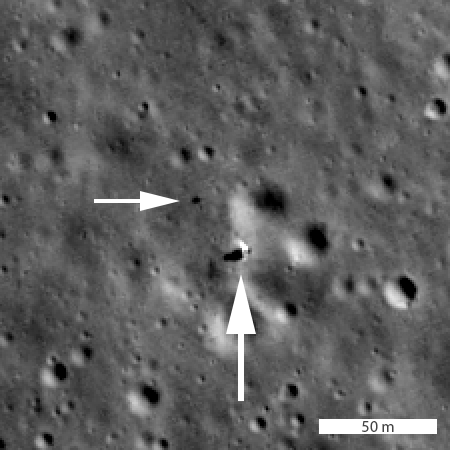
Link here. Lots of nice information, including the fact that Chang’e-3 seems to still be functioning in a limited manner, and that Chang’e-4 is depending not on solar panels but a radioactive thermal electric system, similar I think to the RPGs that NASA uses on its deep space missions. (I am uncertain however about this, based on looking at the video at the link, which seems to show solar panels on Chang’e-4. They could be instead panels to protect the spacecraft from the sun’s heat.)

They enter lunar orbit on December 12, and will likely land in the first week of January.

3 comments

First test flight of Dragon manned capsule delayed ten days

In order to avoid a conflict at ISS with the Dragon cargo freighter that just docked there, SpaceX has now delayed the unmanned test launch of its first Dragon manned capsule by ten days, to no earlier than January 17, 2019.

The article at the link is mostly focused on describing the experiments and cargo that the cargo freighter just brought to ISS, but it includes these scheduling details involving the unmanned test flight:

The cargo Dragon is the only vehicle currently capable of returning experiments from the International Space Station and is in relatively high demand. Thus, the worms will either return aboard this CRS-16 Dragon or wait until spring when the CRS-17 Dragon departs the orbital outpost. Regardless, once the newly delivered science experiments and cargo are removed from Dragon, the International Space Station crew will pack the craft full of return cargo before closing Dragon’s hatch and releasing it from the Station in mid-January 2019 for return to Earth.

Presently, CRS-16’s unberth and landing date is set for 13 January 2019, which at the time of the mission’s launch set up a potential overlap between CRS-16 and SpaceX’s Demonstration Mission -1 (DM-1) for the Commercial Crew Program.

At the time of CRS-16’s launch, the uncrewed DM-1 test flight had been targeting a No Earlier Than (NET) launch date of 7 January 2019 from LC-39A at the Kennedy Space Center, with a docking to the International Space Station to follow on 10 January. That NET 7 January launch date officially slipped on Friday to NET 17 January.

I once again want to emphasize that the only thing that I see that might delay this launch is NASA’s effort to slow it down.

8 comments

Delta Heavy launch aborts at T-7.5 seconds

A ULA Delta Heavy aborted its launch of a secret National Security Administration surveillance satellite last night at T-7.5 seconds.

It was not immediately clear whether any of the rocket’s three Aerojet Rocketdyne RS-68A main engines started their ignition sequences, but a statement later released by ULA said the computer-controlled countdown sequencer ordered an abort at T-minus 7.5 seconds.

In the statement, ULA said the abort was “due to an unexpected condition during terminal count at approximately 7.5 seconds before liftoff. “The team is currently reviewing all data and will determine the path forward. A new launch date will be provided when available,” ULA said.

Obviously, there is no word yet on a new launch date.

2 comments

Boeing cancels satellite deal involving hidden China funding

Boeing has canceled its sale of a communications satellite to a company that appears largely funded in secret by Chinese sources.

Boeing says it has canceled a controversial satellite order from a U.S.-based startup, which had received the bulk of its funding from a Chinese-government owned financial company. The deal, which critics warned could give China access to sensitive technology, comes amid a period of especially acrimonious relations between Washington and Beijing over a host of issues, including industrial espionage and intellectual property theft.

The Chicago-headquartered aerospace company announced its decision, which it said was only because of non-payment on the part of the customer, to nix the deal, worth more than $200 million, on Dec. 6, 2018. Two days earlier, the Wall Street Journal had published an expose detailing the links between the official buyer, Global IP, and a string of Chinese government operated entities and individuals with significant connections to China’s Communist Party and military establishment.

If carried out, the satellite sale would have provided the Chinese detailed information about the satellite’s technical design.

This story highlights the Chinese way of developing new technology: They generally steal it. Though their engineering upgrades are often brilliant, they have shown little innovation or originality in their work. Their entire manned program is an upgrade of the Russians Soviet-era space station program. Their decisions recently to build smallsat rockets as well as vertically landing reusable first stages only occurred after private commercial companies in the U.S. proved that both will work and can make money.

Boeing almost certainly backed out when it realized that the Chinese involvment was substantial, and exposed it to criminal penalties.

Hat tip Kirk Hilliard.

7 comments

China launches lunar rover/lander Chang’e-4; Saudi satellites

Using its Long March 3B rocket, China on December 7 successfully launched its Chang’e-4 rover/lander, aimed at being the first probe to land on the Moon’s far side.

It will take the probe five days to reach the Moon and land.

The same day China also launched two Earth observation satellites for Saudi Arabia, using its Long March 2D rocket.

The leaders in the 2018 launch standings:

35 China
20 SpaceX
13 Russia
10 Europe (Arianespace)

China has widened its lead over the U.S. 35 to 32 in the national rankings. China also looks like it is going to come close to meeting its prediction of 40 launches for 2018.

0 comments

SpaceX sees no schedule impact from first stage landing failure

Capitalism in space: SpaceX officials expect the first stage landing failure during yesterday’s launch to have little impact on the schedule of upcoming launches.

They also indicated that the cause of the landing failure had something to do with a malfunction in the stage’s grid fins. More important however was this tidbit about the second stage:

Koenigsmann also revealed at the briefing that the rocket’s upper stage, which successfully placed the Dragon cargo spacecraft in orbit, used redesigned composite-overwrapped pressure vessels (COPVs) used to store helium to pressurize the stage’s propellant tanks. SpaceX redesigned those COPVs after a September 2016 pad explosion in order to meet NASA safety requirements for future commercial crew missions.

NASA requires SpaceX to perform at least seven launches with the redesigned COPVs before the agency will allow its astronauts to fly on the vehicle. Koenigsmann said he believed this was the second launch to use the redesigned COPVs, after the launch of the Es’hail-2 communications satellite Nov. 15.

SpaceX appears very unconcerned about getting those remaining five flights, which illustrates their expectation that 2019 will have a substantial number of launches in the first half of the year, prior to the tentative June launch date for the first manned Dragon mission.

1 comment

Falcon 9 launches Dragon; 1st stage return fails

SpaceX’s Falcon 9 rocket today successfully launched a Dragon cargo capsule to ISS.

Unfortunately, a problem with the first stage had it fail to land on its target landing pad, instead landing in the ocean. This failure is the first in quite some time for a SpaceX first stage. It was the first failure however of their Block 5 first stages, which might impact the manned Dragon launch schedule set for this coming year.

The leaders in the 2018 launch race:

33 China
20 SpaceX
13 Russia
10 Europe (Arianespace)
8 ULA

This SpaceX launch was the 100th successful rocket launch for 2018, the first time the global rocket industry has reached the century figure since 1991, before the fall of the Soviet Union. As SpaceX’s 20th launch this year it sets a new record for launches by a private company. In fact, this total exceeds the average number of launches for the entire U.S. from 2001 to 2016, and clearly demonstrates how SpaceX has not only become the world’s dominate launch company, its effort to foster competition into the launch industry has served to energize it, for everyone.

In the national rankings, China continues to lead the U.S. 33 to 32.

23 comments

Ariane 5 launches two satellites

Arianespace yesterday successfully placed a South Korean weather satellite and an Indian communications satellite into orbit using its Ariane 5 rocket.

The Indian satellite was initially supposed to launch in the spring, but ISRO pulled it back to India just after its arrival in French Guiana to do more checks on it because of the failure of another satellite using similar components.

The leaders in the 2018 launch race:

33 China
19 SpaceX
13 Russia
10 Europe (Arianespace)
8 ULA

Arianespace had predicted it would do 14 launches this year. As this launch is described as its last 2018 launch, it appears they have fallen short of that prediction.

These standings will be updated later today, assuming SpaceX’s Dragon launch to ISS goes off as scheduled.

2 comments

SpaceX recovers fairings from ocean

Capitalism in space: In its launch on December 3, SpaceX was unable to catch either half of the Falcon 9’s fairings as they floated down by parachute. However, both halves were recovered, and the company plans to try to dry them out and reuse them.

The recovery ship, Mr. Steven, failed to catch either in its giant net. Since both fairings however landed gently in the ocean, and were quickly recovered, the article notes that SpaceX is now considering a change in its method of recover. The method of landing appears to have the fairing halves almost act like small boats, thus protecting the delicate equipment on their interiors. It appears they have increased their waterproofing, and may now only need to get them out of the water quickly to make then reusable.

Posted from the West Bank city of Modi’in Ilit.

2 comments

Falcon 9 first stage successfully flies for the third time

Capitalism in space: During a successful launch today of 64 smallsats, SpaceX successfully landed for the third time the rocket’s first stage.

This first stage flew twice before, in May and August. With this flight it is primed for a fourth flight, I will bet sometime in the next two months.

SpaceX was also going to try to recover half of the fairing, but as I write this there is no word yet on that effort. Also, the deployment of the 64 smallsats will start momentarily and take more than an hour. During the live stream, which you can watch as a replay at the link, it was very clear that one of SpaceX’s commercial goals with this launch was to promote the Falcon 9 as an affordable and viable vehicle for launching smallsats. SpaceX is anticipating the growth of that business, and wants to encourage smallsat manufacturers to buy their services. As I like to say, the competition is heating up.

The leaders in the 2018 launch race:

33 China
19 SpaceX
13 Russia
9 Europe (Arianespace)
8 ULA

China remains ahead of the U.S. in the national rankings, 33 to 31.

Update: What I neglected to mention, partly because I was writing this post while traveling, is that with SpaceX launch the company set a new annual record for the most launches in a year, which is also the record for the most launches in a year by any private company, ever.

9 comments

Russian Soyuz successfully launches three astronauts

A Russian Soyuz rocket today successfully launched three astronauts on a mission to ISS, less than two months after an early launch had resulted in a launch abort.

Hopefully by the end of 2019 American astronauts will no longer have to rely on Russian rockets for their access to space.

The leaders in the 2018 launch race:

33 China
18 SpaceX
13 Russia
9 Europe (Arianespace)
8 ULA

China remains ahead of the U.S. in the national rankings, 33 to 30.

All these numbers will change repeatedly in the next few days, as their are a number of launches scheduled, including a SpaceX launch later today, when they will attempt, for the first time, to reuse a first stage for the third time.

0 comments

Moon rocks sell at auction for $855K

At a Sotheby auction of space memorabilia yesterday three Moon rocks brought back by a Soviet-era robot ship sold for $855K.

This was the second time these rocks have sold at auction, with their sale price more than doubling with yesterday’s sale. Though their value has apparently gone up a lot, I think the seller here made a very wise decision. Right now, practically all the rocks are controlled by NASA and are not for sale, thus creating a shortage and forcing the value of the available rocks to rise. Their value will drop however once private companies start hauling them back to Earth.

A number of other interesting space items sold during auction, including several unused spacesuits and several paintings by Chesley Bonestell, Alan Bean, and Norman Rockwell.

1 comment

NASA commits $2.6 billion for commercial lunar exploration

NASA today announced that it has committed $2.6 billion over the next ten years to buy delivery services to the Moon for its unmanned scientific missions, provided from nine different private companies.

The companies selected — Astrobotic Technology, Deep Space Systems, Draper, Firefly Aerospace, Intuitive Machines, Lockheed Martin Space, Masten Space Systems, Moon Express, Orbit Beyond — cover a range of companies from the well established to new companies not yet proven. This announcement essentially permits them all to bid on providing NASA delivery services to the moon for small unmanned probes. The press release states that:

These companies will be able to bid on delivering science and technology payloads for NASA, including payload integration and operations, launching from Earth and landing on the surface of the Moon. NASA expects to be one of many customers that will use these commercial landing services.

More information here. UPDATE: Doug Messier has published the press releases from most of the above companies, describing their individual projects, and I have added links to each.

The program appears modeled after NASA commercial cargo and crew programs, whereby the companies will own and control the orbiters, landers, and rovers they build, allowing them to market them to others for profit. It also appears designed to keep costs low, as did commercial cargo program. NASA is merely the customer.

This is good news. It suggests that the American space industry is continuing to transition away from big government programs, controlling everything, to a robust private industry that is in charge with the government merely one out of many customers.

0 comments

Blue Origin reveals more details about New Glenn

Capitalism in space: Blue Origin’s release of a payload user guide has provided space geeks a wealth of new information about the design of its New Glenn orbital rocket.

Numerous other items of interest are mentioned on the Guide, with launch vehicle specific elements such as a large common bulkhead being employed on the second stage and common tooling on the second stage and that is also aluminum orthogrid material in its construction. The rocket will use autogenous pressurization for both stages.

The large 7 meter fairing has the ability to launch very large payloads such as space telescopes, but also dual payloads – not unlike Ariane 5 regularly conducts.

The Guide refines some performance numbers, with 1060 kN (240,000 lb) total thrust cited for the second stage, which is slightly down from the 125,000 lb per BE-3U – the second stage engine-performance previously stated by Blue Origin’s online resources.

The article at the link also provides some updates on the status of the construction of the rocket’s launchpad, landing barge, and manufacturing facility.

0 comments

South Korea test flies its first home-built rocket engine

The new colonial movement: South Korea yesterday successfully completed a suborbital test flight of its first home-built rocket engine.

The 75-ton-thrust engine was fired up and launched the first-stage rocket at the Naro Space Center in Goheung, South Jeolla Province, at 4 p.m., as part of the country’s long-term project to launch the Korea Space Launch Vehicle-2 (KSLV-2), dubbed Nuri, in 2021.

The Ministry of Science and ICT said it achieved an engine burn-time of 151 seconds, which exceeded its goal. It earlier said the test launch would be considered a success if the engine maintained a burn-time of about 140 seconds. The test rocket also reached a maximum altitude of 209 kilometers, 319 seconds after liftoff, and safely landed in international waters southeast of Jeju Island.

The planned orbital launch in 2021 makes this one of many new rockets, from both countries as well as private companies, set to become operational in the early 2020s. It looks like that decade will be especially exciting for space.

0 comments

Successful launch tonight for India’s PSLV rocket

The new colonial movement: India’s PSLV rocket successfully placed 31 satellites into orbit, including an Indian Landsat-type satellite plus 30 commercial smallsats.

This ties India with Japan at six launches for the year. With one more launch scheduled for this year, they should end up ahead of Japan.

The leaders in the 2018 launch race remain unchanged.

33 China
18 SpaceX
11 Russia
9 Europe (Arianespace)
8 ULA

At 95 total successful launches so far this year, 2018 now matches the total from 1993, the last time the global aerospace industry accomplished that many. That year, China and Japan had one launch each, Europe seven, with the rest by Russia and the U.S. Now the wealth is much more widely spread, and has a strong potential to grow significantly in the next few years.

0 comments

Investigators uncover extensive corruption in Roscosmos

An investigation of Roscosmos by Russian prosecutors has revealed extensive violations of law, all of which occurred in only the last year and a half.

The Russian Prosecutor General’s Office has detected systemic legal violations in the work of State Space Corporation, Roscosmos, between 2017 and the first half of 2018. In total, 1,700 violations had been revealed, Official Spokesman Alexander Kurennoy said, adding that 16 criminal cases had been launched.

“During the period between 2017 and the first six months of 2018, documents on the activities conducted by the previous management of Roscosmos had been reviewed. Systemic violations of the law had been detected, particularly regarding the state’s defense procurement, with research and development work having been conducted improperly. This also concerns the area linked to state-of-the-art engineering, and where work on registering patents on intellectual property is carried out, they had been often disrupted. This includes the deadline of defense missions, where evidence of poor-quality products being supplied had been revealed,” he told reporters.

Furthermore, prosecutors had revealed violations of procurement legislation, namely when it comes to pricing and import substitution. “Also, the situation in the rocket and space industry in general was deemed unsatisfactory since the corporation hadn’t enacted the required controls for the appropriate expenditure of budget funds by all of the enterprises’ branches,” Kurennoy stressed.

I expect this situation in Russia will get far worse, as the corruption is a feature, not a bug, in their government-run centralized aerospace industry.

1 comment
1 289 290 291 292 293 472