SpaceX: Ready to launch Starship/Superheavy by end of January but it won’t

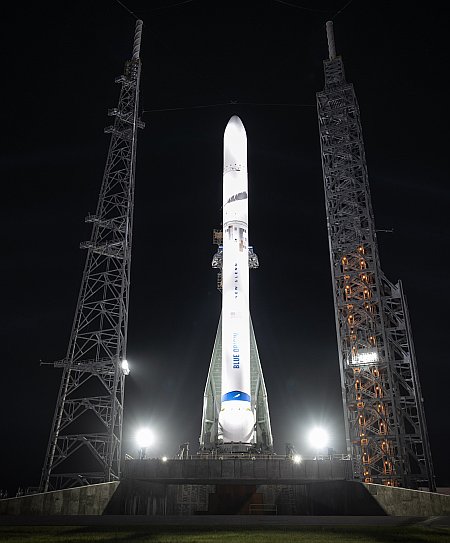
Surprise! During the NASA press update yesterday making official the new delays in its entire Artemis lunar program, a SpaceX official revealed that the company will be ready to launch the third orbital test flight of its Starship/Superheavy rocket by end of January, but it also does not expect to get a launch approval from the FAA for at least another month.

Speaking during the press conference, SpaceX Vice President of Customer Operations & Integration Jensen said Starship hopes to be ready to test Starship once more by the end of January and to receive the necessary license from federal authorities to do so by the end of February.

During the conference Jensen made it repeatedly clear that it will require numerous further launch tests to get ready ready for its lunar landing mission for NASA — about ten — and that the company hopes to have this task completed by 2025 so that the agency’s new delayed schedule can go forward as now planned.

Yet how will SpaceX do this if the FAA is going to delay each launch because of red-tape by at least one month? SpaceX might be confident the FAA will give the okay for a launch in late February, but no one should be sanguine about this belief. Bureaucrats when required to dot every “i” and cross every “t”, as it appears the Biden administration is demanding, can be infuriatingly slow in doing so, even if they wish to hurry.

This news confirms my prediction from November that the launch will happen in the February to April time frame. It also leaves me entirely confident that my refined December prediction of a launch no earlier than March will be right.

SpaceX wants to do about six test launches per year. I don’t know how it can do so with the FAA holding it back.

4 comments

NASA makes it official: The entire Artemis schedule is delayed

Surprise! NASA yesterday officially confirmed the rumors reported earlier about delays in its Artemis Moon program, outlining a new schedule that pushes all the launches back from months to more than a year.

NASA will now target September 2025 for Artemis II, the first crewed Artemis mission around the Moon, and September 2026 for Artemis III, which is planned to land the first astronauts near the lunar South Pole. Artemis IV, the first mission to the Gateway lunar space station, remains on track for 2028.

The agency cited issues with its Orion capsule that need fixing, including unexpected damage to its heat shield during the first test flight in 2022, battery problems found during ground testing, and new issues discovered with the as-yet unflown environmental systems designed to keep the astronauts alive.

One rumor that did not turn out to be true was the suggestion that first manned lunar landing would be shifted from Artemis 3 to Artemis 4, to give NASA more time to test things.

More details about the press briefing can be found here.

No one should take any of these dates seriously. NASA technique for announcing delays in this moon program have consistently been wrong. It announces small delays incrementally, to hide the fact that it knows the actual launch will be delayed far more that politics allows. The program was first proposed in 2004 with a planned landing in 2015. Since then NASA has announced numerous delays numerous times, always in small amounts. Yet by 2015 it was clear the first landing wouldn’t happen for at least a decade (after a decade of work), because of Obama’s unilateral cancellation of the initial program and Congress’s demand that it be re-established in a different form. By 2022 it was clear that the first manned landing mission was at least five years away.

Thus these new dates will certainly slip. You can bet on it. As I noted yesterday, NASA will be lucky to make that first manned lunar landing by 2030.

6 comments

The Surt volcano on Io

The Surt volcano on Io in close-up
Click for original image.

Cool image time! The picture to the right, rotated, reduced, and sharpened to post here, was taken by Juno during its 57th close-fly of Jupiter on December 30, 2023. It shows of one of the many volcanoes that cover and continually recoat the surface of the Jupiter moon Io.

The picture was initially processed by citizen scientist Gerald Eichstädt. Thomas Thomopoulos then zoomed in and added additional enhancements to this particular area. (I thank Thomas for his additional help in making this post happen.)

The location is an active volcano named Surt, which has been observed to erupt several times since the 1970s, with its February 2001 eruption the most powerful yet observed on Io, though the pictures by the Jupiter orbiter Galileo taken before and after revealed few significant surface changes.

The picture itself shows a region where major changes have definitely occurred. The large arc of mountains across the photo’s center suggests the remaining half of a large caldera, its northern half now either buried or destroyed. The deep obvious hole inside that crescent appears to be the main vent from which the recent eruptions have spewed, as indicated by the light-colored apron surrounding it.

In the southwest section of that large mountain arc is a distinct ridgeline with a small circular curve in its middle that suggests a former volcanic cone, its northern half now gone.

To put it mildly, Io appears a very alien place, shaped entirely and continuously by endlessly volcanic eruptions that spread lava across its entire surface repeatedly.

2 comments

Rocket Lab gets contract to build 18-satellite constellation for U.S. military

Rocket Lab was yesterday awarded a half billion dollar contract to build the next set of eighteen satellites of the U.S. military’s Tranche communications satellite constellation.

Rocket Lab will act as prime contractor for the $515 million USD firm-fixed price agreement, leading the design, development, production, test, and operations of the satellites, including procurement and integration of the payload subsystems. The contract establishes Rocket Lab’s position as a leading satellite prime contractor, providing supply chain diversity to the Department of Defense (DoD) through vertical integration. The contract comprises $489 million base plus $26 million of incentives and options and will be carried out by Rocket Lab National Security (RLNS), the Company’s wholly owned subsidiary created to serve the unique needs of the U.S. defense and intelligence community and its allies.

The plan is for these satellites to launch in 2027. It does not appear that the contract includes the launches itself. Rocket Lab can do some, but it is likely the military will award some to SpaceX and others.

This deal continues the military’s shift from designing and building its own satellites that usually cost too much and are years behind schedule to buying the product from the private sector. It also continues the shift from large unwieldly and very exposed single satellites to constellations of many small satellites that are difficult to destroy..

1 comment

China launches X-ray space telescope

China early today successfully used its Long March 2C rocket to launch its new Einstein X-ray space telescope, built in partnership with the European Space Agency (ESA). The rocket lifted off from the Xichang spaceport in the southwest of China.

Astronomers will use the telescope to study the high energy released by during supernovae. It will also be used to study black holes and other high energy deep space phenomenon.

Meanwhile, the lower stages of the rocket, which use toxic hypergolic fuels, fell somewhere in China. No word if they landed anywhere near habitable areas.

The 2023 launch race:

3 SpaceX
2 China
1 India
1 ULA

2 comments

Layered volcanic vent on Mars

Layered volcanic vent on Mars
Click for original image.

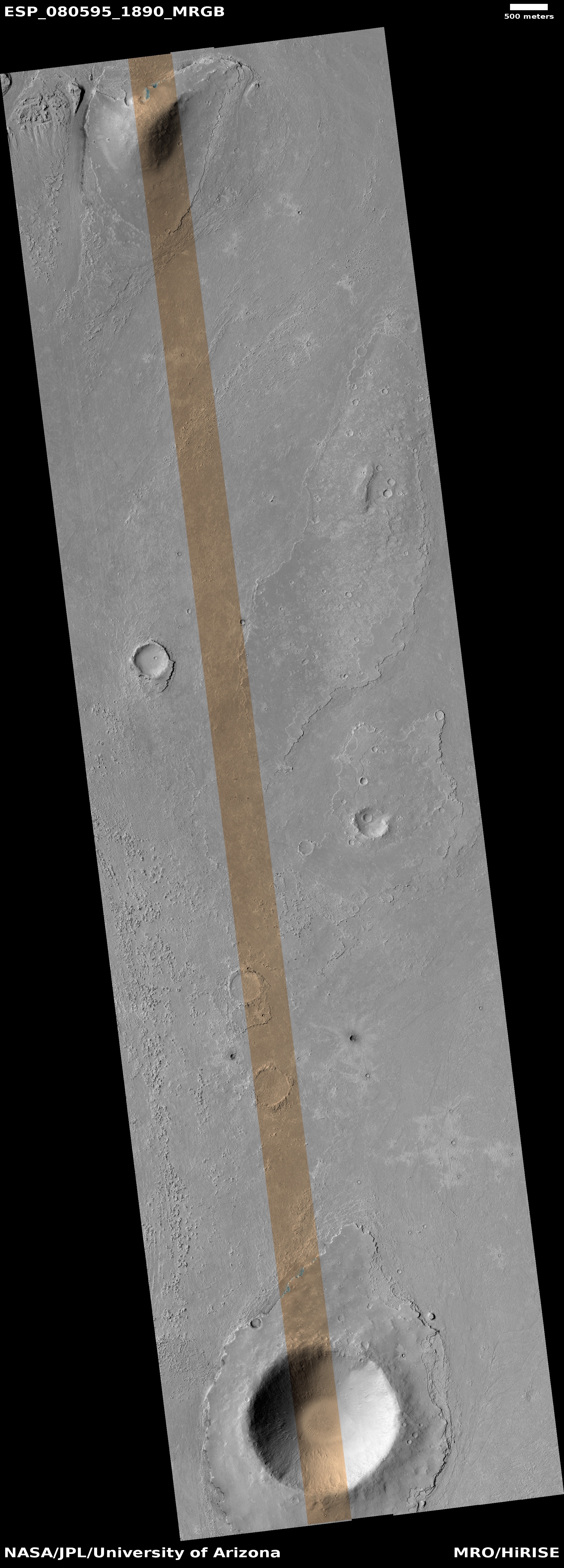
Cool image time! The picture to the right, rotated, cropped, reduced, and sharpened to post here, was taken on August 31, 2023 by the high resolution camera on Mars Reconnaissance Orbiter (MRO), and shows what the science team labels as a “vent near Olympica Fossae.”

The grade within the fissure is downhill to its center. Outside the vent the grade is downhill to the north and south, with the overall grade sloping to the west as well. Note the layers on each side of the depression. Each indicates another volcanic flood event that laid down another layer of lava. At some point this vent either blew up through those layers, or it had remained opened during all those many events, the lava flowing out and acting like water to erode the layers on the north and the south.

As always, the scale of Martian geology is daunting, as shown by the overview map below.
» Read more

0 comments

Astrobotic’s Peregrine lunar lander suffers major failure

According to updates by the engineering team running Astrobotic’s Peregrine lunar lander, launched early today by ULA’s Vulcan rocket, the lander’s propulsion system suffered a major failure shortly after activation.

After successfully separating from United Launch Alliance’s Vulcan rocket, Astrobotic’s Peregrine lunar lander began receiving telemetry via the NASA Deep Space Network. Astrobotic-built avionics systems, including the primary command and data handling unit, as well as the thermal, propulsion, and power controllers, all powered on and performed as expected. After successful propulsion systems activation, Peregrine entered a safe operational state. Unfortunately, an anomaly then occurred, which prevented Astrobotic from achieving a stable sun-pointing orientation.

The company later released an update, stating that the failure caused “a critical loss of propellant” that will make the mission impossible as planned. They are reassessing to see if they can come up with an alternate plan, but without sufficient fuel no lunar landing will be possible under any mission profile.

Peregrine is a smaller test version of Astrobotic’s larger Griffin lunar lander, which has contracts with NASA and ESA for later missions. This failure will likely impact those missions, forcing either delays or redesigns.

This mission was always an engineering test mission designed to prove out Astrobotic’s landing design, so experiencing a failure was not a surprise. The problem is that this failure occurred so soon after launch that it prevents the company from testing that landing design, at all.

8 comments

One spiral galaxy eating another

One spiral galaxy eating another
Click for original image.

Cool image time! The picture to the right, cropped, reduced, and sharpened to post here, was taken by the Hubble Space Telescope as part of an on-going survey of known pecular-looking galaxies. This pair is believed to be 570 million light years away. From the caption:

Galaxies are composed of stars and their solar systems, dust and gas. In galactic collisions, therefore, these constituent components may experience enormous changes in the gravitational forces acting on them. In time, this completely changes the structure of the two (or more) colliding galaxies, and sometimes ultimately results in a single, merged galaxy. That may well be what results from the collision pictured in this image. Galaxies that result from mergers are thought to have a regular or elliptical structure, as the merging process disrupts more complex structures (such as those observed in spiral galaxies). It would be fascinating to know what Arp 122 will look like once this collision is complete . . . but that will not happen for a long, long time.

From our viewpoint, the spiral galaxy at the top appears warped by the gravitational pull of the face-on spiral at the bottom, as if it is being sucked into the bottom galaxy. In truth, both galaxies are pulling on each other. If we could circle around and see them in three dimensions we would almost certainly see distortions in the bottom spiral as well.

10 comments

Scientists: Suspended iron minerals floating in Venus’s atmosphere explain dark UV streaks

Venus as seen in ultraviolet by Mariner 10, February 5, 1974
Venus as seen in ultraviolet by Mariner 10,
February 5, 1974

The uncertainty of science: Since the mid-1970s scientists have been trying to figure out the cause of the dark streaks seen in the atmosphere of Venus when photographed in ultraviolet. The image to the right was the first such UV image, taken by Mariner 10 during its fly-by on its way to Mercury. These streaks are caused by some unknown material that absorbs the UV light.

Researchers have now proposed that two different iron-bearing minerals, floating in Venus’s atmosphere, are what cause these dark UV streaks. From the absract:

Our results demonstrate that ferric iron can react with sulfuric acid to form two mineral phases: rhomboclase [(H5O2)Fe(SO4)2·3H2O] and acid ferric sulfate [(H3O)Fe(SO4)2]. A combination of these two mineral phases and dissolved Fe3+ in varying concentrations of sulfuric acid are shown to be good candidates for explaining the 200- to 300-nm and 300- to 500-nm features of the reported unknown UV absorber.

Iron has been detected in the atmosphere previously, and is theorized could come from volcanic eruptions on the planet’s million-plus volcanoes.

This new hypothesis explaining the dark UV absorber however remains unconfirmed, and joins a list of other candidates for that absorber, many of which propose either iron or sulfur in different combinations. Because so little data really exists about the atmosphere of Venus, with what is known also uncertain, it is presently impossible to solve this mystery with confidence. The problem is made even more difficult in that scientists understand almost nothing about the chemistry of materials under the conditions seen in Venus’s atmosphere, which is extremely hot (800 degrees Fahrenheit) and very thick and dense (100 times that of Earth).

1 comment

ULA’s Vulcan rocket successfully places payload in orbit on first launch

Vulcan at liftoff.
Vulcan at liftoff.

After four years of delay, mostly caused by delays at Blue Origin in delivering the two BE-4 engines used in the first stage, ULA’s Vulcan rocket finally completed its first launch early on January 8, 2024, lifting off from Cape Canaveral and successfully placing Astrobotic’s Peregrine lunar lander into orbit.

As of posting the upper stage had just deployed Peregrine, which will leave Earth orbit in about four days using its own engines. The upper stage has one more burn to send it into solar orbit, carrying the ashes of numerous people for the company Celestis.

The 2024 launch race:

3 SpaceX
1 India
1 China
1 ULA

For ULA, this launch is a very big deal. It is the first of two required in order for the Space Force to certify the rocket for future military launches. It also positions the company to begin the many launches that Amazon has awarded it to place into orbit a large percentage of that company’s Kuiper internet satellite constellation, assuming of course Blue Origin can deliver on schedule the many BE-4 engines that ULA will require.

This launch will also likely lead to the sale of ULA. » Read more

10 comments

NASA: UAE to build airlock module for lunar station plus have astronaut fly there

According to a press release from NASA today, the United Arab Emirates (UAE) will build the airlock module for the Lunar Gateway space station plus have one astronaut fly a mission to the station after it is built.

Under a new implementing arrangement expanding their human spaceflight collaboration with NASA through Gateway, MBRSC will provide Gateway’s Crew and Science Airlock module, as well as a UAE astronaut to fly to the lunar space station on a future Artemis mission.

I strongly suspect that the UAE will mostly pay for this module to be built, hiring outside contractors from either the U.S. or Europe to do the work.

4 comments

Canyons formed from the giant crack that splits Mars

Canyons formed by the giant crack that splits Mars
Click for original image.

Cool image time! The photo to the right, cropped, reduced, and sharpened to post here, was taken on September 22, 2023 by the high resolution camera on Mars Reconnaissance Orbiter (MRO). It shows a complex of north-south trending canyons, with easternmost cliff about 400 feet high (though the full drop to the large canyon on its east is closer to 800 feet).

These canyons however have nothing to do with ice or water flow. They were formed by underground tectonic forces that pushed the ground upward, forced it to split and form cracks. Those cracks in turn produced these canyons. In some cases, such as the depression on top of the central ridge, the formation process probably occurred because fissures formed below ground, causing the surface to sag.

As always, the hiker in me wants to walk up the nose of that ridge and then along its western edge, with the western canyon on my left and that smaller depression on my right.

The larger context of this location is in itself even more spectacular.
» Read more

0 comments

Researchers propose method for removing toxic perchlorates from Martian water

Of the twelve research grants just awarded by NASA to develop a variety of new technologies for astronomy and future space exploration, one proposes a new method for removing the toxic perchlorates that are thought to exist in all Martian water.

What if we could make the perchlorates just vanish? This is the innovative solution we propose here, taking advantage of the reduction of chlorate and perchlorate to chloride and oxygen being thermodynamically favorable, if kinetically slow. This is the promise of our regenerative perchlorate reduction system, leveraging synthetic biology to take advantage of and improve upon natural perchlorate reducing bacteria.

These terrestrial microbes are not directly suitable for off-world use, but their key genes pcrAB and cld, which catalyze the reduction of perchlorates to chloride and oxygen, have been previously identified and well-studied. This proposed work exploits the prior work studying perchlorate-reducing bacteria by engineering this perchlorate reduction pathway into the spaceflight proven Bacillus subtilis strain 168, under the control of a robust, active promoter. This solution is highly sustainable and scalable, and unlike traditional water purification approaches, outright eliminates perchlorates rather than filtering them to dump somewhere nearby.

Essentially the researchers will try to engineer bacteria known to be able to survive space so that it carries genes from another microbe able of changing the perchlorate into chloride and oxygen.

This study as well as the other eleven are only in phase one of their contracts, with the award of later phases determined by their initial successes or failures.

3 comments

Japan delays launch of Mars sample return mission due to problems with its H3 rocket

Japan’s space agency JAXA last week officially delayed the launch of its MMX Mars sample return mission, from later this year until the next Mars launch window in 2026.

A September 2024 launch would have seen MMX reach the Red Planet in August 2025 and return to Earth with around 0.35 oz (10 grams) of samples of the Mars moon Phobos in 2029. But the mission now must wait until the next Mars launch window opens in late 2026; its samples are slated to reach Earth in 2031.

The delay is because of JAXA’s ongoing problems getting its new H3 rocket off the ground. The first test launch last year failed, and though the next launch attempt is now scheduled for February, the agency decided it wanted more time to prove out the rocket before putting the Mars mission on it.

This decision once again highlights the overall failure of JAXA to produce for Japan a viable space effort. It is long past time for the Japanese government to take control from this agency, and allow the private sector to compete freely for business. Right now Japan’s continuing failures in space are downright embarrassing, compared to its Asian neighbors of China, India, and South Korea.

0 comments

NASA and one private company respond to Navaho nation’s demand to cancel lunar mission

Both NASA and one of the private companies involved in ULA’s first Vulcan rocket launch on January 8, 2023 that will carry the Astrobotic’s Peregrine lunar lander to the Moon have now responded to the Navaho nation, which has stated its religion gives it the unlimited right to decide what can go there.

Navaho President Buu Nygren had claimed earlier this week that the “Moon is sacred to numerous Indigenous cultures” and the payloads of human ashes being sent to the Moon was “tantamount to desecration.” He demanded the mission be delayed or canceled.
» Read more

16 comments

China’s Kuaizhou-1A solid-fueled rocket launches four weather satellites

China today successfully completed its first launch in 2024, its Kuaizhou-1A solid-fueled rocket lifting off from its Jiuquan spaceport in northwest China carrying four weather satellites.

No information was released about where the rocket’s lower stages crashed inside China. Nor did China’s state run press provide any information on the payloads, other than to say they will most be “used to provide commercial meteorological data services.”

The 2024 launch race:

2 SpaceX
1 India
1 China

2 comments

The mining potential on Mars

The mining potential on Mars
Click for original image.

Cool image time! The picture to the right, cropped, reduced, and sharpened to post here, was taken on October 30, 2023 by the high resolution camera on Mars Reconnaissance Orbiter (MRO). Labeled simply as a “terrain sample,” it was probably taken not as part of any specific research project but to fill a gap in the schedule in order to properly maintain the camera’s temperature.

Nonetheless, the larger region where this photo is located is one of great interest to scientists as well as to future explorers. First note the colors. The wide variations between the bright orange of that peak (only a few tens of feet high) and the light orange and aqua-green of the bedrock to the north and south suggest a terrain with a lot of different materials within it.

The location is in the dry equatorial regions, so the swirls visible on the plateaus north and south of that small peak are not related to near surface ice. Instead, this is warped bedrock, with those swirls also suggesting material of a varied nature, exposed to the surface by erosion processes.
» Read more

1 comment

SpaceX launches commercial communications satellite

SpaceX today successfully launched a commercial geosynchronous communications satellite, its Falcon 9 rocket lifting off from Cape Canaveral.

The first stage successfully completed its tenth flight, landing back at Cape Canaveral. The fairings completed their ninth and fourteenth flights respectively.

The 2024 launch race:

2 SpaceX
1 India

No one else has launched as yet, though many launches are scheduled through the first ten days of January.

0 comments
1 153 154 155 156 157 814