No contact with Mars’ rovers for the next month

The Sun is about going to cause a month-long break in communications with Curiosity and Perseverance, the two rovers on Mars.

This communications pause occurs every two years, when the orbits of Earth and Mars align with the Sun in between.

This holiday season coincides with conjunction β€” every two years, because of their different orbits, Earth and Mars are obstructed from one another by the Sun; this one will last from Dec. 27 to Jan. 20. We do not like to send commands through the Sun in case they get scrambled, so we have been finishing up a few last scientific observations before preparing Curiosity for its quiet conjunction break.

This is not a unique situation. Both rovers have gone through conjunction several times previously. The science teams will place the rovers in secure positions to hold them over during the break.

As for the orbiters circling Mars, it isn’t clear how much their operations will be impacted. The update at the link above makes no mention of them, and my memory says communications with them is less hampered, though reduced somewhat.

6 comments

China’s Long March 12A launches but fails to land the first stage

China’s new Long March 12A reusable rocket completed its first launch today (December 23 in China), lifting off from the Jiuquan space spaceport in northwest China. The attempt to softly land the first stage vertically at a landing pad down range however failed.

According to one report, the rocket’s upper stage reached orbit, but this remains unconfirmed. A Google-translation of this Chinese state-run report confirmed the failure of the first stage:

The rocket lifted off successfully after ignition, and its flight appeared normal during the visual observation phase. However, reports from the recovery site indicated an anomaly during the first stage’s re-entry, resulting in a “mushroom cloud” formation, and the successful recovery of the first stage was not achieved.

Several Chinese outlets showed the same image of that cloud. This is the second unsuccessful attempt by China this month to land a first stage, the first being the December 2nd attempt by the Chinese pseudo-company Landspace’s Zhuque-3 rocket. The Long March 12A is built by the government, so there is no make-believe company involved.

UPDATE: China’s state-run press has confirmed the upper stage reached orbit.

The leaders in the 2025 launch race:

168 SpaceX
86 China (a new record)
18 Rocket Lab
15 Russia

SpaceX still leads the rest of the world in successful launches, 168 to 143.

4 comments

The first launch by South Korean rocket startup Innospace fails shortly after liftoff

Less than five seconds after launch

Though details are not yet available, the first launch by South Korean rocket startup Innospace of its Hanbit-Nano rocket failed less than 2 minutes after liftoff from Brazil’s long unused Alcantera spaceport. The failure occurred sometime after the rocket passed through max-q, the moment when the aerodynamic pressure of the atmosphere and the speed of the rocket stresses the rocket the most.

The live stream provided no details, other than to say “we experienced an anomaly during the flight.” No other details have yet been released.

The image to the right is a screen capture of the rocket lifting off the pad, less than a few seconds after T-0. Though the rocket appeared to move upward in a smooth controlled flight, soon thereafter it became impossible to see anything but the bright engine flame at its base. Either the flames were so bright it overexposed the live stream, or the fire was spreading beyond the nozzles. At the moment however we know nothing about what happened.

9 comments

Two very different galaxies

Two very different galaxies.
Click for original.

Cool image time! The picture to the right, reduced and sharpened to post here, was released today as the Hubble picture of the week. From the caption:

The trick is that these galaxies are not actually very close. The large blue galaxy MCG-02-05-050 is located 65 million light-years from Earth; its brighter smaller companion MCG-02-05-050a, at 675 million light-years away, is over ten times the distance! Owing to this, MCG-02-05-050a is likely the larger galaxy of the two, and MCG-02-05-050 comparatively small. Their pairing in this image is simply an unlikely visual coincidence.

The smaller blue galaxy, also called Arp 4, has an active nucleus that emits a lot of energy, suggesting the presence of a supermassive black hole. Less is known about the more distant orange galaxy.

0 comments

A tour of Stoke Space

Nova upper stage static fire test

Tim Dodd of Everyday Astronaut yesterday released a long video in which he got a new tour the Stoke Space facility, led by the company’s CEO and founder, Andy Lapsa.

I have embedded that video below. The image to the right is a screen capture of a static fire test of the company’s Nova rocket’s upper stage engine that was done at the end of the tour. The engine uses a radical design of a ring of small nozzles, with a heat shield in the middle. The design aims to allow that upper stage to return to Earth for reuse, after it has deployed its payload. Nova’s first stage will also be reusable, landing vertically like the Falcon 9.

Though as usual Lapsa said nothing about schedule, it appears that the company is getting very close to its first launch. It appears the company’s launchpad in Florida will be ready for launch early in 2026. It also appears that all the rocket’s components are falling into place.

Lapsa noted that though both stages are designed to land and be reused, the goal for that first launch is simply to demonstrate they can get the rocket into orbit. Neither stage will attempt a landing. Once they’ve got that success under their belt, they will then go for other milestones.

Right now only SpaceX and Stoke Space are working to build a completely reusable rocket. SpaceX is going very big, with Starship. Stoke is aiming for the Falcon 9 market. If successful, it will be able to beat that rocket in price.
» Read more

4 comments

Eutelsat/OneWeb to launch new 340 satellites by 2027

More business for rockets! The internet satellite company Eutelsat/OneWeb now has plans to launch another 340 satellites by 2027, partly to replace aging satellites but also to upgrade its constellation.

Eutelsat OneWeb plans to deploy a constellation of over 340 satellites for its second-generation (Gen-2) low-earth orbit (LEO) network by 2027, as it looks to strengthen its business-to-business (B2B) and business-to-government (B2G) offerings globally. Neha Idnani, Regional Vice President for Asia Pacific at Eutelsat OneWeb, told Business Today in an exclusive interaction that the company is gearing up for the next phase of its orbital expansion to boost network capacity, resilience and coverage worldwide.

OneWeb began deploying its Gen-1 satellites in 2019 and operates a constellation of around 640 satellites as of 2025. While the network is fully operational, close to 100 satellites from the initial fleet are due for replenishment. The Gen-2 rollout will mark a shift to a more advanced and flexible network architecture.

The article at the link touts India’s space agency ISRO as a likely launch provider for those missions, which isn’t surprising as a substantial percentage of Eutelsat/OneWeb is owned by an Indian investor. It is also likely however that other companies, including SpaceX, Blue Origin, and Rocket Lab, will be considered also.

7 comments

Rocket Lab completes its 7th launch for Japanese company iQPS

Rocket Lab this evening successfully completed its 7th launch of a radar satellite for Japanese company Q-Shu Pioneers (iQPS), its Electron rocket lifting off from one of the two launchpads in New Zealand.

Q-Shu has signed Rocket Lab to do eleven launches total, so expect four more launches next year.

In 2025 Rocket Lab also completed three launches of its HASTE version of Election, which is designed to do suborbital hypersonic tests for the Pentagon. If we count these, the company has completed 21 launches in 2025. And even if we don’t count these suborbital launches, Rocket Lab has now launched more times than any other private company, except for SpaceX.

The leaders in the 2025 launch race:

168 SpaceX
85 China
18 Rocket Lab (a new record)
15 Russia

SpaceX still leads the rest of the world in successful launches, 168 to 142.

2 comments

Axiom gets $100 million of investment capital from Hungarian company

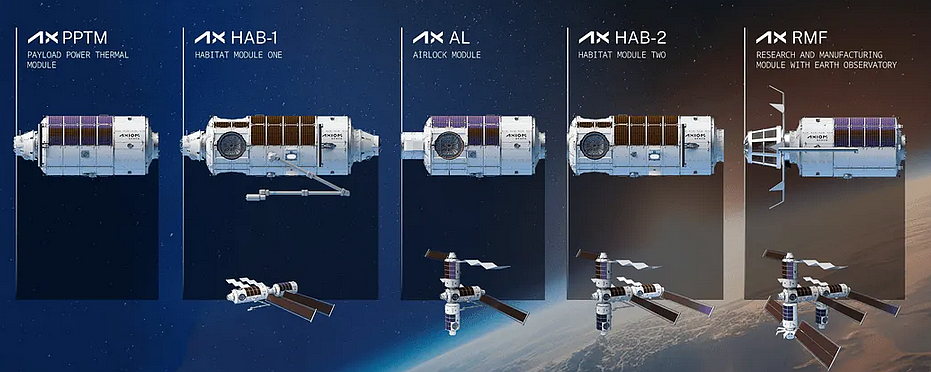
Axiom's new module assembly sequence
Axiom’s assembly sequence for its planned station, initially attached to ISS but subsequently detached

The space station startup Axiom has now obtained a $100 million investment by the Hungarian communications provider 4iG.

The company said Dec. 19 it has committed to invest $30 million in Axiom by the end of 2025, followed by an additional $70 million by March 31, 2026.

In October, 4iG announced a non-binding commitment letter to evaluate a potential $100 million investment in Axiom Space. The agreement outlined a separate $100 million framework for cooperation on the development of orbital data center systems over the next five years. 4iG said in a news release that the Axiom investment would provide Hungary with an opportunity to secure a long-term role in orbital data centre programs and space-based data processing and storage, but did not provide details.

In 2024 there were rumors the company had a serious cash shortage, though since then construction of its first two modules has proceeded as planned, with a launch of the first module still set for sometime in 2026. This new infusion of cash should shore up Axiom’s station construction considerably.

My rankings of the commercial space stations now under development:

» Read more

36 comments

China launches “communications technology test” satellite

China early today successfully launched a “communications technology test” satellite, its Long March 5 rocket lifting off from its coastal Wenchang spaceport.

As is routine for China’s state-run press, little information about the satellite was released, simply saying it will be “used to carry out multi-band and high-speed communication technology validation tests.” That China used its most powerful Long March 5 rocket to launch it suggests it is a hefty satellite possibly placed in geosynchronous orbit. Or maybe it is a variation of AST SpaceMobile’s giant Bluebird satellites used for direct cell phone use.

The leaders in the 2025 launch race:

168 SpaceX
85 China (a new record)
17 Rocket Lab
15 Russia

SpaceX still leads the rest of the world in successful launches, 168 to 141.

0 comments

Curiosity’s exploration of boxwork on Mount Sharp

Curiosity panorama, December 18, 2025
Click for high resolution panorama. For original images, go here, here, and here.

Overview map
Click for interactive map.

Cool image time! The panorama above was created from three photographs taken on December 18, 2025 (here, here, and here) by the right navigation camera on the Mars rover Curiosity.

The view is north, looking down the flanks of Mount Sharp and across the floor of Gale Crater to its rim about 20 to 30 miles away. In comparing this view with a similar one taken in July, it is obvious that the Martian atmosphere has become far dustier during the last six months. The rim and the mountains beyond are hardly visible now through the haze.

The blue dot on the overview map to the right marks Curiosity’s present position. The yellow lines indicate roughly the area covered by this panorama. The while dotted line indicates the rover’s travels, while the red dotted line its planned routes.

As you can see by both the rover’s tracks in the panorama above and the white dotted line in the overview, Curiosity has been traversing back and forth across the boxwork formation of criss-crossing ridges for more than half a year, as the science team attempts to decipher what caused these ridges and hollows. They have also done some drilling in this effort.

The science team has been getting close to the day it will move on, resuming Curiosity’s climb of Mount Sharp, but they keep finding things amidst this boxwork that requires additional study. For example, consider this from yesterday’s update:
» Read more

2 comments

A new commercial smallsat space telescope is now operational and offering its data to scientists

Mauve space telescope
Mauve space telescope. Click for source.

Capitalism in space: A new commercial optical space telescope with a 5-inch-wide mirror and dubbed the Mauve Telescope is now operational in orbit, with its private owner, UK startup Blue Skies, offering its data to scientists for an annual subscription fee.

Blue Skies is in the process of commissioning the Mauve and plans to start delivering data to scientists in early 2026. Customers include Boston University, Columbia University, INAF’s Osservatorio Astrofisico di Arcetri, Konkoly Observatory, Kyoto University, Maynooth University, the National Astronomical Observatory of Japan, Rice University, Vanderbilt University, and Western University.

The spacecraft’s three-year mission is to study flares from stars and their impact on the habitability of planets around them. From low Earth orbit, it hosts a telescope that can collect data in the ultraviolet to visual light range (200-700 nm spectrum).

With such a small mirror Mauve is not going to be able to do a lot of ground-breaking work, though there are definitely observations of value it can accomplish, such as those listed above. Its main purpose is as a demonstration project to attract a bigger round of new investment capital, from universities like the ones listed above, for launching a larger private telescope with greater capabilities.

This is how all telescopes were funded in the U.S. until World War II, through private funds privately built. Blue Skies effort here suggests we are heading back to that model, with government budgets increasingly constrained. The company is already working on a second and larger space telescope, dubbed Twinkle with a 18-inch primary mirror. It hopes over time to continue to scale up its orbital telescopes until it is matching Hubble and Webb, and doing so faster and at far less cost.

And for profit no less!

5 comments

Something caused a Starlink satellite to tumble and its fuel tank to vent

According to an update yesterday by SpaceX on X, one of its many Starlink satellites is now tumbling with its fuel tank venting, and is thus losing altitude.

On December 17, Starlink experienced an anomaly on satellite 35956, resulting in loss of communications with the vehicle at 418 km. The anomaly led to venting of the propulsion tank, a rapid decay in semi-major axis by about 4 km, and the release of a small number of trackable low relative velocity objects. SpaceX is coordinating with the @USSpaceForce and @NASA to monitor the objects.

The satellite is largely intact, tumbling, and will reenter the Earth’s atmosphere and fully demise within weeks. The satellite’s current trajectory will place it below the @Space_Station, posing no risk to the orbiting lab or its crew.

Either the tank burst, or got hit with something causing it to burst.

The media reports I’ve seen have tried to make this event more significant than it is. First, it is remarkable how few of SpaceX’s thousands of Starlink satellites have failed in this manner. These low numbers show how this incident is rare and not very concerning. Second, the spacecraft’s orbit is decaying, and will soon burn up harmlessly in the atmosphere. It will not add any space junk to low Earth orbit.

In fact, that this event illustrates more than anything how well SpaceX manages its Starlink constellation. Thousands of satellites launched, and only a handful have failed like this.

7 comments

New study: AI is corrupting the minds of children

AI report
Click for source.

A new study has found that the unsupervised use of AI by young children increasingly has them involved in bad things that are violent and emotionally harmful.

A new report conducted by the digital security company Aura found that a significant percentage of kids who turn to AI for companionship are engaging in violent roleplays β€” and that violence, which can include sexual violence, drove more engagement than any other topic kids engaged with.

Drawing from anonymized data gathered from the online activity of roughly 3,000 children aged five to 17 whose parents use Aura’s parental control tool, as well as additional survey data from Aura and Talker Research, the security firm found that 42 percent of minors turned to AI specifically for companionship, or conversations designed to mimic lifelike social interactions or roleplay scenarios. Conversations across nearly 90 different chatbot services, from prominent companies like Character.AI to more obscure companion platforms, were included in the analysis.

Of that 42 percent of kids turning to chatbots for companionship, 37 percent engaged in conversations that depicted violence, which the researchers defined as interactions involving β€œthemes of physical violence, aggression, harm, or coercion” β€” that includes sexual or non-sexual coercion, the researchers clarified β€” as well as β€œdescriptions of fighting, killing, torture, or non-consensual acts.”

Half of these violent conversations, the research found, included themes of sexual violence. The report added that minors engaging with AI companions in conversations about violence wrote over a thousand words per day, signaling that violence appears to be a powerful driver of engagement, the researchers argue. [emphasis mine]

You can read the study here. As bad as this data above is, the most frightening aspect of the report is this quote:
» Read more

8 comments

Ancient Martian drainage into crater lake, now turned into ridges

Inverted channels
Click for original image.

Cool image time! The picture to the right, rotated, cropped, reduced, and sharpened to post here, was taken on September 9, 2025 by the high resolution camera on Mars Reconnaissance Orbiter (MRO). It shows what the science team labels “an inverted channel.” From the caption:

Topographic inversion is a process where geologic features that were once low-lying, like impact craters or riverbeds, become elevated over time, like mesas or ridges. In this process, a crater or channel is filled with lava or sediment that becomes lithified [hardened]. If this infill is more resistant to erosion than the surrounding landscape, the less-resistant material can be eroded away by wind or water. The former crater or valley fill, being more resistant, remains elevated as the landscape around it lowers. The original low-lying feature becomes a mesa or ridge.

In this image, an ancient river network and nearby impact craters have undergone topographic inversion. Impact craters contain round mesas within them, and the stream channel is defined by a network of ridges.

The location of this inverted channel makes its history even more interesting.
» Read more

1 comment

More delays expected in India’s first manned Gaganyaan orbital mission

Artist rendering of India's Gaganyaan capsule
Artist rendering of India’s Gaganyaan capsule

It appears that India’s space agency ISRO is now hinting that the first manned orbital flight of India’s Gaganyaan capsule will not occur in 2027 as planned, but could be delayed until 2028.

ISRO had hoped to fly the first unmanned orbital test flight, Gaganyaan G1, before the end of this year, followed by several more unmanned flights in 2026, with the manned flight in 2027. G1 however has slipped to early 2026, though it appears the mission is finally coming together.

In a response to a question posed at the Lok Sabha, the State Minister for Space, Jitendra Singh noted that the first Gaganyaan mission is nearly ready to fly, β€œMajor infrastructure such as the Orbital Module Preparation Facility, Gaganyaan Control Centre, Crew training facility have been established. Second launch pad modifications have been incorporated. Precursor missions such as TV-D1 and IADT-01 have been successfully accomplished. Ground tracking networks, terrestrial links and IDRSS-1 feeder stations have been established. Crew Module Recovery plan as well as assets to be deployed have been finalized. For the first uncrewed mission (G1), all HLVM3 stages and CES motors are ready. Crew and Service Module systems have been realized. Assembly and integration activities are nearing completion.”

…The Gaganyaan G1 flight is the first of eight planned missions as part of an expanded programme cleared by the Union Cabinet last year with a total budget of Rs 20,193 crore. Initially, the programme was envisioned with two developmental flights followed by a crewed flight, with a budget of Rs 9,023 crore. There are now two crewed flights in the revised campaign, with ISRO aiming for the first crewed flight in 2027-28. [emphasis mine]

The highlighted dates are the first time ISRO has suggested the first manned flight might slip to 2028.

When the Gaganyaan program was first announced in 2018, the first manned flight was scheduled for 2022. Since then that schedule has been repeatedly delayed. I suspect ISRO’s schedule will only become more reliable after it finally completes that first G1 orbital test flight.

The endless incremental delays however are reminiscent of NASA’s Artemis program, designed to hide a sluggish program with problems.

2 comments

Station module builder Max Space announces new Thunderbird inflatable module

Thunderbird, with cut-out showing interior and person for scale
Thunderbird, with cut-out showing interior and person
for scale. Click for original images.

The startup Max Space yesterday unveiled a new larger and upgraded inflatable module, dubbed Thunderbird, that it proposes to sell to the various space stations being built in the U.S. and globally.

Thunderbird Station is built to support 4 or more crew members continuously, with an incredible 350mΒ³ of pressurized volume, more than triple that of a standard ISS module. Launched on a single standard Falcon 9 rocket, the full expandable habitat launches compactly and expands 20x once deployed in orbit, requiring no in-orbit assembly. The interior features a novel reconfigurable architecture, morphic interior structure,that allows astronauts to dynamically adapt the space for research, manufacturing, or living during a mission. The design was developed in collaboration with veteran astronauts to take full advantage of three-dimensional volume in microgravity, not just traditional floor and wall space, to create the most spacious and functional habitable volume ever built. [emphasis in original]

The company also announced that it plans to fly a much smaller demonstration mission of this inflatable module design in the first quarter of 2027, launching on a Falcon 9 rocket and dubbed Mission Evolution.

The primary objective is to test and verify the on-orbit deployment of the expandable module with its exceptional micrometeoroid protection layers. After many years of successful ground testing and development, the flight unit is in full production and is scheduled for launch Q1 2027 onboard a scheduled SpaceX launch.

Max Space first appeared in 2024 when it announced its intention to fly an inflatable demo mission by 2025. Obviously that schedule has undergone some significant delays, though it appears the company used the time to refine its designs considerably. Its management includes one former NASA astronaut and one former member of the Bigelow space station team that built the first private orbiting inflatable modules, Genesis-1, Genesis-2, and BEAM (still operating on ISS).

The company is not trying to build its own space stations. Instead, it is marketing its inflatable modules to all the other space station startups as a quick way to get an additional large module added to their stations.

Hat tip to BtB’s stringer Jay.

2 comments

South Korean rocket startup Innospace signs deal to launch from Australia

Proposed Australian spaceports
Australian spaceports: operating (red dot) and proposed (red “X”)
Click for original image.

The South Korean rocket startup Innospace — about to attempt its first orbital launch from Brazil on December 19, 2025, earlier this week signed an agreement with Australia’s Southern Launch spaceport to launch its rockets from there.

Leading space mission service provider Southern Launch has signed South Korean launch service provider Innospace to conduct space missions from the Whalers Way Orbital Launch Complex and the Koonibba Test Range. This strategic partnership enables Innospce to conduct a diverse range of missions from Southern Launch sites, including orbital satellite launches and suborbital technology demonstrations.

Beginning in 2026 and continuing for at least the next decade, this agreement strengthens South Australia’s position as an emerging global hub for space innovation.

Whether or not its launch from Brazil’s long unused Alcantera spaceport is a success, it appears Innospace was looking for another spaceport option closer to South Korea. Moreover, Southern Launch has been an on-going active launch site for suborbital launches as well as a landing zone for spacecraft, unlike Alcantera which has sat unused for decades. That activity probably makes it a more viable place to operate.

Hat tip to BtB’s stringer Jay.

0 comments

Rocket Lab launches a set of technology test satellites for Space Force

Rocket Lab tonight successfully placed into orbit a set of Space Force technology test satellites dubbed DISKSat, its Electron rocket lifting off from Wallops Island in Virginia.

DISKSat is a new standard satellite design, shaped like a flat disk about a yard across and developed by the Aerospace Corporation. The idea is that these disk-shaped satellites will more efficiently fit payload into the standard cylindrical fairings used by rockets. This mission includes four that will be deployed in low Earth orbit, but during the mission will also test operation in much lower orbits than satellites normally fly. I suspect the flat design reduces the atmospheric drag at those low orbits, thus allowing the satellite to remain in orbit for longer time periods.

The leaders in the 2025 launch race:

168 SpaceX
84 China
17 Rocket Lab (a new record)
15 Russia

SpaceX still leads the rest of the world in successful launches, 168 to 140.

12 comments

European sea-level satellite releases first data

First data from Sentinel-6B
Click for original.

The European Space Agency’s (ESA) Sentinel 6B satellite, launched a month ago, has now released its first sea-level data.

Following its launch on 17 November 2025, the first data from Sentinel-6B was captured on 26 November by the satellite’s Poseidon-4 altimeter. The image [to the right] is a combination of altimeter data from both the Sentinel-6 sea-level tracking satellites: Sentinel-6B and its twin, Sentinel-6 Michael Freilich, which was launched in 2020. The image shows the Gulf Stream current in the North Atlantic Ocean, off the eastern coasts of the US and Canada.

The Gulf Stream is a hugely important area of the North Atlantic Ocean, not only for the role it plays in global weather patterns and climate, but also because it’s a busy shipping route as well as a key ecosystem for marine species and therefore an important fishing zone.

What makes this particular government press release unusual is that though it is about a climate-related satellite, it makes no mention of global warming and how the sea level rise that has been recorded by the string of similar orbital satellites going back to 1993 is going to eventually drown us all. Maybe that’s because that total rise measured since 1993 equals only about 4 inches. That’s 4 inches of rise detected in more than three decades. At that rate, a little over an inch per decade, it will take centuries to drown anyone, but only those who refuse to walk a few feet to higher ground.

It could be the scientists and government PR hacks that are involved in writing this release also realized that the gig is up, and everyone now knows it, and it would only embarrass them further to push the global-warming hoax again.

4 comments

Three launches and one scrub overnight

Falcon 9 1st stage after landing for 30th time

In the past twelve hours there was one launch abort at T-0 and three successful launches.

First, Japan’s space agency JAXA attempted to launch a GPS-type satellite using its H3 rocket, built by Mitsubishi. The countdown reached T-0 but then nothing happened. The launch was then scrubbed because of an issue in the ground systems. No new date was announced.

Next, Arianespace, the commercial division of the European Space Agency (ESA), launched two European Union GPS-type satellites, Galileos 33 and 34, its Ariane-6 rocket lifting off from French Guiana.

This was Arianespace’s seventh launch in 2025, the most it has achieved since 2021, though still about 20-30% lower than the numbers it generally managed in the 2010s.

Finally, SpaceX followed with two launches on opposite coasts. First, its Falcon 9 rocket launched 29 Starlink satellites from the Kennedy Space Center in Florida, the first stage completing its sixth flight by landing on a drone ship in the Atlantic.

Shortly thereafter the company launched another 27 Starlink satellites, its Falcon 9 rocket lifting off from Vandenberg Space Force Base in California. The first stage (B1063) completed its 30th flight, landing on a drone ship in the Pacific. This stage is now the third Falcon 9 booster to reach 30 reuses:
» Read more

11 comments
1 34 35 36 37 38 818