
Europe and China discussing future space cooperation

The new colonial movement: The heads of the space agencies of both Europe and China held a virtual face-to-face discussion on April 1st, discussing their space operations as well as the possibility of future cooperation.

Zhang Kejian, administrator of the CNSA, and new ESA Director General Josef Aschbacher, who entered the post March 1, discussed a range of topics according to a short CNSA press release (Chinese). The parties outlined upcoming activities, with China recently approving a 14th Five-year plan for 2021-2025, and discussed lunar and deep space exploration, Earth observation, and cooperation in ground station.

Josef Aschbacher tweeted after the meeting that he had congratulated Zhang on the Chang’e-5 lunar sample return mission, which in December 2020 delivered to Earth 1.73 kilograms of lunar samples from Oceanus Procellarum on the moon’s near side.

…Karl Bergquist, ESA’s international relations administrator, told SpaceNews that ESA and CNSA went over ongoing activities including telemetry, tracking, and control support activities for the Chinese exploration program.

Apparently Zhang raised the issue of Europe contributing to China’s proposed lunar base. Aschbacher made no commitments, though he later stated that while there is “no ESA stance on this topic”, he anticipates future discussions on the topic.

Some of this is similar to the recent discussions between NASA and China, focused on exchanging telemetry of various orbiters to avoid the possibility of collisions or interference with their operation. I would not be surprised however if Europe expands this conversation and joins China in its space plans. The U.S. is shifting from a government-run space program — which both China and Europe favor — to a commercial model mostly run by private enterprise. Under that model there will be less opportunity for European participation in American space projects.
9 comments

ESA awards UK’s Orbex 7.45 million euros to fund rocket development

Capitalism in space: The European Space Agency (ESA) has awarded the new United Kingdom smallsat launch company Orbex 7.45 million euros to help fund the development of its Prime rocket.

This will supplement the 4.7 million euros that Orbex has raised from private capital.

The funds from the award will go towards the completion of spaceflight systems in preparation for the first launches of Orbex’s 19-metre ‘microlauncher’ rocket, Prime. €11.25 million of the total funding will be assigned to work undertaken in the UK, in particular the lightweight avionics designed in-house by Orbex in Forres, and the guidance, navigation and control (GNC) software subsystem being designed by Elecnor Deimos, a strategic investor and partner of Orbex. The remaining €900,000 of the total funding package will support the development of the GNC for the orbital phase being developed by Elecnor Deimos for Orbex in Portugal.

If all goes right, Prime will make its first launch from Sutherland, Scotland, in ’22.

The contract award signals the shift at ESA that resembles what happened at NASA in the past decade, moving from designing and building its rockets and spacecraft to buying the product from private companies. While ESA might be providing a large bulk of the capital to develop Prime, it appears ESA is not involving itself heavily in the development itself, leaving that instead to the company.

0 comments

ESA contracts Airbus to build three more Orion service modules

The European Space Agency (ESA) late last week announced that it has awarded Airbus a contract to build three more service modules for NASA’s Orion capsule.

This new contract supplements the existing contract that already has Airbus building three service modules. With six service modules in the pipeline, the ESA is signaling that it is very confident the Artemis program will continue.

The key question remains: Will it continue with SLS as the rocket of choice? Right now there simply aren’t the funds to build six SLS rockets. Congress has only funded two. Moreover, the pace of construction for SLS means that, if funded, it will likely take a decade at least for it to launch these six capsule/service modules. Since SpaceX’s Starship/Super Heavy will likely be operational in about half that time, and will also be capable of much more for far less, I suspect that if these additional Orion capsules get launched, they will do so on something other than SLS.

5 comments

ESA funds ArianeGroup prototype vertical landing hopper

The European Space Agency (ESA) has now committed 33 million euros for ArianeGroup to develop a prototype vertical landing hopper dubbed Themis that would begin testing first stage landings by ’23.

ArianeGroup and its collaborators in Belgium, Switzerland, France and Sweden offer critical technical knowhow gained through the development of Europe’s next-generation engine – Prometheus – which will power Themis.

ESA’s Prometheus is a highly versatile engine capable of providing 1000 kN of variable thrust and is reignitable which makes it suitable for core, booster and upper stage application. An onboard computer handles engine management and monitoring in real time – a crucial feature for reusability.

ArianeGroup is the private consortium led by Airbus and Safran that is building Ariane 6. This deal suggests that ESA amd ArianeGroup has finally recognized that Ariane 6, built without reusability, is a lemon and is not attracting customers. This new contract starts the process of developing a reusable first stage.

They still might be too late. They will only begin testing the Themis prototype in ’23, with no clarity on when a full scale version will follow. Meanwhile, it is very likely that SpaceX’s fully reusable Starship/Super Heavy will be flying orbital missions by then, and likely charging far less than they presently do for their Falcon 9.

7 comments

ESA funds construction of its own X-37B, dubbed Space Rider

The new colonial movement: The European Space Agency (ESA) has now signed the contracts to fund the construction of its first reusable mini-shuttle, dubbed Space Rider and comparable to the Air Force’s X-37B.

ESA signed two contracts with industry on 9 December at Palazzo Chigi in Rome, Italy in the presence of Italian government representatives. The first contract is for delivery of the Space Rider flight model including the reentry module and the AVUM orbital service module, by co-prime contractors: Thales Alenia Space Italy and Avio. The second contract covers the delivery of the ground segment by Italian co-prime contractors: Telespazio and Altec.

Activities are on track for the first flight of Space Rider in the third quarter of 2023 from Europe’s Spaceport in French Guiana.

Like the X-37B, Space Rider will provide Europe with a space platform for performing long term experiments in space and recovering them undamaged, though initially the flights will be no more than two months long. While it will launch on a rocket like the X-37B, and will use its body to shed velocity as it returns through the atmosphere, it will not land on a runway but will instead use parachutes to drop it to the ground.

More importantly, Space Rider will be available to the private sector. The X-37B is controlled by the U.S. military, and they have made it available for only a limited number of non-military experiments.

0 comments

New Gaia data release tracks distance and motion of 1.8 billion stars

The European Space Agency (ESA) today released the third round of data from its Gaia satellite, designed to measure precisely the distance and motion of billions of nearby stars.

Gaia EDR3 contains detailed information on more than 1.8 billion sources, detected by the Gaia spacecraft. This represents an increase of more than 100 million sources over the previous data release (Gaia DR2), which was made public in April 2018. Gaia EDR3 also contains colour information for around 1.5 billion sources, an increase of about 200 million sources over Gaia DR2. As well as including more sources, the general accuracy and precision of the measurements has also improved.

This release also included the following discoveries:

  • The Milky Way’s outer regions beyond the Sun contain two populations of stars, one slowly dropping towards the galaxy’s plane, the second flying away quickly.
  • The first precise measure of the solar system’s orbit in the Milky Way
  • A more complete census of all stars within 100 parsecs of the Sun
  • A better map of the interaction between the Large Magellanic Cloud and the Milky Way, which also showed that the cloud does have a spiral structure

This precise data will take decades to digest, as past research has been based on only rough distance and motion estimates. Having precise data will change our approximation of each object’s brightness, which will also change much of what we assume about it.

1 comment

ESA signs contract for 1st space junk removal

Capitalism in space: The European Space Agency (ESA) has now signed a contract with a private company, ClearSpace SA, for the first dedicated commercial mission to remove a piece of orbiting space junk.

ESA officials signed a contract with ClearSpace on Nov 13. to complete the safe deorbiting of a payload adapter launched aboard the second flight of the Arianespace Vega rocket in 2013.

Unlike traditional ESA contracts that involve the agency procuring and coordinating the mission, ClearSpace-1 is a contract to purchase a service: the safe removal of a piece of space debris. ESA officials said they intend this mission to help establish a new commercial sector led by European industry. The 86 million euros supplied by ESA will be supplemented with an additional 24 million euros ClearSpace is raising from commercial investors. Approximately 14 million euros of the privately-raised funding will be utilized for the mission, while the remaining 10 million will be set aside for contingencies, ESA spokesperson Valeria Andreoni told SpaceNews.

First, that the ESA has decided here to shift from running the mission and to merely being the customer buying the product from a private company is magnificent news. Europe has been, like NASA was in the 2000s, very reluctant to give up its total control in the design, construction, and launch of rockets and spacecraft. That they are now mimicking NASA’s own shift in the 2010s to this private model, as I outlined in detail in Capitalism in Space, means that ESA’s bureaucracy is finally coming around to the idea of freedom, capitalism, and private enterprise. What a thing!

Second, though this mission is commercial, it isn’t really a practical economic solution to the removal of most space junk. The contract will cost $104 million, plus the additional private capital ClearSpace has raised. None of this appears to include the launch cost. Yet, it will only remove one defunct object in orbit.

Such a technology will be useful for removing specific large pieces of space junk that pose a risk should they crash to Earth. It will not be economically useful for removing the small junk in orbit that threatens other working satellites and spacecraft. For that technology to be cost effective it will need to be able to clean up many objects on a single flight.

1 comment

ESA maps out first launch schedule for new rockets

Capitalism in space? The European Space Agency (ESA) today laid out the development roadmap that will lead to the launch of two new rockets, the Vega-C being built by the Italian company Avio, and the Ariane 6 being built by ArianeGroup.

The Vega-C is a more powerful version of the Vega rocket, aimed at capturing the smaller satellite market. It maiden flight is now scheduled for June ’21.

The Ariane 6 is aimed at replacing the Ariane 5, Europe’s big workhorse rocket, but to do so at a lower cost. Its maiden flight is now set for the second quarter of ’22, a significant delay from the previously announced target date in ’21, which itself was a delay from the original late ’20 launch date.

Ariane 6 however has not succeeded in cutting costs enough to match its competitor SpaceX, and thus it continues to have trouble attracting customers, even among ESA’s partner nations that it is meant to serve. These issues have led to rumors that ESA is already looking to either significantly upgrade Ariane 6 (before it even flies), or replace it entirely wit a new re usable rocket.

1 comment

NASA and ESA ink Lunar Gateway deal

NASA yesterday announced that it has signed a deal with the European Space Agency (ESA) outlining their partnership in building the Lunar Gateway space station in orbit around the Moon.

Under this agreement, ESA will contribute habitation and refueling modules, along with enhanced lunar communications, to the Gateway. The refueling module also will include crew observation windows. In addition to providing the hardware, ESA will be responsible for operations of the Gateway elements it provides. ESA also provides two additional European Service Modules (ESMs) for NASA’s Orion spacecraft. These ESMs will propel and power Orion in space on future Artemis missions and provide air and water for its crew.

For some reason NASA’s press release makes no mention of what ESA gets from the deal. From this news report:

[ESA] said it will receive “three flight opportunities for European astronauts to travel to and work on the Gateway” as part of the agreement.

I also note that there is no mention of the Artemis Accords in this agreement. As far as I can tell, right now the only ESA member who has signed on is the United Kingdom, and I am not sure of the UK’s status in the ESA considering their exit from the European Union. The two are different political deals, but exiting one might affect the other.

The Trump administration has said repeatedly that it will only partner in its lunar ambitions with countries that sign the accords. However, at this moment Congress has simply not funded those ambitions, so NASA needs partners to get things built. Moreover, Orion is a space capsule (costing about $18 billion and taking 20 years to build) that does not have a service module to provide it air and water. Europe provides that, and had only agreed to build two.

It might be that NASA has traded the accords away to get Europe’s help for both Gateway and Orion. This deal, announced now, might also be an effort by NASA (and Europe) to lobby Congress to fork up the cash.

9 comments

Mercury probe BepiColombo probe flies past Venus

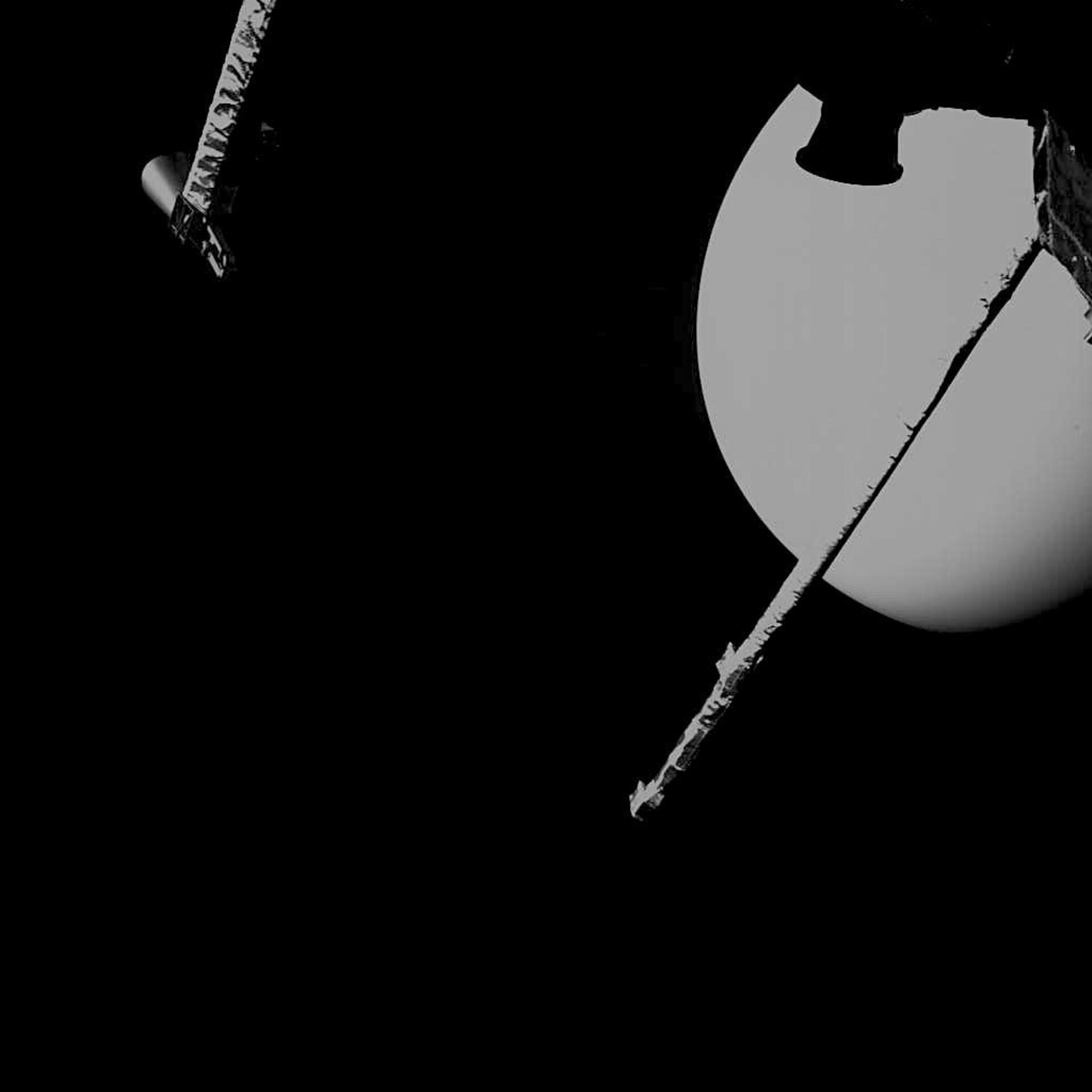
Venus during BepiColombo fly-by
Click for full image.

The two-pronged European and Japanese probe BepiColombo today has completed its first of two fly-bys of Venus on its way to an arrival at Mercury in 2025.

The image to the right is one of 64 taken during the fly-by. The science team has created a movie from those images, showing Venus slide past as the spacecraft slewed to view it. During the fly-by the instruments on board its Japanese and European orbiters, both of which will separate and operate independently once they reach Mercury, gathered data of Earth’s sister planet.

The spacecraft still needs one more Venus fly-by plus six past Mercury to get it on a trajectory that will put it in orbit around Mercury. It has also already completed one fly-by past Earth in this complicated route.

0 comments

COVID-19 and launchpad issues delay Ariane 6

The European Space Agency (ESA) confirmed today that the first launch of Arianespace’s Ariane 6 rocket will be delayed at least six months, to late 2021, due to lock downs related to the Wuhan flu panic, as well as construction issues at the rocket’s new launchpad.

“While we know that the maiden flight will not take place before the second semester of 2021, we cannot at this moment precisely quantify the delay, and we cannot provide an exact launch date,” Daniel Neuenschwander, ESA’s director of space transportation, said according to an ESA translation of remarks at a July 9 press event provided to SpaceNews. The French Association of Professional Journalists in Aeronautics, organized the event at ArianeGroup’s headquarters in Paris.

ESA hopes to have greater clarity on the delays in a few months, he said, according to the ESA translation.

It bodes bad for this rocket that they, at this time, have so little handle on the issues and the length of the delays.

2 comments

ArianeGroup developing new rocket engine

Capitalism in space: The private company ArianeGroup has now gotten the okay from the European Space Agency (ESA) to begin full development of its new Prometheus rocket engine, intended to reduce costs 10x.

By applying a design-to-cost approach to manufacturing Prometheus, ESA aims to lower the cost of production by a factor of ten of the current main stage Ariane 5 Vulcain 2 engine. Features such as variable thrust, multiple ignitions, suitability for main and upper stage application, and minimised ground operations before and after flight also make Prometheus a highly flexible engine.

This Prometheus precursor runs on liquid oxygen–methane which brings high efficiency, allows standardisation and operational simplicity. Methane propellant is also widely available and easy to handle.

Essentially, ArianeGroup is going to try to build its own methane-powered rocket engine, having seen the success that SpaceX has so far had with its own Raptor methane engine. This also signals an increased recognition at ESA and ArianeGroup that their new Ariane-6 rocket, whose first launch is still about a year away, is not going to be competitive with SpaceX’s offerings, and needs to be upgraded or replaced.

1 comment
1 16 17 18 19 20 22