FAA releases more information about SpaceX’s proposed Starfall recoverable capsule
Back in July 2025 it was reported that SpaceX was developing its own recoverable capsule design — dubbed Starfall and comparable in concept to Varda’s capsules.
Under the plan, internally called Starfall, SpaceX’s Starship rocket would bring products such as pharmaceutical components to space in small, uncrewed capsules, said one of the people, who spoke on condition of anonymity because the matter is confidential.
Starship would then deploy the capsules, which would spend time in orbit before reentering the atmosphere, where they could be recovered back on Earth, the person added.
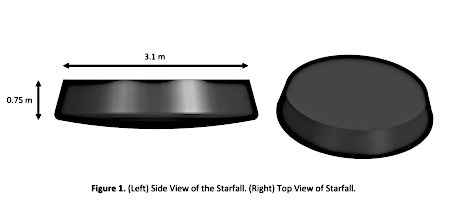
The FAA has now released an environmental assessment of the design that provides more information, including the first proposed demo missions. The graphic to the right is from that assessment, and provides a simplified illustration of the capsule’s size and shape.
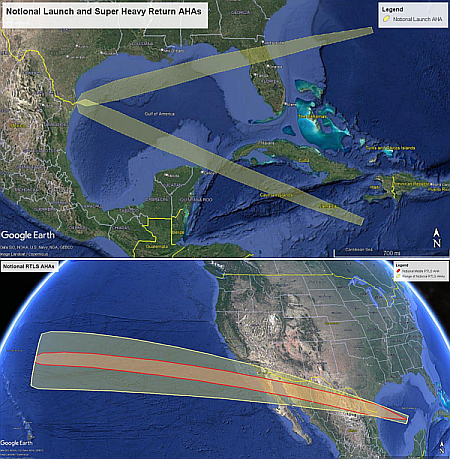
The FAA decision approves two reentries of Starfall capsules in the Pacific Ocean about 1,300 kilometers off the coasts of California and Mexico. The capsules would launch on either Falcon 9 or Starship vehicles, going into orbit before reentry or flying a direct suborbital trajectory to the landing zone.
The capsules are disk-shaped, 0.75 meters tall and 3.1 meters in diameter at the top. The capsules have cold-gas attitude control thrusters but no other propulsion system and do not have the ability to deorbit on their own. The vehicle consists of two parts: a top plate and a heat shield. The top plate is an aluminum structure partially wrapped in an unspecified thermal protection material and weighs 1,400 kilograms. The heat shield is a carbon-fiber structure covered in thermal protection material and also contains nitrogen gas bottles used for the thrusters and other systems. It weighs about 700 kilograms.
The vehicle would slow its descent using a single main parachute, along with pilot and drogue parachutes, with the heat shield jettisoned before splashdown. The FAA documents state that SpaceX will use boats to recover all elements of the spacecraft after splashdown.
No timeline for these tests was provided. It appears SpaceX wants to manufacture and fly these in large numbers, using Starship. It also appears it would be in direct competition with Varda and a host of other startups that have raised capital and are developing their own capsules. In the U.S. Varda, Inversion Space, and Sierra Space have raised money for doing such orbital work. In Europe, The Exploration Company in France, Atmos in Germany, PLD in Spain, Genesis in Croatia, and Space Cargo in Luxembourg have also raised capital. So far, Varda is the only company to successfully fly capsules.
Because all would be depended on other rocket companies to launch their capsules, including SpaceX, Starfall raises some legitimate antitrust questions. SpaceX’s ability to undercut its rivals in this area, as both capsule and rocket provider, would be unmatched, and could easily wipe out all competition.
The competitive need for more launch providers at low cost is becoming increasingly critical.