Two launches today by Japan and SpaceX

The beat goes on! Even as SpaceX proceeds today with the largest initial public offering of stock ever, raising an expected $75 billion in cash for its long term plans, the global launch industry marched on with two launches today.

First, Japan’s space agency JAXA successfully launched its H3 rocket on a test flight following a launch failure in December 2025. The rocket lifted off from JAXA’s Tanegashima spaceport in southern Japan, using its simplest configuration, with no solid-fueled strap-on boosters. Though the rocket deployed some cubesats, its main payload was a dummy satellite to test the rocket’s deployment system, which caused the 2025 failure by not holding its satellite in place. On today’s launch, the deployment system worked as planned, which means JAXA can now resume operational launches with H3.

This was Japan’s first launch in 2026.

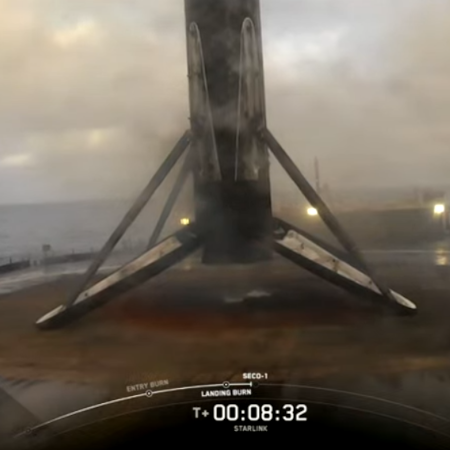
Next, SpaceX placed another 29 Starlink satellites into orbit, its Falcon 9 rocket lifting off from Cape Canaveral Space Force Station in Florida. The first stage completed its 27th flight, landing on a drone ship in the Atlantic (58 days after its previous flight).

The leaders in the 2026 launch race:

70 SpaceX
36 China
8 Russia
8 Rocket Lab (plus two suborbital HASTE launches)

For the third straight year SpaceX leads the entire world combined in total launches, 70 to 63.

11 comments

Japan to do test launch of its H3 rocket in June

Japan’s space agency JAXA is now planning a test launch on June 10, 2026 of its H3 rocket, carrying a dummy payload only in order to test the changes it has made in the rocket after a failed launch in December 2025.

The failure of the eighth H3 rocket was likely caused by an adhesion problem in the satellite mounting structure, which led it to break apart during flight, according to an investigation by JAXA. Similar issues were found in other units, prompting the space agency to fix them so the components can maintain their structural integrity.

In the June launch, a dummy satellite will be mounted on the test vehicle to collect data and verify the effectiveness of the measures. For future launches of actual satellites or space probes, JAXA plans to review the mounting structure design to reduce the risk of failure.

In other words, the method for attaching the payload to the rocket at some points failed, so that the satellite separated prematurely. The June launch will be to test a new mounting system.

Posting has been light the last few days as I deal with recovery from knee surgery.

0 comments

JAXA releases preliminary results of investigation into December 2025 H3 rocket launch failure

Japan's space agency JAXA

JAXA yesterday released the preliminary results of its investigation into upper stage failure during the December 2025 launch of its H3 rocket.

Previously the agency had indicated it believed the cause was linked to the separation of the rocket’s payload fairings. This new report changes that conclusion:

After liftoff, the No. 8 H3 rocket sustained damage to the section where the Michibiki No. 5 positioning satellite was mounted, when the satellite cover, called fairing, was separated.

In addition, the fuel tubing of the rocket’s second-stage engine was damaged, presumably causing combustion to stop earlier than planned, JAXA said in a progress report on its investigation into the failure at a meeting of a subgroup of a science ministry panel.

As the section was damaged, the satellite was no longer attached to the second stage of the rocket. The satellite fell off when the first stage separated.

In other words, as the fairings released, the satellite apparently deployed, damaging the fuel feed to the upper stage engine. It is as yet unclear whether the deployment system worked as intended, but did so prematurely, or if it failed entirely, allowing the satellite to fall away once the fairings separated.

At the moment Japan has no launch capability. Both of JAXA’s rockets, the H3 and the Epsilon-S are grounded due to launch failures. Meanwhile, the country has only recently begun to develop private launch companies, none of which are ready to launch.

1 comment

JAXA identifies cause of H3 rocket failure

In releasing today the preliminary results of its investigation into the failure on December 21, 2025 of the upper stage of its H3 rocket, Japan’s space agency pinned the likely cause on the rocket’s fairings.

Japan Aerospace Exploration Agency officials told a science ministry panel on Dec. 23 they suspect an abnormal separation of the rocket’s payload fairing—a protective nose cone shield—caused a critical drop in pressure in the second-stage engine’s hydrogen tank.

Engineers think the fairing might have hit the rocket at separation, damaging the tank.

Japan at present has no way to launch payloads. It has no operating independent commercial rocket companies, and its JAXA-owned H3 and Epsilon-S rockets have had repeated problems. The H3 failed on its first launch in 2023, causing a year-long delay, and Epsilon-S still in limbo because of repeated failures during development.

1 comment

Japan launches a Japanese GPS-type satellite; upper stage fails however

UPDATE: It is now confirmed the launch was a failure.

While the H3 was able to lift off from the Tanegashima Space Center in Kagoshima Prefecture at 10:51 a.m., the second-stage rocket engine did not start properly and stopped burning earlier than scheduled, the Japan Aerospace Exploration Agency (JAXA) said.

Original post:
—————————-
Japan’s space agency JAXA this evening (December 22 in Japan) launched a Japanese GPS-type satellite designed to work in conjunction with the U.S. GPS constellation, its H3 rocket lifting off from its Tanegashima spaceport.

However, it appears the second stage engine shut down prematurely. The status of the satellite is presently uncertain.

This was Japan’s fourth launch in 2025, which is about the average number of annual launches it has managed for the past two decades. Japan only had three successful launches this year.

The leaders in the 2025 launch race:

168 SpaceX
85 China
18 Rocket Lab
15 Russia

SpaceX still leads the rest of the world in successful launches, 168 to 142.

0 comments

Three launches and one scrub overnight

Falcon 9 1st stage after landing for 30th time

In the past twelve hours there was one launch abort at T-0 and three successful launches.

First, Japan’s space agency JAXA attempted to launch a GPS-type satellite using its H3 rocket, built by Mitsubishi. The countdown reached T-0 but then nothing happened. The launch was then scrubbed because of an issue in the ground systems. No new date was announced.

Next, Arianespace, the commercial division of the European Space Agency (ESA), launched two European Union GPS-type satellites, Galileos 33 and 34, its Ariane-6 rocket lifting off from French Guiana.

This was Arianespace’s seventh launch in 2025, the most it has achieved since 2021, though still about 20-30% lower than the numbers it generally managed in the 2010s.

Finally, SpaceX followed with two launches on opposite coasts. First, its Falcon 9 rocket launched 29 Starlink satellites from the Kennedy Space Center in Florida, the first stage completing its sixth flight by landing on a drone ship in the Atlantic.

Shortly thereafter the company launched another 27 Starlink satellites, its Falcon 9 rocket lifting off from Vandenberg Space Force Base in California. The first stage (B1063) completed its 30th flight, landing on a drone ship in the Pacific. This stage is now the third Falcon 9 booster to reach 30 reuses:
» Read more

11 comments

Japan launches a new upgraded version of its HTV cargo freighter

Japan today (October 26th in Japan) successfully launched to ISS a new upgraded version of its HTV cargo freighter, its H3 rocket lifting off from its Tanegashima spaceport in southern Japan.

The HTV-X1 carries more than freight. After its cargo is unloaded at ISS it will spend an additional three months flying independently in orbit, where engineers will conduct three additional experiments. JAXA, Japan’s space agency, hopes it can market HTV-X1 for use by the commercial space stations presently being developed. It is also marketing it as a potential orbital capsule that others can use for in-space manufacturing.

This was only the third launch by Japan in 2025, so there is no change to the 2025 leader board:

138 SpaceX
64 China
13 Russia
13 Rocket Lab

SpaceX now leads the rest of the world in successful launches, 138 to 106.

19 comments

Two Japanese shipping companies are developing floating landing platforms for rockets

Two different Japanese shipping companies are now developing floating ship platforms that rocket companies could use to land their rocket’s first stages.

Japan’s Nippon Yusen Kaisha (NYK) is following compatriot Mitsui OSK Lines in targeting space exploration as a new source of revenues.

NYK has obtained an approval in principle from ClassNK for the conceptual design of an offshore recovery system for reusable rockets, an initiative developed through the Space Strategy Fund at the Japan Aerospace Exploration Agency (JAXA). NYK now aims to carry out a demonstration test of this new vessel type in 2028 working with multiple partners including Mitsubishi Heavy Industries.

Since JAXA and Mitsubishi own and build Japan’s new H3 rocket, JAXA’s funding here suggests both are considering upgrading the H3 for reusability. It is also possible Mitsubishi is mulling plans to build its own new commercial rocket.

1 comment

JAXA/Mitsubishi test upgraded engines for H3 rocket

Japan’s space agency JAXA, working with Mitsubishi, successfully completed today a static fire test of new more powerful engines to be used on its new H3 rocket, thus eliminating the need for solid-fueled boosters with the goal of reducing the rocket’s cost.

Thursday’s test involved the sixth H3 rocket, which is a Type 30 test vehicle that has three main engines and no boosters. The three main engines were fired for 25 seconds while the rocket remained attached to the launchpad. JAXA will check acceleration, temperature and other data collected during the test.

This new version of the H3 is expected to do its first launch before the end of 2025. If successful, the launch price compared to JAXA’s now retired H2A rocket will be cut in half, to about $35 million, a number that will almost be competitive with the Falcon 9. SpaceX officially charges about $70 million per launch, but it is believed it could reduce that price significantly — some estimate to as low as $20 million — and still make a profit.

0 comments

Mitsubishi wants to cut launch price of H3 rocket to $35 million

Mitsubishi Heavy Industries, which developed the new H3 rocket for Japan’s space agency JAXA, wants to attract commercial launch business, and to do so hopes to cut the rocket’s launch price to about $35 million.

According to the article at the link, the price for the H2A rocket that the H3 has replaced was 10 billion Japanese yen, about $70 million.

The H2A launched more than 70 satellites and other objects into space, serving as the backbone of Japan’s space transportation. However, there was an average of only two launches a year, and most depended on “public demand” for government satellites. There were only orders for commercial launches for five satellites belonging to foreign countries, such as South Korea and the United Kingdom.

…For Mitsubishi Heavy Industries, Ltd., which took over the manufacture and operation of the H2A from JAXA in 2007, winning commercial orders has been a longstanding issue. The H3 was jointly developed by MHI and JAXA with the aim of halving the launch fee.

That price listed for the H2A rocket is likely wrong, much lower than the real price, as it matches what SpaceX has been offering publicly for the Falcon 9 for more than a decade. If the H2A had been that cheap, it would have garnered some business. It did not.

Lowering the cost for the H3 rocket to $35 million would definitely be competitive in the present launch market. Whether Mitsubishi can accomplish this however remains unclear. So far there is no indication that this new rocket has attracted any more business than the H2A, but as the rocket has only just started launching it is still too early to judge.

2 comments

Japan’s H3 rocket successfully completes its fifth launch

Japan’s space agency JAXA early today successfully launched the sixth satellite in that country’s GPS-type constellation, its new H3 rocket lifting off from the Tanegashema spaceport in south Japan.

This was the rocket’s fifth launch, and the first for Japan this year. The link goes to the JAXA live stream, cued to T-30 seconds. Though it now also provides English translation, JAXA still insists on having an announcer count off every second, several minutes prior to and after launch, something that is incredibly annoying and distracting, and entirely unnecessary.

The 2025 launch race:

14 SpaceX
6 China
1 Blue Origin
1 India
1 Japan

3 comments

Japan launches military communications satellite

Japan today successfully launched a military communications satellite on the fourth launch of Mitsubishi’s new H3 rocket.

Liftoff occurred at Japan’s Tanegashima spaceport on the southern end of Japan’s island chain.

This was Japan’s fifth launch in 2024, the most launches it has accomplished in a single year since it completed six in 2018. As such the leader board in the 2024 launch race remains unchanged:

107 SpaceX
49 China
12 Russia
11 Rocket Lab

American private enterprise still leads the rest of the world combined in successful launches 124 to 74, while SpaceX by itself still leads the entire world, including American companies, 107 to 91.

0 comments

Mitsuibishi’s H3 rocket wins launch contract from UAE

Capitalism in space: The United Arab Emirates (UAE) yesterday announced that it has awarded the launch contract for its first unmanned probe to the asteroid belt to the Japanese company Mitsuibishi and its new H3 rocket.

The UAE Space Agency (UAESA) announced Oct. 10 it selected Mitsubishi Heavy Industries to launch its Emirates Mission to the Asteroid Belt (EMA) on an H3 rocket in the first quarter of 2028. Terms of the contract were not disclosed.

The spacecraft, also known as MBR Explorer after Sheikh Mohammed bin Rashid Al Maktoum, Crown Prince of Dubai, will fly by six main belt asteroids between 2030 and 2033 before rendezvousing on a seventh, Justitia, in 2034, later deploying a lander.

This mission is the third that the UAE has selected MHI to launch. An H-2A rocket launched the Emirates Mars Mission, a Mars orbiter, in 2020, while KhalifaSat, a remote sensing satellite, launched as a secondary payload on another H-2A in 2018.

What makes this launch contract different from the previous two is that the winner is Mitsubishi. Previous awards went through Japan’s space agency JAXA, which appeared to manage the H2A entirely. Now, Mitsubishi is in control, and is working directly with its customer.

This change proves that Japan’s government effort to promote private enterprise in space is real, that though it has been slow to wrest bureaucratic control from JAXA, that wresting is happening nonetheless.

0 comments

Eutelsat awards multi-launch contract with Mitsubishi

The French communications satellite company Eutelsat has awarded the Japanese company Mitsubishi a multi-contract using its H3 rocket.

The company did not reveal the contract amount or the number of launches involved. The first launches however will begin in 2027, with company officials explaining why they signed the deal.

The operator already has launches mostly covered for deploying its next-generation OneWeb broadband satellites in low Earth orbit (LEO), CEO Eva Berneke recently told SpaceNews. However, these launches include 3D printing specialist Relativity Space’s Terran R vehicle and Europe’s next-generation launcher Ariane 6, which have both already experienced development delays.

Ariane 6 is also part of the multi-billion-dollar launch campaign Amazon plans to kick off this year for its LEO constellation. “Given that Amazon has acquired Ariane 6 rockets, if we wanted to use it in, say, 2027, are we going to fit into their launch manifest or not?” Berneke told SpaceNews in the interview.

There are two interesting aspects to this deal. First, Eutelsat decided it needed to diversify its launch providers. The status of Relativity’s Terran-R rocket remains uncertain, and if it goes under Eutelsat would be left with just Ariane-6, which has its own issues and might not be able to meet the demand.

Second, Eutelsat clearly decided it did not want to give this business to SpaceX. I guarantee SpaceX’s price was less than Mitsubishi’s since the H3 is entirely expendable and very expensive, developed by Mitsubishi primiarly for the Japanese government (which paid the bills) and not as a player in the international launch market. Eutelsat made this choice for probably good and bad reasons. The good reason: All satellite companies need to encourage the success of as many launch providers as possible, to increase its options and competion. Giving business to Mistubishi serves that purpose.

The bad reason? Among many in Europe and elsewhere there is a childish resentment of SpaceX, simply because. No one will say so publicly, and if asked everyone will deny it, but the evidence clearly suggests that this silly emotional factor exists.

1 comment

Japan’s H3 rocket launches successfully for the second time

Japan’s space agency JAXA today successfully completed the second successive launch of its new H3 rocket, placing an Earth observation satellite into orbit.

This was the third launch of the H3, with the first in May 2023 a failure, and the second a success in February 2024.

I have embedded the video of the launch below, cued to T-15 seconds. This was Japan’s third launch in 2024, exceeding last year’s total of two and matching its total from 2024.

The leader board for the 2024 launch race remains unchanged:

69 SpaceX
29 China
8 Russia
8 Rocket Lab

American private enterprise still leads the world combined in successful launches, 80 to 44, while SpaceX by itself still leads the entire world, including other American companies, 69 to 55.
» Read more

1 comment

Six launch companies give updates on the status of their rockets

Link here. The event was a panel at a conference where officials from SpaceX, ULA, Mitsubishi, Arianespace, Relativity, and Rocket Lab gave presentations.

Based on what is reported at the link, the Mitsubishi update was the most significant:

Mitsubishi Heavy Industries (MHI) successfully launched its H3 rocket Feb. 16 after the rocket’s inaugural launch failed nearly a year earlier, a setback that Iwao Igarashi, vice president and general manager at MHI, called a “nightmare.” “There were no major problems with the rocket” on its second flight, he said.

We will have to see. Though everything worked as planned on the second flight, the true test on whether Mitsubishi has overcome the issues from the first launch will be the rocket’s third launch, presently scheduled for sometime next year.

A Relativity official said their Terran-R rocket is still targeting a first launch in 2026, while Rocket Lab was hopeful that the first launch of its larger Neutron rocket would occur by the end of this year.

0 comments

Japan and India successfully complete launches

Japan and India today completed launches of different rockets, one on its first successful test launch.

First, early this morning Japan’s new H3 rocket successfully reached orbit for the first time, on its second attempt. The first attempt had problems, first with a launch abort at T-0 when the solid-fueled strap-on boosters failed to ignite. On the launch attempt the upper stage failed. Today’s launch was a complete success, placing a dummy payload into orbit.

Japan’s space agency JAXA however needs to learn how to run a launch in a professional manner. Minutes prior to launch an announcer began a second-by-second countdown, and continued this for minutes after the launch. Not only was this unnecessary and annoying, it made the real updates impossible to hear. India used to do this in its first few live streams, but quickly recognized the stupidity of it. In addition, the person translating the updates clearly knew nothing about rocket launches, so her translations were tentative and often completely misunderstood what had just happened.

All of this makes JAXA look like a second rate organization, which might also help explain its numerous technical failures in recent years.

About twelve hours later, at mid-day in India, India’s space agency ISRO successfully launched its GSLV rocket, placing a commercial radar environmental satellite into orbit.

The leaders in the 2024 launch race:

15 SpaceX
8 China
2 Iran
2 Russia
2 Japan
2 India

American private enterprise still leads the entire world combined in successful launches 17 to 16, with SpaceX trailing the entire world combined (excluding American companies) 15 to 16.

6 comments

Japan delays launch of Mars sample return mission due to problems with its H3 rocket

Japan’s space agency JAXA last week officially delayed the launch of its MMX Mars sample return mission, from later this year until the next Mars launch window in 2026.

A September 2024 launch would have seen MMX reach the Red Planet in August 2025 and return to Earth with around 0.35 oz (10 grams) of samples of the Mars moon Phobos in 2029. But the mission now must wait until the next Mars launch window opens in late 2026; its samples are slated to reach Earth in 2031.

The delay is because of JAXA’s ongoing problems getting its new H3 rocket off the ground. The first test launch last year failed, and though the next launch attempt is now scheduled for February, the agency decided it wanted more time to prove out the rocket before putting the Mars mission on it.

This decision once again highlights the overall failure of JAXA to produce for Japan a viable space effort. It is long past time for the Japanese government to take control from this agency, and allow the private sector to compete freely for business. Right now Japan’s continuing failures in space are downright embarrassing, compared to its Asian neighbors of China, India, and South Korea.

0 comments

Japan’s space agency JAXA schedules next H3 rocket launch

JAXA, Japan’s space agency, announced today that it has now scheduled the next test launch of its new H3 rocket for February 15, 2024.

This rocket, built by Mitsubishi for JAXA, is supposed to replace the H2A rocket, which completed its last launch in September 2023. The H3 was supposed to be flying years ago, but has experienced numerous engineering problems throughout its development. It was initially supposed to launch in 2020, but was first delayed to 2021 because of “engine issues,” which were later described as cracks and holes in the engine’s combustion chamber.

That launch date was never met. When JAXA was gearing up to launch in 2022 news sources revealed another yearlong delay until 2023 because of new engine problems, which appeared to require a complete engine redesign.

Then in February 2023 the rocket’s first launch attempt was aborted at T-0 when the two strap-on solid rocket boosters failed to ignite. A second launch attempt a month later failed when the second stage failed during launch.

Even if the rocket successfully launches in February, it still leaves Japan far behind the rest of the space-faring industry. The H3 is entirely expendable, and is far more expensive to launch than the new reuseable rockets in use or being developed by numerous private American companies or other nations. JAXA says it hopes to launch it six times a year, but I can’t imagine it getting even a third that number of customers.

What Japan’s government really needs to do is to get the launch business away from JAXA completely. Let other companies besides Mitsubishi build their own rockets and have JAXA buy their services, rather than try to design its own rockets. This system is working marvelously in the U.S., so much so that India is now aggressively trying to copy it, while communist China has made its own pseudo attempt, somewhat successfully, to do the same for the past five years.

3 comments

Japan’s space agency JAXA studying new reusuable rocket concepts

Even as it struggles to complete the first launch of its H3 hydrogen-fueled expendable rocket, Japan’s space agency JAXA has begun study work on new reusuable rocket concepts, working with its long-time rocket partner Mitsubishi.

Few details were released, but it appears they are studying a replacement for the H3, possibly using methane fuel rather than hydrogen (which is very difficult and expensive to handle), that would be ready for launch in the 2030s.

Meanwhile, the H3 remains grounded after its March 2023 launch failure, when its upper stage engine failed to ignite. No new launch date has been set. Because Japan has no more H2A rockets left, and its smaller Epsilon rocket is also grounded due to launch and test problems, JAXA right now has no capability to launch anything.

Japan’s policy towards space was changed this year to encourage the development of independent, privately owned rockets, but this transition from government-run to commercial has barely begun, and might not go anywhere based on this new study. It appears both JAXA and Mitsubishi are fighting to hold onto their turf.

1 comment
1 2