Why did Trump suddenly pick Transportation Secretary Sean Duffy to become temporary head of NASA?

The reason for Trump’s sudden decision yesterday to name Transportation Secretary Sean Duffy as interim NASA administrator, replacing long-time NASA manager Janet Piro — who had held the job since Trump took office — remains unclear.

This article suggests the president wanted someone with more political clout who was also part of his inner circle.

Two articles (here and here) imply the decision was related to the recent clashes politically between Trump and Musk, adding that Duffy and Musk have been reported to be in conflict over air traffic controller issues. Picking Duffy thus directly reduces Musk’s influence at NASA.

The truth is that we really don’t know exactly what motives brought Trump to make this appointment. It could be that Trump wants someone in charge who will have the political clout to push through his proposed NASA cuts. It also could be Trump wants someone with that clout to review those cuts and change them.

The bottom line is that NASA remains a political football, a situation that in the end had done decades of harm to the American space industry. The sooner it can be made irrelevant and replaced by a commercial, competitive, and (most important) profitable space industry, the better.

We really don’t need a “space agency.” We didn’t have such a thing when we settled the American west.
9 comments

Senate reconciliation budget bill includes Cruz’s big spending additions to NASA

Senate NASA budget increases

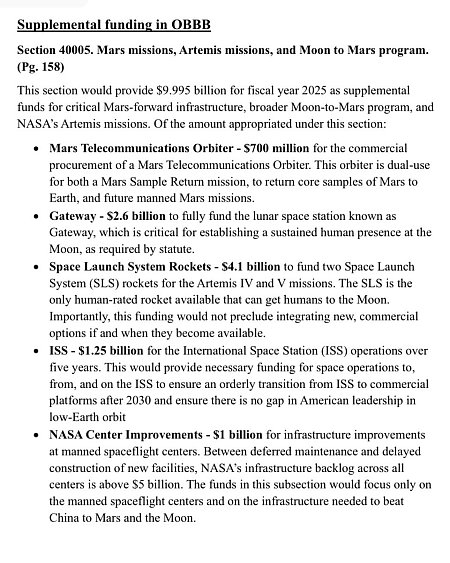
According to a tweet yesterday by Representative Marjorie Taylor Greene (R-Georgia), the reconciliation budget bill that was passed by the Senate included the budget additions that Senator Ted Cruz (R-Texas) had proposed to save SLS, Orion, and Lunar Gateway.

The graphic to the right lists these budget numbers. It is not clear whether the launch taxes on payloads that Cruz proposed were also included, though likely not based on the rules under which the reconciliation bill was passed.

This additional money for these projects contradicts directly the NASA 2026 budget proposal put forth by Trump that aimed to cancel Lunar Gateway and end SLS and Orion after only two more flights. Their existence in this passed Senate bill suggests that Congress is cool with the idea of spending this money and continuing these projects, even though they do nothing but waste taxpayer money and get us no where in space.

It also appears from the language in the graphic that the Senate is eager to also spend more money on NASA’s Mars sample return project, even though NASA itself still has no idea how to accomplish the task.

9 comments

NASA still hoping to save its Lunar Trailblazer mission

Though the odds of success are very dim, NASA has decided to give engineers another few weeks to try to activate its Lunar Trailblazer orbiter, that stopped communicating with Earth the day after it was launched in late February.

NASA has extended recovery efforts of its Lunar Trailblazer spacecraft from mid-June to early July. Updated modeling of the spacecraft’s trajectory by the mission team indicates lighting conditions will continue to be favorable and may provide enough sunlight for the spacecraft’s solar panels to recharge its batteries to an operational state and turn on its radio.

…Should enough sunlight reach Lunar Trailblazer’s solar panels, the batteries may charge to a level that allows the spacecraft’s radio system to boot up. But as Lunar Trailblazer travels farther away, it will soon be too distant to recover because its telecommunications signals to Earth will be too weak for the mission to receive telemetry and command.

The mission team has determined that if they can regain command of the spacecraft, the propulsion system isn’t frozen, and the instruments remain operable, the spacecraft may be able to achieve an elliptical lunar orbit and complete its lunar science objectives.

As I said, the chance of success are not good.

1 comment

NASA sets another new date for Axiom’s Ax-4 commercial manned mission to ISS

NASA today announced a new launch date of June 25, 2025 for Axiom’s Ax-4 commercial manned mission to ISS carrying a three passengers from India, Poland, and Hungary respectively and commanded by former NASA astronaut Peggy Whitson (now working for Axiom).

As with previous announcements, the information provided was sparse:

NASA, Axiom Space, and SpaceX are targeting 2:31 a.m. EDT, Wednesday, June 25, for launch of the fourth private astronaut mission to the International Space Station, Axiom Mission 4.

The mission will lift off from Launch Complex 39A at NASA’s Kennedy Space Center in Florida. The crew will travel to the orbiting laboratory on a new SpaceX Dragon spacecraft after launching on the company’s Falcon 9 rocket. The targeted docking time is approximately 7 a.m. Thursday, June 26. NASA will provide more details and its coverage information shortly.

The launch had previously been delayed several times because NASA and Russia wanted to first assess the repair work on the leaks in the Russian Zvezda module before allowing another docking at the station. No information however has been released so far detailing that assessment. Though there have been indications that the loss of air in ISS was stopped by the repair, neither NASA nor Roscosmos have provided any specific data.

7 comments

Ispace: Resilience’s failure was due to a hardware issue in laser range finder

In a press conference today, officials of the Japanese startup Ispace explained that the failure of its second lunar lander, Resilience, to land softly on the Moon on June 5, 2025 was due to a hardware issue in its laser range finder that prevented it from providing correct altitude data.

At the same time, they have not yet been able to pin down precisely what caused the failure. It could have been because of unexpected degradation during flight, or possibly a technical fault with the range finder in gathering data at the speeds and altitudes experienced.

The company is forming a task force in partnership with Japan’s space agency JAXA as well as NASA to try to figure out the issue. It is also going to add lidar instrumentation to future missions to provide a backup to the laser range finder. These actions will add about $11 million in additional costs, an amount Ispace says it can absorb.

Ispace is building two more lunar landers, one for NASA in partnership with the American company Draper, and the second for JAXA. It appears both missions are still moving forward.

16 comments

Parker completes its 24th close fly-by of the Sun

The Parker Solar Probe has successfully completed its 24th close fly-by of the Sun, the last of its initial primary mission, matching the distance and speed record set during two previous fly-bys.

Parker Solar Probe checked in with mission operators at the Johns Hopkins Applied Physics Laboratory (APL) in Maryland — where it was also designed and built — on Sunday, June 22, reporting that all systems are healthy and operating normally. The spacecraft was out of contact with Earth and operating autonomously during the close approach.

During this flyby, the spacecraft also equaled its record-setting speed of 430,000 miles per hour (687,000 km per hour) — a mark that, like the distance, was set and subsequently matched during close approaches on Dec. 24, 2024, and March 22, 2025.

The data obtained during this fly-by will be beamed back to Earth in the coming months, as Parker moves to the outer part of its orbit, farther from the Sun.

Though this completes the planned orbits of the mission’s primary mission, the proposed Trump budget continues to fund the spacecraft’s operation for the next five years, allowing it to monitor changes in the Sun as it ramps down from solar maximum to solar minimum.

1 comment

Isaacman hints of future space plans

In receiving an award from a space advocacy group on June 21, 2025, billionaire Jared Isaacman hinted that his future space-related plans could include working with science organizations to finance scientific probes.

[Had he become NASA administrator he had wanted] NASA to partner with academic organizations on missions where such organizations would have had a bigger role in funding. “My priorities would have been leadership in space and the orbital economy,” he said, “and trying to introduce a concept where NASA could help enable others to conduct interesting scientific missions, getting academic organizations to contribute.”

That was something he said he might be interested in pursuing outside the agency. “I wouldn’t mind maybe trying to put that to a test and see if you could fund an interesting robotic mission, just to show that it can be done, and try and get some of the top tier academic institutions who want to perform. So that’s on my mind.”

He also indicated that he generally has no problem with the Trump administration’s proposed NASA cuts, noting that such academic organizations need to figure out how to work with less money.

Despite this statement, it appears he is still unsure of what he will do next in space. He has not restarted his Polaris Dawn manned program — suspended when he was nominated to become NASA administrator — and has said that right now he is more focused taking advantage of this unexpected break from work to spend more time with his family.

8 comments

NASA delays Axiom manned mission again

Without providing any specific details, NASA today announced that it has once again scrubbed the June 22, 2025 launch of Axiom’s Ax-4 manned mission to ISS as it assesses the Russian repairs to the air leaks in the Russian Zvezda module.

The space agency needs additional time to continue evaluating International Space Station operations after recent repair work in the aft (back) most segment of the orbital laboratory’s Zvezda service module. Because of the space station’s interconnected and interdependent systems, NASA wants to ensure the station is ready for additional crew members, and the agency is taking the time necessary to review data.

No new launch date has been set. Because the agency provides so little specific information, we don’t know if the air leak repairs are working, are failing, or have indicated even more serious problems that make any station docking a greater risk. Almost certainly, this latter fear is unfounded and the repairs have succeeded in stopping or slowing the loss of air, but the paucity of information from NASA allows for wild speculations. It would be better if the agency told us what it has so far learned, and exactly why that knowledge requires it to extend the data-gathering time period.

1 comment

NASA/Axiom announce another four-day launch delay for Axiom’s fourth manned mission

NASA and Axiom today announced that they have rescheduled the launch of Axiom’s fourth manned mission to ISS, dubbed Ax-4, to June 22, 2025 in order to give Russian and American engineers more time to assess the leak repairs in the station’s Russian Zvezda module.

The press announcement provided little information, simply stating that:

The change in a targeted launch date provides NASA time to continue evaluating space station operations after recent repair work in the aft (back) most segment of the International Space Station’s Zvezda service module.

It would be nice if the agency would release some actual data. Earlier reports had suggested that the repairs had completely sealed the leaks and that the station was no longer losing air. The vagueness of today’s report suggests that the repairs might not have been as successful as hoped. It could also be engineers simply want more data for a longer period to prove the repairs have worked.

The lack of detailed information causes unnecessary speculation.

1 comment

Axiom manned flight to ISS rescheduled; NASA attempts to clarify ISS leak situation

In a NASA update today, it announced a new launch date of June 19, 2025 for Axiom’s fourth manned flight to ISS while also attempting to clarify ISS leak situation that caused this last and more extended delay.

On June 12, NASA and Axiom Space delayed the mission as the agency continued to work with Roscosmos to understand the most recent repair efforts to seal small leaks. The leaks, located in the aft (back) most segment of the International Space Station’s Zvezda service module, have been monitored by flight controllers for the past few years.

Following the most-recent repair, pressure in the transfer tunnel has been stable. Previously, pressure in this area would have dropped. This could indicate the small leaks have been sealed. Teams are also considering the stable pressure could be the result of a small amount of air flowing into the transfer tunnel across the hatch seal from the main part of space station. By changing pressure in the transfer tunnel and monitoring over time, teams are evaluating the condition of the transfer tunnel and the hatch seal between the space station and the back of Zvezda.

It appears, though NASA doesn’t say so directly, that the Russians did not wish to change the situation at ISS with another docking — even if it was a docking on the American half of the station — while it was evaluating these leak repairs. It now appears they have gotten enough data to allow NASA to set a new launch date later this week.

If the repairs have managed to stop the leaks this is excellent news. At the same time, it doesn’t reduce the risks of a catastrophic failure of Zvezda, since the existence of these numerous stress fractures in its hull suggest a chronic long term failure that can only worsen with time.

The sudden delay of Axiom’s AX-4 last week also indicates poor coordination between NASA and Roscosmos. It was as if NASA had no idea the repair work was occurring, either because it wasn’t paying attention to what the Russians were doing or because the Russians had kept this work secret until it was completed. In either case, this is not how such a partnership should operate.

8 comments

Axiom manned mission delayed further because of new Zvezda leaks on ISS

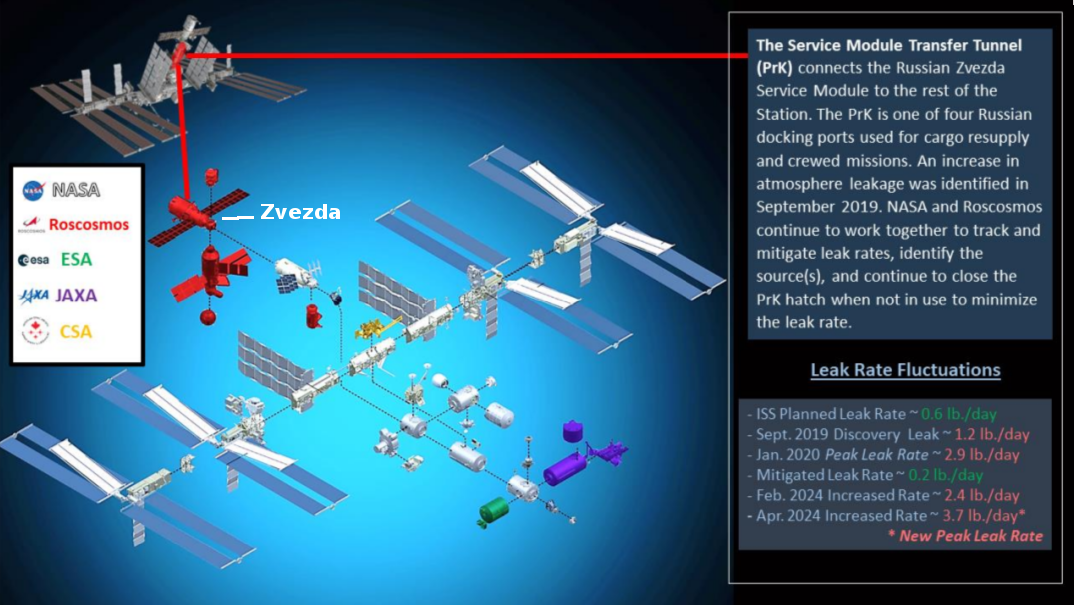
Figure 3 from September Inspector General report
Figure 3 from September Inspector General report, showing Zvezda’s location on ISS.

According to a press update today by NASA, the launch of the commercial Ax-4 manned mission to ISS has been further delayed due to work by the Russians attempting to seal new leaks in the station’s Zvezda module.

NASA and Axiom Space are postponing the launch of Axiom Mission 4 to the International Space Station. As part of an ongoing investigation, NASA is working with Roscosmos to understand a new pressure signature, after the recent post-repair effort in the aft most segment of the International Space Station’s Zvezda service module.

Cosmonauts aboard the space station recently performed inspections of the pressurized module’s interior surfaces, sealed some additional areas of interest, and measured the current leak rate. Following this effort, the segment now is holding pressure.

In other words, the Russians had recently detected an increase in leakage in the module, identified several more cracks inside Zvezda, and have been working to seal them.

The graphic above comes from a 2024 NASA inspector general report, which at that time noted a significant increase in the leak rate in 2024 (see the data in the lower right). Since then it has been NASA policy to close the hatch that connects the American and Russian sections of the station whenever anything docks with Zvezda, due to risk that the docking could cause the module to fail entirely.

Zvezda is one of the oldest modules on ISS, built in the late 1980s and launched in 2000. It is believed the leaks are due to stress fractures in its hull due to the many dockings and undockings that have occurred at its aft docking port.

If the NASA press release can be believed, the situation is under control and the repairs have been successful. If so, expect the Axiom mission to be rescheduled shortly.

If not, we could be witnessing the beginning of the end of ISS, five years earlier than planned by bureaucrats in Washington and Moscow.

5 comments

Axiom charges $70 million per ticket to fly to ISS

Axiom's new module assembly sequence
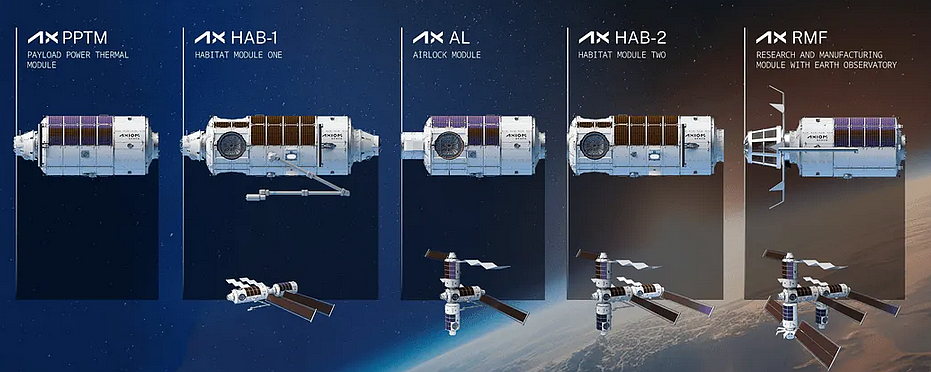
Axiom’s assembly sequence for its planned station, initially attached to ISS but subsequently detached

According to this article today about Axiom’s tourist flights to ISS, the company now charges $70 million per ticket, which means that for the AX-4 flight scheduled for launch tomorrow, the revenues from India, Poland, and Hungary total about $210 million.

That money of course doesn’t all end up in Axiom’s pockets. It has to pay SpaceX for the launch and use of the Dragon capsule. It also has to pay NASA some recently imposed high fees to use its astronaut training facilities as well as lease time on ISS.

All told, I suspect Axiom’s profits for these flights is relatively small. The company however has other reasons to fly these missions. It is attempting to win NASA’s big space station construction contract, and these flights to ISS demonstrate the company’s ability to manage such operations while working with NASA. Of the other three space station projects competing for that contract, only Vast is planning to do the same.

This effort by these two companies is part of the reason I rank them first and second for winning that contract.

  • Haven-1, being built by Vast, with no NASA funds. The company is moving fast, with Haven-1 to launch and be occupied in 2026 for an estimated 30 days total. It hopes this actual hardware and manned mission will put it in the lead to win NASA’s phase 2 contract, from which it will build its much larger mult-module Haven-2 station..
  • Axiom, being built by Axiom, has launched three tourist flights to ISS, with a fourth scheduled for tomorrow, carrying passengers from India, Hungary, and Poland. Though there have been rumors it has cash flow issues, development of its first module has been proceeding more or less as planned.
  • Orbital Reef, being built by a consortium led by Blue Origin and Sierra Space. Overall, Blue Origin has built almost nothing, while Sierra Space has successfully tested its inflatable modules, including a full scale version, and appears ready to start building its module for launch.
  • Starlab, being built by a consortium led by Voyager Space, Airbus, and Northrop Grumman, with an extensive partnership agreement with the European Space Agency. It recently had its station design approved by NASA, but it has built nothing. This might change once it obtains several hundred million dollars from its initial public offering of stock.
3 comments

The Senate, led by Ted Cruz, endorses NASA’s failed SLS, Orion, and Lunar Gateway

Let’s all go bankrupt! A bill introduced today by Ted Cruz (R-Texas), chairman of the Senate Commerce Committee, rejects the Trump budget plan to phase out NASA’s failed SLS, Orion, and Lunar Gateway programs that have cost so far tens of billions for decades without accomplishing anything, and instead expands funding over the next decade to these and many other projects and agencies at NASA.

The bill would allocate $2.6 billion to Lunar Gateway, $4.1 billion to build two more SLS rockets, $20 million to build one more Orion capsule, $1.25 billion more for ISS to continue its operations as is, and $1 billion to upgrade or expand facilities at five NASA centers in Florida, Texas, Mississippi, Alabama, and Louisiana.

This pork-laden bill would also fund a Mars Telecommunications Orbiter for $700 million and add $325 million to the $843 million contract NASA has with SpaceX to build the de-orbit vehicle for bringing ISS down in a controlled manner once it is retired.

What this bill tells us is that these Senators, led by “lying” Ted Cruz (to use the nickname Trump pinned on him during the 2016 presidential election campaign), are still unwilling to face the realities of the national debt, and want to spend money we don’t have in order to make believe they are grand explorers sending Americans into space. Instead, these idiots are simply funneling cash to their states in order to bribe voters to vote for them.

As Elon Musk so correctly noted, there is an election coming in 2026. Maybe it is time to throw them all out.

What this bill also tells us is that Trump is going to find it very difficult to get the budget under control. The Senate doesn’t care if the country goes bankrupt. They intend to spend our money like it grows on trees, to hell with the future. Shame on them.

Sadly, these senators know they have the backing of almost the entire press corp, which is why they are doing this. They figure they will get great press for “saving” NASA, even if it bankrupts the country. Worse, it appears the press is all for helping them do so.

R.I.P. America.

40 comments

Understanding Trump’s proposed NASA cuts, in the larger context of the overall federal budget

U.S. debt as of June 4, 2025
U.S. debt as of June 4, 2025. Click for original.

For my entire life it has always been the same: Whenever any politician or elected official proposes any cuts to the federal budget, and most especially when those cuts are aimed at a popular government agency like NASA, the news reports in the mainstream press are uniformly hostile.

Trump’s proposal to cut NASA’s budget by 24% in 2026 has been no different. Here are just a few headlines:

This list is only a sampling, but they are typical of almost all the reporting now and that always happens when big cuts are proposed in any government program. The spin is always the same: “These cuts are horrible, their acceptance would be the act of a barbarian, and by doing so will certainly cause the fall of civilization!”

Above all, the focus is always on the cuts themselves, and never on the larger picture.

I am not going to do that. I have reviewed in detail the proposed cuts to NASA, and am now going to take a detailed look, but will do so by considering the larger context of the overall federal budget and the need to get its spending under control.

And out of control that budget is, as indicated by the screen capture above of today’s US Debt Clock. The United States is bankrupt. If we don’t gain some control over federal spending in a very near future some very bad things are going to happen, and soon. And those bad things will likely shut down luxury items like NASA entirely, not just impose some cuts to its overall budget.

All Trump is doing is attempting a first stab at this problem. The real question is whether he has made a rational and reasonable attempt, or whether it should be revised in some manner.

This is the perspective I bring to this issue. I just wish others would do the same.
» Read more

41 comments

Axiom’s fourth commercial passenger flight to ISS delayed another two days

NASA, Axiom, and SpaceX yesterday announced that the launch of Axiom’s fourth commercial passenger flight to ISS, dubbed Ax-4, has been delayed two days to June 10, 2025.

NASA, Axiom Space, and SpaceX are targeting no earlier than 8:22 a.m. EDT on Tuesday, June 10, for launch of the fourth private astronaut mission to the International Space Station, Axiom Mission 4. This shift allows teams to account for predicted inclement weather during the SpaceX Falcon 9 rocket and Dragon spacecraft transport in addition to completing final processing of the spacecraft ahead of launch.

The Dragon capsule for this mission is new, and there had been delays in getting it built. Though weather is likely the biggest reason for this delay, it also sounds as if SpaceX has needed just a little bit of extra time to finalize the capsule’s construction.

The mission will fly one Axiom astronaut plus three passengers, each a government astronaut from India, Poland, and Hungary. It will spend about a week docked at ISS.

0 comments

Voyager announces first public stock offering, valued at $1.6 billion

Starlab design in 2025
The Starlab design in 2025. Click
for original image.

The space station startup Voyager Technologies yesterday announced its first public stock offering, with the hope of raising almost $400 million in investment capital.

Underwriters have a 30-day option to purchase up to 1.65 million additional Class A shares, on top of the 11 million initially offered, which are expected to be priced between $26 and $29 each. If fully subscribed at the top end of the range, the IPO could raise as much as $367 million in gross proceeds.

Voyager plans to build the Starlab space station, launched as a single large module by SpaceX’s Starship/Superheavy rocket, but so far has cut no metal, focusing its work entirely on designs. It has also signed deals with several foreign companies in Europe and Japan as well as the European Space Agency, positioning itself as providing the international community a station to replace ISS when it is gone.

At the moment however I rank Starlab fourth among the four commercial space stations under development, mostly because it has built nothing. Hopefully the funds raised by this stock offering will allow it to start some construction work.

  • Haven-1, being built by Vast, with no NASA funds. The company is moving fast, with Haven-1 to launch and be occupied in 2026 for an estimated 30 days total. It hopes this actual hardware and manned mission will put it in the lead to win NASA’s phase 2 contract, from which it will build its much larger mult-module Haven-2 station..
  • Axiom, being built by Axiom, has launched three tourist flights to ISS, with a fourth scheduled for early June, carrying passengers from India, Hungary, and Poland. Though there have been rumors it has cash flow issues, development of its first module has been proceeding more or less as planned.
  • Orbital Reef, being built by a consortium led by Blue Origin and Sierra Space. Overall, Blue Origin has built almost nothing, while Sierra Space has successfully tested its inflatable modules, including a full scale version, and appears ready to start building its module for launch.
  • Starlab, being built by a consortium led by Voyager Space, Airbus, and Northrop Grumman, with an extensive partnership agreement with the European Space Agency. It recently had its station design approved by NASA, but it has built nothing. This might change once it obtains several hundred million dollars from its initial public offering of stock.
0 comments

Trump’s NASA budget cuts and rejection of Jared Isaacman for NASA administrator signal a very bright future for American space

To most Americans interested in space exploration, my headline above must seem extremely counter-intuitive. For decades Americans have seen NASA as our space program, with any cuts at NASA seen as hindering that effort. Similarly, Isaacman, a businessman and private astronaut who has personally paid for two flights in space, had initially been nominated by Trump to become NASA administrator expressly because of that commercial space background. For Trump to reject such a person now seems at the surface incredibly damaging to NASA’s recent effort to work with the private sector.

All of that seems true, but it really is not. Both of these actions by Trump are simply what may be the last acts in the major change that has been engulfing the American space industry now for the past decade.

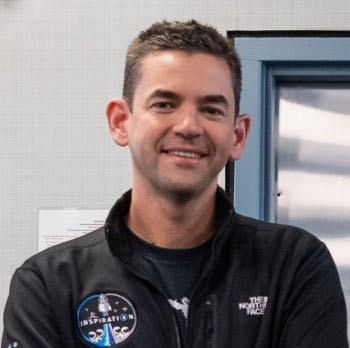
Jared Isaacman

Jared Isaacman during his spacewalk
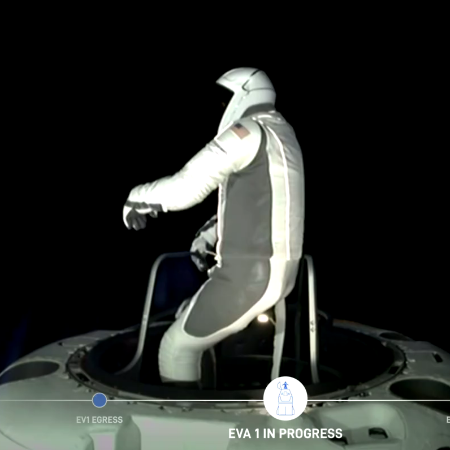
Jared Isaacman during his spacewalk in September 2024

First, let’s consider Isaacman. Before Trump had nominated him for NASA administrator, he had been a free American doing exactly what he wanted to do. As a very wealthy and successful businessman, he had decided to use that wealth to not only fly in space — fulfilling a personal dream — but to also use those flights to raise money for St. Jude’s Children’s hospital, whose work he considered priceless and wanted supported. He ended up flying two space missions, becoming the first private citizen to do a spacewalk, while also raising more than $200 million for St. Jude’s.

Isaacman’s second flight was also the first in what he hoped would be his own long term manned space program, which he dubbed Polaris. The first mission did this spacewalk from a SpaceX capsule. The second would hopefully do a repair mission to Hubble, or if rejected by NASA some other work in orbit. And the third would fly in SpaceX’s Starship around the Moon.

As this program was funded entirely by Isaacman and used no government funds, it was generally free from criticism. If anything, Americans hailed it as ambitious and courageous. He was following his own American dream, and doing it on his own dime.

This history however made him appear on the surface to be a perfect choice for NASA administrator under Trump, especially in a time where America’s space effort is shifting more and more to the private sector.

Everything changed however once Trump nominated him. He had to suspend his private Polaris program. He had to kow-tow to politicians, telling them what they wanted to hear. And he was no longer his own boss.
» Read more

21 comments

Trump is withdrawing Jared Isaacman’s nomination for NASA administrator

Jared Isaacman
Jared Isaacman

According to numerous reports in various news outlets today and first revealed at Semafor, President Trump has informed Jared Isaacman that he is withdrawing his nomination for NASA administrator.

The White House is pulling the nomination of Jared Isaacman to be the next NASA administrator, just days before he was set to receive a confirmation vote in the Senate, according to three people familiar with the matter and confirmed by the administration.

It must be emphasized that many of these stories speculate absurdly about the reasons for this decision, such as the Washington Post suggestion, underlined by conservative reporter Laura Loomer, that it was Isaacman’s links with Elon Musk that caused this decision, implying that Trump as problems with Musk, something that seems blatantly wrong based on Trump’s positive and many public expressions of support for Musk.

The Semafor story however indicated the most likely reason for this decision, by quoting one White House spokeswoman:

“It’s essential that the next leader of NASA is in complete alignment with President Trump’s America First agenda and a replacement will be announced directly by President Trump soon,” said Liz Huston, a spokesperson for the White House.

This statement confirms something I sensed in March, before anyone else. I noted Isaacman’s past support for Democratic Party candidates and his apparent support in his companies for DEI, and wondered if the delay in getting him confirmed was due to headwinds in the White House and Republican Party over these issues. As I noted then:

These facts suggest to me that within both the Trump administration and among Republican in the Senate there are now second thoughts about Isaacman. Trump’s experience in his first administration, with federal appointees constantly sabotaging his efforts behind his back, has made him very determined to only bring people into his second administration he is certain to trust. Isaacman’s long support for the Democratic Party as well as DEI could be the reason the administration is delaying his confirmation.

More recently Isaacman has publicly expressed some concerns about the budget cuts at NASA proposed by the White House. Those tweets could have been the final blow to his nomination.

For Isaacman, this simply means that he can resume his own private Polaris space program, and align it with Musk’s parallel private Starship program to send humans to Mars, with both entirely without any government funding.

49 comments

NASA unwittingly reveals its bankruptcy by its reliance on AI

Uranus as seen by Hubble in 2014 and 2022
Click for original image.

In what appeared to be a totally inexplicable press release today, NASA posted the two pictures of Uranus to the right. The accompanying text was truly puzzling, describing in a somewhat brainless and inaccurate manner what is in the pictures;

Two views of the planet Uranus appear side-by-side for comparison. At the top, left corner of the left image is a two-line label. The top line reads Uranus November 9, 2014. The bottoms line reads HST WFC3/UVIS. At the top, left corner of the right image is the label November 9, 2022. At the left, bottom corner of each image is a small, horizontal, white line. In both panels, over this line is the value 25,400 miles. Below the line is the value 40,800 kilometers. At the top, right corner of the right image are three, colored labels representing the color filters used to make these pictures. Located on three separate lines, these are F467M in blue, F547M in green, and F485M in red. On the bottom, right corner of the right image are compass arrows showing north toward the top and east toward the left. [emphasis mine]

First, the description doesn’t match the pictures precisely, as if whoever wrote it wasn’t looking at these pictures. Second, the description is ridiculously literal, and really provides no information at all. (Consider for example the highlighted sentence. All it is doing is describing a standard scale bar, in the strangest most stupid manner possible.)

I immediately surmised that someone at NASA has decided to use AI to do this work, and AI (in its typical stupid brilliance) provided this worthless text. The unnamed NASA employee — equally as stupid — then posted it without reading it, assuming AI had done his or her job perfectly.

What makes this display of stupidity even worse is that these pictures, and a real press release, were issued back in 2023, when I posted these pictures initially. Does no one at NASA ever bother to read their own press releases?

Apparently not. The advent of AI has now produced human employees at the space agency who read nothing, know nothing, and do nothing. They instead plug stuff into AI and pump it out to the public mindlessly.

No wonder Trump wants to slash NASA’s budget. We certainly ain’t getting our money’s worth from the people that are there.

I also fully expect NASA management to soon deep-six this press release, or to fix it quickly once they read this post.

6 comments

Senate schedules vote for confirming Jared Isaacman as NASA administrator

The Senate is now targeting early June for its vote on Jared Isaacman’s nomination as NASA administrator.

Senate Majority Leader John Thune (R-S.D.) filed cloture on Isaacman’s nomination May 22, a procedural move that would set up a vote on the nomination in early June. The Senate is not in session the week of May 26 because of the Memorial Day holiday.

Since his nomination was approved by the Senate Commerce committee in April, Isaacman has been meeting with many other senators. The article at the link does the typical mainstream press thing of pushing back 100% against the proposed NASA cuts put forth by Trump’s 2026 budget proposal, telling us that these senators were generally opposed to those cuts and questioning Isaacman about them, a claim not yet confirmed. It did note something about those senators and those proposed cuts that if true was very startling and possibly very encouraging.

While many of the proposals in the budget, like winding down SLS and Orion, were expected, the scale of the cuts, including a nearly 25% overall reduction in NASA spending, still took many by surprise. [emphasis mine]

In other words, Congress was not surprised by the proposed end of SLS and Orion. It even appears they are ready to give it their stamp of approval.

None of this is confirmed, so take my speculation with a grain of salt. Still, the winds do appear to be blowing against SLS and Orion.

2 comments
1 9 10 11 12 13 117