China accelerates its schedule for its upcoming Moon/Mars missions while admitting its lunar base will take longer

Phase I of China/Russian Lunar base roadmap
The original phase I plan of Chinese-Russian lunar
base plan, from June 2021.

The new colonial movement: In several different reports today in China’s state-run press — timed to coincide with the launch of three astronauts to Tiangong-3 — Chinese officials confirmed that it has moved up the planned launch dates for both its first lunar rover as well as its Mars sample return mission, and it is also expanding its offers to the international community to partner on those missions.

At the same time it let slip the fact that it will not be establishing its lunar base on the Moon in 2030, as previously claimed. Moreover, note how this so-called accelerated schedule of lunar missions is actually behind the announced timetable outlined by China and Russia in 2021, as shown on the right. None will fly by this year, as promised.

As for the news today, first China announced that its Tianwen-3 Mars sample return mission will launch in 2028.
» Read more

6 comments

A Malaysian state plans spaceport, working in partnership with China

Proposed spaceports in Malaysia

According to an report out of Malaysia yesterday, the Malaysian state of Pahang has initiated a one year study to build a spaceport off its eastern coast near the town of Nensasi, working in partnership with China.

“On April 15, PKNP [Pahang State Development Corporation] signed a letter of intent with China Great Wall Industry Corporation (CGWIC) and Lestari Angkasa Sdn Bhd to establish a strategic collaboration in the space technology sector. “Next month, PKNP and Lestari Angkasa will visit Wenchang Space City in Hainan, China, to hold further discussions on the Pahang International Spaceport project,” he said during the Pahang state assembly session today.

This is the second Malaysian state to propose its own spaceport. In January the eastern state of Sabah began its own study, working in partnership with the Ukraine.

The partnership with China is worrisome for the U.S., as it is very likely that China will arrange use of that spaceport for its own purposes. It will also use its presence there to access and steal any technology brought by other western companies or nations should they launch there as well.

1 comment

China launches three astronauts to Tiangong-3 space station

China today successfully launched a new crew of three astronauts for a six-month mission on its Tiangog-3 space station, its Long March 2F rocket lifting off from its Jiuquan spaceport in northwest China.

The crew’s Shenzhou capsule will dock autonomously with the station later today. This was China’s fifteenth manned mission and ninth to the station, which it has now occupied continuously for more than three and a half years.

The rocket’s core stage and four strap-on boosters crashed somewhere inside China. No word on where or whether they crashed near any habitable areas.

The leaders in the 2025 launch race:

46 SpaceX
21 China
5 Rocket Lab
5 Russia

SpaceX now leads the rest of the world in successful launches, 46 to 36.

0 comments

Rocket startup Astra wins $44 million development contract to build its Rocket-4

Having shut down its smaller Rocket-3 rocket operations and then almost going bankrupt, the startup Astra is apparently coming back from the dead, having won a $44 million military development contract to build its larger Rocket-4 rocket.

Chris Kemp, Astra’s chief executive, said in an interview the company intends to leverage its contract with the Defense Innovation Unit to demonstrate point-to-point delivery of about 1,300 pounds of cargo using Rocket 4. The military for years has expressed interest in using rockets for rapid deployment of critical supplies to remote locations, complementing traditional transportation methods.

The company now claims it will do the first test launch of Rocket-4 in 2026.

When the company’s stock valuation dropped so much in 2022 and was on the verge of shutting down, Kemp and a team of investors purchased that stock and took the company private. Since then it has mostly focused on building attitude thrusters for satellites. Whether this new contract is enough to get this new rocket off the ground remains a big unknown.

1 comment

Trump cuts to NOAA include major shake-up on how it gathers weather data

According to the budget data that was leaked anonymous last week, the Trump administration is proposing a major restructuring of NOAA’s satellite operations, shifting from building geosynchronous weather/climate satellites in partnership with NASA to focusing on buying weather data from commercial smallsats.

The plan would initially reduce NOAA’s program by two-thirds.

The document suggests NOAA’s National Environmental Satellite, Data and Information Service (NESDIS) “immediately cancel all major instrument and spacecraft contracts on the GeoXO program,” saying the projected costs are “unstainable, lack support of Congress, and are out of step with international peers.”

GeoXO is a $19.6 billion program that includes six satellites and ground infrastructure to significantly enhance NOAA’s ability to monitor weather, map lightning, and track ocean and atmospheric conditions over decades. To maintain observations from geostationary orbit at the conclusion of the Geostationary Operational Environmental Satellite (GOES)-R Series, the White House memo calls on NOAA to “immediately institute a major overhaul to lower lifecycle costs by 50 percent” with annual costs below $500 million, while remaining on schedule to launch the first satellite in 2032.

Rather than expanding the geostationary constellation to include satellites over the East, West and Central United States, the proposal includes only East and West satellites like the GOES-R Series. OMB also recommends an immediate end to NOAA relying on NASA to help it acquire weather satellites.

Maybe the most controversial recommendation calls for NOAA to focus on gathering daily weather data while ending its monitoring of long term ocean and atmospheric climate trends.

The shift from NOAA-built satellites to purchasing weather data from commercially launched and built satellites makes great sense, and is the most likely part of this plan to get implemented. Similarly, ending NOAA’s reliance on NASA will help streamline the fat from both agencies.

Whether the Trump administration can force an end to NOAA’s climate gathering operations is less clear. The politics suggest this will be difficult. The realities however suggest that a major house-cleaning in this area is in order, as there is ample evidence that the scientists running this work have been playing games with the data, manipulating it in order to support their theories of human-caused global warming.

9 comments

Africa opens the office building in Egypt of its African Space Agency

Going where no bureaucrat has gone before! Ceremonies on April 20, 2025 in Cairo inaugurated the opening of the headquarters in Egypt of the African Space Agency.

Badr Abdelatty, Egypt’s Minister of Foreign Affairs and Immigration, participated in the official inauguration. The ceremony was attended by several high-ranking officials and dignitaries, including Dr. Ayman Ashour, Minister of Higher Education and Scientific Research; Dr. Sherif Sedky, CEO of the Egyptian Space Agency; Moses Vilakati, African Union Commissioner for Agriculture, Rural Development, Blue Economy, and Environmental Sustainability; and Dr. Tidiane Ouattara, Chair of the African Space Agency Council. Also in attendance were heads and representatives of African and international space agencies, along with ambassadors from African nations and partner countries of the African Union.

…Minister Abdelatty underlined that the African Space Agency will act as a platform to deepen cooperation among African nations in the peaceful uses of space, promote knowledge exchange, and build technical capacities. Additionally, it will work to unify African positions in international forums, especially within the United Nations system. He also stressed the importance of collaboration with academic institutions, research centers, and global space agencies, which will help establish a robust African presence in space science and technology.

While these officials also claimed the agency will foster cooperation across Africa’s space industries and governments, the quote reveals its main focus, acting as a jobs program for the political hacks who have done favors for the various leaders of African countries. This is not to say it won’t help encourage some space development (it will), but we must recognize that this agency has little to do with fostering private enterprise.

2 comments

Rocket Lab gets two big military contracts, from the Space Force and the UK

Due to its success in quickly redesigning the first stage of its Electron rocket into a hypersonic test vehicle dubbed HASTE, Rocket Lab has now won two very large hypersonic test program contracts from both the American Space Force as well as the United Kingdom.

Rocket Lab has been selected by the U.S. Air Force to participate within its Enterprise-Wide Agile Acquisition Contract (EWAAC), a $46 billion indefinite delivery-indefinite quantity (IDIQ) contract designed for the rapid acquisition of innovative technologies, engineering services, and technical solutions that develops the Air Force’s new capabilities. The program has a contracting period through to 2031 and is designed to be broad in scope, flexible in funding, and agile for maximum use to enable the Air Force to quickly procure services and technologies across various domains.

Further, Rocket Lab has also been selected by the United Kingdom’s Ministry of Defence (UK MOD) for its Hypersonic Technologies & Capability Development Framework (HTCDF), a ~$1.3 billion (£1 billion) framework to rapidly develop advanced hypersonic capabilities for the United Kingdom. As a newly-selected supplier to the HTCDF, Rocket Lab is now eligible to bid to provide services, technologies, and testing capabilities that support the UK’s development of sovereign hypersonic technology.

In both cases Rocket Lab will bid for test contracts using HASTE.

These deals indicate that Rocket Lab has essentially grabbed the business that Stratolaunch had been vying for with its giant Roc airplane and Talon test drop vehicles. Stratolaunch might get some contracts, but it appears the bulk of the work will instead go to Rocket Lab. It also appears that Stratolaunch has also been beaten to this business by the startup Varda, which has also won an Air Force contract for hypersonic testing using its orbital capsules during their return to Earth.

0 comments

India’s Spadex mission completes second autonomous docking

According to one government official, India’s space agency ISRO has now successfully completed a second autonomous docking in orbit using the target and chase spacecraft of its Spadex mission, launched in December 2024.

Between the undocking on March 13 and the second docking operation, Isro had carried out a “rolling” or “rotating” experiment — in late March. … At the time, Narayanan [ISRO chairman], while confirming the success of the operation, had said that more experiments were in store. … “…The satellites have a lot of propellant… I have only told [the teams] one thing, please do everything [on] simulation on ground [first]. Let us be very careful. Let us not make any mistakes as a wealth of data can be generated [through various experiments].”

The rolling experiment, which was likened to the Chandrayaan-3 “hop” experiment the space agency conducted on Moon in terms of learning it provides for future missions, helped Isro validate multiple softwares, ground station control and more.

This second docking further confirms the technology and the ability of ISRO’s engineers to perform it. Originally the plan had been to do only one docking. The two spacecraft were to then undock and go their separate ways, doing other orbital research. Narayanan changed that plan, since this technology is essential for India’s planned space station. The focus is now on multiple test dockings, in a variety of configurations, with more to come.

0 comments

Soyuz safely returns three astronauts from ISS

A Russian Soyuz capsule successfully landed in Kazakhstan this morning, bring two Russians and one American back to Earth after a seven month mission to ISS.

The American on board, Don Petit, also celebrated his 70th birthday today, completing his fourth mission in space. According to the article at the link, he did not do well upon landing, requiring significant aid to exit the capsule. The picture released by NASA of him being carried to the medical tent shows him smiling with a thumbs up, but he is clearly unable to walk at this point on his own. That fact by itself is not significant, because many astronauts after missions lasting longer than six months need aid upon return. It does indicate however that this flight is almost certainly Petit’s last one. As that NASA release it notes he “is doing well and in the range of what is expected for him following return to Earth.”

4 comments

China launches six technology test satellites

China today successfully placed a set of six technology test satellites into orbit, its Long March 6 rocket lifting off from its Taiyuan spaceport in northeast China.

No word on where the rocket’s lower stages and four strap-on boosters crashed inside China. Furthermore, the upper stage of the Long March 6 rocket, which reaches orbit, has a history of breaking up and creating clouds of space junk. We have no assurance from China whether they have fixed this issue.

The leaders in the 2025 launch race:

43 SpaceX
20 China
5 Rocket Lab
5 Russia

SpaceX still leads the rest of the world in successful launches, 43 to 35. (Note: this last number is corrected from the previous update, which was one number short.)

2 comments

Two different states in India announce space policies

Map of India

Capitalism in space: In another indication that India’s governments are going full bore for private enterprise in space, two different Indian states this week announced new space policies designed to attract private investment and space startups.

Those two states, Tamil Nadu and Gujarat, are shown on the map to the right. Tamil Nadu announced its new space industrial policy hopes to attract more than a billion dollars in space companies to the state. Gujaret in turn announced its own space policy aimed at attracting $5 billion in investment and 25,000 jobs over the next five years.

It is not surprising that Tamil Nadu has issued this policy, considering that it is the state where India’s new second spaceport, Kulasekarapattinam, is located, and is being built as a launch site for commerical operations. Gujaret is at first glance less obvious, but it houses a major facility of India’s space agency ISRO. It is also one of India’s most industrialized states.

Both however illustrate the impact of the Modi government because of its policy to encourage private enterprise and de-emphasize government control. Not only is the federal government pushing capitalism, the country’s individual states are joining in.

4 comments

NASA’s useless safety panel suddenly notices that there are leaks on ISS

My regular readers will know that I consider NASA’s Aerospace Safety Advisory Panel (ASAP) to be less than useless, repeatedly showing strong biases that allow it to miss major safety issues while causing headaches where no safety problems exist. Those biases consistently favor NASA and the older big space companies while attacking the new space companies like SpaceX.

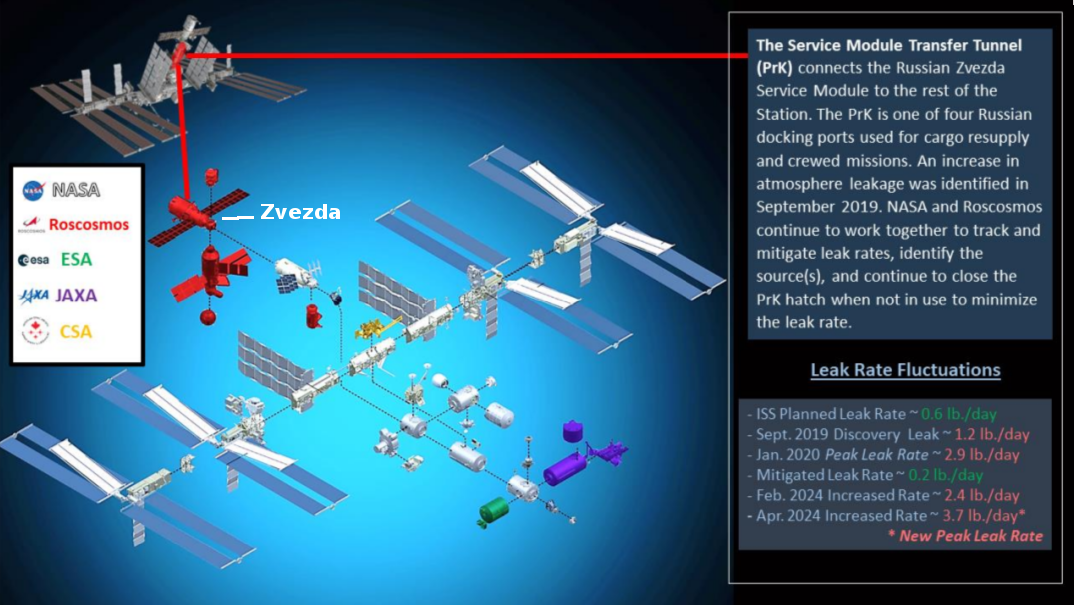
This week the panel held its quarterly public meeting, and illustrated their uselessness and bias once again. Suddenly they have noticed that ISS has a serious chronic air leak problem due to the stress fractures in the Russian Zvezda module. They also came to the brilliant discovery that ISS is big, and that its de-orbit will have to be done carefully.

Oh my! Will wonders never cease!? These facts have only been documented at length and frequently by numerous inspector general reports and NASA updates over the past half decade. NASA has in fact contracted SpaceX to build a specialized de-orbit spacecraft, larger than a Dragon capsule, to dock with the station and conduct the de-orbit.

NASA didn’t need this safety panel to tell it the obvious.

Meanwhile, the panel suddenly decided it must chime in on budget issues and the possibility of there being major cuts at NASA, something that is entirely outside its area of responsibility. And to no one’s surprise it announced that budget cuts are bad!

Nor did the panelists see any safety issues with putting astronauts in an Orion capsule and flying them around the Moon on the next Artemis launch, even though NASA and its inspector general have both determined that the capsule’s heat shield is unreliable. The panel also had no problem with flying humans in this capsule the very first time its environmental system is tested.

To these political hacks, they see “we see no showstoppers at this time” for this SLS/Orion manned mission.

Instead, as always, the panel focused its criticism and concerns on SpaceX and Starship, labeling its development “the biggest risk” in NASA’s program to get Americans back to the Moon.

The most hilarious aspect of the panelists’ public comments is that they had nothing to say about Boeing’s Starliner, a pattern the panel has followed since Boeing and SpaceX got contracts a decade ago to transport astronauts to and from ISS. Consistently the panel has seen phantom safety risks with SpaceX — where none existed — while ignoring or completely missing Boeing myriad failures. That pattern continues.

NASA does face budget cuts. It would certainly help the agency if every dime wasted on this panel could be funneled into more useful purposes.

11 comments
1 64 65 66 67 68 838