A review of India’s government space program suggests it is behind schedule

India's space agency ISRO, as transparent as mud
India’s space agency ISRO.

Link here. The main take-away of the article is that the investigation into the two launch failures of ISRO’s PSLV rocket has stalled everything, including the planned two unmanned orbital test missions of its Gaganyaan capsule, needed before the actual manned mission can fly in early 2027. The first was originally supposed to fly in March, but has been delayed pending completion of the investigation of the PSLV failures.

That investigation however has stalled far more than just Gaganyaan:

The Indian Space Research Organisation (Isro), which had announced an aggressive manifest of 18 launches for 2026, has so far completed only one in the first four months of the year, and that mission [PSLV] ended in failure.

The article also notes a decline in ISRO’S transparency in recent months, a decline that bodes ill for the agency and its programs. I have noted this as well. When ISRO in February 2026 announced the next PSLV launch for this coming June, it released no information from its investigation of the previous two launch failures. If ISRO knows what went wrong, it wasn’t saying. All it has told us so far is that the cause of the two launch failures was for different reasons.

1 comment

A very interesting and revealing interview of NASA administrator Jared Issacman

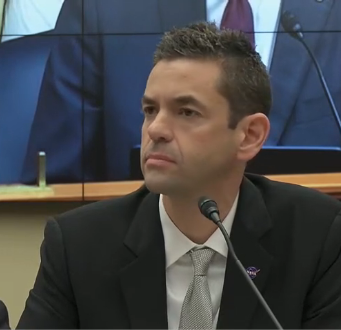
Jared Isaacman
NASA administrator Jared Isaacman

Link here. I found this interview with NASA administrator Jared Issacman to be very informative and worth reading, especially in regards to his comments on the proposed cuts to NASA’s budget.

First, he admits right off the bat that the heat shield was his biggest concern during the Artemis-2 mission. He also took a swipe at past NASA management over this issue. After noting that the initial inspection of the Artemis-2 shield after recovery showed it experienced little serious damage, he added this: “All that aside, if you’re going to wait three and a half years between missions, just replace the heat shield.” In other words, after Artemis-1 NASA management dithered when it saw the damaged heat shield. It should have immediately moved to replace it.

As for the proposed Trump budget cuts and the opposition to those cuts by many in Congress, Issacman said this:

There’s a lot of passionate people out here [referring I think to the space industry and its advocates]. They can do incredible things, from a scientific perspective. I don’t know how many of them have ever pulled together a financial model, and driven execution on some of these things to say what should or shouldn’t be the right budget.

Now, all that said, of course, we will maximize every dollar that Congress affords to the agency. But it is not healthy, for the agency, to get in this mindset that we have to spend our way out of every problem. And I don’t think it’s good for the country to think we have to print our way out of every problem. [emphasis mine]

This is not the first time Isaacman has indicated he thinks NASA can survive these cuts, and in fact can do as well if not better by using what it gets more wisely. It is however the first time he has put NASA’s budget in the context of the entire federal budget, which is badly out of control. Isaacman does not want more money from Congress because he thinks it is bad for the nation to spend itself into debt. He thinks he has enough to do the job.

The entire interview is worth reading. It indicates a very practical and honest mindset. Everyone might not agree with every proposal Isaacman has put forth, but he is clearly approaching things from a very good place.

31 comments

Three launches today, two by SpaceX and one by China

The launch beat goes on! First, China launched eight satellites using its Kinetic-1 (Lijian-1) rocket, lifting off from its Jiuquan spaceport in northwest China. China’s state-run press provide no further information about the satellites, nor did it provide information about where the rocket’s lower stages crashed inside China.

Next, SpaceX completed two Starlink launches on opposite coasts. First it placed 29 Starlink satellites in orbit, its Falcon 9 rocket lifting off from Cape Canaveral Space Force Station in Florida. The first stage completed its 26th flight, 42 days after its previous flight, landing on a drone ship in the Atlantic.

The company then did its second launch of the day, placing 25 Starlink satellites into orbit, its Falcon 9 rocket lifting off from Vandenberg Space Force Base in California. The first stage completed its 21st flight, 45 days after its previous flight and landing on a drone ship in the Pacific.

The leaders in the 2026 launch race:

46 SpaceX
20 China
5 Rocket Lab
5 Russia

For the third straight year SpaceX continues to lead the entire world combined in total launches, 46 to 35.

2 comments

Space Force selects Blue Origin as possible lessor of “Sudden Flats” site at Vandenberg for future heavy lift rocket launches

Vandenberg Space Force Base

The Space Force has chosen Blue Origin to help develop the plans and possibly lease the “Sudden Flats” site — also dubbed Space Launch Complex-14 (SLC-14) — at Vandenberg Space Force Base in California for the launch of heavy lift commercial rockets.

The location is shown in the map to the right. The Space Force had requested proposals for developing the site in December 2025.

Respondents were evaluated based on technical capability, financial maturity and alignment with U.S. government requirements. The selection of Blue Origin reflects their ability to meet these criteria and contribute to the development of heavy or super-heavy launch capabilities at Vandenberg Space Force Base.

SLC-14 is considered the most viable site at [Vandenberg] for heavy and super-heavy launch operations due to its location.

Several crucial milestones must be achieved before any construction or launch activities can commence, to include safety assessments and an environmental impact analysis. The timeline for increased launch activity will depend on the completion of the safety and environmental analysis and subsequent infrastructure development.

I suspect that Blue Origin won this bid because SpaceX didn’t offer a proposal. It already has three launch sites for Starship/Superheavy, and probably decided it didn’t need this site.

Blue Origin meanwhile in November 2025 announced planned upgrades to its New Glenn rocket that would make it as powerful as NASA’s SLS rocket, but much cheaper because its first stage is reusable. The company is likely hoping to build that rocket, dubbed New Glenn 9×4 (based on the number of engines on the first and second stages respectively), and launch it from this site.

12 comments

Orion survives re-entry, crew splashes down safe

Orion just after main parachute deployment

Orion successfully survived re-entry tonight with its questionable heat shield, with the capsule splashing down off the coast of California at 8:07 pm (Eastern).

All four astronauts are healthy and safe. As of posting they were still in the capsule, floating on the ocean, with recovery crews on their way to it. [Update: those recovery crews, six boats with more than 40 people, are taking an ungodly amount of time to latch onto the capsule and begin recovery. Over an hour after splashdown the crew is still in the capsule.]

The Artemis-2 mission is now over, though the final condition of that heat shield still needs to be analyzed. In addition, engineers need figure out how to fix a bunch of other issues that took place during the mission:

  • A leak in an internal helium tank on Europe’s service module
  • Communication drop-outs several times
  • the endless issues with Orion’s toilet

There were other minor issues that cropped up repeatedly, none significant but all of which should be fixed. And though it will be helpful to determine how this heat shield performed, it should be noted that the data is essentially irrelevant to future missions. The next mission, Artemis-3, will use a completely different design, and test it for the first time on a manned flight. That flight however will be in Earth orbit, so the stress on the shield will be far less than this return, even with the changed re-entry path.

Though many will call this lunar fly-by “historic,” it will likely be little remembered by future generations. It did little to move the settlement of the solar system forward. No truly useful engineering was tested. The rocket and capsule are engineering dead-ends. Neither will be of much use for establishing colonies on the Moon or Mars, as SLS is still too expensive and too difficult to stack and launch and Orion is too small for any interplanetary missions, being nothing more than an overweight and very expensive ascent/descent capsule.

The only plus of this mission is that it will likely give NASA’s administrator, Jared Isaacman, the political clout to institute major changes in the entire Artemis program, changes that could make the American colonization of the solar system more likely. There are strong indications that he wants to make better use of the private sector.

And that private sector is poised to bypass NASA, regardless of what NASA wants or tries to do, with capabilities far better then anything we have seen since the Apollo program.

56 comments

Orion’s risky return-to-Earth happens tonight at 8:07 pm (Eastern)

The Earth as seen by the Artemis-2 astronauts, from behind the Moon
The Earth and Moon during the lunar fly-by on April 6, 2026.
Click for original image.

After spending ten days in space, including a swing around the back of the Moon, the four-person Artemis-2 crew is now preparing for its return-to-Earth this evening, splashing down off the Pacific coast near San Diego.

At 10:53 p.m. EDT [last night], the Orion spacecraft ignited its thrusters for 9 seconds, producing an acceleration in velocity of 5.3 feet-per-second and pushing the Artemis II crew toward Earth. The crew is now more than halfway home.

About two hours before the burn, there was an unexpected return link loss of signal during a data rate change affecting the transmission of communications and telemetry from the spacecraft to the ground. Two-way communications were reestablished, and flight controllers resumed preparing for the upcoming burn with the crew shortly after.

…The third return trajectory correction burn is scheduled for April 10 at about 1:53 p.m. ahead of re-entry procedures.

This is I think the second time Orion has had a short loss of communications with ground control. In addition, the crew had to cancel a planned manual piloting demonstration of Orion while it flew past the Moon because of a leak in an internal helium tank, used to maintain pressure in the oxygen tank as the propellant is used. The leak was inside the European-built service module, which will be jettisoned before re-entry and burn up in the atmosphere.

Mission managers say this leak has not impacted any engine burns, but it will require attention before the next flight.

The return to Earth however carries the biggest risk of the entire mission. Orion’s heat shield is questionable. During its first use in the 2022 unmanned Artemis-1 flight around the Moon, it did not behave as expected, with large chunks breaking off instead of thin layers ablating away. Though mission engineers have adjusted the flight path through the atmosphere to mitigate stress, there is great uncertainty about that solution.

I have embedded NASA’s live stream of the return-to-Earth below. It begins at 6:30 pm (Eastern), though the first return event, jettison the service module, doesn’t occur until 7:33 pm (Eastern).
» Read more

21 comments

India conducts another parachute drop test for its Gaganyaan manned capsule

Gaganyaan drop test
Click to watch video of drop test.

India’s space agency ISRO today successfully completed its second helicopter drop test of a dummy capsule, testing the parachute release system that its Gaganyaan manned capsule will use on return to Earth.

In this test, a simulated Crew Module, weighing about 5.7 tonnes, that is equivalent to the mass of the Crew Module in the first uncrewed Gaganyaan mission (G1), was lifted by an Indian Air Force Chinook helicopter to an altitude of about 3km and released over a designated drop zone in sea, near to Sriharikota coast.

Ten parachutes of four types were deployed in a precise sequence during the descent of the Crew Module, gradually reducing the velocity for safe touchdown. Subsequently, the simulated Crew Module was successfully recovered in coordination with Indian Navy. The IADT-02 test validated the parachute-based deceleration systems in the Crew Module.

The manned mission is presently scheduled for early next year, after a series of unmanned orbital test flights are completed in ’26. This schedule is significantly later than ISRO’s original schedule. When the program was first proposed in 2018, ISRO said the manned mission would happen in 2022.

4 comments

China launches another set of satellites for its Guowang internet constellation

China yesterday successfully completed the 21st launch for its Guowang (Satnet) internet satellite constellation, its Long March 6A rocket lifting off from its Taiyuan spaceport in northeast China.

Though China’s state-run press provided no information on the number of satellites in the payload, all previous launches using the Long March 6A had carried five satellites. If so, that would mean the constellation now has 164 satellites in orbit, out of a planned 13,000. This fits with the information in the article at the link, which states the constellation now has “nearly 170 satellites” in orbit.

China’s state-controlled press also made no mention about where the rocket’s core stage (using very toxic hypergolic fuels) and its four solid-fueled strap-on boosters crashed inside China.

Another launch attempt today by the German rocket startup Isar Aerospace was scrubbed due to “a leak in a composite overwrapped pressure vessel (COPV).” COPV tanks are used inside the main tanks. As the propellant in that main tank is used, the COPV releases helium to maintain the tank’s pressure. No new launch date has been announced.

The leaders in the 2026 launch race:

42 SpaceX
18 China
5 Rocket Lab
4 Russia

For the third straight year SpaceX continues to lead the entire world combined in total launches, 42 to 32. It has another Starlink launch scheduled for this evening.

1 comment

European Union to restructure its space bureaucracy

The European Union
This label would be more accurate if it read
“NOT made in the European Union”

The European Commission of the European Union (EU) announced earlier this week that it is renaming its “European Union Agency for the Space Programme” to the “European Union Space Services Agency (EUSPA)”, with the new agency aimed at running the EU’s various satellite projects, including its Galileo GPS-type constellation, its proposed communications constellations, and its various European security satellite projects.

The proposed regulatory document can be read here [pdf]. More details can be found here:

In the text of the draft regulation, the Commission says the agency is expected to play a crucial role in implementing Union space systems and wider space policy from 2028 to 2034 as part of the European Competitiveness Fund. That places the agency firmly inside the next generation of EU planning for satellite navigation, Earth observation, secure connectivity, space situational awareness and related civil and defence applications.

One of the clearest elements in the proposal is the agency’s planned renaming. The draft regulation states that the current European Union Agency for the Space Programme would become the European Union Space Services Agency. The Commission says this is meant to reflect more accurately the body’s current and future role as an operational actor supporting the delivery of Union space systems rather than simply administering a programme framework. That change in title is therefore intended to signal a broader institutional shift rather than a cosmetic rebranding.

The language above as well as the actual regulation itself I think illustrates well why the European Union is increasingly falling behind the rest of the world in space. The wording is obtuse, complex, and jargon-filled, often aimed at making things seem more significant than they really are.

The number of different bureaucracies involved is also a bad sign. On top is the EU. Under that is the European Commission. Below that is this new agency EUSPA. On the side is the European Space Agency, which though it will have a representative at all EUSPA meetings the division of responsibilities between it and EUSPA is very unclear.

All told, everything about this document and the government bureaucracies involved seems designed to do things slowly and in a manner guaranteed to cost more.

No wonder many member nations of the EU and ESA have decided to go their own way, even as they politely maintain membership in these organizations. Germany, France, Spain, and Italy are all now pushing the development of new commercial independent space companies within their borders, all attempting to launch similar space assets, but with the ability to eventually do it faster and cheaper.

I would expect those new private companies will soon eclipse anything proposed by EUSPA in the coming decade.

5 comments

ESA paid Arianespace about $96 million for an Ariane-6 launch

According to a story today on European Spaceflight, the European Space Agency (ESA) paid its commercial division Arianespace €82 million [about $96 million] for its Ariane-6 launch in November 2025 of ESA’s Earth observation Sentinel-1D satellite.

The European Space Agency has disclosed that launching the Sentinel-1D Earth observation satellite aboard an Ariane 62 rocket in November 2025 cost €82,070,773. As part of its involvement in the development of the European Union’s Copernicus Earth observation satellite constellation, ESA is responsible for placing contracts with European industry for the development, launch, and operation of satellites. As part of this responsibility, the agency publishes an annual list of all contracts awarded with a value of more than €15,000. In 2025, this included the disclosure of the cost of launching Sentinel-1D aboard an Ariane 6 rocket in its two-booster variant [dubbed Ariane-62].

This is the first time ESA or Arianespace have revealed any price figures for using Ariane-6, and shows that Arianespace is attempting to price Ariane-6 competitively with SpaceX’s Falcon 9 rocket. The article notes that SpaceX charged ESA about $90 million for an earlier Sentinel launch.

Because Falcon 9 is mostly reusable, SpaceX’s profit margin is far higher than Arianespace’s. Ariane-6 is expendable, and thus costs more. Thus, if necessary SpaceX could significantly lower its price, but hasn’t because it hasn’t yet felt any competitive pressure to do so. When the new reusable rockets from Stoke Space and Rocket Lab begin launching sometime this year, then launch prices will drop considerably, and Ariane-6 will find itself very over-priced, with no way to lower its cost enough to compete.

3 comments

Saxavord spaceport lost about $7 million in both ’23 and ’24; Andoya launch scheduled for today

Proposed or active spaceports in North Europe

According to a report in the Times of London yesterday, the Saxavord spaceport on the Shetland Islands lost about $7 million in both ’23 and ’24.

Annual accounts for Shetland Space Centre, the SaxaVord operating company, show a near 32 per cent rise in revenue to £2.5 million for 2024. The document, recently lodged at Companies House, shows a £5.4 million [$7.25 million] pre-tax loss, compared to £5.1 million [$6.85 million] in 2023.

The spaceport is controlled by billionaire Anders Holch Povlsen, who had been instrumental in using the courts to block launches from the other proposed spaceport in Sutherland, Scotland. Saxavord meanwhile was first proposed about four years ago, but it has also not yet had its first launch. In both cases, the major obstacle has been the United Kingdom’s regulatory bureaucracy run by its Civil Aviation Authority, which has taken years to issue permits and licenses. Those delays have bankrupted two rocket companies, Virgin Orbit and Orbex, because they were unable to launch as scheduled.

Saxavord hopes its first launch will occur later this year, from the German rocket startup Rocket Factory Augsburg. That company had hoped to launch in 2024 — after more than a year delay due to red tape — but an explosion during the final static fire test of the first stage ended those plans.

Meanwhile, the first orbital launch from Norway’s Andoya spaceport is now expected later today by the German rocket startup Isar Aerospace. This will be the second launch of its Spectrum rocket, the first failing just after lift-off in 2025. This second attempt had been scrubbed in January and March, and is now scheduled for 1 pm (Pacific) today. I have embedded its live stream below.
» Read more

1 comment

Russia’s latest plans for its post-ISS space station

The present Russian plans to transition from ISS to its Russian Orbital Station
Click for full resolution image.

Anatoly Zak yesterday posted the picture to the right, showing a presentation by Russian officials of Roscosmos’ latest plans for its transition from ISS to their own Russian Orbital Station (ROS). Though it is in Russian, I think I can glean from it some significant take-aways about Russia’s future space plans.

First, if these plans proceed as planned (doubtful based on Russia’s track record in the past three decades), at some point in the next four years they will attach a new module to ISS, docking with the Prichal docking hub, launched in 2021. Then in 2030 they will undock this new module as well as Prichal and the Nauka module, which also launched in 2021, and use these three modules as the core of their new station.

That 2030 date is significant, as it is an admission by Russia that it intends to stay with ISS until then. Up till now Roscosmos has only committed to ISS through 2028, even though NASA and its partners at ESA and Japan have set 2030 as ISS’s present retirement date.

Second, they plan to add more modules to this core station, beginning in 2031, and by 2034 to have completed a four-module cross-shaped station with Prichal as the central hub. That completion date is one year later than the timeline Russia announced in 2024, when it claimed ROS would be completed in 2033. That 2024 timeline also said ROS’s first module would be launched in 2027, but the graphic to the right no longer gives any date for that launch. I suspect 2027 is extremely unlikely.

Finally, don’t expect the new modules promised in the 2031-2034 timeframe to launch on schedule either. As I note above, all Russian space projects in this century have routinely been delayed repeatedly, with most never launching at all.

This plan also makes no mention of an agreement with India in December 2025 to coordinate the construction of its station with Russia’s, flying both in the same inclination presently used by ISS. This is not really a surprise, as both projects will operate independently, so that delays in one do not impact the other.

Hat tip BtB’s stringer Jay.

1 comment
1 6 7 8 9 10 838