Chang’e-5 sample return capsule successfully recovered in China

The new colonial movement: The sample return capsule for China’s Chang’e-5 mission, the first to bring lunar samples back to Earth since 1976, has been successfully recovered in the inner Mongolia region of China today.

Chinese officials confirmed the roughly 660-pound (300-kilogram) capsule landed at 12:59 p.m. EST (1759 GMT) Wednesday, or 1:59 a.m. Thursday in Beijing.

Recovery crews dispatched to the remote landing zone converged on the capsule in helicopters and off-road vehicles, traveling across the snow-covered plains of Inner Mongolia in the middle of the night. Ground teams reached the Chang’e 5 return module within minutes to begin operations to secure the capsule, and planted a Chinese flag in the frozen soil next the spacecraft.

Crews plan to transport the module to Beijing, where scientists will open the sample carrier and begin analyzing the moon rocks.

For China this success is a major milestone for its government-run space program. They have demonstrated superb technical capabilities that will serve them on many more future missions. They have also signaled to the world and the U.S. that they mean business in space, and that their published plans to build colonies on the Moon are serious. They have also made it clear that they will enforce control over any territory they occupy, notwithstanding the rules of the Outer Space Treaty. Any American government that makes light of these facts and refuses to aggressively compete with China is going to quickly discover it shut out of the most valuable locations on the Moon.
0 comments

InSight: Mars’ crust is thin, and its interior is many layered with a molten core

Scientists yesterday released results from the seismometer on the Mars InSight lander that suggest that the crust of the red planet is thin and that its interior is many layered with a molten core.

[T]wo moderate quakes, at magnitude 3.7 and 3.3, have been treasure troves for the mission. Traced to Cerberus Fossae, deep fissures in the crust 1600 kilometers east of the landing site that were suspected of being seismically active, the quakes sent a one-two punch of compressive pressure (P) waves, followed by sidewinding shear (S) waves, barreling toward the lander. Some of the waves were confined to the crust; others reflected off the top of the mantle. Offsets in the travel times of the P and S waves hint at the thickness of the crust and suggest distinct layers within it, Brigitte Knapmeyer-Endrun, a seismologist at the University of Cologne, said in an AGU presentation. The top layer may reflect material ground up in the planet’s first billion years, a period of intense asteroid bombardment, says Steven Hauck, a planetary scientist at Case Western Reserve University.

At 20 or 37 kilometers thick, depending on whether the reflections accurately trace the top of the mantle, the martian crust appears to be thinner than Earth’s continental crust—a surprise. Researchers had thought that Mars, a smaller planet with less internal heat, would have built up a thicker crust, with heat escaping through limited conduction and bouts of volcanism. (Though Mars is volcanically dead today, giant volcanoes dot its surface.) A thin crust, however, might mean Mars was losing heat efficiently, recycling its early crust, rather than just building it up, perhaps through a rudimentary form of plate tectonics, Mojzsis says.

The thin crust provides a solid basis for explaining the large volcanoes and vast lava plains on the planet. Combined with the light gravity, magma would have found an easier path to the surface. Handed this knowledge, planetary geologists can now make a first stab at outlining more precisely the planet’s early volcanic history.

4 comments

SpinLaunch expands operations at Spaceport America in NM

Capitalism in space: SpinLaunch, the private launch startup that proposes to fling payloads into orbit rather than launch them in a rocket, has announced that it will be expanding its operations at Spaceport America in New Mexico.

The company already built a $7 million, 10,000-square-foot facility at the Spaceport after announcing plans last year to conduct all testing there on its new technology. Now, the company is doubling down, with plans to hire an additional 59 people and invest another $46 million over 10 years. The state Economic Development Department will support the expansion with $4 million in Local Economic Development Act funding, said EDD Secretary Alicia J. Keyes.

…Under its expansion, the company plans to actually build the centrifuge launch system at the spaceport, with test launches to start next year. “We expect by next summer to begin flight test operations at the spaceport, and we expect to continue to test new flight designs there for the foreseeable future,” Yaney told the Journal. “We see it as a permanent facility for us.”

The idea is fascinating, but I have some doubts. First, the accelerations will be so high that it might limit the company’s customer base, since many satellites will likely not be able to withstand those forces.

If it works, however, the company will have found a truly clever way to eliminate entirely the need for a first stage, and maybe even the second stage.

7 comments

ESA funds ArianeGroup prototype vertical landing hopper

The European Space Agency (ESA) has now committed 33 million euros for ArianeGroup to develop a prototype vertical landing hopper dubbed Themis that would begin testing first stage landings by ’23.

ArianeGroup and its collaborators in Belgium, Switzerland, France and Sweden offer critical technical knowhow gained through the development of Europe’s next-generation engine – Prometheus – which will power Themis.

ESA’s Prometheus is a highly versatile engine capable of providing 1000 kN of variable thrust and is reignitable which makes it suitable for core, booster and upper stage application. An onboard computer handles engine management and monitoring in real time – a crucial feature for reusability.

ArianeGroup is the private consortium led by Airbus and Safran that is building Ariane 6. This deal suggests that ESA amd ArianeGroup has finally recognized that Ariane 6, built without reusability, is a lemon and is not attracting customers. This new contract starts the process of developing a reusable first stage.

They still might be too late. They will only begin testing the Themis prototype in ’23, with no clarity on when a full scale version will follow. Meanwhile, it is very likely that SpaceX’s fully reusable Starship/Super Heavy will be flying orbital missions by then, and likely charging far less than they presently do for their Falcon 9.

7 comments

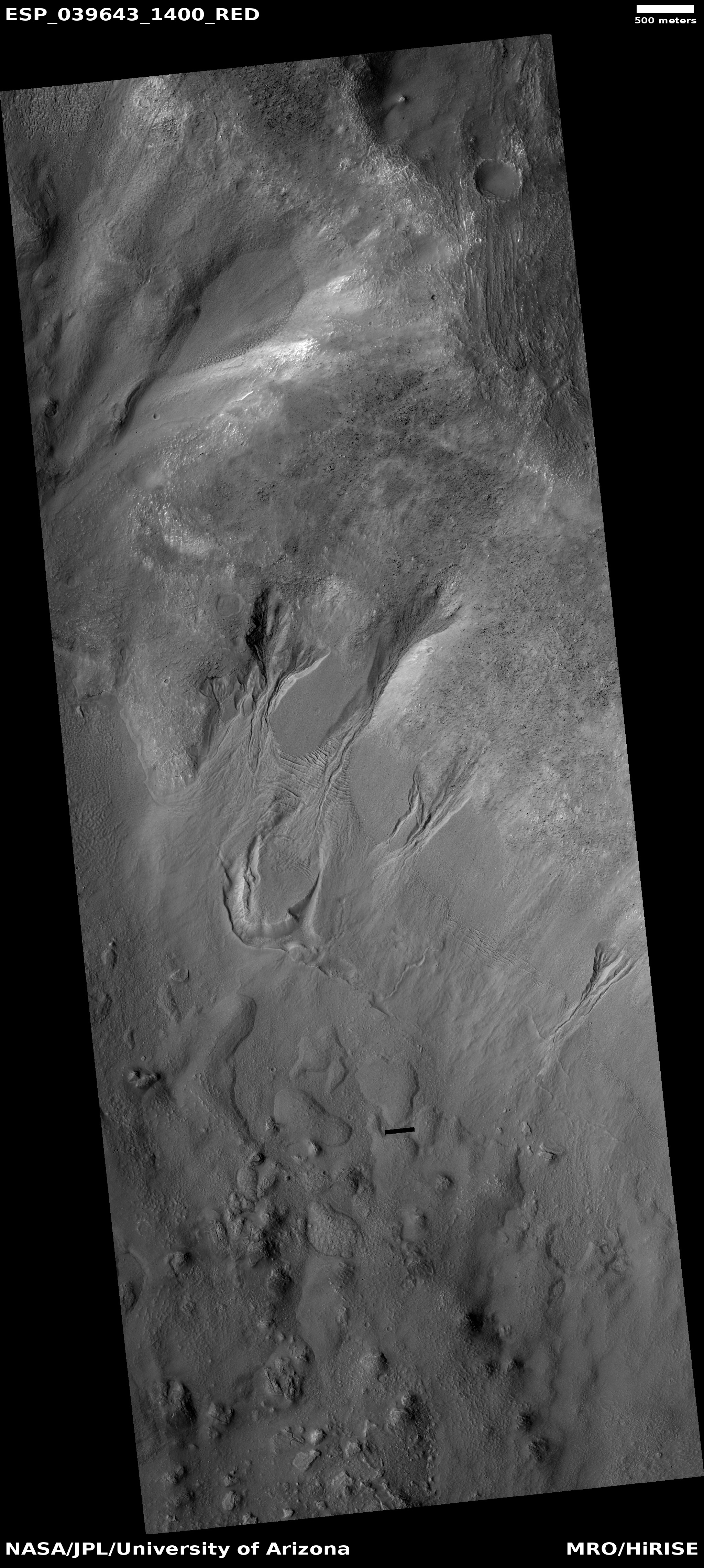
Cones on Mars!

Today’s cool image is actually a bunch, all found recently in the monthly image download from the high resolution camera on Mars Reconnaissance Orbiter (MRO).

All the photos I post below show pimple-like cones, all of which appear to be a type of small volcano. The cones are found in a wide range of locations, from the northern lowland plains to the cratered highlands to the mid-latitude transition zone between the two. They are also found at the bottom of deep canyons, in the floors of craters, and amidst mountains.

Let us begin.
» Read more

2 comments

Astra test launch almost reaches orbit

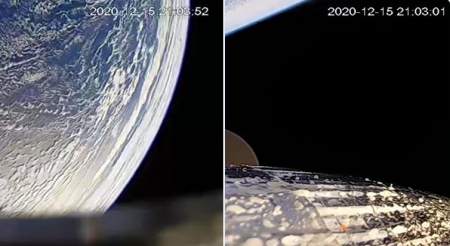
The view from space on Astra's Rocket

UPDATE: The rocket came up slightly short of orbit. From Eric Berger:

Rocket was 0.5 km/s short of orbit. With a better fuel mixture in the upper stage it would have orbited. Apogee of 390km. Rocket 3.3 will carry a payload, and there will be no hardware or software changes.

Original post:
——————————
Capitalism in space: According to the company’s Twitter feed, the second launch attempt today by Astra of its rocket appears to have reached orbit.

The images to the right were taken by their rocket, which is unimaginatively dubbed Rocket 3.2. I hope they now give this vehicle a more striking name.

If they have succeeded, they will have joined Rocket Lab as one of only two private commercial smallsat startups to launch a rocket to orbit. Two Chinese pseudo-private companies, Galactic Energy and ExSpace, have accomplished this, but I do not count them as real private companies. They might have worked independent of the government and raised investment capital, but nothing they do happens without close government supervision.

We will have to wait for full flight data from the company, but assuming they reached orbit that will be 40th American launch in 2020, the first time the U.S. has topped 40 launches in a single year since 1969, when the country achieved 46 successful orbital launches.

6 comments

Ancient and recent volcanoes on Mars

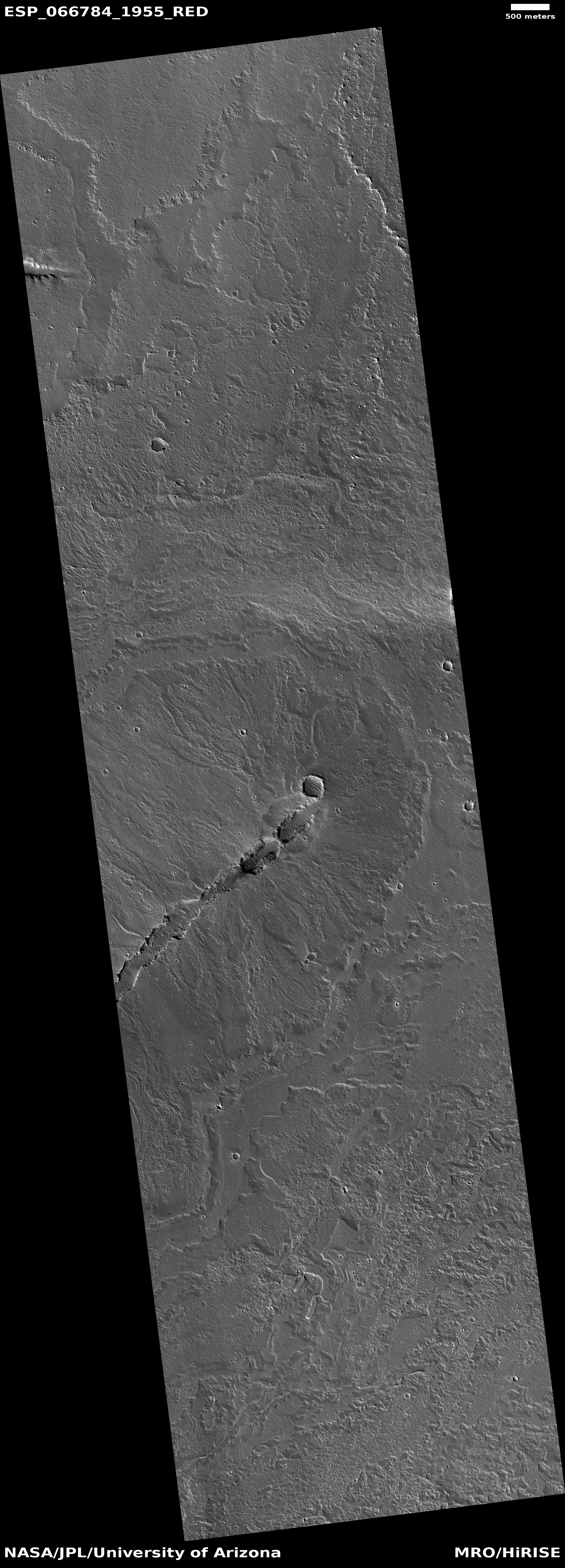
Volcanic vent on eastern flank of Olympus Mons
Click for full image.

Cool image time! The photo to the right, rotated, cropped, and reduced to post here, was taken by the high resolution camera on Mars Reconnaissance Orbiter (MRO) on October 25, 2020. It shows what it calls a “possible volcanic vent east of Olympus Mons”.

Is this active? If not, how old is it. Also, the elongated shape of the vent suggests the possibility of a lava tube, or at least some underground complexity to the release of its magma.

In order to get some clarity, I emailed Sarah Sutton of the Lunar and Planetary Laboratory of the University of Arizona, who requested this photograph. Her response:

The image is of a small shield volcano with an elongated vent at the summit. We don’t have complete stereo here yet, so we can’t tell exactly what the height is. This vent might have sourced tube-fed flows, but in this case, we can’t resolve such features in the image data. This and other small shield volcanoes in the vicinity are partially buried by plains-forming lava flows. The lava flows around the base overlap the flows that emanate radially from the summit vent. Therefore we infer that the shield is older than the surrounding lava flows.

The vent, which runs from the southwest to the northeast, sits on top of a sloping wide hill, which is that small shield volcano described by Sutton. The flat plains surrounding this hill are from later eruptions from other and possibly larger volcanoes. The wider overview map below might give us a clue as to the source.
» Read more

1 comment

Rocket Lab successfully launches Japanese radar satellite

Capitalism in space: Rocket Lab early today successfully launched an Japanese radar satellite using its Electron rocket.

This was the company’s sixth successful launch in 2020, matching the count it had predicted at the start of the year it would reach. And this despite one launch failure. The rocket also sported a new and larger faring, giving Rocket Lab the ability to launch larger payloards or more satellites with each launch.

The leaders in the 2020 launch race:

33 China
24 SpaceX
14 Russia
6 ULA
6 Rocket Lab

The U.S. now leads China 39 to 33 in the national rankings.

2 comments

Confirmed: Martian glacial features are ice

Lobate glacial flows on Mars
Click for full image.

Scientists using the radar instrument on Mars Reconnaissance Orbiter (MRO) have now confirmed that the Martian glacial features that most resemble the glaciers seen on Earth are made of substantial amounts of ice, and were possibly active and growing only a few million years ago.

“Our radar analysis shows that at least one of these features is about 500 meters thick and nearly 100 percent ice, with a debris covering at most ten meters thick,” said Berman, lead author of “Ice-rich landforms of the southern mid-latitudes of Mars: A case study in Nereidum Montes” published online in Icarus at https://doi.org/10.1016/j.icarus.2020.114170. PSI scientists Frank C. Chuang, Isaac B. Smith and David A. Crown are co-authors on the paper.

Global mapping of Viscous Flow Features (VFFs), a general grouping of ice-rich flow features in the southern hemisphere of Mars shows a dense concentration in Nereidum Montes, along the northern rim of Argyre basin. Located within a northwestern subregion of Nereidum Montes is a large number of well-preserved VFFs and ice-rich mantling deposits, the paper says, potentially the largest concentrations of any non-polar region in the southern hemisphere.

…Processed data from the Shallow Radar (SHARAD) instrument aboard NASA’s Mars Reconnaissance Orbiter spacecraft were used to search for basal reflections across VFFs within the region. For one in particular, these observations and analysis indicate that it is composed of nearly pure water ice. Model ages obtained from crater counts and their associated size-frequency distributions (SFDs) on both ice-rich mantling deposits and small lobate VFFs suggest that the deposits stabilized several to tens of millions of years ago in the Late Amazonian Epoch, and that small lobate VFFs likely formed due to the mobilization of mantling deposits.

This data here reinforces the impressions from many other places within the 30-60 degree latitude bands on Mars where many such features are found.

Mars might be a desert, but it is a desert like Antarctica, not the Sahara. Any settlement there must use the Earth’s south pole as its guide for construction and design.

6 comments

Russia successfully completes second Angara rocket launch

The new colonial movement: After many delays, Russia today successfully completed the second launch of its new Angara rocket, placing a dummy test payload into orbit.

The leaders in the 2020 launch race:

33 China
24 SpaceX
14 Russia
6 ULA
5 Rocket Lab
5 Europe (Arianespace)

The U.S. lead over China in the national rankings remains 38 to 33. With this launch the total launches in 2020 now matches that achieved last year, something achieved despite the Wuhan virus panic.

8 comments

SpaceX successfully launches commercial radio satellite

Capitalism in space: SpaceX today successfully launched a new commercial radio satellite for Siruis.

The first stage was making its seventh flight, the fifth in 2020. It successfully landed on the drone ship. The fairings were also both previously flown.

The leaders in the 2020 launch race:

33 China
24 SpaceX
13 Russia
6 ULA
5 Rocket Lab
5 Europe (Arianespace)

The U.S. now leads China 38 to 33 in the national rankings. The U.S. has also completed the most launches in a single year since 1968. Unlike 1968, all the launches this year were flown by private companies, either for commercial customers or for the government, with rockets owned by the companies. In 1968 almost all the launches were for the government, and the rockets were controlled by the government, even if built by private companies.

Note that this very successful year occurred during a year when many businesses were forced to shutdown due to the Wuhan panic. It appears many rocket companies decided this was not a reason to cease operations.

4 comments

Virgin Galactic’s first Unity launch from New Mexico fizzles

Capitalism in space: Virgin Galactic’s first attempt to launch its SpaceShipTwo Unity suborbital spacecraft from its New Mexico spaceport ended almost immediately after the ship was released from WhiteKnightTwo when its engines did not ignite.

All appeared normal during the flight’s early phases. VSS Unity was carried into the air by its twin-fuselage mothership, known as WhiteKnightTwo VMS Eve, and was released to fly free at an altitude of more than 40,000 feet.

A webcast provided via NASASpaceflight.com showed the flash of the plane’s hybrid rocket motor lighting up, but only for a second. After the flame-out, Test pilots Dave Mackay and C.J. Sturckow brought Unity back down to the spaceport for a gliding landing.

I wish Virgin Galactic well, but at this point consider the company a backwater in the drive to develop a commercial space tourism industry. It took them too long to get to this point. Even if they should start flying tourists next year, they will be competing with orbital tourist flights by SpaceX, and the contrast is stark. I simply no longer see a viable customer base for Virgin Galactic, unless they get a lot of government subsidies.

21 comments
1 115 116 117 118 119 126