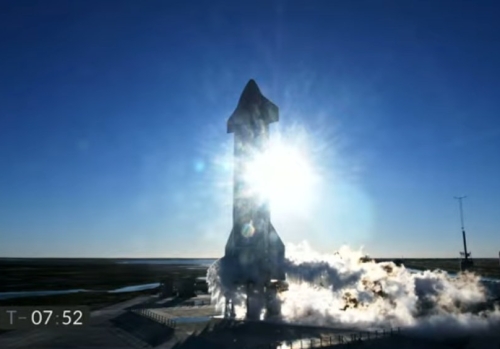
Indonesia & SpaceX considering launchsite there

Capitalism in space: Indonesia has been in discussions with SpaceX and Elon Musk about establishing a SpaceX launch site in that country.

President Joko Widodo discussed the idea with SpaceX founder Elon Musk during a phone call on Friday, the Coordinating Ministry for Maritime and Investment Affairs said in the statement. Musk intends to send a team to Indonesia in January to study partnership opportunities, it said.

Makes sense for Musk to consider such a move, especially if the U.S. and Texas governments start to turn the screws on his Boca Chica launch site. Furthermore, it is his intention to eventually launch Starship/Super Heavy from a floating launch platform. Establishing arrangements with other foreign nations for putting it in their waters gives the company more flexibility.

People always migrate toward freedom. For two hundred and fifty years, that meant they moved to the United States. This now is changing, as the U.S. culture is signaling its increased hostility to this most important founding principle. Expect more stories like this in the coming decades.

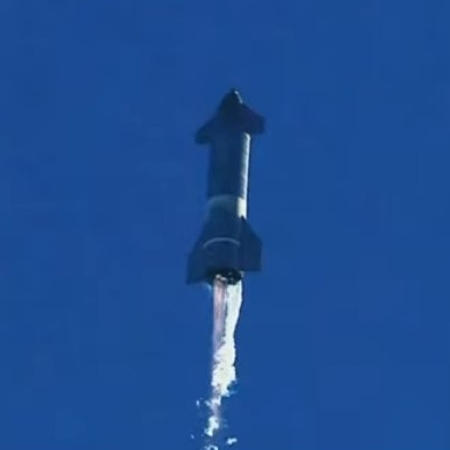
15 comments

New data confirms and localizes uplifted lunar dust as seen by Apollo astronauts

The uncertainty of science: In a paper released today, scientists reveal the detection of electrostatic dust events on the Moon similar to those observed by Apollo astronauts, and find that these events might not be global but instead confined to craters during twilight. From the abstract:

Lunar horizon glows observed by the Apollo missions suggested a dense dust exosphere near the lunar terminator. But later missions failed to see such a high‐density dust exosphere. Why the Apollo missions could observe so large number of dust grains remains a mystery. For the first time, we report five dust enhancement events observed by the Lunar Dust Experiment on board Lunar Atmosphere and Dust Environment Explorer [LADEE] mission, which happen near a twilight crater with dust densities comparable to the Apollo measurements. Moreover, the dust densities are larger on the downstream side of the crater and favor a higher solar wind temperature, consistent with an electrostatic dust lofting from the negatively charged crater floor. We also check the Apollo observations and find similar twilight craters, suggesting that the so‐called dust exosphere is not a global phenomenon but just a local electrified dust fountain near twilight craters.

The dust clouds the astronauts thought they saw near the horizon have been theorized to be dust uplifted by static electricity. However, all later missions had so far failed to detect this phenomenon, until now. That the result also pinpoints the location and ties it to twilight is important for future missions to the Moon. Astronauts can thus minimize any damage by this dust by shutting down operations during lunar twilight periods.

2 comments

Breaking: Starship prototype #9 tips over inside assembly building

It appears from the 24-hour live stream provided by LabPadre that the ninth Starship prototype tipped over inside the assembly building to rest against one wall. You can see it happen at about 8 seconds into the video below:

No word on whether anyone was hurt, nor any information about the cause. My guess is that it occurred during the operations to move this prototype to the launchpad.

UPDATE: It appears no one was hurt, but there is damage to the fins, which might also mean damage to the hull. This in turn might make it unsafe to fly this prototype, as the hull forms the walls of the methane/oxygen tanks.

The day has not been good for SpaceX. Earlier they had to scrub the launch of a commercial communications satellite at T-30 seconds for reasons that they did not provide. High altitude winds had delayed the launch an hour or so, but it appears this was not the reason. According to SpaceX’s website, “SpaceX is standing down from Friday’s launch attempt of the SXM-7 mission to perform additional ground system checkouts.” They are targeting Sunday for the next launch attempt.

13 comments

Strange crater in the basement of Mars

Strange crater in Hellas Basin
Click for full image.

Today’s cool image to the right, cropped and reduced to post here, is intriguing for a number of reasons. Taken on September 11, 2020 by the high resolution camera on Mars Reconnaissance Orbiter (MRO), it shows a partially buried crater found in the middle of Hellas Basin, the lowest point on Mars and what I like to call the red planet’s basement.

What makes this crater intriguing is the layered pile of material filling its interior. If I didn’t know any better, I would think some construction crew has used a bulldozer to push debris from the crater’s right half in order to smooth the ground in preparation for building a strip mall, office building, or housing development.

This of course is not what happened. Then what did create those layered piles in the crater’s left half?
» Read more

1 comment

ULA’s Delta-4 Heavy successfully launches reconnaissance satellite

Capitalism in space: After a several month delay, ULA’s Delta-4 Heavy tonight successfully launched a reconnaissance satellite for the National Reconnaissance Office.

The leaders in the 2020 launch race:

33 China
23 SpaceX
13 Russia
6 ULA
5 Rocket Lab
5 Europe (Arianespace)

The U.S. now leads China 37 to 33 in the national rankings. The U.S. launch total this year matches the number of launches achieved in 1969, and is the most launches by the U.S. in a single year since then.

10 comments

Watch ULA try again to launch its Delta-4 Heavy

Capitalism in space: ULA will today try once again, after numerous scrubbed and aborted attempts in August and September, to launch its Delta-4 Heavy rocket carrying a National Reconnaissance Office spy satellite.

The mission is set to take off at 6:15 p.m. EST (2315 GMT) Thursday from pad 37B at the newly-renamed Cape Canaveral Space Force Station in Florida. Forecasters predict near-ideal weather with a 90% chance of favorable conditions during the launch window Thursday evening.

Many of the launch problems earlier this year were due to issues in the launch pad. The article at the link describes the major refurbishing that ULA has done since then to fix them.

I have embedded their live stream of the launch, below the fold. It is set to go live at 5:55 pm (Eastern).

Note also that the next few days will be very busy for the American rocket industry. Tomorrow (Friday) both SpaceX and Astra have launches scheduled, with the latter making its second attempt to complete its first orbital launch. Then Rocket Lab has another Electron launch from New Zealand scheduled for the next day (Saturday).

That’s four launches in three days. If just two succeed, it will raise the total U.S. launches in 2020 to 38, which would be the most American launches in a single year since 1969, the year the country put men on the Moon.
» Read more

0 comments

Smallsat rocket startup Obex raises $24 million

Capitalism in space: The smallsat rocket startup Obex of the United Kingdom today announced that it has raised $24 million in private investment capital to support the development of its Prime rocket.

Conceived and developed as an environmentally sustainable launch system, the Orbex Prime rocket uniquely uses bio-propane, a renewable biofuel that cuts CO2 emissions by 90% compared to traditional kerosene-based rocket fuels. Designed to be recoverable and re-usable, Orbex Prime is intended to leave no debris in the ocean or in orbit around the Earth. The company is constructing the rocket vehicle at factories in Forres, near Inverness in Scotland, and Copenhagen in Denmark.

…Orbex has already confirmed six commercial satellite launch contracts, with the first launches expected in 2022. The company’s preferred launch site will be the Sutherland spaceport on the northernmost coast of Scotland, which was granted planning permission in mid-August 2020.

Whether the Sutherland spaceport happens however remains uncertain. Though it still appears to be moving forward, there is a lot of local opposition to it, some with clout. It appears however that Orbex is aware of this reality, and is developing Prime to allow it to launch from other sites.

That the company is trying to build this rocket as reusable right from the beginning is encouraging. It shows that the rocket industry is finally accepting the new paradigm established by SpaceX. For them to achieve this by ’22 however will be quite challenging.

0 comments

Beresheet-2 will have two landers instead of one

The new colonial movement: SpaceIL, the Israeli non-profit company that built the failed Beresheet-1 lunar lander, yesterday announced its plans to build Beresheet-2, this time with an orbiter and two lunar landers, and launch it by ’24.

The two landers would be much smaller than the first spacecraft — about 260 pounds each, fully fueled, compared with a bit less than 1,300 pounds for Beresheet — and they would land on different parts of the moon. The orbiter would circle the moon for at least a couple of years. The three spacecraft of Beresheet 2 would together weigh about 1,400 pounds.

Even though the designs would be new, they would reuse many aspects of Beresheet, and the founders said they had learned lessons that would increase the chances of success for the second attempt. SpaceIL will again collaborate with Israel Aerospace Industries, a large satellite manufacturer.

SpaceIL is looking for funding from both private and Israeli government sources. It is also looking for funds from other nations, a decision which revealed the most intriguing part of this announcement:

SpaceIL hopes that international partnerships will pay for half of the cost of Beresheet 2. Mr. Damari said the United Arab Emirates, a small but wealthy country in the Persian Gulf that has set up an ambitious space program in recent years, was one of seven nations interested in taking part. He declined to name the other six.

If this flight ends up to be a partnership between Israel and the United Arab Emirates it will send shockwaves through the Arab world, most especially among the supporters of the terrorist leaders ruling the Palestinian territories.

1 comment

China launches two science satellites with its Long March 11 rocket

The new colonial movement: China yesterday completed the eleventh successful launch of its Long March 11 rocket, putting two astronomy satellites in orbit designed to supplement gravitational wave research.

The satellites appear designed to look in other wavelengths at the region of sky from which gravitational waves are detected, and better pinpoint their location and nature.

This Long March 11 launch continues its perfect launch record. It uses solid rocket motors, derived from military missiles, which allow it to be stored easily and then launched quickly.

The leaders in the 2020 launch race:

33 China
23 SpaceX
13 Russia
5 ULA
5 Rocket Lab
5 Europe (Arianespace)

The U.S. still leads in the national rankings, 36 to 33, over China. And before anyone asks, yesterday’s SpaceX test suborbital flight of Starship does not qualify as a launch in these standings, as I only include successful orbital launches.

0 comments

Starship flies!

Starship about 2 minutes into its flight

Capitalism in space: In a spectacular achievement, SpaceX’s eighth Starship prototype today completed 6:42 minute flight that appeared to go practically perfectly, until landing.

At that point it appeared the spacecraft’s last landing burn was insufficient to slow it down enough for landing, and it crashed. However, it crashed on its landing pad, meaning it had maneuvered its way back through the atmosphere exactly as planned.

Below the fold are screen captures from the flight, in sequence.

The flight left several impressions. First, this design is viable. Though we are still looking at a prototype, it is one that works.

Second, the ship appeared to lumber into space, almost slowly. This was partly an illusion because of its size. Nonetheless, it reminded me of the 747, which always flew magnificently but with what seemed like a measured attitude. Starship appeared similar.

Third, the systems for controlling the ship on its return through the atmosphere appeared to work as intended. Though SpaceX obviously has a lot more work to do to achieve an orbital return, they have made a magnificent start.

And they have gotten this far in only two years, for less than $2 billion. Compare that to NASA and Boeing and their SLS, which is half a decade behind schedule and will likely cost $30 billion once launched.

We should expect the ninth prototype to be on the launchpad within days, and the next test flight in no more than few weeks.
» Read more

44 comments

Watch the attempted first high altitude flight of SpaceX’s Starship

Starship on launch pad
Screen capture from SpaceX live feed during 1st launch attempt.
Click for LabPadre live stream,
from which this image was captured today.

UPDATE: Less than six minutes to launch.

UPDATE: Hold called at T-2:06. They have reset the clock for a 4:40 pm (Central) launch.

Original post:
——————-
Capitalism in space: SpaceX’s live stream is on, with a liftoff in six minutes. I have embedded below the fold the live stream for this first high altitude flight of SpaceX’s Starship.

The LabPadre live stream, to the right, shows that they have already proceeded through most of preliminary stages prior to liftoff.

If all goes right, this eighth prototype of Starship will go about 40,000 feet in the air, turn over and attempt to control its return belly side down, and then upright itself just before landing so it can complete a vertical landing like a Falcon 9 first stage. The company gives themselves a one in three chance of landing the spacecraft. SpaceX has also made it clear that their primary engineering goal on this flight is to test that return through the atmosphere, so that is the part of the flight they most need to succeed. Failing to land afterward but getting that data will make this test a complete success.

No matter what happens, the company has prototypes 9 through 15 waiting in the wings.

UPDATE: This post will remain at the top of the page until the flight occurs, or is scrubbed. Scroll down for new stories.
» Read more

58 comments

Cryptic Terrain on Mars

Cryptic terrain near Mars' south polar ice cap
Click for full image.

Cool image time! The photo to the right, rotated and cropped to post here, was taken on September 27, 2020 by the high resolution camera on Mars Reconnaissance Orbiter (MRO). It shows what is likely a crater that is partly buried by ice and dust and sand near or on the edge of Mars’s south polar ice cap.

It also shows an example of what planetary scientists have dubbed “cryptic terrain,” found generally on the margins of that ice cap. In this case, the location is on a plateau adjacent to the ice cap dubbed Promethei Planum. Despite a lot of searching, I could not locate any research papers describing Promethei Planum, though data outlined in one Mars Express press release from 2008 suggested it was part of the polar ice cap more than two miles thick that is covered by a thin mantle of dry ice each winter.

The strange curlicue cliffs and plateaus seen here are thought to form as part of the arrival and then sublimation away of that seasonal dry ice mantle, but how that process exactly works to create these particular geological features remains I think a mystery. North is to the top. The general grade is also downhill away from the icecap to the north.

Moreover, the overview map below, with the location of this image indicated by the blue cross, illustrates more mysteries.
» Read more

1 comment
1 116 117 118 119 120 126