Rocket Lab wins contract to launch space junk removal satellite

Capitalism in space: Rocket Lab announced this week that it has won a launch contract from the Japanese-based company Astroscale to launch its first attempt to rendezvous with a piece of space junk — an abandoned upper stage from a Japanese launch — in order to grab and de-orbit it.

Rocket Lab announced Sept. 21 that it won a contract from Astroscale for the launch of its Active Debris Removal by Astroscale-Japan (ADRAS-J) spacecraft. A Rocket Lab Electron will launch ADRAS-J from its Launch Complex 1 in New Zealand in 2023.

ADRAS-J will rendezvous with and inspect an upper stage left in orbit by a Japanese launch. The Japanese space agency JAXA awarded Tokyo-based Astroscale a contract in 2020 for the mission as part of its two-phase Commercial Removal of Debris Demonstration project.

The first phase of this demonstration project involved Astroscale’s current test satellite, which is presently testing capture techniques of space junk using magnets.

It appears Rocket Lab got the contract because it can place this smallsat in the precise orbit it needs, and can do it for far less than any other launch company in operation at present.

1 comment

Rocket Lab negatively impacted by New Zealand’s Wuhan panic lockdowns

Capitalism in space? Rocket Lab reported this week that not only has its income been slashed because of New Zealand’s draconian lockdowns in fear of COVID-19, the company has had to cut its planned launches for the fourth quarter of 2021 by more than half.

“Operations have experienced disruptions due to some of the most restrictive COVID-19 measures globally, including current stay-at-home orders which prevent launch operations from taking place,” said Peter Beck, chief executive of Rocket Lab, of New Zealand’s current restrictions. “Indications are that the current lockdown restrictions may ease by the end of September with the delta cases dropping in New Zealand, but this, of course, is subject to change.”

Those restrictions have delayed plans by Rocket Lab to perform three dedicated Electron launches of BlackSky satellites that had been scheduled to begin in late August. It could also affect the launch of NASA’s CAPSTONE lunar cubesat, which had been scheduled for no earlier than late October on another Electron from Launch Complex 1 in New Zealand.

Adam Spice, chief financial officer, said that the company has five Electron launches manifested for the fourth quarter of the year, but is assuming only two launches in its financial projections. While those five launches would produce more than $40 million in revenue, the company is forecasting only $17-20 million in revenue for the fourth quarter.

Meanwhile, the company has not been able to launch from its new launchpad at Wallops Island in Virginia because NASA — after almost two years! — has apparently still not approved the company’s flight termination system, used to destroy a rocket that has gone out of control. NASA’s refusal to approve this system is very puzzling and very suspicious, especially because Rocket Lab has launched 21 times with it from New Zealand, and even used it several times to successfully destroy failing rockets.

2 comments

The boom in commercial space continues

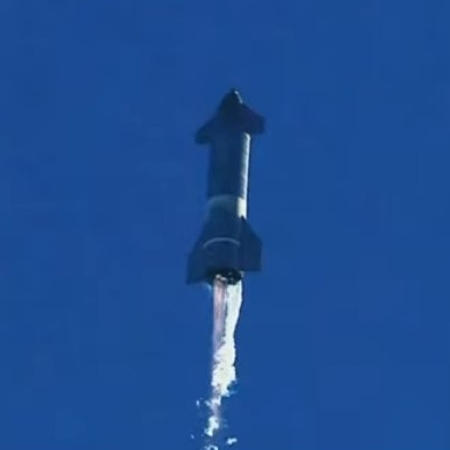
Starship on an early test flight
Modern rocketry soaring under freedom

Capitalism in space: In the last two days there have been so many stories about different space companies winning new contracts I think it is important to illustrate this in one essay, rather than in multiple posts. Below is the list:

The last two stories are possibly the most significant, because both show that the shift in space from government-built to privately-built, as I advocated in my 2017 policy paper, Capitalism in Space, is spreading to other countries. » Read more

13 comments

Rocket Lab becomes third rocket company to go public

Capitalism in space: On August 25, 2021 Rocket Lab became the third rocket company to go public, following Virgin Galactic and Astra to sign a merger deal with a special-purpose acquisition company (SPAC).

Nasdaq celebrated the milestone, inviting Rocket Lab founder and CEO Peter Beck to ring the market’s opening bell Wednesday morning.

The SPAC merger, with a San Francisco-based company called Vector Acquisition Corporation, provides Rocket Lab with about $777 million. The funds will aid the development of multiple projects, including Rocket Lab’s big, next-generation Neutron rocket, company representatives said.

Nor is this all. Virgin Orbit has also signed a similar deal this wee, and will begin trading stock soon.

All these deals indicate that the investment community is very confident in making big profits in space, and is now willing to commit a lot of cash to that prospect.

0 comments

Two smallsat orbiters to launch in ’24 to study Martian upper atmosphere

NASA has picked a twin orbiter mission being built by a partnership of the University of California-Berkeley and the private rocket company Rocket Lab to place two smallsats in orbit around Mars to study how the harsh environment of space might be causing the red planet to lose its atmosphere.

The entire project is dubbed ESCAPADE (an insanely contrived acronym) but the two smallsats have been dubbed “Blue” and “Gold.”

The mission builds on decades of experience at SSL in building satellite instruments and fleets of spacecraft to explore regions around Earth, the moon and Mars, specializing in magnetic field interactions with the wind of particles from the sun. Each of the two satellites, named after UC Berkeley’s school colors, will carry instruments built at SSL to measure the flow of high energy electrons and ionized oxygen and carbon dioxide molecules escaping from Mars, magnetic field detectors built at UCLA and a probe to measure slower or thermal ions built at Embry-Riddle Aeronautical University in Daytona Beach, Florida.

With twin satellites, it is possible to measure conditions simultaneously at two places around the planet, Lillis said, allowing scientists to connect plasma conditions at one site to the escaping ion flux at another. Over the course of the mission, the two satellites will change positions to map the upper atmosphere and magnetosphere of nearly the entire planet from an altitude of between 150 and 10,000 kilometers.

Maybe the most important aspect of this mission however is not what it will learn at Mars, but how it is being financed and built. NASA is only paying about $80 million, a tiny amount compared to most past unmanned planetary probes. The university in turn is buying Rocket Lab’s Photon satellite structure rather than building the satellites from scratch. It will configure the instruments to fit into that ready made satellite body, thus saving time and money.

By doing it this way NASA and the planetary science community is increasingly relying on private companies to provide them their planetary probes, rather than building such things by hand themselves, at much greater cost. The result is a growing and thriving private commercial sector that owns and builds its own planetary probes, for profit.

0 comments

Rocket Lab to launch three times in one month, beginning in late August

Capitalism in space: Rocket Lab yesterday announced that it is aiming to complete three launches of its Electron rocket in less than a month, with the first scheduled for late August.

Scheduled to lift-off from Launch Complex 1 on New Zealand’s Mahia Peninsula in late August, the ‘Love At First Insight’ mission will be Rocket Lab’s 22nd Electron launch overall and fifth mission of 2021. ‘Love At First Insight’ is the first in a rapid succession of scheduled Electron launches between late August through September that represent the company’s fastest launch turnarounds to date.

All three launches are for the company BlackSky, which is putting into orbit a constellation of Earth-imaging small satellites.

Since 2018 Rocket Lab has repeatedly promised that it will soon ramp up its launch rate to monthly, and then weekly. For a variety of reasons, mostly relating to two launch failures in the past year, that promise has not been kept. If the company succeeds in putting these six Black Sky satellites into orbit on three quick launches, it will finally come close to demonstrating that pace.

Rocket Lab will reinforce that promise if it also completes its manifest of 2021 launches, which calls for three more launches for a total of nine launches in ’21, six of which will have occurred in the year’s last four months.

0 comments

Rocket Lab shifts another launch from Virginia to New Zealand

Foot-dragging by NASA bureaucrats has apparently forced Rocket Lab to shift the launch of its CAPSTONE lunar orbit cubesat from its new launchpad in Wallops Island, Virgina, to its New Zealand launchpad.

CAPSTONE would be the second Rocket Lab mission in recent weeks that shifted from Virginia to New Zealand. The most recent Electron launch July 26 placed into orbit Monolith, a smallsat developed by the Air Force Research Laboratory. Monolith was originally going to launch on the first Electron mission from Virginia.

Rocket Lab said at the time that it shifted the launch of Monolith because of ongoing work by NASA to certify the software for the rocket’s autonomous flight termination system. A NASA spokesman said in July that the agency expected to complete certification of the unit by the end of the year.

Note too that Rocket Lab had originally hoped to launch from Wallops in 2020, but was forced to delay that launch to 2021 then because of NASA’s inability to approve this system. Now it looks like they won’t be able to launch in ’21 either.

This flight termination system is likely the same one that Rocket Lab has successfully used now for four years and more than twenty launches in New Zealand. Why it should take NASA literally years to approve it is shameful. As I wrote in November,

While I have no evidence of this, I cannot help being suspicious of these various government agencies. For years numerous people in the government put fake roadblocks up to slow or stop SpaceX’s first manned launch, merely because it threatened their turfs. This autonomous termination system will make the ground crews at Vandenberg and at Cape Canaveral irrelevant, and I would not be surprised if some of these issues were drummed up to delay or block this system because of that.

I know I am being cynical, but based on history it is not unreasonable to be so.

I think we are seeing evidence now that my cynicism was entirely justified.

11 comments

Rocket Lab returns to flight, launching an American military test satellite

Capitalism in space: Rocket Lab tonight (July 29th in New Zealand) successfully launched its Electron rocket to place an American military technology test satellite into orbit.

This was the company’s first launch since a launch failure in May. Though the company has previously fished two first stage boosters out of the ocean as they test the engineering to allow the recover and reuse of those first stages, on this flight they made no such attempt.

The leaders in the 2021 launch race:

23 China
20 SpaceX
12 Russia
3 Northrop Grumman
3 Rocket Lab

The U.S. now leads China 30 to 23 in the national ranks. Last year the U.S. launched 40 times total. With the year seven months old, the U.S. has already reached three quarters of that number, suggesting that there is an outside chance that this year it could break its record of launches in a year, 70 in 1966. At the least the U.S. looks like it will achieve comparable launch numbers that were typical in the mid-1960s, at the dawn of the space age when NASA and the military were launching a lot to figure out the best way to do things.

Now the launches are privately owned, and exist because everyone is making money doing it. Assuming the world doesn’t get hit with a real disaster (instead of last year’s fake Wuhan flu panic), expect these numbers to continue to rise in the coming years.

11 comments

Rocket Lab identifies cause of May launch failure; ready to launch again

Capitalism in space: Rocket Lab announced yesterday that it has identified and corrected the cause of a May 15 launch failure and is now ready to resume launches, as early as before the end of July.

Rocket Lab said an investigation by the company traced the root cause to the rocket’s second stage engine igniter system. A problem with the igniter corrupted signals in the computer on the stage, which in turn caused the thrust vector control system to “deviate outside nominal parameters.” The engine computer then shut down the Rutherford engine.

The igniter problem, the company said, resulted from “a previously undetectable failure mode within the ignition system that occurs under a unique set of environmental pressures and conditions” not noticed in previous testing of the engine or on previous Electron launches. Engineers have replicated the problem in the lab and created what Rocket Lab called “redundancies” in the ignition system, including changes to the design of the igniter and how it is manufactured, to prevent the problem from happening again.

Rocket Lab has had two launch failures in the past year, so getting back flying as quickly as possible is critical for them, especially because a lot of new smallsat launch companies are coming up from behind. Virgin Orbit initiated commercial launches this year, having already completed two, and Astra and Firefly both seem ready, based on recent announcements, to make their first orbital launches before the end of this year.

1 comment

Rocket Lab wins contract to build two Mars smallsat planetary probes

Capitalism in space: Rocket Lab has won a contract to build two Mars smallsat planetary probe as part of a NASA project.

The project, led by the University of California, will have two probes dubbed Blue and Gold that will launch in 2024 on a Falcon Heavy rocket. The science goal is to place two spacecraft in Mars orbit to provide a more global look at is atmosphere. The financial goal is to show that smallsats built for less can do the same job as larger probes costing millions more.

0 comments

FAA grants Rocket Lab permission to resume launches following launch failure

Capitalism in space: According to a press release from Rocket Lab yesterday, the FAA has granted it permission to resume launches following its May 15th launch failure when a problem with the rocket’s upper stage prevented it from reaching orbit.

Apparently the FAA is satisfied with the thoroughness of Rocket Lab’s investigation into the launch failure, and is thus willing to let launches resume, when the company itself decides it is ready. Rocket Lab’s investigation into the failure however is not complete. According to the press release:

The review team is working through an extensive fault tree analysis to exhaust all potential causes for the anomaly and the full review is expected to be complete in the coming weeks, following which Rocket Lab anticipates a swift return to flight.

Though that review continues, the company has not yet revealed what it thinks caused the upper stage to send the rocket and payload in the wrong direction upon ignition.

0 comments

New Zealand government blasts Rocket Lab for employment violations, even as it waives its own strict COVID border rules for the company

Two stories today from New Zealand, both related to the American company Rocket Lab, help illustrate the often absurd and irrational nature of modern government rule-making.

First, New Zealand’s Employment Relations Authority attacked the company after ruling against it in a single employee grievance case. The case involved a fired employee who filed and won his grievance when he refused to sign the company’s offered settlement. Based on this single case, authority officials quickly and publicly blasted Rocket Lab as if it had committed numerous blasphemies:

Authority member Rachel Larmer found that the dismissal was “extremely unfair” and that the company “failed to comply with even the most basic and widely understood principles of procedural fairness”.

As the article noted, it “is unusual for the authority to be so overtly critical of an employer.” Yet, attack Rocket Lab it did, very bluntly and very publicly.

Yet, at the same time, this same New Zealand government has apparently been giving this evil employer routine waivers of its draconian border restrictions imposed to prevent the arrival of COVID.

More than 150 aerospace specialists have arrived on short term visas to work in New Zealand for the satellite launch service provider Rocket Lab since the country’s border closed. Immigration New Zealand said 156 foreigners were granted border exemptions as part of a government-approved programme for the company.

Rocket Lab spokesperson Morgan Bailey said the company had focused on bringing in essential workers for its launches, who would usually stay for two weeks after completing managed isolation.

Normally visitors to New Zealand need to quarantine for two weeks. Apparently, the government is allowing foreign workers for Rocket Lab to bypass that rule and make alternative arrangements.

So which is it? Is Rocket Lab a horrible slave-driver who must be watched like a hawk so that it does not abuse its workers, or is it a generous provider of work and business for New Zealand that is so valuable gives it a privileged position where some laws don’t apply to it?

In truth, New Zealand’s laws themselves are now simply being enforced somewhat randomly, based merely on whether a specific government official personally likes or dislikes the company. That is my impression at least.

But then, that is the impression given and now common throughout the western world. We no longer treat the law as sacrosanct, but instead use it for political purposes, which require its plain meaning to shift and change like Jello, depending on the personal and political motives of the individuals involved. And all for the sake of power.

3 comments

Rocket Lab launch fails

Rocket Lab’s launch yesterday of its Electron rocket failed when the upper stage began tumbling right after stage separation and engine start.

This was the second Electron failure in twenty launches. The last, in July 2020, was also caused by a problem in the upper stage, though far less dramatic. In that case an electric failure caused the upper stage engine to shut down prematurely before it had reached orbit.

Though the launch was a failure, the recovery of the first stage as part of Rocket Lab’s effort to make it reusable appears to be proceeding as planned. According to the company’s statement:

Electron’s first stage safely completed a successful splashdown under parachute and Rocket Lab’s recovery team is working to retrieve the stage from the ocean as planned.

I have embedded below the fold the Rocket Lab live feed, cued to just before the failure. You can see that as soon as the upper stage fires it begins to tumble.
» Read more

4 comments

Rocket Lab launch on May 15 will attempt a second ocean recovery of 1st stage

Capitalism in space: Rocket Lab’s next planned launch on May 15th will attempt a repeat of the ocean recovery of their Electron rocket’s 1st stage, as they did after a November 2020 launch.

The goal of such work is to help transition the two-stage Electron from an expendable vehicle, as it was originally designed, to a rocket with a reusable first stage. And inspection of the recovered booster from “Return to Sender” suggests that this vision is no pipe dream. “We are more kind of bullish on this than ever before,” Rocket Lab founder and CEO Peter Beck said during a teleconference with reporters on Tuesday (May 11). “We reentered on a very aggressive corridor, we had no upgraded heat shield, and we still got [the booster] back in remarkable condition.”

Indeed, some parts of that rocket will fly again; the propellant pressurization system from the “Return to Sender” first stage has been incorporated into the “Running Out of Toes” Electron [launching May 15th], Beck said. [emphasis mine]

The highlighted words are quite remarkable. As far as I know, SpaceX never reused any part of a Falcon 9 first stage that was recovered in the ocean.

Rocket Lab also hopes to reduce any damage further by using new equipment on their ship for getting the stage out of the water. In addition, they have added heat shielding to the stage that should also reduce damage during its fall back to Earth.

Finally, on the next flight or so they will test something they are calling a “decelerator,” designed to slow the stage down during that fall. They are not saying what this decelerator is, which suggests it is some form of new engineering.

If all goes right, they hope to make the first snatch by helicopter of a first stage before it hits the ocean sometime next year.

3 comments

Rocket Lab to recover 1st stage on next flight

Capitalism in space: Rocket Lab yesterday announced that in its continuing program to make the first stage of its Electron rocket reusable, it will attempt to recover the stage after splashdown in the ocean during its next launch in May.

While Electron’s second stage delivers the satellites to orbit, Electron’s first stage will undertake a series of complex maneuvers designed to enable the stage to survive the extreme heat and forces of atmospheric re-entry on the way back to Earth.

As the rocket reaches speeds of around eight times the speed of sound on its descent, the air around Electron heats up to 2,400 °C generating an extremely hot plasma that creates a red-orange glow around the re-entering stage. Because Electron will enter the atmosphere engines first, the nine 3D printed Rutherford engines on the first stage will bear the brunt of this extreme heating. To withstand the immense temperatures, this Electron features an evolved heat shield designed to protect the engines and direct the force of the plasma away from the rocket. After entering the atmosphere, Electron will deploy a drogue parachute to help begin the process of slowing the rocket down and stabilizing its descent. Once Electron is at subsonic speeds, a circular parachute is deployed to help further slow the rocket in preparation for a gentle ocean splashdown. A Rocket Lab vessel will then rendezvous with the stage in the splashdown zone, approximately 650 km from Launch Complex 1, and retrieve it for transport back to Rocket Lab’s Production Complex for inspection.

They did the same thing on the previous launch. This second test will be to validate what was learned then.

If all goes as planned, they hope the next recovery attempt will be an in-air snatch by a helicopter, before the stage hits the water. If that is successful that stage will then be capable of re-use.

2 comments

Rocket Lab to build new bigger rocket

Capitalism in space: As part of its announcement yesterday that Rocket Lab is going to become a publicly traded stock, the company also announced it is going to develop a new larger rocket, dubbed Neutron, to supplement its smaller Electron rocket.

The second link provides some additional details about Neutron.

Today, Monday, 1 March, the company revealed its “Neutron” rocket, a medium-class launch vehicle that can lift up to 8,000 kilograms (eight tonnes) into orbit, comparable to Russia’s Soyuz rocket. The two-stage vehicle will be 40 meters (131 feet) tall, more than double the company’s existing Electron rocket, which measures 18 meters (60 feet) tall and has so far flown 97 satellites across 18 launches.

They will design it to be human-rated from the start, and will also have the first stage land vertically using its engines so it can be reused. According to video from the company, they are aiming for a ’24 launch date.

5 comments

Rocket Lab about to go public

Capitalism in space: According to news reports today, the smallsat rocket company Rocket Lab is about to sign a deal that will make it a publicly traded stock in a merger with a venture capital company.

The Wall Street Journal reported today talks between the company and Vector Acquisitions Corp were nearing completion and could be finalised with 24 hours, and was expected to see Rocket Lab raise another $650 million in cash from other private investors.

Vector is a special-purpose acquisition company, a vehicle that recruits investors and lists before pursuing a business to buy. Vector, backed by tech private equity firm Vector Capital, raised $400m on launch in September.

Rocket Lab is one of a cluster of spaceflight operators jostling for global market share in the smaller-launch market, where the focus is on achieving reliable delivery of small cargoes to lower earth orbits. Any listing would catapult Rocket Lab – whose Mahia spaceport has delivered nearly 100 satellites into orbit – into the top rank of New Zealand companies, and represents a huge blow for the local NZX. With a valuation of $5.7b, it would have ranked as one the 10 largest companies on the national exchange.

According to Rocket Lab, it is not a New Zealand company but based in the U.S., despite the bulk of its operations being in New Zealand.

I will not be surprised it Rocket Lab’s stock price quickly rises once available for purchase. Unlike Virgin Galactic, this is a real company with a real product producing real profits. It is also very well placed to garner a healthy share in the emerging launch market of smallsats that is now arriving on the scene. The company is about to initiate launches from its second launchpad at Wallops Island in the U.S., which will also allow it to finally accelerate its launch pace to the promised twice a month pace it has been promising for the last two years.

4 comments

SpaceX and Rocket Lab complete launches

Capitalism in space: Two successfully launches this morning.

First Rocket Lab used its Electron rocket to launch a German cubesat thought to be a prototype for a Chinese communications constellation, though no information has been publicly released. No recovery attempts were made on the rocket’s first stage.

Then SpaceX successfully completed its 17th Starlink launch and second launch in 2021. This puts about 950 Starlink satellites in orbit. The booster for this flight landed on the drone ship, completing its record eighth flight.

The 2021 launch race:

2 SpaceX
1 Virgin Orbit
1 China
1 Rocket Lab

The U.S. now leads China 4 to 1 in the national rankings.

3 comments

Rocket Lab successfully launches Japanese radar satellite

Capitalism in space: Rocket Lab early today successfully launched an Japanese radar satellite using its Electron rocket.

This was the company’s sixth successful launch in 2020, matching the count it had predicted at the start of the year it would reach. And this despite one launch failure. The rocket also sported a new and larger faring, giving Rocket Lab the ability to launch larger payloards or more satellites with each launch.

The leaders in the 2020 launch race:

33 China
24 SpaceX
14 Russia
6 ULA
6 Rocket Lab

The U.S. now leads China 39 to 33 in the national rankings.

2 comments
1 6 7 8 9 10 14