
City lights seen from space show the evolution and development of countries over time
City lights as seen from space show the evolution and development of countries over time.
City lights as seen from space show the evolution and development of countries over time.
NASA looks to 3D printing to create spare parts and tools on ISS.
On the way to its winter haven, Opportunity found more evidence of liquid water that once flowed on Mars, specifically a geological vein that they think might be gypsum.
The vein examined most closely by Opportunity is about the width of a human thumb (0.4 to 0.8 inch, or 1 to 2 centimeters), 16 to 20 inches (40 to 50 centimeters) long, and protrudes slightly higher than the bedrock on either side of it. Observations by the durable rover reveal this vein and others like it within an apron surrounding a segment of the rim of Endeavour Crater. None like it were seen in the 20 miles (33 kilometers) of crater-pocked plains that Opportunity explored for 90 months before it reached Endeavour, nor in the higher ground of the rim.
According to what project scientist Steve Squyres said at a press conference today at the AGU meeting, “This is the single most significant piece of evidence that liquid water once flowed on Mars.”
The monthly update of the solar cycle graph produced by NOAA’s Space Weather Prediction Center was released yesterday. I have posted the graph below the fold.
The fast ramp up to solar maximum is continuing. For the fifth month in a row the Sun’s sunspot activity leaped upward. Not only has the sunspot activity once again exceeded the prediction for this particular time period, the activity is shot way above the solar maximum peak predicted for several years hence. This behavior is far different then what we’ve seen during the just completed long and deep solar minimum, when the Sun consistently underperformed the predictions for sunspot activity. Now it appears to be outperforming the predictions.
» Read more
Mad scientists at their best! An experiment designed to mimic the dynamo at the Earth’s core is about to be turned on.
Ten years in the making, the US$2-million project is nearly ready for its inaugural run. Early next year, the sphere will begin whirling around while loaded with 13,000 kilograms of molten sodium heated to around 105 °C. Researchers hope that the churning, electrically conducting fluid will generate a self-sustaining electromagnetic field that can be poked, prodded and coaxed for clues about Earth’s dynamo, which is generated by the movement of liquid iron in the outer core. If it works, it will be the first time that an experiment that mirrors the configuration of Earth’s interior has managed to recreate such a phenomenon.
This is a really very cool experiment, as we really do not have a good understanding of how planetary magnetic fields are produced.
According to comments left on a number of particle physics blogs, the word is that the LHC is closing in on the Higgs. The Higgs boson is theorized to be the “force carrier” of the Higgs field — a field thought to permeate the entire Universe, endowing matter with mass. Only by using powerful particle accelerators like the LHC do we stand a chance of seeing these mysterious particles. Apparently, both the ATLAS and CMS experiments are independently seeing a Higgs signal, and the predicted mass of the particle agrees with the experimental results. In particle physics-speak, the Higgs appears to have a mass of 125 GeV (gigaelectronvolts).
The rumors are fun, but this quote from the chief at CERN puts some damper on them:
“These results will be based on the analysis of considerably more data than those presented at the Summer conferences, sufficient to make significant progress in the search for the Higgs boson, but not enough to make any conclusive statement on the existence or non-existence of the Higgs.”
I suspect in this case we will need to wait for an actual announcement.
Speaking of press release journalism, they just ended a press conference at the American Geophysical Union (AGU) fall meeting led by James Hansen, head of the NASA’s Goddard Institute of Space Studies in New York. Hansen is a devoted global warming scientist, most well known to the public from his testimony to Congress in 1988 outlining the serious threat the world faces from global warming and carbon dioxide increases in the atmosphere.
I had very much wanted to ask Hansen (as well as the rest of the panel) this somewhat challenging question:
» Read more
The pathetic state of science journalism.
Many survive as a science journalist just by paying attention to press releases and reproducing them, as long as others do the same. A recent BBC analysis of its science coverage in its own news reports revealed that 75% came from press releases, and only a tiny fraction contained views not expressed in those press releases.
This lip service is not good enough, and editors should wise up that science journalism has lost its edge and demand reform. It has also become uncritical and therefore not journalism. Too many who profess to practice journalism are the product of fashionable science communication courses that have sprung up in the past fifteen years. It’s my view that this has resulted in many journalists being supporters of, and not reporters of, science. There is a big difference.
I couldn’t agree more. I sometimes think my rants against “press release journalism” sound like a broken record. I am glad I am not the only one ranting.
And the winner is: The Hubble Space Telescope has now been used as a reference in more than 10,000 peer-reviewed science papers.
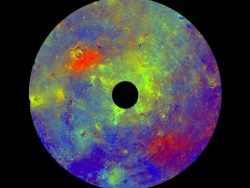
Tonight’s press conference at the American Geophysical Union conference focused on the latest results from Dawn, orbiting the giant asteroid Vesta. Or to put it as scientist Vishnu Reddy put it, “Vesta is the most colorful asteroid in the solar system.”
At least, in geological terms. To our human eye the asteroid wouldn’t be so spectacular. However, the false color images released by the scientists show the global geological diversity of Vesta. From the press release:
» Read more
Two newly discovered supermassive black holes weigh in as the heaviest known.
One of the newly discovered black holes is 9.7 billion solar masses and is located in the elliptical galaxy NGC 3842, which is the brightest galaxy in the Leo cluster of galaxies that sits 320 million light years away in the direction of the constellation Leo. The second is as large or larger and sits in the elliptical galaxy NGC 4889, which is the brightest galaxy in the Coma cluster about 336 million light years from Earth in the direction of the constellation Coma Berenices.
It is believed that these heavy supermassive black holes are the kind that produced quasars in the early universe.