
Lockheed Martin’s space profits to decline in 2019 because of ULA

Capitalism in space: Lockheed Martin is projecting a decline in its space profits in 2019 because of a decline in income coming from its ULA partnership with Boeing.

In the previous quarterly earnings call in October, Bruce Tanner, Lockheed Martin’s chief financial officer, warned those earnings could be down as much as $150 million in 2019 compared to 2018. Tanner said then that both the number of [ULA] launches and the mix of vehicles contributed to that decline.

“We have more, for instance, Delta 4 launches in 2018 than we expect to have in 2019,” he said in the prior call. “Those are obviously the most profitable launch vehicles in all of ULA’s portfolio.”

In the latest earnings call, Tanner said the decline would not be as large as previously projected, estimating it to be closer $100 million. Part of the change has to do with improved performance at ULA, he said, but a bigger factor was a delay of a Delta 4 Heavy launch from late 2018 to earlier this month, shifting the profit realized from it to 2019. [emphasis mine]

The highlighted language illustrates why they are losing sales. The Delta family of rockets might bring ULA the most income, but that is because it is also its most expensive rocket to build and launch, and is also the one for which it charges the most.

Back in 2016 ULA announced that it planned to retire Delta, but it has not yet done so, probably because the company earns so much with each launch. Whether they eventually retire it or not doesn’t really matter, however, because its high cost will have it with time go the way of the horse regardless. Other cheaper rockets, such as the Falcon Heavy, are getting the business instead.

In fact, this competitive process probably explains entirely the drop in earnings expected in 2019.
1 comment

Arianespace slashes launch price for Ariane 5

Capitalism in space: Arianespace has announced that it is once again dropping the launch price for an Ariane 5 launch, in order to increase the chances it will win several contracts this year.

Arianespace is competing for two major launch contracts in the Asia-Pacific region that should be awarded this year and expects there could be tenders for another three, said [Arianespace Managing Director and Head of Sales for Asia-Pacific Vivian Quenet].

The article does not mention the actual price, but Arianespace had been charging about $100 million per launch satellite, while SpaceX had been charging $62 million (for a new Falcon 9) and about $50 million (for a reused one).

0 comments

SpaceX shifts some Starship/Super Heavy construction to Texas

Capitalism in space: SpaceX has decided to shift some of the construction of its new Starship/Super Heavy rocket from Los Angeles to its Boca Chica facility in Texas.

In tweets later Jan. 16, Elon Musk, the founder and chief executive of SpaceX, said that development of the vehicle itself, including the Raptor engines that power it, would continue in Hawthorne, while at least the prototype versions of Starship are built in Texas. “We are building the Starship prototypes locally at our launch site in Texas, as their size makes them very difficult to transport,” he said.

A shift to South Texas, industry sources said, could be a way to reduce expenses, given the lower cost of living there versus the Los Angeles area. However, that region of Texas has a much smaller workforce, particularly in aerospace, compared to Southern California.

Meanwhile, I keep hearing from my sources in the industry that SpaceX is facing more serious problems because of the coming decline in the manufacture of large geosynchronous satellites. The smallsat revolution appears to be the cause, and SpaceX’s larger rockets are not ideal for launching these tiny satellites. I am not entirely convinced of this pessimistic conclusion, but if SpaceX is in trouble it will likely be a tragedy for manned spaceflight. The smallsat rockets cannot put people in space. Neither can the gigantic government rockets like SLS. Without innovative companies like SpaceX building and launching large rockets for profit, the development of the large inexpensive rockets needed for human travel will be significantly hampered.

3 comments

A detailed look at the layoffs at SpaceX

Capitalism in space: Link here. Because of California’s complex employee protection laws, SpaceX has provided the government there a detailed list describing the 577 layoffs taking place in California.

Technicians — a critical role at any rocket company — make up the lion’s share of laid-off employees, with 174 positions eliminated (30.2% of all layoffs in Hawthorne). Engineers come next with 97 jobs let go, or nearly 17% of the locally terminated workforce.

Managers and supervisors together make up about 7% of the layoffs in Hawthorne. Positions listed under “Other” include baristas, dishwashers, drivers, recruiters, writers, and an investigator.

The article really doesn’t tell us much, other than the large majority of the 10% reduction are occurring in California, which makes me wonder if SpaceX is acting to reduce its presence in that high-tax, high-regulation state.

9 comments

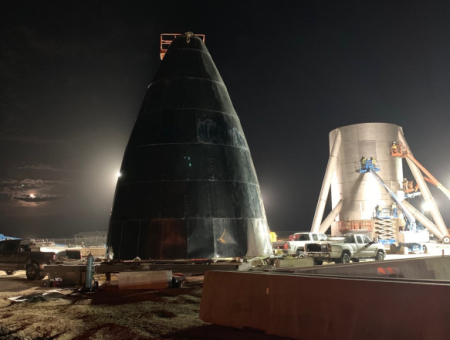
More updates from SpaceX’s Boca Chica launch site

Link here. The article reviews what has been done for the past few months, as well as what has been done most recently. All of this new work appears focused on preparing for test flights of Starship and Super Heavy.

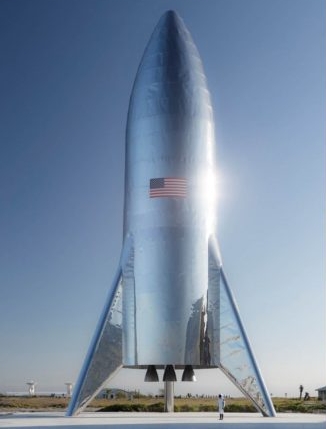
I should note however that I am beginning to sense a little bit of Barnum in this work. The steel-clad Starship Hopper that SpaceX has assembled here is clearly not even close to doing any hopper tests, as it doesn’t appear to have fuel tanks and its engines appear to be mere “placeholders for fit checks.” It looks really really cool, however, and is impossible to hide to the public, so it thus has garnered the company a lot of attention.

11 comments

SpaceX to trim workforce by 10%

Capitalism in space: SpaceX announced yesterday that it plans to trim its workforce by 10% in an effort to reduce costs.

It might seem strange for the company to be doing this at this moment, when they are embarking on the construction of the very ambitious Super Heavy and Starship rockets. One would think they would need to expand (not shrink) their workforce to make that happen.

What I see is that they have recognized a need to reconfigure their workforce. This article today about their growing fleet of Falcon 9 first stage boosters, provides the clue.

SpaceX’s reusable Falcon fleet could feature as many as 12-15 boosters capable of something like 5-10 additional launches each by the second half of fourth quarter of 2019. At that point, SpaceX might have enough experience with Block 5 and enough flight-proven boosters to plausibly begin a revolutionary shift in how commercial launches are done. With far more boosters available than SpaceX has payloads to launch, multiple flight-ready Block 5 rockets will inevitably stack up at or around the company’s three launch pads and surrounding integration and refurbishment facilities.

In other words, they no longer need as many people employed building expendable first stages. Moreover, they might have found that many of the employees used to build new Falcon 9 first stages are not the kind they need to design and build the new rocket. This trimming allows them to cut some fat with the opportunity to add muscle later. It would not surprise me if their workforce once again starts to grow, but with new employees with new skills.

12 comments

SpaceX reveals picture of fully assembled suborbital Starship hopper

Starship Hopper

Capitalism in space: SpaceX has released pictures of the fully assembled suborbital Starship hopper, planned for its first test flights in the coming months. The image on the right is not a simulation, but the real thing.

In tweets by Elon Musk, he also revealed that they hope to have an orbital prototype of Starship built by June, with the Super Heavy booster beginning construction in the spring. More information here.

This is unquestionably an ambitious schedule, but the contrast with the development of SpaceX’s manned Dragon capsule, slowed absurdly by the government shutdown and NASA’s bureaucracy, highlights clearly the fundamental reason why SpaceX refused government money for the development of Super Heavy/Starship. By using private funds, SpaceX is free to proceed at its own pace, which is fast, rather than waiting for permission from the bean-counters sitting in NASA offices who have no real idea how to build anything.

It is likely they will not meet this schedule. It is also likely that they will also get this done in a time frame far faster than anyone expects.

8 comments

SpaceX completes fit test of two sections of Starship hopper

Capitalism in space: SpaceX has completed a fit test whereby they put the two main sections of their Starship hopper prototype together.

In a burst of activity that should probably be expected at this point but still feels like a complete surprise, SpaceX technicians took a major step towards completing the first Starship hopper prototype by combining the last two remaining sections (aft and nose) scarcely six weeks after assembly began.

SpaceX CEO Elon Musk also took to Twitter late last week to offer additional details and post what appears to be the first official render of Starship’s hopper prototype, which is now closer than ever before to looking like the real deal thanks to the incredible drive of the company’s southernmost employees. With the massive rocket’s rough aeroshell and structure now more or less finalized, Musk’s targeted February/March hop test debut remains ambitious to the extreme but is now arguably far from impossible.

More details about the status of both the Super Heavy and Starship here. As noted in the first link above, SpaceX is moving very quickly, at a pace unheard of in the rocket industry, to get these hopper prototypes ready for test flights. For example, this new effort at Boca Chica in Texas went from a barren spot to a full facility with a giant spacecraft in less than eight weeks.

4 comments

SpaceX rolls manned Dragon/Falcon 9 to launchpad

Capitalism in space: This week SpaceX rolled to the launchpad the stacked manned Dragon capsule and Falcon 9 rocket that will fly the first unmanned test flight no early than January 17, 2019.

it is understood that the rollout is a dry simulation and thus will not include any propellant. However, a static fire test including propellant load and a short burn of the first stage’s nine Merlin engines will occur at a later date.

While this week’s rollout and subsequent fit checks do not seem to have been impacted by the ongoing U.S. government shutdown, other aspects of the launch campaign will be delayed.

The launch is expected to slip past the latest official no-earlier than launch date of January 17th. Many aspects of the launch campaign require NASA oversight and thus cannot proceed without NASA’s approval. It is understood that each additional day of the government shutdown translates into about a one day delay with the launch.

The irony here is that there are really no NASA employees required for SpaceX to do the launch. It is occurring on their leased property using their equipment and their launch team. Only when the capsule arrives at ISS will NASA employees be required, and those slots have been deemed “essential” in this government shutdown and are still operating on ISS and at mission control in Houston.

If Trump ordered it, this flight could happen. SpaceX is clearly ready. It is only NASA and its bureaucracy that stands in the way.

9 comments

Musk tweets peek at Starship hopper

Starship test hopper

Capitalism in space: Elon Musk this week tweeted an image of the Starship test hopper, adding that they hope to begin test flights by March.

“This test hopper is at full body diameter of 9m / 30 ft, just not full height. Super Heavy will be full height & diameter,” Musk tweeted, indicating that the company will go directly to building a full-scale version of the rocket booster, rather than a truncated test version.

It seems to me that Musk continues to embarrass all other rocket companies, both private and governmental, with his effective use of current technology to innovate and produce new designs. While everyone else seems locked into building the same old things, his company is using what it knows to try to build something smarter and more efficient.

SpaceX’s track record suggests that it will do exactly what it is trying to do, even if it likely takes longer than they predict. Others should take heed, or they will all get left behind.

24 comments
1 154 155 156 157 158 234