Comet 67P/C-G at 126 miles

Comet 67P/C-G at 126 miles
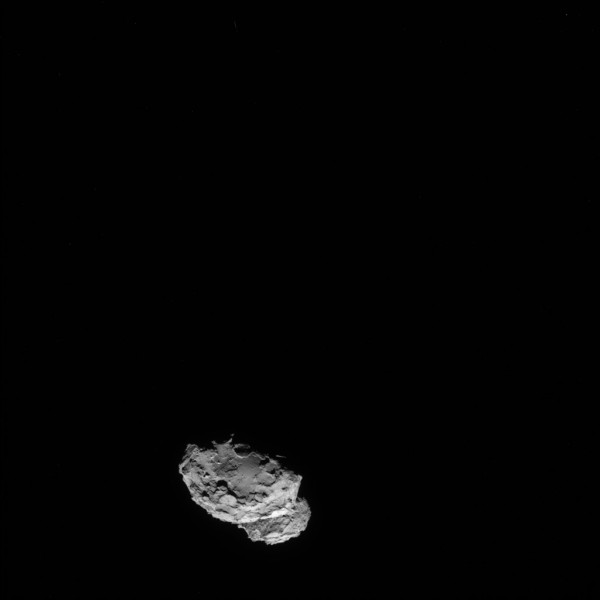
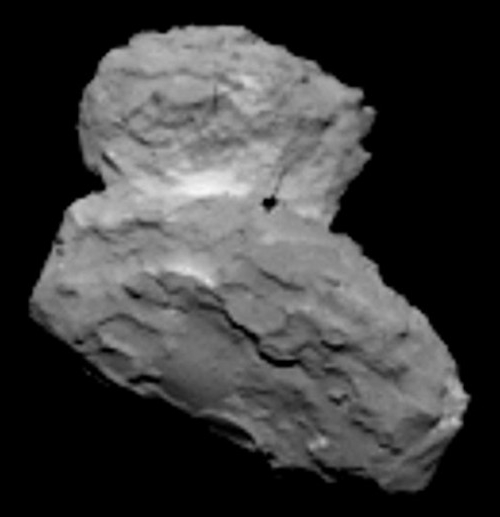
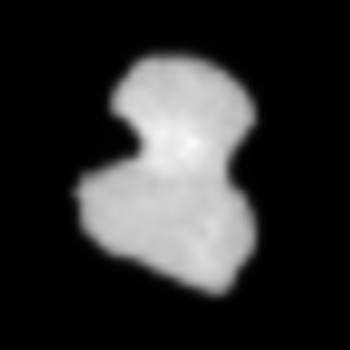
The image above was taken by Rosetta on August 4 from only 126 miles (234 kilometers). Unlike earlier images, this image is raw, uncropped and unprocessed. All I have done is rescale it to fit on my webpage. As they explain at the link,

As you can see, the comet is not centred in the full-frame image. This is a result of the rendezvous burn conducted the previous day, which adjusted Rosetta’s trajectory towards the comet. This effect is corrected for in the commands sent to the spacecraft after the new orbit has been determined.

The science team also notes that beginning tomorrow, the comet will be close enough that they will no longer have to provide a cropped close-up using the navigation camera and that this uncropped raw version will be sufficient.
Rendezvous and orbital insertion on Wednesday!

0 comments

67P from less than 200 miles

67P on August 3

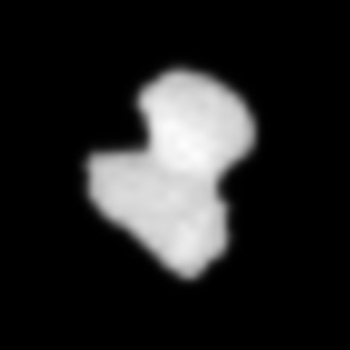
Today’s Rosetta image of Comet 67P, shown above, gives us a different angle of the comet. The spacecraft was only 186 miles (300 kilometers) away when it snapped the picture, and this side view emphasizes the nucleus’s jagged shape.

I am reminded of what happens to a block of ice when you spray warm water on it. It begins to melt away, but very randomly and unevenly, producing very weird shapes and the surface evaporates off. In the case of Comet 67P, the nucleus is a dirty ball of ice, and the Sun’s rays have been causing its surface to evaporate off every time it approaches the Sun. Thus, we get a very weird shape.

0 comments

Today’s Comet 67P image

Comet 67P on August 2

The image above was taken on August 2 using Rosetta’s navigation camera. It has been processed by the science team to bring out the details. I have also rotated it to match the August 1 image taken at a distance of 620 miles that was taken by Rosetta’s OSIRIS narrow angle camera, designed to do the actual science.

You can see that the navigation camera does a pretty good job on its own of capturing the comet’s nucleus. Both images show that the instruments are working perfectly, and thus tell us that the next few months will be quite spectacular after Rosetta goes into orbit in three days, followed in November by the landing of Philae somewhere on the comet’s surface.

If you download both images and then switch back and forth between them you can get a better feel for the geometry of the surface features.

0 comments

Comet 67P from 1000 k

67P from 1000 kilometers

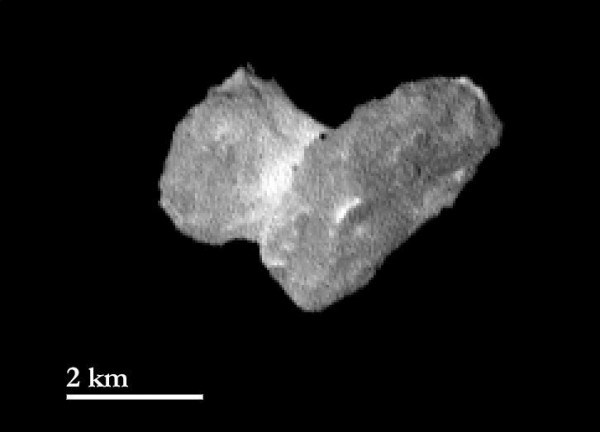
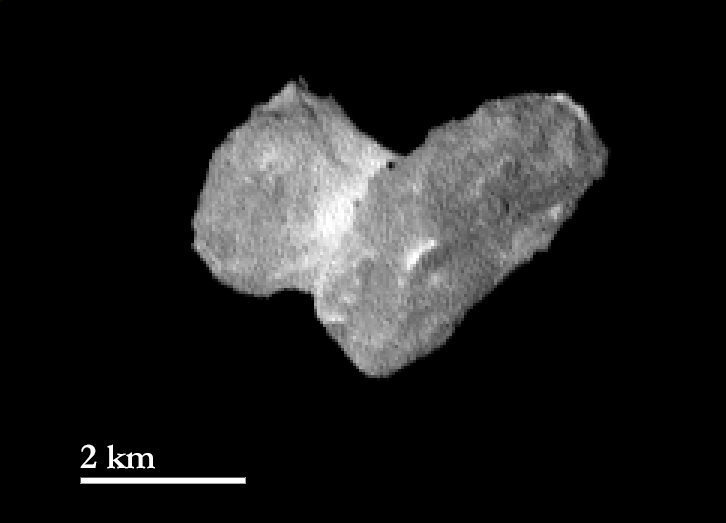
Above is a new image of Comet 67P as seen from about 1000 kilometers, or about 620 miles, released by the Rosetta science team today. The image was taken on August 1 and has been processed somewhat to bring out the details. The black spot near the junction between the nucleus’s two sections is not real but an artifact of the camera’s CCD.

This image is the first real clear and sharp look at the nucleus, and what it shows us is a surface quite different from the many other asteroids that science probes have imaged close-up in the past. From this angle there are far few craters visible then is normally seen on asteroids, and the surface has complex roughness and pitted look that I suspect the planetary geologists are right now scratching their heads about and waving their arms trying to explain. My first guess, which no one should take too seriously, is that as material vents off the comet when it gets close to the Sun it leaves behind these scars.

One more thing: If you go here you can see a number of additional image releases in the last 24 hours, all fascinating. This link explains that the features that looked like craters in earlier images were actually artifacts from the camera’s CCD.

0 comments

Getting closer

Comet 67P on July 31

This image of Comet 67P from Rosetta was taken yesterday. Though it has not been processed like the image I posted yesterday, more details continue to come out as the spacecraft each day gets closer to the comet. This image was taken from a distance of 825 miles, 375 miles closer than the previous day.

Very soon these close-up images will become too large to show the entire nucleus in one image. Rosetta will instead begin to snap images of specific features.

Meanwhile, the Rosetta science team released its first temperature readings of the comet.
» Read more

0 comments

New Rosetta comet images

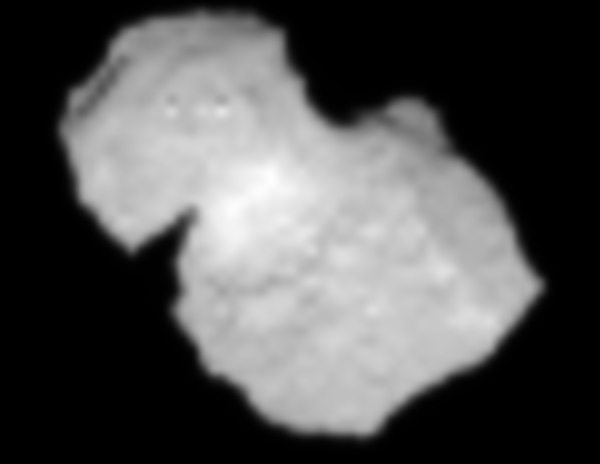
New images from Rosetta have a resolution of 100 meters per pixel and are finding that the neck connecting the comet’s two sections is apparently much brighter than the rest of the nucleus.

As earlier images had already shown, 67P may consist of two parts: a smaller head connected to a larger body. The connecting region, the neck, is proving to be especially intriguing. β€œThe only thing we know for sure at this point is that this neck region appears brighter compared to the head and body of the nucleus”, says OSIRIS Principal Investigator Holger Sierks from the Max-Planck-Institute for Solar System Research (MPS) in Germany. This collar-like appearance could be caused by differences in material or grain size or could be a topographical effect.

It looks like this comet is going to turn out to be one of the most fascinating objects any space probe has visited in a long time.

0 comments

More images from Rosetta

67P

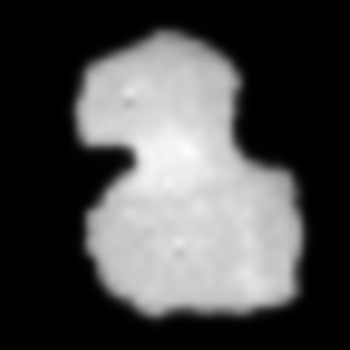
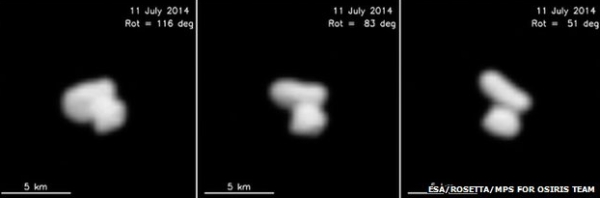
The comet that Rosetta will orbit is getting stranger and stranger, with new images suggesting that it is really two objects stuck together.

The pictures show that 67P/Churyumov-Gerasimenko appears to be not one but two objects joined together. It is what scientists call a “contact binary”. How the comet came to take this form is unknown. It is possible that 67P suffered a major fracture at some point in its past; it is also possible the two parts have totally different origins.

What is clear is that the European Space Agency (Esa) mission team now has additional and unexpected considerations as it plans how to land on the comet later this year – not least, which part of the comet should be chosen for contact?

1 comment
1 2