Starlink now has four million subscribers

According to SpaceX’s CEO, Gwynne Shotwell, during testimony in a hearing before the Texas state legislative committee and confirmed by a SpaceX tweet on X, Starlink now has a total of four million subscribers.

The milestone would mean that SpaceX has gained a million new customers since the end of May alone. This outpaces the company’s already impressive rate of growth: Starlink started providing beta service of its product in October 2020; it hit 1 million subscribers in December 2022, 2 million subscribers in September 2023, and 3 million in May. The constellation now comprises nearly 6,000 satellites, with service available in nearly 100 countries to individual users as well as large enterprise customers like major airlines and cruise lines.

The service is on track to generate $6.6 billion in revenue this year — an increase from roughly $1.4 billion just two years prior, according to industry research and consulting firm Quilty Space. [emphasis mine]

With $6.6 billion in yearly revenue, in two years SpaceX will get as much from its customers as it has raised in investment capital. It essentially does not need to look for more funding, as it is now earning enough to pay for both Starlink as well as the development of Starship/Superheavy. Furthermore, at this point the company no longer needs NASA’s government funds to do anything it wants to do.

Nor are these numbers the end. Yesterday it was also reported that Air France had signed up Starlink for its airplane fleet, coming after both United and Hawaiian airlines announced they were switching to Starlink as well.

No wonder the left as well as the federal bureaucracy — dominated by top-down authoritarians who love governemnt rule — are hostile to SpaceX. It no longer needs them, and that independence threatens their power.

7 comments

Orbital tug startup D-Orbit raises another 150 million euros

The orbital tug company D-Orbit announced today that it was able to extend its more recent round of fund-raising by 50 million euros, and raise a total of 150 million in private investment capital instead.

Japan’s Marubeni Corp. led the Series C round. Marubeni has exclusive rights to distribute D-Orbit’s services in Japan in Southeast Asia, according to the news release.

New and existing investors participating in the round include: Avantgarde, CDP Venture Capital, Iberis Capital, Indaco Venture Partners, the European Innovation Council, Neva, Phaistos Investment Fund, Primo Ventures and Seraphim Space Investment Trust. Also joining the round was a consortium led by United Ventures that included the European Investment Bank and the European Investment Fund.

I call the company a “startup” in the headline, but that probably is now incorrect. It already has flown fourteen orbital tug missions, with seven more scheduled in 2025. At this point it is well established, and could extend this most recent funding round.

0 comments

Musk and Shotwell once again blast red tape against the company

The EPA to SpaceX
The EPA to SpaceX “Nice company you got here.
Sure would be a shame if something happened to it.”

In a follow-up to SpaceX’s blunt critical response to the attacks against it by the head of the FAA, Mike Whitaker during House testimony on September 24, 2024, Elon Musk in a tweet yesterday called for Whitaker to resign.

That blast however was only the start. During a different hearing on September 24th before the Texas state house appropriations committee, Gywnne Shotwell, the CEO of SpaceX, called the actions of the EPA to regulate the launch deluge system for Starship/Superheavy “nonsense.”

“We work very closely with organizations such as the (Texas Commission on Environmental Quality),” she said. “You may have read a little bit of nonsense in the papers recently about that, but we’re working quite well with them.”

…On Tuesday, Shotwell maintained that the the system — which she said resembles “an upside down shower head” — was “licensed and permitted by TCEQ [Texas Commission on Environmental Quality] … EPA came in afterwards and didn’t like the license or the permit that we had for that and wanted to turn it into a federal permit, which we are working on right now.”

…The state agency has said the company received a stormwater permit — a type that’s usually quickly approved — but did not have the permit required for discharge of industrial wastewater produced by launches. That type of permit requires significant technical review and usually takes almost a year to approve. [emphasis mine]

The problem with this demand by both EPA and TCEQ is that SpaceX is not dumping “industrial wastewater produced by launches.” The deluge system uses potable water, essentially equivalent to rain water, and thus does zero harm to the environment. In fact, a single rainstorm would dump far more water on the tidal islands of Boca Chica that any of SpaceX’s Starship/Superheavy launches.

Thus, this demand by the EPA clearly proves the political nature of this regulatory harassment. The unelected apparatchiks in the federal bureaucracy are hunting for ways to stymie and shut down SpaceX, and they will use any regulation they can find to do so — even if that use makes no sense. And they are doing this because they support the Democratic Party wholesale, and thus are abusing their power to hurt someone (Elon Musk) who now opposes that party.

11 comments

Lockheed Martin drops out of commercial manned lunar rover consortium

Lunar Outpost, one of the three companies/partnerships that have won NASA contracts to develop manned lunar rovers for the Artemis program, has replaced Lockheed Martin as one of its partners.

This fact was only made evident now, three months after Lockheed parted ways, with a statement that a new much smaller company, Leidos, has joined the consortium.

That statement listed the other members of the Lunar Dawn team: General Motors, Goodyear and MDA Space. Notably absent was Lockheed Martin, which Lunar Outpost had described as its “principal partner” on the rover when it won the NASA contract in April. The website for Lunar Dawn also did not list Lockheed Martin as a partner.

In a Sept. 25 interview, Justin Cyrus, chief executive of Lunar Outpost, confirmed that Lockheed Martin was no longer involved in the rover project. “We just weren’t able to reach an agreement as we were negotiating the terms and conditions of the statement of work for this contract,” he said.

Both Lunar Outpost and Lockheed Martin provided no specific reasons for the break-up, other than typical PR statements such as “it wasn’t a good fit for us or them.”

The rover being built is dubbed Lunar Dawn. The present NASA contract only covers the design phase. Once completed NASA will choose one consortium to build the rover itself, picking from either the Lunar Outpost design or the designs submitted by Intuitive Machines and Venturi Astrolab.

0 comments

Amateur gets new image of China’s X-37B copy in orbit

An amateur astronomer, Felix Schöfbänker, has released a new picture he took of China’s X-37B-type reusuable mini-shuttle while it was in orbit and prior to its landing on September 6, 2024.

The picture is low resolution and not very pretty, but it does appear to show that the mini-shuttle has a delta wing design.

While the recent space plane flight was underway, space watcher veteran Felix Schöfbänker in Upper Austria took imagery of the craft. In a recent posting, Schöfbänker reported he has imagery taken Aug. 10 of the Chinese space plane which shows a delta-wing design, captured when the craft turned 180 degrees since an earlier observation he made on July 30.

Schöfbänker also theorizes that the dark area between the wings could be the mini-shuttle’s cargo bay.

0 comments

New Zealand’s new government abandons promise to streamline red tape

With the release of a new space strategy document [pdf] today, it appears that New Zealand’s new government has abandoned a promise it had made during the election campaign to streamline its space licensing requirements.

It appears that the new leading party in the government had promised to eliminate the present complex licensing rules that require an entirely new license every time a rocket or satellite company makes any change in its plans. The new space strategy however makes no mention of this change, and in fact seems more focused on expanding the government’s reach into space operations, including building and launching its own satellite by 2030. The article at the link suggests this change is possibly because the leading party is in a coalition government that must satisfy its coalition partners.

Three years ago I would have said this policy change would have guaranteed that Rocket Lab would shift more operations to the U.S., but the increased red tape imposed by the FAA’s new “streamlined” Part 450 regulations doesn’t make such a shift helpful any longer. Since the UK government also appears to be favoring heavy regulations that have stalled spaceports there, these government actions might help explain why there has been a sudden burst of new rocket companies and spaceports in Europe and in India in the past two years. Private concerns in both sense an opportunity.

1 comment

China launches five satellites

China today successfully launched five satellites, its Kinetica-1 rocket (Lijian-1 in Chinese) lifting off from its Jiuquan spaceport in northwest China.

China’s state-run press generally attempts to describe this rocket as commercial and built by one of its pseudo-companies, but in this case that is even more dishonest. CAS Space was created from a government space division as a separate subsidiary, and thus is wholly controlled, funded, and owned by that agency. Unlike China’s other pseudo-companies, it didn’t even bother to go through the dance of raising investment capital or winning contracts.

Nonetheless, company officials now boast — after this fourth launch of this rocket — they are about to begin launching monthly. No word on where the rocket’s lower stages crashed inside China.

Meanwhile, China also today publicly announced a successful ICBM test launch into the Pacific, the first time it has made such an test or public announcement in four decades. It released almost no details, however, including where the missile was launched or where it splashed down.

The leaders in the 2024 launch race:

94 SpaceX
43 China
11 Russia
11 Rocket Lab

American private enterprise still leads the rest of the world combined in successful launches 110 to 65, while SpaceX by itself now leads the entire world, including American companies, 94 to 81.

0 comments

SpaceX launches 21 more Starlink satellites

SpaceX tonight successfully launched another 21 Starlink satellites, its Falcon 9 rocket lifting off from Vandenberg in California.

The first stage completed its tenth flight, landing on a drone ship in the Pacific.

The leaders in the 2024 launch race:

94 SpaceX
42 China
11 Russia
11 Rocket Lab

American private enterprise now leads the rest of the world combined in successful launches 110 to 64, while SpaceX by itself now leads the entire world, including American companies, 94 to 80.

The United States has now tied its record for launches in a single year, 110, set only last year. It has done so however in less than three-quarters of a year, suggesting that the new record will be significantly higher. This new record mostly reflects the pace that SpaceX and Rocket Lab are setting, with most of the heavy lifting by SpaceX.

If things go as expected, expect 2025 to smash this record as well, because all signs suggest that both ULA and Blue Origin will begin launching regularly in order to meet their various contracts, joining SpaceX, Rocket Lab, and several other rocket startups.

0 comments

FAA administrator claims SpaceX wasn’t following regulations; SpaceX says that’s false

FAA administrator Mike Whitaker today said this to SpaceX:
FAA administrator Mike Whitaker today to SpaceX:
“Nice company you have there. Shame if something
happened to it.”

In a hearing today before the House transportation committee, the FAA administrator Mike Whitaker claimed repeatedly that the red tape his agency has imposed on SpaceX, as well as the fines it recently imposed on the company, were due to safety concerns as well as SpaceX not following the regulations and even launching without a license.

Mike Whitaker, the administrator of the FAA, told lawmakers on the House Transportation Committee that his decision to delay SpaceX’s launch for a few months is grounded in safety, and defended the $633,000 fine his agency has proposed against SpaceX as the “only tool” the FAA has to ensure that Musk’s company follows the rules.

… [Kevin Kiley (R-California)] argued those reviews don’t have anything to do with safety, prompting Whitaker to shoot back: “I think the sonic boom analysis [related to returning Superheavy back to Boca Chica] is a safety related incident. I think the two month delay is necessary to comply with the launch requirements, and I think that’s an important part of safety culture.”

When Kiley asked what can be done to move the launch up, Whitaker said, “complying with regulations would be the best path.”

SpaceX immediately responded with a detailed letter, published on X, stating in summary as follows:

FAA Administrator Whitaker made several incorrect statements today regarding SpaceX. In fact, every statement he made was incorrect.

The letter then detailed very carefully the falseness of each of Whitaker’s claims. You can read images of the letter here and here. The company noted:

It is deeply concerning that the administrator does not appear to have accurate information immediately available to him with respect to SpaceX licensing matters.

Based on SpaceX’s detailed response, it appears its lawyers are extremely confident it has a very good legal position, and will win in court. Moreover, the politics strongly argue in favor of fighting now. Though such a fight might delay further Superheavy/Starship test launches in the near term, in the long run a victory has a good chance of cleaning up the red tape for good, so that future work will proceed without this harassment.

Whitaker’s testimony also suggests strongly that he — a political appointee by the Biden administration –is likely the source of many of the recent delays and increased red tape that SpaceX has been forced to endure. He clearly thinks he knows better than SpaceX on these technical areas, even though his education and work history has never had anything to do with building rockets.

21 comments

Blue Origin completes first static fire test of New Glenn upper stage

Blue Origin yesterday successfully conducted a 15 second static fire test of the upper stage of its orbital New Glenn rocket.

The hotfire lasted 15 seconds and marked the first time we operated the vehicle as an integrated system. The purpose of the hotfire test was to validate interactions between the subsystems on the second stage, its two BE-3U engines, and the ground control systems.

Additionally, we demonstrated its three key systems, including: the tank pressurization control system, which uses helium to pressurize the liquid hydrogen and liquid oxygen tanks during flight; the thrust vector control system, which gimbals the engines and steers the rocket during flight; and validated the start-up and shut-down sequences for the BE-3U systems, which can be restarted up to three times during a mission.

In addition to testing our flight hardware, this hotfire test was also an opportunity for the launch operations team to practice launch day procedures on console and verify timing for a number of critical operations.

An actual launch date has not been announced. Previously New Glenn was to carry two Mars orbiters for NASA and launch by October 21, 2024 at the latest. Because of doubts the company could meet that data, NASA pulled the satellites from the rocket.

Prior to launch the company still has to do a full static fire test of the rocket’s first stage. Though company officials have said this would happen “very soon,” no date has been announced for the test.

0 comments

China launches eight satellites from offshore barge

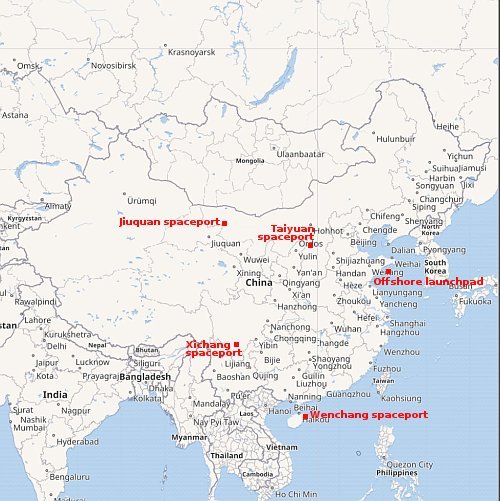
China's spaceports

China today successfully launched eight satellites, its Smart Dragon-3 rocket lifting off from an offshore barge off the northeast coast of China.

The reports from China’s state-run press provided no information on the satellites themselves. The rocket has four stages that are all solid-fueled. This was its fourth launch from the off-shore barge. It was also thirteenth total offshore launch for China, involving four different rockets.

The leaders in the 2024 launch race:

93 SpaceX
42 China
11 Russia
11 Rocket Lab

American private enterprise still leads the rest of the world combined in successful launches 109 to 64, while SpaceX by itself now leads the entire world, including American companies, 93 to 80.

0 comments

September 23, 2024 Quick space links

Courtesy of BtB’s stringer Jay. This post is also an open thread. I welcome my readers to post any comments or additional links relating to any space issues, even if unrelated to the links below.

  • ULA is prepping Vulcan for its second launch
  • Target launch date is October 4, 2024. The launch will put a dummy payload into orbit, but it will, if successful, also certify Vulcan for operationals paying launches for the U.S. military.


1 comment

Isar begins static fire tests of its Spectrum rocket

Proposed spaceports surrounding Norwegian Sea

Isar Aerospace, one of three German rocket startups vying to the be first to complete an orbital launch, has now revealed that it has begun static fire tests of its Spectrum rocket at its launch facility at the Andoya spaceport in Norway.

In response to questioning from European Spaceflight, Isar confirmed that all components of the Spectrum rocket that will be utilized for its inaugural flight had arrived in Andøya and that testing of the first and second stages had begun.

“All components of our launch vehicle Spectrum have arrived in Andøya and the final preparations for the first test flight of Spectrum are in full swing,” an Isar Aerospace spokesperson said. “We are currently performing hot fire tests of the first and second stages. These tests will determine whether the systems meet all the necessary requirements for the first test flight.”

The company has a 20-year lease at Andoya, and though it has not announced a launch date, these ground tests suggest that launch could occur quite soon. If so, Isar will have beaten Rocket Factory Augsburg and Hyimpulse to space. Rocket Factory had apparently been in the lead until a fire during a full static fire test of its RFA-1 rocket’s first stage in August destroyed the rocket.

This race is also between the spaceports surrounding the Norwegian Sea. Rocket Factory is launching from Saxavord in the Shetland Islands, a spaceport that has been under development the longest, since before 2020, and has been plagued with the red tape problems that appear systemic in the United Kingdom. Andoya however is a latecomer in this race. Though it has been used for suborbital tests for decades, it only started its effort to become a commercial spaceport for orbital flights in November 2023, less than eleven months ago.

0 comments

New Russian missile explodes during test

According to orbital imagery, it appears that a new Russian missile that has been under development for more than a dozen years but has not yet completed a full test flight, exploded sometime between September 20th and September 21st during a test launch.

Satellite images from Planet Labs of the Sarmat’s Yubileinaya launch silo in Plesetsk posted on Sept. 21, 2024, showed a major crater left by an apparent rocket explosion, along with multiple fires just east of the site. The fires were also confirmed by NASA’s satellite-based Fire Information for Resource Management System, FIRMS, within 24 hours of Sept. 21, 2024. At least four fire engines speeding to the facility were also discernable on satellite images, confirming that these pictures had been taken immediately after the incident on September 21.

The rocket’s development — which claims will be far more capable than its present missiles — appears to have been plagued with problems and delays. It is also a strange missile, in that it is liquid-fueled, something that western militaries abandoned for missiles more than a half century ago. Solid-fueled missiles are simpler and can be stored ready-to-launch for long periods. Fueling and launching a liquid-fueled rocket quickly is not really practical during a wartime emergency.

16 comments

SpaceX conducting salvage operations to recover a Superheavy booster in the Gulf of Mexico

SpaceX has apparently conducted salvage operations in the Gulf of Mexico to recover the Superheavy booster that had successfully completed a soft vertical splashdown during the fourth Starship/Superheavy test flight on June 6, 2024.

Confirmation of the recovery project came from a group of young, independent filmmakers who caught wind of the operation and chartered a boat for the 15-mile trip to the Ridgewind to see for themselves what was going on.

…After a two-and-a-half-hour cruise they were about a half mile from the Ridgewind when a drone buzzed toward them. It hovered for a moment before a voice announced through a loudspeaker: “There is a one mile exclusion zone in this area, please depart one mile away from vessel.”

The filmmakers retreated as requested, but then remained there for awhile, observing operations from a distance. They later contacted SpaceX.

The Interstellar Gateway crew reached out to SpaceX, which Leal said quickly confirmed it had contracted with Hornbeck to recover the giant booster. It asked the filmmakers to refrain from announcing the find until after the Ridgewind completed its work and began steaming to port. That happened Sunday.

The filmmakers are one of the number of independent live stream groups that record launches, and made it clear it announcing the salvage work that they respected SpaceX’s request because they knew it was entirely reasonable — to avoid safety problems that could be caused by others boating over — and that they had no desire to hinder SpaceX’s effort.

The article, from a mainstream Democratic Party propaganda source, however tried to slam SpaceX for its “secretive nature,” something that is so untrue only a Democrat shill could write it with a straight face. It also spent a lot of time criticizing the company for creating that one-mile safety exclusion zone around its salvage operations, questioning SpaceX’s “authority” to do so.

2 comments

Chinese pseudo-company almost succeeds in vertically landing test rocket

The Chinese pseudo-company Deep Blue Aerospace this weekend almost succeeded in vertically landing a grasshopper-type test rocket, its engines cutting off just before landing so that when the rocket hit the ground the impact was too much for its landing legs.

I have embedded video of the flight and crash landing below. The footage has a AI feel to it, for several reasons. First the camera is a fisheye lens, creating distortion. Second, this test grasshopper-type rocket is quite small, much smaller than the company wants you to realize, thus allowing the drone to fly around during its flight it in a somewhat spectacular manner.

The company stated that the test completed 10 of 11 engineering goals. It will have to rebuild a new test lander however to achieve that last and most important goal, landing without damage to allow immediate reflight. Regardless, this test means that China is finally getting close to achieving rocket reusablity, something it promised in 2018 it would achieve by 2020.

Note also that though this pseudo-company will likely not release its data to the other Chinese pseudo-companies, if China’s government wants to expropriate it for its own government rockets it will do so, and in fact likely has.
» Read more

3 comments

China and Rocket Lab complete launches

Yesterday there were two more launches. First China’s Long March 2D rocket in the very early morning hours lifted off from its Taiyuan spaceport in northern China, placing six satellites in orbit.

The satellites are part of a constellation for doing high resolution Earth observations. No word on where the rocket’s lower stages, using very toxic hypergolic fuel, crashed inside China.

Next Rocket Lab successfully launched five satellites for the French satellite company Kinéis. This was the second of five planned launches by Rocket Lab to put the entire 25 satellite internet-of-things constellation into orbit. It was also the second attempt to launch, with the first experiencing a launch abort at T-0 seconds due to a ground-system issue.

The launch pace is beginning to heat up. There were four launches yesterday, two from China, one from SpaceX and one from Rocket Lab. The leaders in the 2024 launch race:

93 SpaceX
41 China
11 Russia
11 Rocket Lab

American private enterprise still leads the rest of the world combined in successful launches 109 to 63, while SpaceX by itself now leads the entire world, including American companies, 93 to 79.

1 comment

Boeing replaces the head of its defense/space/security division

Ted Colbert
Ted Colbert

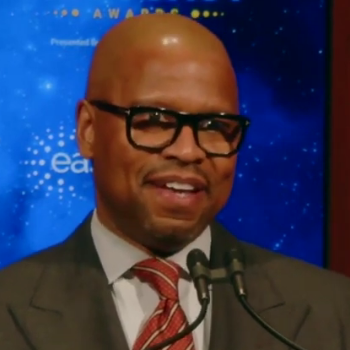
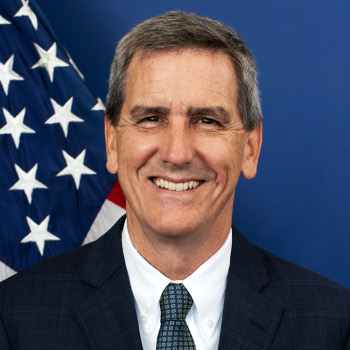
Boeing today announced that the head of its defense/space/security division, Ted Colbert, has been removed, effective immediately.

New Boeing CEO Kelly Ortberg in his first significant move since taking over in August, said Ted Colbert would be leaving and Steve Parker, the unit’s chief operating officer, would assume Colbert’s responsibilities until a replacement is named at a later date.

One project that Colbert was in charge of was Starliner, a program that has cost the company at least $1.6 billion in overruns because of numerous faulty engineering problems.

Colbert might not be to blame for the endless problems at Starliner, but the fish stinks from the head. He also might be very qualified, but sadly, as his picture shows, he is a minority, and since Boeing went all in on DEI racist hiring quotas a few years ago, which makes the skin color and gender of an applicant a major qualification in hiring, one can’t help wondering if he was a DEI (Didn’t Earn It) hire. At Boeing that policy created a goal to increase black staffing by 20%. Its full report [pdf] makes it very clear it no longer made talent, experience, or skill the primary qualification for getting hired, but skin color and sex took precedence.

As I said, one cannot help wondering if Colbert was hired not because of his great management and engineering knowledge, but because he happened to born with a dark skin color. If so, that might help explain the failures in this paricular division.

10 comments

China’s solid-fueled Kuaizhou-1A rocket launches four satellites

China this afternoon launched four satellites using its solid-fueled Kuaizhou-1A rocket, lifting off from its Xichang spaceport in the southwest of China.

It is unclear what the satellites purpose are, though there are hints they are part of a constellation providing communications for the internet of things. No word was also released where the rocket’s lower stages crashed in China.

The leaders in the 2024 launch race:

93 SpaceX
40 China
11 Russia
10 Rocket Lab

American private enterprise still leads the rest of the world combined in successful launches 108 to 62, while SpaceX by itself now leads the entire world, including American companies, 93 to 77.

2 comments
1 78 79 80 81 82 473