Killing private space

The financial foolishness in Congress, by Republicans this time, continues. In making its budget recommendations for NASA, the report [pdf] of the House Appropriations Commerce, Justice, Science, and Related Agencies subcommittee also demands that NASA immediately choose one commercial company for its commercial space program. (Hat tip to Clark Lindsey for spotting this.)

The number of ways this action is counter-productive almost can’t be counted.
» Read more

36 comments

Four TSA screeners have been charged with accepting cash in exchange for allowing drug smugglers pass through security.

This should make you you feel safer: Four TSA screeners have been charged with accepting cash in exchange for allowing drug smugglers to pass through security.

And in related news: A family missed its flight after TSA agents insisted on giving a seven-year-old girl with cerebral palsy a full pat-down.

0 comments

More problems for Dark Matter

Vast Polar Structure

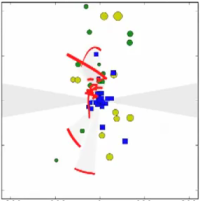
A new study by astronomers has found a vast structure of satellite galaxies and star clusters aligned perpendicular to the Milky Way and extending outward above and below the galaxy’s nucleus by as much as a million light years.

In their effort to understand exactly what surrounds our Galaxy, the scientists used a range of sources from twentieth century photographic plates to images from the robotic telescope of the Sloan Deep Sky Survey. Using all these data they assembled a picture that includes bright β€˜classical’ satellite galaxies, more recently detected fainter satellites and the younger globular clusters.

β€œOnce we had completed our analysis, a new picture of our cosmic neighbourhood emerged”, says Pawlowski. The astronomers found that all the different objects are distributed in a plane at right angles to the galactic disk. The newly-discovered structure is huge, extending from as close as 33,000 light years to as far away as one million light years from the centre of the Galaxy.

An animation illustrating this galactic distribution is posted below the fold. You can read the actual preprint paper here.

The problem with this polar alignment with the Milky Way’s core is that the theories for explaining the distribution of dark matter do not predict it.
» Read more

0 comments

To mine the asteroids, first build small cheap space telescopes.

To mine the asteroids, first build small cheap space telescopes.

The space telescope will be based on the same design Planetary Resources will eventually use for its asteroid-prospecting spacecraft: a 30-kilogram to 50-kilogram flier packed with imaging sensors and a laser-optical communication system the company is developing to avoid encumbering its spacecraft with large antennas. The company, which says it has about two dozen employees, will market these spacecraft as cheap but effective telescopes for both astronomical and Earth-observing applications. Sales would provide cash for the company’s core work on asteroid mining, Eric Anderson, co-founder and co-chairman of Planetary Resources, said.

The telescope slated for launch sometime in the next two years β€œwould be something, let’s say, a university buys [for astronomical observations], or a commercial company that wants to monitor shipping traffic or something like that,” Anderson said in a phone interview. The cost for the telescope, which Planetary Resources is calling Arkyd-101, would be β€œmillions of dollars, including launch.”

At the Planetary Resources press conference today, there was a lot of talk about the benefits and profits to be gained from mining the asteroids. However, this ain’t gonna happen for quite a few years. In the meantime, the company plans to make money building space telescopes which scientists and others can use, for a fee, to do research.

In other words, the government and astronomers dropped the ball on replacing the Hubble Space Telescope. Now, private enterprise is going to pick it up and run with it.

4 comments

Cryosat has released its first seasonal variation map, tracking the growth of the Arctic icecap for the winter of 2010-2011.

Cryosat has released its first seasonal variation map, tracking the growth of the Arctic icecap for the winter of 2010-2011.

The video at the link is quite interesting to watch. Note however that the press information says nothing about whether the icecap was larger or smaller than expected, something that probably is not surprising. It will probably take decades of further work to get the true context of these results.

0 comments
1 86 87 88 89 90 134