UAE astronaut flight to ISS tentatively scheduled for April

Russia has now tentatively scheduled the flight to ISS of the United Arab Emirates first astronaut.

The first astronaut from the United Arab Emirates (UAE) will fly to the International Space Station (ISS) on April 5, 2019, and will return to Earth on April 16, 2019, the ISS launch schedule, shared with Sputnik, has shown. According to the document, an astronaut will fly to the ISS on board the Russian Soyuz MS-12 spacecraft.

It has not been determined yet if Hazza Mansouri or Sultan Nayadi will take part in the mission. Both astronauts have qualified for it and have begun their training in Russia earlier in September.

Though the goal of this mission by the UAE government is to encourage a private space industry in their country, the mission remains wholly a government creature. What has not been released is how much UAE is paying the Russians for their flight.

Had the launch of the U.S. commercial crew spacecraft not been slowed by NASA and had been operational, either SpaceX or Boeing could have competed for this business. Expect them to do so in the future.

4 comments

China launches smallsat

One of China’s claimed-to-be private companies, Expace, today launched a smallsat into orbit using the Kuaizhou-1A solid-fueld rocket. .

Exspace, like OneSpace and Ispace, is considered private by the Chinese. I find it interesting however that all these private companies have remarkably similar names, and all appear to be doing military work. Even if they get private financing from Chinese investors and their management is formed independent of the government, we should not be fooled. These are wholly owned and controlled by the Chinese government. They do nothing without its knowledge and support.

The leaders in the 2018 launch race:

26 China
16 SpaceX
8 Russia
7 ULA
6 Europe (Arianespace)

China has widened its lead over the U.S. in the national rankings, 26 to 24.

2 comments

Stratolaunch building its own rocket engine

Capitalism in space: Stratolaunch yesterday revealed details about its PGA rocket engine that it is developing in house.

The hydrogen-fueled PGA will produce 200,000 pounds of liftoff thrust. “When you try to do something like single stage to orbit, or in our case air launch, you really have to have hydrogen performance to make it happen,” Jeff Thornburg, Stratolaunch’s vice president of propulsion engineering, told Aviation Week.

Stratolaunch says that 85 percent of the manufacturing process will take advantage of additive-manufacturing techniques, also known as 3-D printing. That’s aimed at reducing the cost of engine production. “The propulsion team is currently in the process of manufacturing and testing prototype subscale and full-scale hardware,” Stratolaunch says. “The team has completed ignitor development, with injector testing currently underway. After this is completed, the team will perform a full-scale preburner test by the end of 2018.”

The engine is being designed to power the rockets and manned ferry that they also plan to build to be launched from the bottom of their giant airplane Roc.

It is clear now that they could not find anyone else willing to build these upper stages, and are now building them themselves. This means that SpaceX, with its Big Falcon Rocket, is now not the only company building a completely reusable system for gaining access to space.

2 comments

Roscosmos head meets with Chinese

The head of Russia’s Roscosmos space agency, Dmitry Rogozin, held meetings this week with China, discussing possible future space cooperation.

Russia can’t really afford to do much right now on its own, but it also wants to negotiate the best deal it can with anyone it works with in space. These discussions are therefore specifically designed to give Rogozin some negotiating leverage when he meets with NASA’s head Jim Bridenstine on October 10.

0 comments

New images from Hayabusa-2’s mini-bouncers

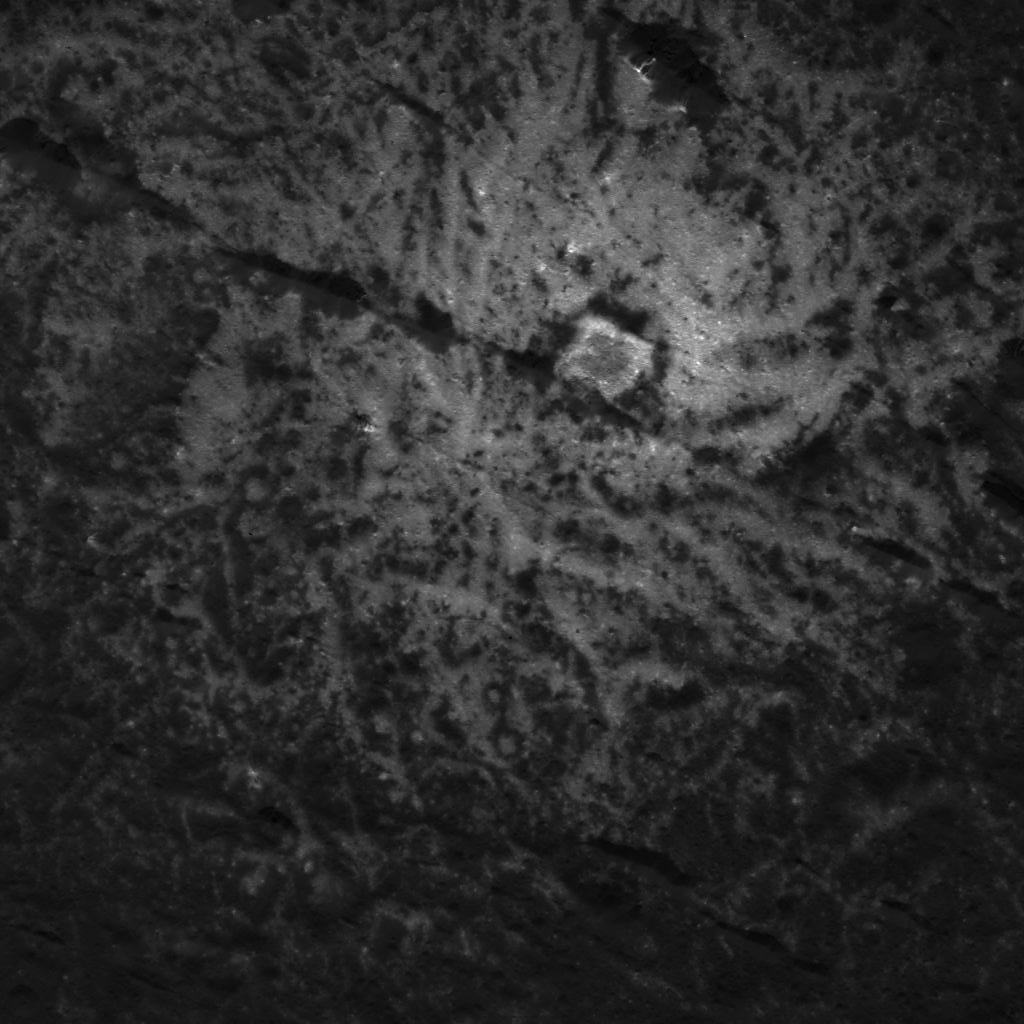
Three press releases from the Hayabusa-2 science team last night provide new images from the spacecraft’s MINERVA bouncers, presently on the surface of Ryugu, as well as new high resolution images from Hayabusa-2 during its recent close-in maneuvers.

The images from the first story also includes a ten second movie showing a very rocky surface with the sun moving across the sky. The last link shows the primary landing site candidate with two backup sites.

All told, these images suggest that Ryugu is nothing more than a rubble pile stuck together. If it was heading to Earth, it might be difficult to deflect it, as it might break apart caused by any stress.

1 comment

Next Long March 5 launch delayed again?

There are indications in the Chinese press that suggest the next launch of China’s largest rocket, the Long March 5, will be delayed from its present November launch into 2019.

An online report by People’s Liberation Army Daily, a military newspaper, reports Lin Xiqiang, deputy director of the China Manned Space Engineering Office (CMSEO), as saying at a press conference in Beijing on Wednesday that the Long March 5B will not make its planned test launch in the first half of 2019.

“Due to the failure of the launch of the Long March 5 remote launch vehicle, the first flight of the Long March 5B carrier rocket will be postponed. The specific implementation time needs to be clarified after coordination with relevant departments,” Xiqiang said.

The November launch was to put up a test communications satellite. Should it slip into 2019, this would likely also cause delays in the launch of China’s first lunar sample return mission, Chang’e-5 (originally scheduled for 2017), the launch of China’s first Mars planetary mission in 2020, and finally the launch of the first module of China’s space station, also set for 2020.

All this once again indicates that the problems with Long March 5 were very serious, and might not yet have been addressed, even with a redesign of its engines.

0 comments

SEC goes after Musk

The Securities and Exchange Commission today filed a complaint against Tesla in an effort to force Elon Musk out as head of the company.

The complaint filed by the Securities and Exchange Commission came after a last-minute decision by Mr. Musk and his lawyers to fight the case rather than settle the charges.

The filing by the SEC in federal court in Manhattan threatens to deal a severe blow to the Palo Alto, Calif., electric car maker. Its brand and Mr. Musk are closely intertwined, and analysts have said the company’s roughly $50 billion market value is driven by Wall Street’s appreciation for Mr. Musk’s vision and skill as an innovator.
SEC Sues Elon Musk for Fraud, Seeks Removal From Tesla

Tesla wasn’t named in the suit as a defendant, but the SEC is seeking to bar Mr. Musk, Tesla’s largest shareholder and its top executive, from serving as an officer or director of any U.S. public company. Tesla shares, which have been under intense pressure amid questions about the firm’s financial strength and Mr. Musk’s behavior, tumbled 9.9% to $277 in after-hours trading Thursday on Nasdaq.

This is very bad news for Tesla. However, it might be good news for SpaceX, as Musk has admitted to being very overworked. If he is forced from Tesla, he will have an enormous load removed from him.

13 comments

ULA picks Blue Origin rocket engine for Vulcan first stage

Capitalism in space: ULA has chosen Blue Origin’s BE-4 rocket engine to power the first stage of its next generation rocket, which they are now calling Vulcan-Centaur.

Two BE-4 engines will be used to power the Vulcan first stage. The press release does not mention anything about how they plan to recover these first stages. Earlier announcements had said that they would separate from the rocket stage and parachute down to be capture before hitting the ground.

3 comments
1 38 39 40 41 42 155