September 21, 2022 Quick space links

Courtesy of BtB’s stringer Jay, who trolls Twitter so I don’t have to.

The powerpoint presentation can be viewed here [pdf]. Lots of interesting details, including the revelation that Rocket Lab is considering the construction of its own manned capsule.

To make sure there is no confusion, the satellite did not break apart. Instead, it appears to have been made of two spacecraft that have now undocked from each other and are testing automatic rendezvous and docking procedures, similar to the tests that Astroscale was doing.

The project is targeting 2030 for launch. The picture of the “hopper” at the link looks more like a Boston Dynamics robot dog.

Based on the deal with the UAE on the lunar Chang’e-7 mission, China is looking for other countries to sign on, and will likely get a few.

The deal doesn’t appear to include anything specific, only for both to explore future cooperation, including flying Canadian astronauts on Axiom’s station. Also, this deal suggests Canada will get the contract to build the robot arm for Axiom.

The company had previously done a 20 second test fire, and is still hoping to launch by the end of the year.
4 comments

Martian layers everywhere!

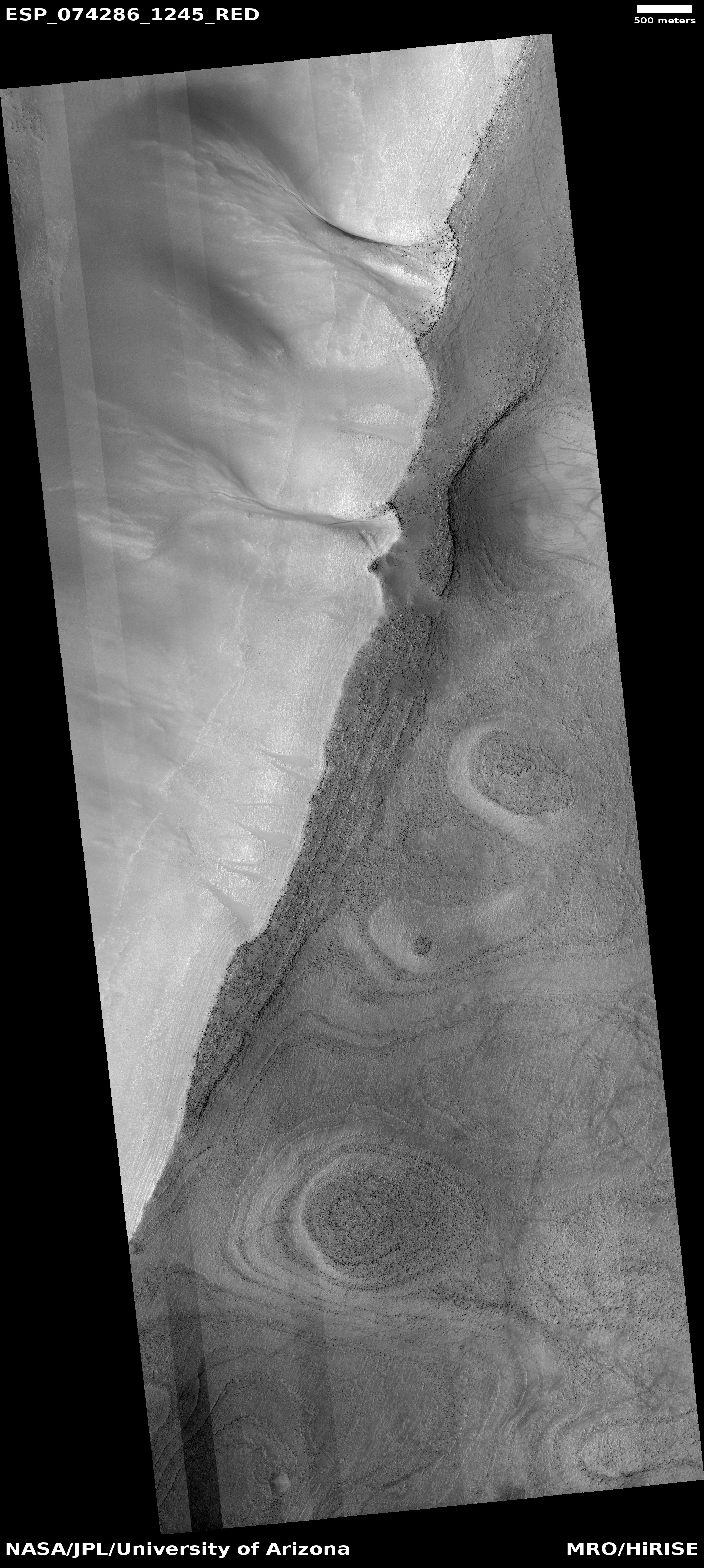
Layers in Argyre Basin
Click for full image.

Cool image time! The photo to the left, rotated, cropped, and reduced to post here, was taken on June 1, 2022 by the high resolution camera on Mars Reconnaissance Orbiter (MRO). It shows the rim edge to a fifteen-mile-wide canyon, with many apparent layers exposed on the high plateau.

The layers are intriguing in that they suggest several things. First, they give us a glimpse into the top and youngest layers that make up the interior canyon wall. Second, they tell us that erosion has removed much of those top and youngest layers, resulting in the mesas on that plateau.

Finally, the gullies flowing down into the canyon indicate further erosion processes, eating away at the canyon wall over time.

The location of this canyon is also intriguing.
» Read more

1 comment

Pushback: NY cops fight city’s COVID jab mandate

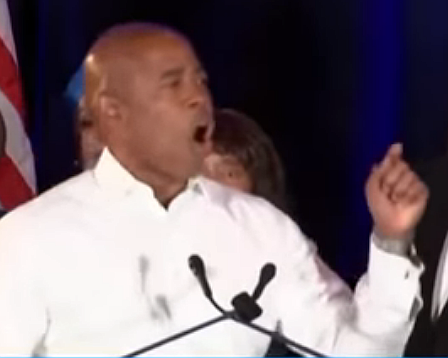
NY Mayor Eric Adams: an enthusiastic tyrant

Bring a gun to a knife fight: In the past week three stories from New York City suggest that the willingness to fight against the irrational and abusive COVID shot mandates imposed by the one-party rule of the Democratic Party in that city can win.

First, a state judge in New York on September 13, 2022 ruled in favor of a lawsuit by police officer Alexander Delito, stating that the city cannot fire him for refusing to get the jab. Delito had apparently been arbitrarily denied a religious exemption, with no explanation. As the judge noted in his decision:

“The hollow and generic phrase ‘does not meet criteria’ cannot be rational because not a single item particular to [Deletto] was discussed and not a single reason for the decision was given,” Justice Arlene Bluth ruled. “There is no indication that anybody even read [Deletto’s] arguments. It is the duty of the agency to explain why it made the decision,” the judge added.

The ruling sets a precedent that will make it difficult for New York City to continue the mandate. Not surprisingly, a week later the city’s Democrat mayor, Eric Adams, announced he is lifting the mandate on the private sector and on school children, even as he refused to remove it from government workers.

The response from the leaders of various government unions was immediate. Here is just one example:
» Read more

7 comments

Another model attempts to show how liquid water could have once existed on Mars

The uncertainty of science: Scientists today published a new model that attempts to show how it was possible in the distant past for liquid water to have existed on the surface of Mars.

New research published in Earth and Planetary Science Letters suggests that Mars was born wet, with a dense atmosphere allowing warm-to-hot oceans for millions of years. To reach this conclusion, researchers developed the first model of the evolution of the Martian atmosphere that links the high temperatures associated with Mars’s formation in a molten state through to the formation of the first oceans and atmosphere. This model shows that — as on the modern Earth — water vapor in the Martian atmosphere was concentrated in the lower atmosphere and that the upper atmosphere of Mars was “dry” because the water vapor would condense out as clouds at lower levels in the atmosphere. Molecular hydrogen (H2), by contrast, did not condense and was transported to the upper atmosphere of Mars, where it was lost to space. This conclusion – that water vapor condensed and was retained on early Mars whereas molecular hydrogen did not condense and escaped – allows the model to be linked directly to measurements made by spacecraft, specifically, the Mars Science Laboratory rover Curiosity.

As a model, this theory proves nothing, though it is very intriguing. The scientists propose that the heat from the planet’s interior replaces the known lack of energy that came from the Sun in Mars’ far past. While this could work, what makes it very uncertain is that its surface data is based on a single measurement from Curiosity, hardly a deep and convincing baseline.

0 comments

Ingenuity completes 32nd flight

According to a tweet from JPL, Ingenuity successfully completed its 32nd flight on Mars on September 18, 2022.

The 55.3-second flight covered 93.74m at a max speed of 4.75 meters per second.

That is about 308 feet distance, comparable to the helicopter’s previous flight. Though it probably continued to the west, as with that last flight, JPL’s tweet did not provide any directional information.

This second short hop in a row however suggests that the team’s focus has definitely shifted from scouting for Perseverance to practicing precision landings, thus gathering data to help build the future Martian helicopter that will be used to pick up Perseverance’s core samples some time in the future.

0 comments

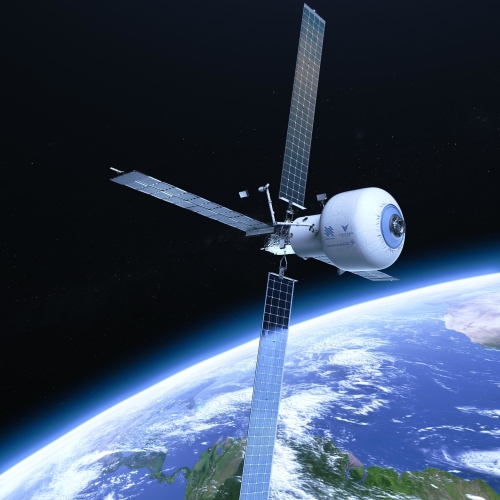
Hilton chosen to design hotel suites on Nanoracks’ Starlab private space station

Nanoracks' Starlab space station
Nanoracks’ Starlab space station

Capitalism in space: Hilton has been chosen to design the hotel suites inside the Starlab private space station that Nanoracks is building and hopes to launch sometime this decade.

Voyager and Hilton will partner in the areas of architecture and design, leveraging Hilton’s word-class creative design and innovation experts, to develop Space Hospitality crew headquarters aboard Starlab, including communal areas, hospitality suites, and sleeping arrangements for the astronauts.

The announcement was made by Voyager Space, the Nanoracks’ division that is building Starlab, and already has a $160 million development contract from NASA.

11 comments

Want to do a virtual hike in Jezero Crater on Mars? You can!

Using data from Mars orbiters, Perseverance, and Ingenuity, scientists have now created a virtual hiking map of Jezero Crater, allowing anyone to explore in detail the same places that the rover and helicopter have visited.

You can view the map here. From the press release:

The map allows virtual hikers to zoom in and out, and pan rapidly across scenes, so that they can explore the landscape from large scales down to centimetre-detail. Some of the 360° panoramas integrated with the waypoints have been synthetically rendered from orbital image data. Others are real panoramas stitched together from a multitude of single images taken by the Mastcam-Z camera instrument onboard the Mars 2020 Rover Perseverance, which have been provided by the University of Arizona. The sounds have been recorded by the SuperCam instrument on that same rover mission.

I’ve played with the map only a little, but find it quite amazing and useful, especially because it seems to work well on my relatively ordinary desktop Linux computer.

0 comments

Launch startup Spinlaunch raises $71 million more in private investment capital

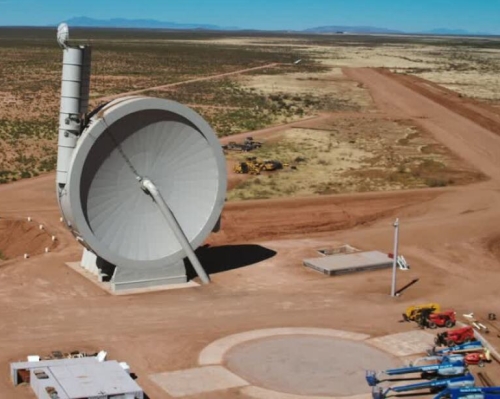
Spinlaunch prototype suborbital launcher
Spinlaunch’s prototype launcher

Capitalism in space: The radical launch startup company Spinlaunch announced yesterday that it has raised an additional $71 million in private investment capital, bringing the total it has raised to $150 million.

Unlike the many rocket startups, Spinlaunch proposes launching payloads using a centrifuge. The image to the right is of its prototype smaller scale launcher, which has already completed several test launches.

The company claims its full scale launcher will begin operations by 2026, but it has not yet revealed where it will be built, which means construction has not yet begun.

Such a launch system cannot be used by any satellite with delicate equipment. The g-forces during launch are too high. However, for getting bulk cargo, like water and fuel into orbit, such a system could become very profitable, if it can be made operational.

2 comments

Saudi Arabia buys two seats on Dragon for Axiom commercial flight to ISS

Capitalism in space: According to an as-yet unconfirmed story today by Reuters, Saudi Arabia has purchased two seats on a SpaceX Dragon capsule as part of an Axiom commercial flight to ISS.

The sources for the story are all anonymous, and no one from Axiom or SpaceX or Saudi Arabia has confirmed it. Nonetheless, it seems entirely plausible, since Saudi Arabia has made it clear it is considering such a mission and Axiom and SpaceX are eager to sell tickets.

0 comments

Webb’s first infrared image of Neptune

Webb's infrared view of Neptune
Click for full image.

The science team for the James Webb Space Telescope today released that telescope’s first infrared image of Neptune.

That image is to the right, cropped and reduced slightly to post here. It is, as the press release touts, the best view in decades of Neptune’s rings. From the caption:

The most prominent features of Neptune’s atmosphere in this image are a series of bright patches in the planet’s southern hemisphere that represent high-altitude methane-ice clouds. More subtly, a thin line of brightness circling the planet’s equator could be a visual signature of global atmospheric circulation that powers Neptune’s winds and storms. Additionally, for the first time, Webb has teased out a continuous band of high-latitude clouds surrounding a previously-known vortex at Neptune’s southern pole.

The dots around the gas giant are the heat signatures of seven of its fourteen moons.

1 comment

OneWeb announces delivery of 36 satellites to India for launch

Capitalism in space: OneWeb yesterday announced the delivery of 36 satellites to India for launch on that nation’s biggest rocket, the GSLV-Mark3.

Though no date for launch was mentioned, the press release did say this:

One additional launch will take place this year and three more are targeted for early next year to complete the constellation.

This suggests two launches before the end of the year, one by India with the second already contracted to SpaceX. As for the three launches next year, it is unclear yet who will launch them. OneWeb has contracts with SpaceX, Relativity, and NewSpace India Limited (NSIL), the commercial arm of India’s government space program which is doing this year’s GSLV launch. While Relativity has not yet launched, either SpaceX or NSIL could handle those launches for sure next year.

2 comments

Hydrogen leak detected during today’s SLS tank test

Though engineers have apparently overcome the issue so that today’s tank test of NASA’s SLS rocket can continue, a hydrogen leak was nonetheless detected during fueling.

The fueling tank test is not yet complete.

At this moment I cannot imagine the military’s range office will allow NASA to launch on September 27th, as the agency has requested. To do so will require the range to ignore the possibility that the flight termination is inoperable, as its batteries are past their use-by date by almost a month. Combined with these ongoing leak issues, it would be irresponsible to do otherwise.

4 comments
1 57 58 59 60 61 192