Part 1 of 2: What NASA’s next administrator should do if SLS and Orion are cancelled

When George Bush Jr. first proposed in 2004 an American long term effort to return to the Moon that has since become the Artemis program, he made it clear that the goal was not to simply land in 2015 and plant the flag, but to establish an aerospace industry capable of staying on the Moon permanently while going beyond to settle the entire the solar system.

The problem was that Bush proposed doing this with a government-built system that was simply not capable of making it happen. Though this system has gone through many changes in the two decades since Bush’s proposal, in every case it has been centered on rockets and spacecrafts that NASA designed, built, and owned, and were thus not focused on profit and efficiency. The result has been endless budget overruns and delays, so that two decades later and more than $60 billion, NASA is still years away from that first Moon landing, and the SLS rocket and Orion capsule that it designed and built for this task are incapable of establishing a base on the Moon, no less explore the solar system.

The real cost of SLS and Orion
The expected real per launch cost of SLS and Orion

For one thing, SLS at its best can only launch once per year (at a cost of from $1 to $4 billion per launch, depending on who you ask). There is no way you can establish a base on the Moon nor colonize the solar system with that launch rate at that cost. For another, Orion is simply a manned ascent/descent capsule. It is too small to act as an interplanetary spacecraft carrying people for months to years to Mars or beyond.

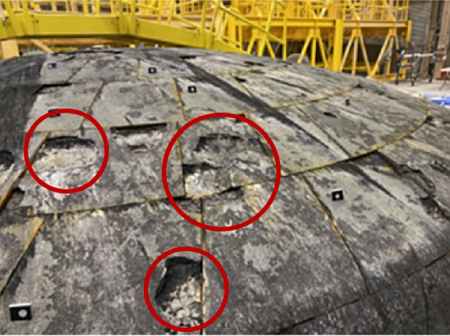
These basic design problems of both SLS and Orion make them impractical for a program to explore and colonize the solar system. But that’s not all. Orion has other safety concerns. Its heat shield has technical problems that will only be fixed after the next planned Artemis-2 manned mission around the Moon. Its life support system has never flown in space, has issues also, and yet will also be used on the next manned flight.

Thus, it is very likely that when Jared Isaacman, Trump’s appointee for NASA administrator, takes over running the agency, he will call for the cancellation of both SLS and Orion. How can he ask others to fly on such an untested system?

When he does try to cancel both however the politics will require him to offer something instead that will satisfy all the power-brokers in DC who have skin in the game for SLS/Orion, from elected officials to big space companies to the bureaucrats at NASA. Isaacman is going to have to propose a new design for the Artemis program that these people will accept.

Artemis without SLS and Orion

Before I propose what Isaacman should do, let’s review what assets he will have available within the Artemis lunar program after cancelling these two boondoggles.
» Read more

26 comments

Reanalysis of Webb data discovers more than a hundred very small main-belt asteroids

Portrait of all 138 new asteroids
Click for original image.

Using data from the Webb Space Telescope in an unexpected way, astronomers have discovered 138 asteroids in the main asteroid belt, most of which are the smallest so far detected.

The picture to the right shows all 138 asteroids. The researchers had originally used Webb to study the atmospheres of the exoplanets that orbit the star TRAPPIST-1. They then thought, why not see if their data also showed the existence of asteroids in our own solar system. By blinking between multiple images they might spot the movement of solar system objects moving across the field of view. From the press release:

The team applied this approach to more than 10 000 [Webb] images of the TRAPPIST-1 field, which were originally obtained to search for signs of atmospheres around the system’s inner planets. By chance TRAPPIST-1 is located right on the ecliptic, the plane of the solar system where all planets and most asteroids lie and orbit around the Sun. After processing the images, the researchers were able to spot eight known asteroids in the main belt. They then looked further and discovered 138 new asteroids, all within tens of meters in diameter — the smallest main belt asteroids detected to date. They suspect a few asteroids are on their way to becoming near-Earth objects, while one is likely a Trojan — an asteroid that trails Jupiter.

The data is insufficient for most of these objects to chart their orbits precisely. Based on this one single study, however, it suggests that pointing Webb along the ecliptic in almost any direction will detect more such objects. Do this enough and astronomers might actually be able to get a rough census of the asteroid belt’s population.

1 comment

NSF punts on its two big telescope projects

Because it presently does not have sufficient funds to build both the Giant Magellan Telescope (GMT) in Chile and the Thirty Meter Telescope (TMT) in Hawaii, the National Science Foundation (NSF) asked an independent panel to look at both projects and give recommendations on which project it should go with.

That report [pdf] has now been released, and its conclusions essentially take the advice of former Yankee catcher Yogi Berra, “When you come to a fork in the road, take it.” From the report’s executive summary:

Both GMT and TMT have strong leadership, partnership and financial commitments but require $1.6 billion in NSF funding to proceed. Without this support, significant delays or project cancellations may result. The panel emphasized the critical need for congressional support, noting that without additional appropriations, NSF may face challenges balancing these projects with other national priorities, risking U.S. competitiveness in fundamental research. [emphasis mine]

If you dig into the report however you find that TMT is a far more uncertain project. GMT is already being built, while TMT is stalled because it has been unable to get political approval to build in Hawaii on Mauna Kea, even though it initially wanted to start construction almost a decade ago.

Clearly, this report was created simply as a lobbying ploy by the NSF to Congress. NSF didn’t want the report to make a choice. It wanted it to endorse both telescopes so that — rather than bite the bullet and fund one telescope with the money it has already been given by Congress — NSF could use the report to demand more funding so that it can fund both.

Though Congress is now controlled by more fiscally-minded Republicans, don’t expect them to be anymore responsible on this issue than Democrats. These guys really don’t understand basic economics, and think they have a blank check for anything they wish to do. I anticipate Congress will give NSF the extra cash for both telescopes.

The problems for TMT remain, however, and even with that cash it remains very doubtful the telescope will be built. But gee, that won’t be a problem for NSF. Who wouldn’t like getting an extra billion or two to spend as one wishes?

1 comment

Two congressmen demand FAA streamline its launch licensing process

In a letter [pdf] sent to the FAA on December 6, 2024, two congressmen have called for the FAA to fix what it calls its Part 450 launch licensing process, established in 2021, that has been choking off rocket development in the U.S.

The congressmen, Sam Graves (R-Missouri) and Rob Wittman (R-Virginia), specifically focused on the problems these new regulations have imposed during what the FAA calls its “pre-application review.” From the letter:

In November of 2024, the FAA indicated that 98 percent of applications are met within the statutory 180 day timeline. However, this timeframe does not include the months, and oftentimes years, of pre–application review that create extensive delays for companies seeking a launch and reentry license. [emphasis mine]

Consider the implications of this one quote. The FAA is proud of the fact that it approves license applications within six months — an ungodly long time for a startup — but doesn’t mention that the approval process is actually far longer because it requires new applications to be reviewed at length, before they can even be submitted.

In November, a week after Trump’s election victory, the FAA announced that it was forming a committee made up of people from the launch industry as well as academia to review Part 450. In their letter the congressmen approved of this new committee, but noted its work would not be completed until mid-2025, and that “the system is broken and must be fixed” immediately.

We, however, urge the FAA to act now and ensure that all actions short of rulemaking that can help mitigate the deficiencies of the part 450 regulation are taken in advance of any necessary regulatory changes to ensure that the commercial space industry does not have to wait years for relief.

I suspect we shall see some real action at the FAA come January 20, 2025, after Trump takes office.

1 comment

Superheavy to be used on next test flight completes 15-second static fire test

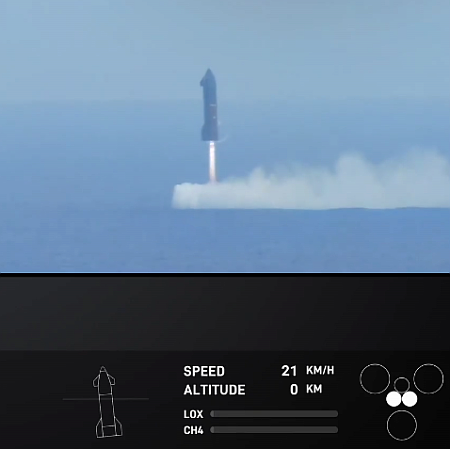
SpaceX has successfully completed a launchpad 15-second static fire test of the 33 engines on the Superheavy booster that will be used on the next test flight (the seventh) of its Starship/Superheavy rocket.

The video at the link is remarkable in that it appears all 33 Raptor-2 engines fired for the entire test with no problems either to the rocket or launchpad, despite producing more thrust in that time than any rocket ever in the history of space exploration.

According to this report, it appears SpaceX is targeting January 11, 2025 for that seventh test flight.

SpaceX has not yet announced a launch date for Starship’s seventh test flight, but the company appears to be eyeing Jan. 11; an email sent by NASA to the U.S. Federal Aviation Administration identifies that date as the target. (According to that email, NASA plans to deploy a Gulfstream V jet to observe the upcoming flight.)

This date however has not yet been confirmed by SpaceX. Nor has the FAA indicated it will issue a license. The FAA’s approval will depend on the flight plan SpaceX chooses for the test. If similar to the previous two test flights, then that approval will be fast. If not, the red tape will likely cause several more months of delays.

0 comments

AST SpaceMobile’s satellite-to-cell constellation gets its second contract

AST SpaceMobile, which is building a constellation of satellites that act as orbiting cell towers and can provide service where ground-based cell towers are unavailable, has now won its second contract, signing a 10-year deal with Vodafone, a European cell company which provides service there as well as across Africa and the Middle East.

AST’s first contract is with AT&T in the U.S. It already has five satellites in orbit, and plans to begin launching its second generation and larger BlueBird satellites next year, with the goal to begin service in the U.S. first.

All it needs really is an FCC license, which it has applied for but not yet received. Its main competitor, Starlink, has received its FCC license, so expect this red tape to evaporate relatively quickly, especially with the coming change in presidents.

0 comments

One of Australia’s proposed spaceports moves

Australia's spaceports
Australia’s spaceports

“I’m from the government and I’m here to help!” Because of its inability to get the proper permissions from a local council, the management of Equatorial Launch Australia (ELA) has abandoned its original spaceport location on the Gove peninsula in the Northwest Territory of Australia and shifted east to a new location on the York peninsula in Queensland.

On the map to the right the “X” shows the old location, with the new location near the town of Weipa on the west coast of the peninsula. The change was forced on the company when it could not get proper approvals from the Northern Land Council (NLC), which manages the Arnhem Land Aboriginal Land Trust where the original site was located.

In a statement late on Monday, ELA said its most recent attempt to finalise a lease for the expansion of the ASC in October had been unsuccessful, following three other failed attempts in the last 12 months. In each case, it said the NLC had “failed to meet its own specified deadline for the approval of the Head Lease” or “provide any official reason for the delay”, despite pleas from the NT government and the Gumatj Aboriginal Corporation.

Because ELA has a launch contract with a South Korea rocket startup Innospace that intends to launch next year, it decided the switch had to occur now to make sure it could meet its obligations under this launch contract.

2 comments

Panama and Austria to sign Artemis Accords

NASA yesterday announced that both Panama and Austria will sign Artemis Accords tomorrow, bringing the total number of nations in the alliance to fifty.

The full list of nations now part of this American space alliance: Angola, Argentina, Armenia, Australia, Austria, Bahrain, Belgium, Brazil, Bulgaria, Canada, Chile, Colombia, Cyprus, Czech Republic, Denmark, Dominican Republic, Ecuador, Estonia, France, Germany, Greece, Iceland, India, Israel, Italy, Japan, Lithuania, Luxembourg, Mexico, the Netherlands, New Zealand, Nigeria, Panama, Peru, Poland, Romania, Rwanda, Saudi Arabia, Singapore, Slovakia, Slovenia, South Korea, Spain, Sweden, Switzerland, the United Kingdom, the United Arab Emirates, the Ukraine, the United States and Uruguay.

The accords were created by the first Trump administration with the goal to create an alliance with enough clout to overcome the Outer Space Treaty’s restrictions on private property. Under the Biden administration, the goal has been rewritten to accomplish the exact opposite, as noted by NASA yesterday:

The Artemis Accords are grounded in the Outer Space Treaty and other agreements including the Registration Convention, the Rescue and Return Agreement, as well as best practices and norms of responsible behavior that NASA and its partners have supported, including the public release of scientific data.

With Trump back in charge, expect him to bring the accords back to its original goal. Unlike his first term, the alliance is now large, and he can use it to quickly apply pressure on the international community to overcome the Outer Space Treaty’s limitations on private property.

0 comments

Kamila Valieva – Avatar

An evening pause: Performed live in 2022, which explains the stupidity of her putting on a mask at the very end of the video.

Hat tip Judd Clark, who notes her sad history: “A real tragedy, an exceptional skater, her coaches gave her trimetazidine, a medication used for heart problems, which apparently makes the heart more efficient at using oxygen. Failing a drug test at 15, most of her medals and records were rescinded.”

See this page for more details. She had finished first during this competition in 2022. All for naught.

0 comments

December 9, 2024 Quick space links

Courtesy of BtB’s stringer Jay. This post is also an open thread. I welcome my readers to post any comments or additional links relating to any space issues, even if unrelated to the links below.

As Jay noted to me in his email, not much news today. I have been working on a long essay outlining my recommendations for NASA and Jared Isaacman, should he cancel SLS and Orion as I expect he will. Hopefully it will be finished by tomorrow. I might post it here, or see if some other venue might be interested.

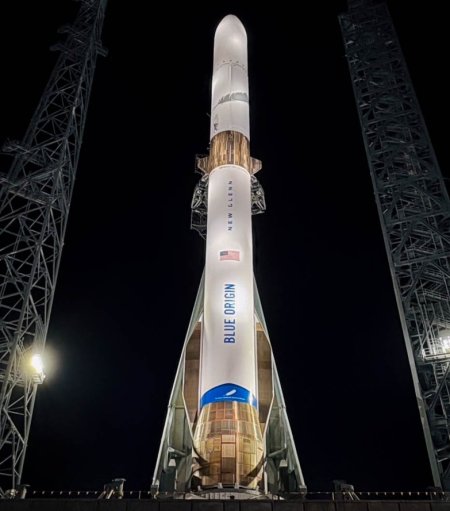
  • Blue Origin’s CEO touts its prep work on New Glenn on the launchpad
    Blue Origin also sent out an email today saying the Blue Ring demo payload for the launch is also ready. Yet, the key quote from the tweet above was this:: “While we wait for regulatory approvals for hotfire and launch…” Why the hell is the FAA holding up this launch? For what reason? Or is it simply that the agency wants to be an equal opportunity red tape destroyer of everyone?
11 comments

“Thar’s ice in them hills!”

Overview map

Thar's ice in them hills!
Click for original image.

Cool image time! The picture to the right, cropped, reduced, and sharpened to post here, was taken on September 25, 2024 by the high resolution camera on Mars Reconnaissance Orbiter (MRO). It shows what the camera team labels as a “mound in the southern highlands.”

The mound in question sits in the center of the sunken depression, and at the highest resolution shows its top to be cracked and broken, as if something is attempting to break out by pushing up from below.

Everything about this picture screams near-surface ice. The cracked mound suggests ice sublimating into gas, which applies pressure to the surface and thus the cracks. The depression suggest that much of the near-surface ice at this location has already disappeared, causing the ground to sag. All the craters lack upraised rims. If caused by impacts, the ground here was soft enough that the impactor simply sank into the ground. Imagine dropping a rock you’ve heated into snow. It would simply leave a hole.

But there’s more. The white dot in the overview map above marks the location. In the inset, the lighter area surrounding this depression resembles an ice sheet that is slowly sublimating away. There are also other similar depressions in that lighter area. The lighter area also has fewer craters than the darker regions nearby, suggesting that this ice sheet covers the older impacts.

The location is in the southern cratered highlands in a mid-latitude region where many images indicate the existence of layers of ice deep below ground. This picture is more evidence of the same, but it also indicates the presence of ice very close to the surface as well.

The orbital data continues to tell us that Mars is not a dry desert like the Sahara, but an icy desert like Antarctica. There will be plenty of water for future colonists. All they will have to do is stick a shovel in the ground, dig it up, and process it.

0 comments

Ten stupid academic studies funded by the federal government

Campus Reform last week posted a list of ten academic studies funded by federal government that any sane person would not only consider stupid, but an utter waste of money.

Number 1 on the list was a grant of almost a half million dollars to researchers at Reed College in Oregon to study the gambling habits of pigeons. The researchers claimed the study would shed light on human gambling behaviors, but if you believe that then you would likely also fork over your life savings to buy the Brooklyn Bridge.

Of the ten studies listed, the National Institute of Health (NIH) and the National Science Foundation (NSF) funded four each, while the National Endowment for the Humanities and the National Cancer Institute funded one each.

National Cancer Institute’s study is surely going to help cure cancer, as it gave $7 million to the con artists faking as researchers at Stanford University to build an AI toilet equipped with cameras to scan the user’s waste and backside.

The studies were done at a range of other major universities, including Cornell, the University of California, the University of Illinois, and the University of Connecticut. Most are publicly funded institutions.

This list demonstrates clearly the bankruptcy of the government agencies involved and justifies any effort to slash their budgets by significant amounts. It does more however. It shows us the bankruptcy of the academic community as well. If scientists at major universities think this drivel is valid research, then we know they are teaching their students garbage as well. The public funding to these colleges should be slashed also.

7 comments
1 10 11 12 13 14 191