Sweden signs Artemis Accords

Sweden yesterday became the 38th nation to sign the Artemis Accords, one day after Switzerland had officially signed.

The alliance now includes the following nations: Angola, Argentina, Australia, Bahrain, Belgium, Brazil, Bulgaria, Canada, Columbia, Czech Republic, Ecuador, France, Germany, Greece, Iceland, India, Israel, Italy, Japan, Luxembourg, Mexico, the Netherlands, New Zealand, Nigeria, Poland, Romania, Rwanda, Saudi Arabia, Singapore, South Korea, Spain, Sweden, Switzerland, the United Kingdom, the United Arab Emirates, the Ukraine, the United States and Uruguay.

The press release once again focuses on “reinforcing” the Outer Space Treaty, rather than using the accords to get around that treaty’s limitations of private property. More and more it appears the Biden administration and the global community wants to use this alliance not to encourage the establishment of a legal framework for private ownership, but to retain that power within the governments involved.

As I said last week, “Under these circumstances, I wonder why China and Russia haven’t signed on as well.”
0 comments

NASA approves Dragonfly mission to the Saturn moon Titan

NASA yesterday announced that it has given final approval for the Dragonfly helicopter mission to the Saturn moon Titan.

With the release of the president’s fiscal year 2025 budget request, Dragonfly is confirmed with a total lifecycle cost of $3.35 billion and a launch date of July 2028. This reflects a cost increase of about two times the proposed cost and a delay of more than two years from when the mission was originally selected in 2019. Following that selection, NASA had to direct the project to replan multiple times due to funding constraints in fiscal years 2020 through 2022. The project incurred additional costs due to the COVID-19 pandemic, supply chain increases, and the results of an in-depth design iteration. To compensate for the delayed arrival at Titan, NASA also provided additional funding for a heavy-lift launch vehicle to shorten the mission’s cruise phase.

The rotorcraft, targeted to arrive at Titan in 2034, will fly to dozens of promising locations on the moon, looking for prebiotic chemical processes common on both Titan and the early Earth before life developed. Dragonfly marks the first time NASA will fly a vehicle for science on another planetary body. The rotorcraft has eight rotors and flies like a large drone.

Be prepared for the project to go overbudget, as NASA’s biggests projects almost always do.

1 comment

Engineers say goodbye to Ingenuity

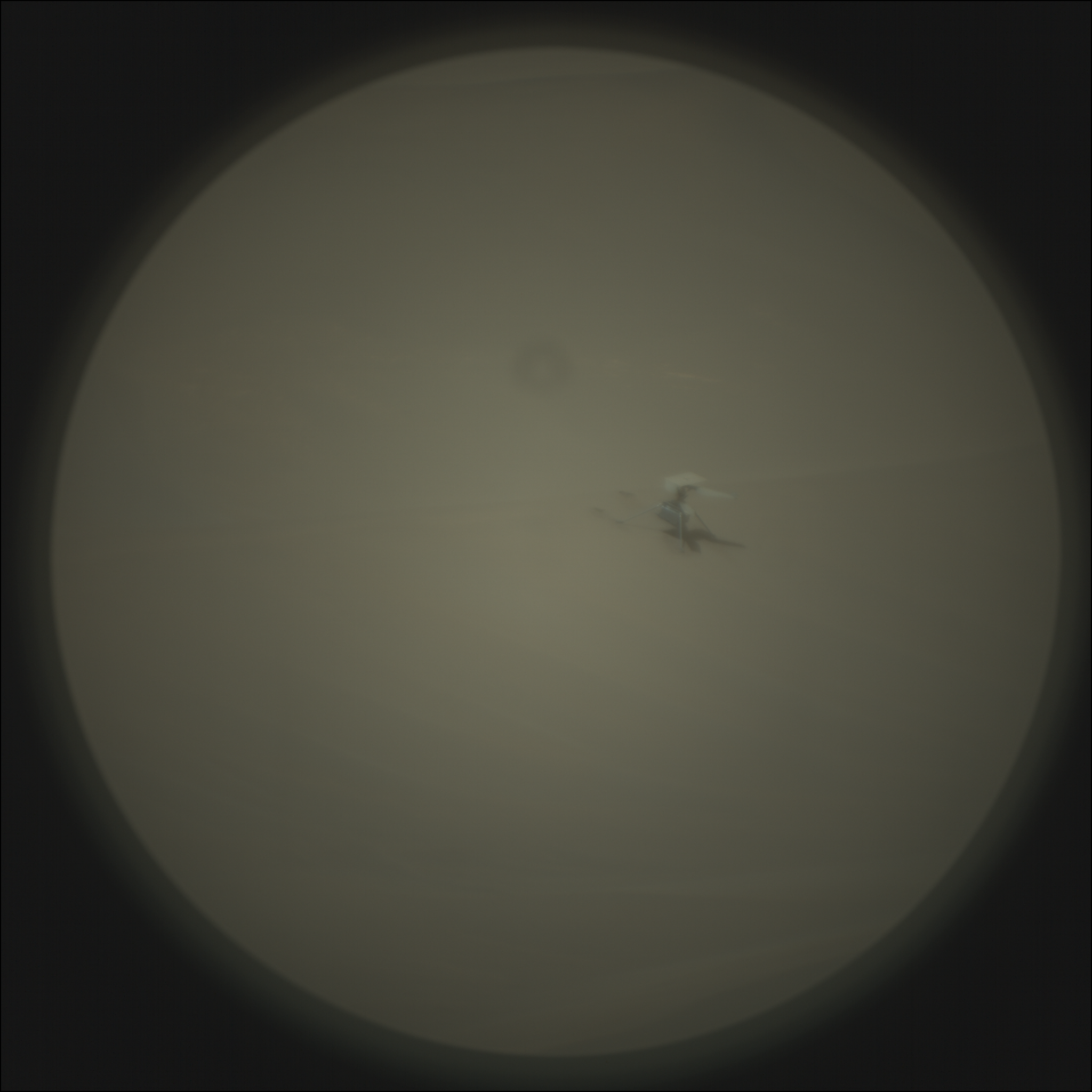
Ingenuity with missing blade
Ingenuity with its missing blade. Click for original image.

Because Perseverance is about to move out of range of direct communications with the disabled Ingenuity helicopter, engineers have now completed their final transmission from the helicopter yesterday, confirming that a new software update has been successfully installed.

The telemetry confirmed that a software update previously beamed up to Ingenuity was operating as expected. The new software contains commands that direct the helicopter to continue collecting data well after communications with the rover have ceased.

With the software patch in place, Ingenuity will now wake up daily, activate its flight computers, and test the performance of its solar panel, batteries, and electronic equipment. In addition, the helicopter will take a picture of the surface with its color camera and collect temperature data from sensors placed throughout the rotorcraft. Ingenuity’s engineers and Mars scientists believe such long-term data collection could not only benefit future designers of aircraft and other vehicles for the Red Planet, but also provide a long-term perspective on Martian weather patterns and dust movement.

The engineers belief that the helicopter could collect data for as long as twenty years. That data will sit on Ingenuity until such time as a later exploration team arrives, either manned or unmanned. There is also the possibility that later in Perseverance’s mission it could pass nearby again, allowing engineers to grab some of the data then.

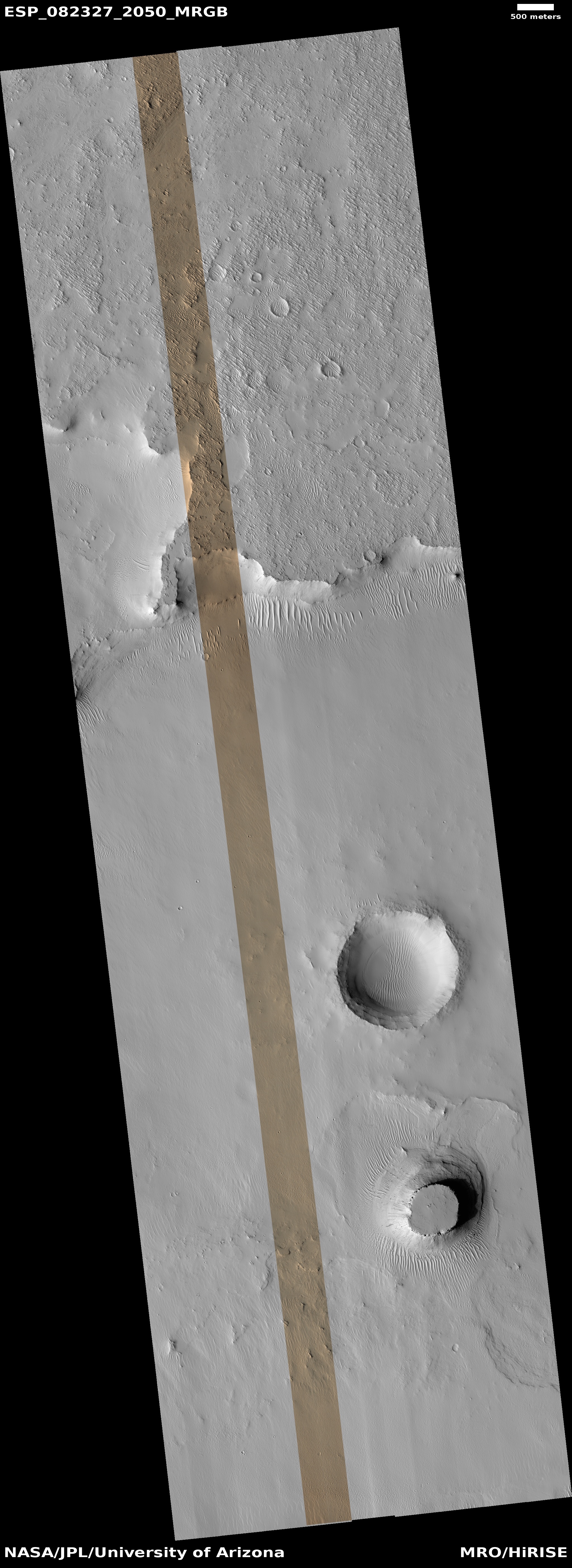
According to the press release, those same engineers are now exploring future helicopter missions to Mars. Based on imagery I have seen coming down from Mars Reconnaissance Orbiter (MRO), the as yet unstated target locations could be inside the eastern end of Valles Marineris or on the northern perimeter of Hellas Basin.

4 comments

April 16, 2024 Quick space links

Courtesy of BtB’s stringer Jay. This post is also an open thread. I welcome my readers to post any comments or additional links relating to any space issues, even if unrelated to the links below.


0 comments

Isolated flat-topped mesa inside large Martian crater

Isolated flat-topped mesa
Click for original image.

Cool image time! The picture to the right, cropped and reduced to post here, was taken on February 18, 2024 by the high resolution camera on Mars Reconnaissance Orbiter (MRO).

The camera team labels this “layers in butte”, but because we are looking straight down at this 400-foot-high butte, it is difficult to see any layers at all. Based on most Martian geology however it would be shocking if this butte is not made up of multiple horizontal layers, ending with that flat surface layer at the top. Moreover, the base of the mesa to the northeast is clearly made up of a series of terraces that appear obscured at other points due to the presence of dust and dunes.

A side view would help clarify the number of layers and their thickness, but it does appear that this butte contains evidence of the geology that once covered this whole area, but over eons has eroded everything away but this butte.
» Read more

0 comments

Scientists: Any ice trapped in Ceres’ permanently shadowed craters has to be very young

The permanently shadowed craters at Ceres' north pole
The permanently shadowed craters (blue) at Ceres’
north pole. Click for original image.

Scientists reviewing the archive data from the Dawn probe that orbited the asteroid Ceres from 2016 to 2018 have found that the permanently shadowed craters at the asteroid’s poles are periodically exposed to sunlight due to long term variations in Ceres’ orbit, meaning that any of the ice in those craters detected by Dawn must be extremely young.

When Ceres reaches its maximum axis tilt, which last occurred about 14,000 years ago, no crater on Ceres remains perennially shadowed and any ice in them must have quickly sublimated into space. “That leaves only one plausible explanation: The ice deposits must have formed more recently than that. The results suggest all of these ice deposits must have accumulated within the last 6,000 years or less. Considering that Ceres is well over 4 billion years old, that is a remarkably young age,” Schorghofer said.

This does not mean that Ceres doesn’t have ice. In fact, it is very ice rich, below the surface. This data instead suggests that the surface remains active, and that there are processes bringing that underground ice to the surface on a regular basis. Except for these craters, which remain permanently shadowed for long time spans, that ice sublimates away relatively quickly. This result fits with earlier data from Dawn, that suggested many active locations on the surface, including its most distinct crater, Occator.

0 comments

Using Gaia data scientists discover the heaviest stellar black hole ever found

In digging into the precise motion data from the Gaia space telescope scientists have discovered the Milky Way’s heaviest stellar-sized black hole, with a mass thirty-three times the mass of our Sun.

Stellar black holes are formed from the collapse of massive stars and the ones previously identified in the Milky Way are on average about 10 times as massive as the Sun. Even the next most massive stellar black hole known in our galaxy, Cygnus X-1, only reaches 21 solar masses, making this new 33-solar-mass observation exceptional.

Remarkably, this black hole is also extremely close to us — at a mere 2000 light-years away in the constellation Aquila, it is the second-closest known black hole to Earth.

The only known black hole inside the Milky Way that is larger is Sagittarius A* (pronounced A-star), the supermassive central black hole at the galaxy’s center and weighing over four million solar masses. That creature is a very different thing, as it involves the long term evolution of the galaxy itself. Stellar-sized black holes only involve the death of a single star, with possible additions from a handful of others.

2 comments

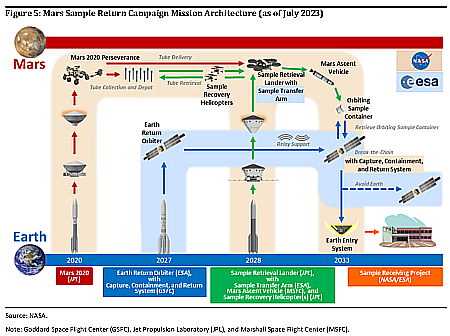
NASA admits that its Mars Sample Return project needs new ideas

The present plan for Mars Sample Return

In issuing yesterday its reponse [pdf] to the February 28, 2024 audit [pdf] by NASA’s inspector general (IG) of its Mars Sample Return mission (MSR), NASA has admitted that its Mars Sample Return project needs new ideas and major changes. From the press release:

“The bottom line is, an $11 billion budget is too expensive, and a 2040 return date is too far away,” said [NASA administrator Bill] Nelson.

The agency will today issue a call for proposals from the private sector for alternative ideas for picking up the samples on Mars and getting them up into orbit.

This NASA response to the IG report however changes little else in overall project, and almost certainly will not succeed in either reducing cost or shortening the timeline in any way.
» Read more

12 comments

NASA: The piece of space junk that crashed through a Florida house came from ISS, and we released it

After completing a careful analysis of the 1.6 pound object that had crashed through two floors of a house in Florida on March 8, 2024, NASA engineers have confirmed that it came from the cargo pallet that was dumped from ISS in March 2021.

As part of the analysis, NASA completed an assessment of the object’s dimensions and features compared to the released hardware and performed a materials analysis. Based on the examination, the agency determined the debris to be a stanchion from the NASA flight support equipment used to mount the batteries on the cargo pallet. The object is made of the metal alloy Inconel, weighs 1.6 pounds, is 4 inches in height and 1.6 inches in diameter.

Though the NASA press release notes the agency will revise its computer models for determining what will burn up in the atmosphere and what will not, it says nothing about reinbursing the homeowner, Alejandro Otero, for the damage to his home. Based on the Outer Space Treaty, the U.S. is likely liable for this damage. I suspect the negotiations are on-going, and if Otero doesn’t have a lawyer yet, he should get one immediately.

4 comments

Salomé’s Dance

An evening pause: Music by Charles Barber. This comes from the 1913 silent film, Salomé, based on an Oscar Wilde play. Rarely seen, the movie represents a very early attempt to do something “edgy”. It succeeds about as well as modern “edgy” films, showing us a very shallow representation of human existence. But the visuals give us a glimpse into that early film world, when sets and costume were usually the only way to show something strange and striking.

Hat tip Judd Clark.

8 comments

April 15, 2024 Quick space links

Courtesy of BtB’s stringer Jay. This post is also an open thread. I welcome my readers to post any comments or additional links relating to any space issues, even if unrelated to the links below.


10 comments
1 135 136 137 138 139 191