September 27, 2024 Zimmerman/Batchelor podcast
Embedded below the fold in two parts.
To listen to all of John Batchelor’s podcasts, go here.
» Read more
Embedded below the fold in two parts.
To listen to all of John Batchelor’s podcasts, go here.
» Read more
An evening pause: Performed live 1969 at Woodstock.
Hat tip both Mike Nelson and Wayne DeVette, who separately suggested this one day apart.
Courtesy of BtB’s stringer Jay. This post is also an open thread. I welcome my readers to post any comments or additional links relating to any space issues, even if unrelated to the links below.
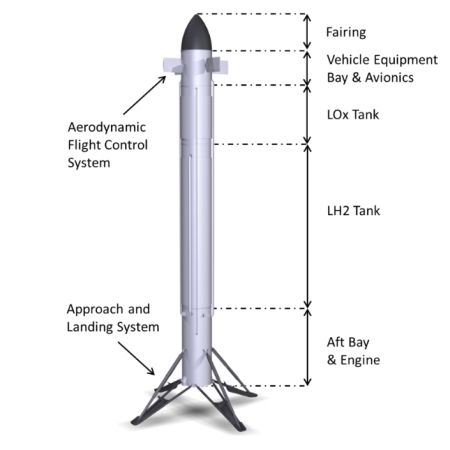
Apparently they jointly created a single entity to share data on developing reusable rockets. Nothing is proprietary.
The link upholds a pdf. While some of the suggestions make sense, the overall tone is a cry of desperation against the possibility that private entities might operate in space out of the control of the government and this scientific organization.
Up until now NASA limited use of the SuperDracos to situations where a failure occurred during launch.
This lander laid the groundwork for the entire American Mars unmanned exploration program of the past quarter century.
It was the first time an unmanned mission accomplished this task, though it came after two American manned landings brought back a much greater haul of lunar samples.
Cool image time! The picture to the right, cropped, reduced, sharpened, and annotated to post here, was taken on July 1, 2024 by the high resolution camera on Mars Reconnaissance Orbiter (MRO).
The science team labels this “Contacts between Likely Sulfates and Chaos Blocks.” That contact I have indicated with the dotted line. To the west the lighter terrain is likely the sulfate-bearing unit, similar to the sulfate-bearing unit that Curiosity has been traversing on Mount Sharp for the past year or so.
To the east are the chaos blocks, but I think that description is wholly inadequate. In truth, I haven’t the faintest idea how this terrain got to be the way it is. It is evident that a lot of dust and sand has gotten trapped in the hollows, leaving behind ripple dunes in some places, but why the higher ridges swirl and curve about as they do is utterly baffling.
» Read more

Taken from figure 2 of the paper. Click for
original image.
Using orbital radar and opitcal images scientists finally believe they have identified the small crater on the Moon produced when — as part of the 2009 LCROSS mission — an abandoned rocket stage crashed in a permanently shadowed section of Cabeus crater near the lunar south pole.
LCROSS was designed to study the ejecta thrown up by that impact, and found “a significant amount of water, estimated at 5.6 ± 2.9% by mass, as well as minor amounts of other volatile species.” Because the impact was in that permanently shadowed region, however, locating the new crater required new instrumentation.
Using a radar instrument on Lunar Reconnaissance Orbiter (LRO) as well as the Shadowcam instrument on South Korea’s Danuri orbiter — designed to take optical images in very low light — the scientists pinpointed that impact crater, as shown in the image to the right, overlaying both the radar and optical images. The crater is estimated to be about 22 meters across, about 25% smaller than predicted. From this the scientists conclude that the water in the ejecta plume came from close to the surface, and thus could only have been placed there in the past billion years. Before that, the location was not in shadow, and volatiles like water could not have survived if they were near the surface.
From this data the scientists believe the water was likely placed there by the “recent delivery by comets or the solar wind, rather than as a paleo-reservoir from an early volcanic atmosphere.” If so, the amount of material can be reasonably predicted, and is likely less than hoped for because it only exists in the top two meters.

Varda’s first capsule on the ground in Utah.
Rocket Lab today announced it has completed testing and intergration of a new recoverable capsule for the in-space manufacturing company Varda, to be used in orbit to produce pharmaceuticals that can only be created in weightlessness.
No launch date was announced. This was the second of four capsules Rocket Lab is building for Varda, with the first having already completed its flight, where it returned to Earth after successfully crystallizng the HIV drug Ritonavir.
The most important tidbit in the press release however was this:
Varda received permission from the FAA under a Part 450 license earlier this month, making them the only company to ever secure a second reentry license.
With the first capsule, the capsule’s return was delayed almost six months because the FAA and the military couldn’t get their paperwork together to approve the return license. Varda now has that return license in hand before launch, meaning it will get the capsule back when it wants.
According to SpaceX’s CEO, Gwynne Shotwell, during testimony in a hearing before the Texas state legislative committee and confirmed by a SpaceX tweet on X, Starlink now has a total of four million subscribers.
The milestone would mean that SpaceX has gained a million new customers since the end of May alone. This outpaces the company’s already impressive rate of growth: Starlink started providing beta service of its product in October 2020; it hit 1 million subscribers in December 2022, 2 million subscribers in September 2023, and 3 million in May. The constellation now comprises nearly 6,000 satellites, with service available in nearly 100 countries to individual users as well as large enterprise customers like major airlines and cruise lines.
The service is on track to generate $6.6 billion in revenue this year — an increase from roughly $1.4 billion just two years prior, according to industry research and consulting firm Quilty Space. [emphasis mine]
With $6.6 billion in yearly revenue, in two years SpaceX will get as much from its customers as it has raised in investment capital. It essentially does not need to look for more funding, as it is now earning enough to pay for both Starlink as well as the development of Starship/Superheavy. Furthermore, at this point the company no longer needs NASA’s government funds to do anything it wants to do.
Nor are these numbers the end. Yesterday it was also reported that Air France had signed up Starlink for its airplane fleet, coming after both United and Hawaiian airlines announced they were switching to Starlink as well.
No wonder the left as well as the federal bureaucracy — dominated by top-down authoritarians who love governemnt rule — are hostile to SpaceX. It no longer needs them, and that independence threatens their power.
The orbital tug company D-Orbit announced today that it was able to extend its more recent round of fund-raising by 50 million euros, and raise a total of 150 million in private investment capital instead.
Japan’s Marubeni Corp. led the Series C round. Marubeni has exclusive rights to distribute D-Orbit’s services in Japan in Southeast Asia, according to the news release.
New and existing investors participating in the round include: Avantgarde, CDP Venture Capital, Iberis Capital, Indaco Venture Partners, the European Innovation Council, Neva, Phaistos Investment Fund, Primo Ventures and Seraphim Space Investment Trust. Also joining the round was a consortium led by United Ventures that included the European Investment Bank and the European Investment Fund.
I call the company a “startup” in the headline, but that probably is now incorrect. It already has flown fourteen orbital tug missions, with seven more scheduled in 2025. At this point it is well established, and could extend this most recent funding round.
An evening pause: Performed live 1991.
Hat tip Terry.
Courtesy of BtB’s stringer Jay. This post is also an open thread. I welcome my readers to post any comments or additional links relating to any space issues, even if unrelated to the links below.
If I were them, I wouldn’t broadcast this as it increases the chances that the thugs at the EPA will move in to shut it down.
The startup is owned entirely by ArianeGroup, builder of the Ariane-6 rocket, and is attempting to build a smaller reusuable rocket.
Tracking detected an additional 149.

The EPA to SpaceX “Nice company you got here.
Sure would be a shame if something happened to it.”
In a follow-up to SpaceX’s blunt critical response to the attacks against it by the head of the FAA, Mike Whitaker during House testimony on September 24, 2024, Elon Musk in a tweet yesterday called for Whitaker to resign.
That blast however was only the start. During a different hearing on September 24th before the Texas state house appropriations committee, Gywnne Shotwell, the CEO of SpaceX, called the actions of the EPA to regulate the launch deluge system for Starship/Superheavy “nonsense.”
“We work very closely with organizations such as the (Texas Commission on Environmental Quality),” she said. “You may have read a little bit of nonsense in the papers recently about that, but we’re working quite well with them.”
…On Tuesday, Shotwell maintained that the the system — which she said resembles “an upside down shower head” — was “licensed and permitted by TCEQ [Texas Commission on Environmental Quality] … EPA came in afterwards and didn’t like the license or the permit that we had for that and wanted to turn it into a federal permit, which we are working on right now.”
…The state agency has said the company received a stormwater permit — a type that’s usually quickly approved — but did not have the permit required for discharge of industrial wastewater produced by launches. That type of permit requires significant technical review and usually takes almost a year to approve. [emphasis mine]
The problem with this demand by both EPA and TCEQ is that SpaceX is not dumping “industrial wastewater produced by launches.” The deluge system uses potable water, essentially equivalent to rain water, and thus does zero harm to the environment. In fact, a single rainstorm would dump far more water on the tidal islands of Boca Chica that any of SpaceX’s Starship/Superheavy launches.
Thus, this demand by the EPA clearly proves the political nature of this regulatory harassment. The unelected apparatchiks in the federal bureaucracy are hunting for ways to stymie and shut down SpaceX, and they will use any regulation they can find to do so — even if that use makes no sense. And they are doing this because they support the Democratic Party wholesale, and thus are abusing their power to hurt someone (Elon Musk) who now opposes that party.

Figure 3 from IG report, annotated by me to show Zvezda location.
According to a new report [pdf] from NASA’s inspector general, the air leaks in the Russian Zvezda module on ISS increased significantly in 2024, reaching “the highest level of risk in its risk management system,” and more than six times the normal planned leak rate for the station (see the box in the lower corner of the figure above).
[I]n February 2024 NASA identified an increase in the leak rate, and the Agency and Roscosmos continue to assess the risk that the increase poses to the module’s structure. In May and June 2024, ISS Program and Roscosmos officials met to discuss heightened concerns with the increased leak rate. The ISS Program subsequently elevated the Service Module [Zvezda] Transfer Tunnel leak risk to the highest level of risk in its risk management system. According to NASA, Roscosmos is confident they will be able to monitor and close the hatch to the Service Module prior to the leak rate reaching an untenable level. However, NASA and Roscosmos have not reached an agreement on the point at which the leak rate is untenable.
To mitigate potential impacts from the air leaks, NASA and Roscosmos continuously monitor leak rates and close the hatch to the Service Module when access is not required, sealing the module to minimize air loss while isolating the leak. While it is possible for the ISS to function if the hatch is closed permanently, it could impact cargo delivery because there would be one less cargo delivery port. Closing the hatch permanently would also necessitate additional propellent to maintain the Station’s altitude and attitude. Although the root cause of the leak remains unknown, both agencies have narrowed their focus to internal and external welds. As of June 2024, there was no indication of other leaks on the Station.
The transfer tunnel is the section of Zvezda that connects it to ISS. Though the report is very careful not to say anything specific about the cause of the leak, the evidence strongly suggests it is caused by stress fractures in the module’s hull, fractures that indicate a serious and dangerous long term issue. The tunnel however cannot be replaced without replacing Zvezda, and Zvezda cannot be replaced without detaching the entire Russian section from ISS, something that is likely very difficult and maybe impossible to do. And even if it could be replaced, Russia does not have the capability or the money right now to build a replacement.
The report also noted that keeping the station operating through 2030 faces other challenges, including the lack of redundancy for getting cargo and crew to ISS, the increasing difficulty of obtaining spare parts for the station, the long term damage from micrometeoroids and orbital debris, and finally, the unknown commitment of Russia, which at this point has not yet decided whether it will remain a partner after 2028.
All these issues underline the need for the four American private commercial space stations to reach orbit and get operational before 2028.