Varda’s third capsule returns to Earth, completing hypersonic test for Air Force

Varda's third capsule, on the ground in Australia
Varda’s third capsule, on the ground in Australia.
Click for original image.

The third recoverable capsule for the startup Varda has landed successfully in Australia, completing its commercial orbital mission for the Air Force, which tested a positional sensor intended for use during hypersonic missile flights.

The California-based space manufacturing startup said the capsule, carrying an inertial measurement unit (IMU) developed for the U.S. Air Force by Innovative Scientific Solutions Incorporated (ISSI), touched down at the Koonibba Test Range operated by Southern Launch.

According to company officials, the capsule reentered Earth’s atmosphere at speeds exceeding Mach 25 – more than 25 times the speed of sound. “This extreme environment offers researchers valuable data to enhance hypersonic navigation, expand orbital economy applications, and support U.S. national security objectives in low Earth orbit,” said Dave McFarland, Varda’s vice president of hypersonic and reentry test.

The capsule had been launched on March 14, 2025 on a SpaceX Falcon 9. Of the capsule’s now three flights, two have tested equipment sensors during descent. Only the first did in-space manufacturing, as had been what Varda anticipated would be its primary customer base.

This was also the second return in a row landing in Australia. Initially the company had planned to return the capsules in the U.S., as it did with its first capsule, but the bureaucratic red tape from both the FAA and the military to do that landing was so bad (delaying the capsule’s return by six months) Varda made alternative arrangements in Australia.

3 comments

Starlink gets approvals to operate in Saudi Arabia, Scotland, and Bangledesh

In the past two days SpaceX’s Starlink constellation for providing internet service globally has obtained approvals from three different countries, widening its use significantly worldwide.

First, Scotland has approved Starlink to begin a six-month trial whereby the constellation will provide internet access on trains operating “between Inverness and Thurso, Wick, Kyle of Lochalsh and Aberdeen.” If successful, the program will be expanded to provide service along other rural train lines in Scotland.

Next the Bangledesh government approved a 90-day waiver allowing Starlink to “supply bandwidth from outside the country.” Normally the regulations in that country require such services to be routed through “local gateways”, which likely refers to local communications companies. This waiver will allow SpaceX to offer Starlink in its normal manner, direct to the customer and outside any already established communications network.

Whether the waiver will be extended further is at present unknown, but I suspect it will be because of public pressure.

Finally, Elon Musk announced that Saudi Arabia has now approved Starlink for “aviation and maritime use” within the country.

All in all, SpaceX continues to vacuum up the world’s internet market simply because none of its competitors have made the effort to compete aggressively. They continue to cede territory to Starlink, without a fight.

11 comments

The global distribution of dust devils on Mars

Global map of dust devils on Mars
Click for original image.

Scientists reviewing the dust devil tracks in orbital images produced by Mars Reconnaissance Orbiter (MRO) have now created a global map that also provides insight into the ground conditions that cause the dust devils to form. From the abstract:

In the first global study of these tracks using high-resolution satellite images from 2014 to 2018, we find tracks in 4% of the images, mostly near 60° north and south latitudes. These tracks are more common during local summers, especially in the southern hemisphere, coinciding with the peak of Mars’ dust storm season, when active dust devils are also more common. Surprisingly, dust devil track (DDT) formation does not depend on elevation, indicating it is not related to the ambient atmospheric pressure. Instead, they occur in darker areas where surface dust covers coarser material, which is revealed as the dust devil moves past.

The white dots on the map above, figure 5 of the paper, shows those MRO images where dust devil tracks were seen. The redish-orange regions are where the data suggests more dust devils should occur, while the blue areas of regions of few dust devils.

The map also notes the locations where Spirit, Opportunity, and InSight landed. Opportunity clearly landed in a region that had more dust devil activity, which explains why its solar panels were cleaned off so regularly by wind. Spirit did not land in such a region, but somehow it was lucky in getting wind events that cleared its panels of dust. InSight had no such luck, and having landed in a region with little dust devil activity, its panels steadily became covered with dust, eventually forcing the end of the mission.

As the paper notes, “To maximize mission lifetimes, future solar powered assets should favor regions where we have identified numerous [dust devil tracks] and where many active [dust devils] are present.” This proposal makes sense, for many reasons. For one, it shifts missions to higher latitudes where many glacial and near-surface ice features are found. Up until now the science community has sent all the landers and rovers to the Martian dry tropics, which has no such near surface ice. For future colonies it is imperative we begin studying Mars’ wetter regions.

This study provides another practical reason for doing so.

3 comments

Scientists: Martian gullies formed by CO2 frost, not water flows

Frost on Martian hillside
Dry ice frost on Martian cliffs. From a 2020 post.
Click for full image.

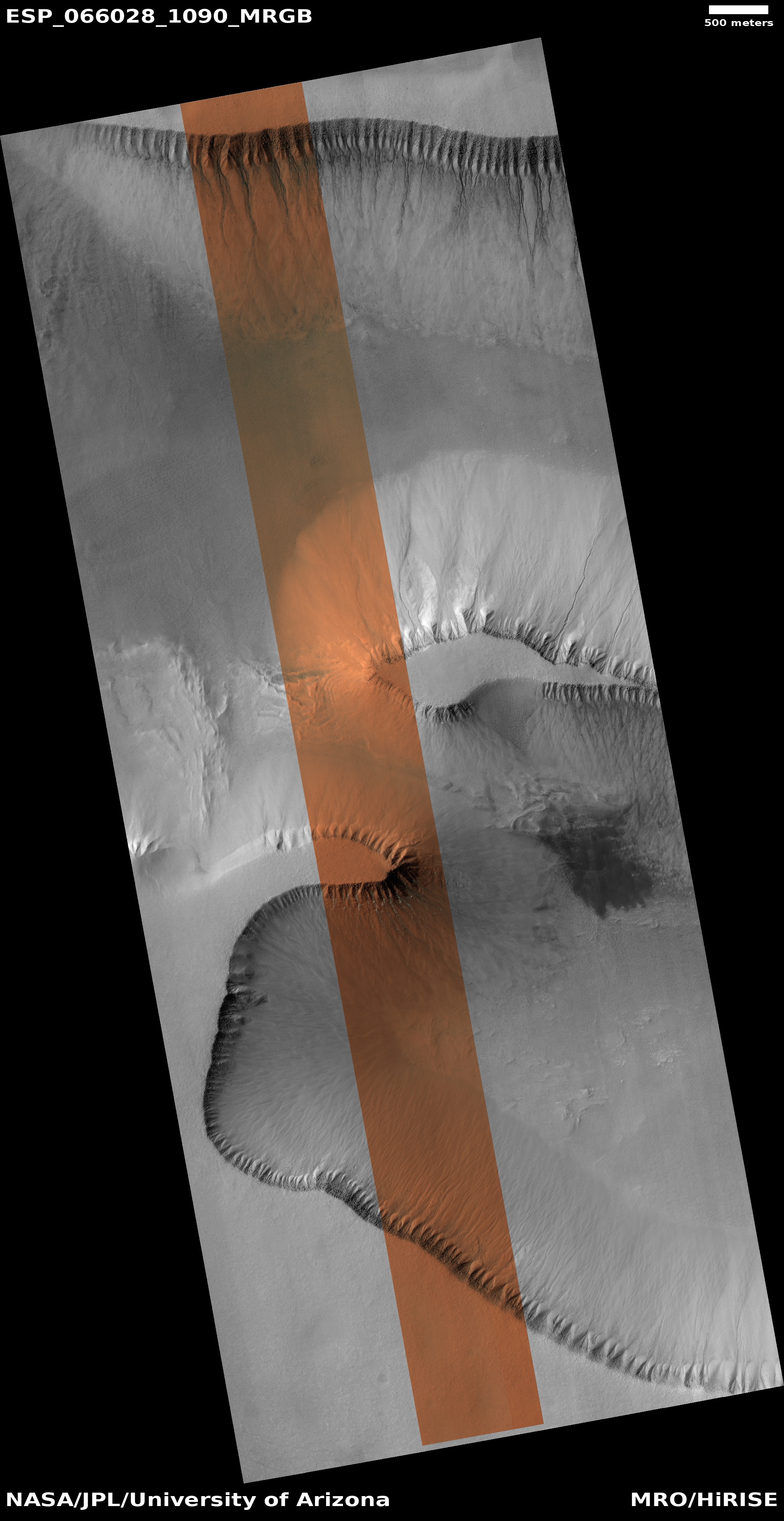
A new analysis of the gullies found on cliffs on Mars, usually on the interior rims of craters, has concluded that carbon dioxide frost is the cause of the erosion, not ancient flows of water.

This conclusion eliminates the need for liquid flowing water in the Martian past, at least in conjunction with gullies. From the paper’s conclusion:

These results show that CO2 frost is capable of producing Martian gully morphologies. Since flows powered by this process are known to be ongoing and capable of transporting the necessary volume of material, it is the simplest explanation for their formation. Variations in the frequency and fluidity of flows could have occurred over time due to variations in the CO2 cycle. CO2-driven gully formation would indicate that there was not necessarily regular, recurring meltwater during high-obliquity periods. This removes a constraint on recent climate, and also addresses a paradox: if obliquity regularly exceeds the current value as generally thought, and if gullies formed via snow melting at high obliquity, the Late Amazonian Epoch should have included regular snowmelt and widespread aqueous processes. Gully formation by CO2 frost processes is consistent with a cold-desert Late Amazonian with rare or small amounts of liquid water and little aqueous weathering, consistent with the observed mineralogy.

…Gullies, one of the most-discussed lines of evidence for liquid water on Mars, may in fact have no direct connection to H2O. CO2 frost-fluidized gully formation also has broader implications for geomorphology, widening an emerging field of new landform types and processes without Earth analogs. Similar processes could occur on other worlds with erodible substrates on steep slopes and volatile ices at their frost point, although we currently lack the high-resolution images needed to test this hypothesis. Such ices include N2 on Pluto and Triton, and SO2 on Io. [emphasis mine]

In other words, though the gullies appear at first glance to our Earth eyes to have been caused by water flowing downhill, in fact the data now suggests the annual CO2 frost cycle of Mars is the prime cause, even in the distant past. No surface water was required. And since no one has yet come up with a good model for liquid surface water even existing in the Martian past (the atmosphere being too cold and thin), this conclusion helps eliminate this conflict.

The paper also notes the lack of water likely eliminates the need for any planetary protection efforts at these gullies, as the lack of water makes the likelihood of any microbiology nil.

As these conclusions are based on lab work and analysis of images, there remains great uncertainty. Nonetheless, the results help reinforce the arguments that the geological features we see on Mars were formed not by flowing liquid water but by other processes, such as glaciers of ice.

4 comments

May 13, 2025 Quick space links

Courtesy of BtB’s stringer Jay. This post is also an open thread. I welcome my readers to post any comments or additional links relating to any space issues, even if unrelated to the links below.

6 comments

Gilmour finally gets launch license from Australian bureaucrats

Australian commercial spaceports
Australia’s commercial spaceports. Click for original map.

After several years of delays, the Australian rocket startup Gilmour Space today announced that it has finally been issued a launch license from the Australian Space Agency.

According to the company, “pending weather & final system checks, we’re on target for our launch window to open NET May 15.”

The launch will take place at Gilmour’s own Bowen spaceport on the east coast of Australia. The Eris rocket has three stages and is designed to launch smallsats similar to Rocket Lab’s Electron rocket.

It is amazing this company hasn’t gone bankrupt waiting for this launch license. It applied in 2022, hoping to launch that year. Three years later it finally gets the okay. The amount of cash it had to burn unnecessarily in those years would generally destroy most startups.

Whether the red tape in Australia will clear up in the future is decidedly unknown, especially with the election victory this month of the leftist party.

Hat tip BtB’s stringer Jay.

0 comments

China launches communications test satellite

China early this morning successfully launched another communications test satellite. its Long March 3C rocket lifting off from its Xichang spaceport in southwest China.

China’s state-run press as always released little information. All we really know is that this launch has been part of a series of recent launches putting similar communications test satellites into orbit. We also don’t know where the rocket’s lower stages, which use very toxic hypergolic fuels, crashed inside China.

The leaders in the 2025 launch race:

57 SpaceX
25 China
5 Rocket Lab
5 Russia

SpaceX still leads the rest of the world in successful launches, 57 to 42.

0 comments

Pentagon raises the list of companies that can bid on space infrastructure projects to almost two dozen

Capitalism in space: In its effort to rely on the private sector for its space needs, the Pentagon yesterday added fourteen space companies to its list of eight companies that can bid on space infrastructure projects.

The latest round of companies added to the project includes Capella Space, EdgeCortix, Eutelsat America Corp. OneWeb Technologies, Fairwinds Technologies and AST Space Mobile, Illumina Computing Group, Lockheed Martin Space, MapLarge, SES Space & Defense, Skycorp, SkyFi, Ursa Space, and Viasat.

They join eight other firms that were brought on board in 2022: Aalyria Technologies, Amazon Web Services, Amazon Kuiper, Anduril, Astranis, ATLAS Space Operations, Enveil, Google, Palantir, Planet Labs, Microsoft, and SpiderOak.

Essentially, the Pentagon wants these companies to compete for contracts to build various space-based communications assets, coming up with the designs and spacecraft themselves. In this round the specific goal is to develop satellite systems that can transmit data and communications to military units anywhere on the globe.

It is puzzling however that SpaceX is not included in this list, even though all its competitors are. I suspect this is because SpaceX’s Starshield version of Starlink is covered under different military programs and contracts. Or it could be that politics forced the military to exclude it in this case. Or there could be some other reason that defies logic. Understanding the byzantine workings of the government’s bureaucracy is often impossible.

1 comment

Lockheed Martin invests in new solid-fueled rocket startup

In its most recent fund-raising round, the solid-fueled rocket startup X-Bow (pronounced “crossbow”) raised $35 million in private investment capital, with Lockheed Martin being the largest investor.

Lockheed Martin’s involvement marks a deepening interest in securing alternative sources for solid rocket motors, components that are increasingly vital to a wide range of U.S. missile systems, including hypersonic weapons. The investment comes three years after Lockheed’s attempt to acquire Aerojet Rocketdyne was blocked by the Federal Trade Commission on antitrust grounds. Aerojet was later bought by L3Harris Technologies, leaving Lockheed without a vertically integrated propulsion supplier.

Nor is this the first time that Lockheed Martin has invested in a rocket startup. It had previously invested in ABL and Orbex, both liquid-fueled but struggling or failing, as well as the much more successful Rocket Lab. It has also invested in the orbital tug startup Orbit Fab, the orbital capsule company Inversion Space, and the satellite startup Terran Orbital, which it ended up buying entirely.

All in all, Lockheed Martin appears determined to join the new wave of space startups, if not by doing it itself but by buying into the successes of new startups. So far this has not entirely paid off, but it does appear to be, in the long term, a viable strategy to keep Lockheed Martin competitive and in the game.

2 comments

NASA engineers end second super pressure balloon flight early

Flight path of second super pressure balloon test

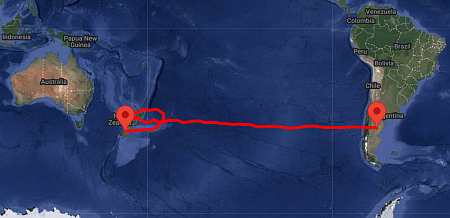
Due to an issue with its power system, NASA engineers today decided to end its second super pressure balloon flight this year after only nine days, when the balloon crossed over South America and thus allowing them to recover it safely.

Although the balloon performed well and the mission successfully met its minimum requirements toward qualification of the balloon system, an issue with the power system aboard the balloon gondola prompted the team to terminate the mission early as a precaution. The team had been monitoring a power failure in one of the redundant charging systems since May 8.  “Despite the loss of one of the redundant charging systems, the remaining power system was performing very well and still able to sustain the batteries and electrical equipment over the course of the mission,” said Hamilton. “However, to be cautious, the team opted to end the flight early to get the equipment back, so we can do a full failure analysis.” 

After identifying a safe area and coordinating with Argentinian officials, the flight was safely terminated. Recovery of the balloon and payload is in progress. 

The first flight flew for seventeen days, circling the globe at the high southern latitudes. In that case issues with the balloon caused the flight to be terminated while it was over the ocean, preventing recovery. As the goal with both flights was to fly for 100 days, neither came close to that target.

0 comments

NASA releases thermal image of Mars taken by Europa Clipper

Mars as seen by Europa Clipper in thermal
Click for original image.

NASA yesterday released a thermal image of Mars taken by during Europa Clipper’s March 1, 2025 fly-by of the red planet on its way to Jupiter. From the caption:

This picture of Mars is a composite of several images captured by Europa Clipper’s thermal imager on March 1. Bright regions are relatively warm, with temperatures of about 32 degrees Fahrenheit (0 degrees Celsius). Darker areas are colder. The darkest region at the top is the northern polar cap and is about minus 190 F (minus 125 C).

The press release doesn’t identify the bullseye feature on the left. I think the bright area inside the bullseye might be the shield volcano Syrtis Major, with the dark area to the right Isidis Basin, which means this is also a snapshot of Perseverance, sitting on the basin’s western perimeter. The dark feature on the right edge of the image might be the giant volcano Elysium Mons. These however are total guesses and likely wrong.

The mission team used this fly-by to test the spacecraft’s science instruments, and have so far found all to be working as expected.

Europa Clipper will do one more fly-by of Earth in December 2026, allowing it to reach Jupiter in April 2030.

0 comments
1 115 116 117 118 119 182