Russia and India agree to orbit their space stations in the same inclination, the same as ISS

India's Bharatiya Antariksh Station as outlined in 2024
India’s Bharatiya Antariksh Station as outlined in 2024.
Click for original image.

According to statements made by Roscosmos head Dmitry Bakanov at a conference in New Delhi this week, Russia and India have agreed to orbit their planned new space stations in the same inclination as ISS, 51.6 degrees, and coordinate their operations at both stations.

By choosing the same orbital geometry for ROS [Russian Orbital Station] and BAS [Bharatiya Antariksh Station], Moscow and New Delhi are effectively planning a continuous “replacement belt” in low Earth orbit. After the ISS is retired, crewed spacecraft launched from Russia and India would still be able to reach a major laboratory complex without radically changing launch trajectories or infrastructure, and—crucially—could, in principle, travel between the two stations with relatively modest maneuvers compared with a full plane-change.

Bakanov’s New Delhi comments build on a broader Roscosmos–ISRO understanding that the two stations should be able to support cross-visits, resource sharing and coordinated operations once both are flying.

This high inclination is required because spacecraft launching from Russia’s high latitudes can’t reach lower inclinations practically. India could put its station at a lower inclination (being at a lower latitude), but if this story is true, it apparently has decided there are advantages using an orbit that will allow cross-missions with Russia, including launches from Russia.

India plans to launch the first module of its station in 2028, and have the entire station operational by 2035. Russia says it will launch is station’s first module by 2027, with full operations beginning by 2030. While both schedules are likely to see delays, we should expect India to get its station built, while Russia will likely struggle to launch even one module.

In fact, I suspect this deal is Russia’s effort to find some partner that can carry it in the future, when its own station gets delayed.
» Read more

4 comments

THANK YOU!!

Scroll down for the most recent posts.

My November fund-raising campaign for Behind the Black is now over. As I noted at the start of the campaign, up until October 2025 had been a poor year for donations. This campaign changed that, drastically. November 2025 turned out to be the most successful fund-raising campaign in the fifteen-plus years I have been running this webpage. And it more than doubled the previous best campaign!

Words escape me! I thank everyone who donated or subscribed. Your support convinces me I should go on with this work, even if it sometimes seems to me that no one in power ever reads what I write, or even considers my analysis worth considering. Maybe someday this will change.

Either way, I will continue because I know I have readers who really want to read what I have to say. Thank you again!

This post will remain at the top of the page for the next few days, to make sure everyone who donated will see it.

15 comments

SpaceX launches 28 Starlink satellites

SpaceX today successfully launched another 28 Starlink satellites, its Falcon 9 rocket lifting off from Vandenberg Space Force Base in California.

The first stage completed its 12th flight, landing on a drone ship in the Pacific.

The leader board in the 2025 launch race.

160 SpaceX (a new record)
77 China
15 Rocket Lab
15 Russia

SpaceX now leads the rest of the world in successful launches, 160 to 129.

0 comments

SpaceX to launch another secondary private stock sale, hints at going public

UPDATE: Elon Musk has posted on X that this story is “not accurate.”

According to reports yesterday, SpaceX is about to launch another secondary private stock sale that double the value of the company.

Elon Musk’s SpaceX, is initiating a secondary share sale that would give the company a valuation of up to $800 billion, The Wall Street Journal reported Friday.

SpaceX is also telling some investors it will consider going public possibly around the end of next year, the report said.

At the elevated price, Musk’s aerospace and defense contractor would be valued above ChatGPT maker OpenAI, which wrapped up a share sale at a $500 billion valuation in October.

At $800 billion, SpaceX would be the world’s most valuable private company.

As for going public, nothing is confirmed. Musk has made some comments suggesting he is considering the idea, but at the same time has noted the problems such a act would cause him.

Musk recently discussed whether SpaceX would go public during Tesla’s annual shareholders meeting last month. Musk, who is the CEO of both companies, said he doesn’t love running publicly traded businesses, in part because they draw “spurious lawsuits,” and can “make it very difficult to operate effectively.”

It seems to me it would be a big mistake for Musk to do this. As a public stock-trading company, Musk would lose the freedom he presently has with SpaceX.

Meanwhile, this new private stock offering has done wonders for the value of Echostar’s stock, now that the company’s own stake in SpaceX after selling it some of its FCC licensed spectrum.

24 comments

China launches another set of Guowang satellites

China today successfully launched the 14th set of the Guowang internet of things satellites (also called SatNet), its Long March 8A rocket lifting off from its coastal Wenchang spaceport.

China’s state-run press made no mention of the number of satellites launched. Based on previous launches by the Long March 8A, it was probably nine, bringing the total number of Guowang satellites in orbit to about 114, after fourteen launches. The final plan calls for a constellation of 13,000. Should take awhile to complete.

The leaders in the 2025 launch race:

159 SpaceX
77 China (a new record)
15 Rocket Lab
15 Russia

SpaceX still leads the rest of the world in successful launches, 159 to 129.

8 comments

David Hartley – Why Wichita Lineman is the greatest unfinished song of all time

A evening pause: As Hartley says in describing how this classic song was created, “But they kept it so simple.” After watching the video below I think you will want to go back to yesterday’s pause and listen again.

May everyone have a great weekend.

Hat tip Cotour.

0 comments

December 5, 2025 Quick space links

Courtesy of BtB’s stringer Jay. This post is also an open thread. I welcome my readers to post any comments or additional links relating to any space issues, even if unrelated to the links below.

5 comments

Perseverance moves west, into the barren hinterlands beyond Jezero Crater

Perseverance looking west
Click for full resolution. Original images can be found here and here.

Overview map
Click for interactive map.

Cool image time! The panorama above was created using two pictures taken on December 4, 2025 (here and here) by the navigation camera on the Mars rover Perseverance. The view I think is looking west, away from the rim of Jezero Crater, which now lies behind the rover to the east.

The blue dot on the overview map to the right marks Perseverance’s position when it took this picture. The yellow lines indicate my rough guess as to the area covered by the panorama. The white dotted line marks the actual route the rover has taken, while the red dotted line the original planned route.

As I noted in my previous Perseverance update in mid-November, the science team has apparently decided to revise the route, abandoning initial plan of going back uphill towards the rim and instead travel downhill into the hills beyond. This is a region that orbital data has suggested might be rich in minerals, making it a prime mining location for future colonists. My guess is that the science team decided they needed to get there, that they had enough data from the rim and that it was now more important to get to the western mineralogy.

Though I am sure they are using the highest resolution orbital images from Mars Reconnaissance Orbiter (MRO) to guide them, the Perseverance team has not yet upgraded its interactive location map to show those details in this western region. Thus, the map in this area is fuzzy and not as detailed.

The team has also not published its revised planned route, so there is no way to guess where the rover will go next. It does appear however that it is finally leaving Jezero Crater for good.

And as all recent pictures from Perseverance, these images show this Martian landscape to be utterly barren, its hills and valleys softened by dust and eons of erosion from the very thin Martian wind. This is an alien place, though it has the potential with human ingenuity to bloom if we have the courage to try.

5 comments

New data strengthens the conflict in the observed value for the universe’s expansion rate

Graphic showing the conflict
Click for original.

The uncertainty of science: New research using a combination of ground- and space-based telescopes has not only failed to resolve the difference between the two values observed for the Hubble constant (the expansion rate of the universe), it actually confirms that conflict.

The graphic to the right nicely illustrates the conflict. Observations from the early universe come up with a value of 67-68 kiloparsecs per second per megaparsec for the Hubble constant. Observations from the present universe, including these new more precise measurements, come up with a value of 73-74. From the press release:

A team of astronomers using a variety of ground and space-based telescopes including the W. M. Keck Observatory on Maunakea, Hawaiʻi Island, have made one of the most precise independent measurements yet of how fast the universe is expanding, further deepening the divide on one of the biggest mysteries in modern cosmology.

Using data gathered from Keck Observatory’s Cosmic Web Imager (KCWI) as well as NASA’s James Webb Space Telescope (JWST), the Hubble Space Telescope (HST) the Very Large Telescope (VLT), and European Organisation for Astronomical Research in the Southern Hemisphere (ESO) researchers have independently confirmed that the universe’s current rate of expansion, known as the Hubble constant (H₀), does not match values predicted from measurements from the universe when it was much younger.

Cosmologists call this conflict “the Hubble Tension”, a absurd fake term expressly designed to hide the fact that they have no idea what’s going on. It isn’t “tension”, it is a perfect example of good observations coming up with contradictory data that no theory can explain.

15 comments

House hearing on Artemis yesterday signals strong doubts about the program in Congress

Artemis logo

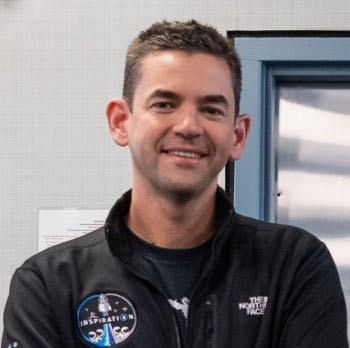
The space subcommittee of the House Science, Space, and Technology Committee yesterday held a hearing on space, one day after the Senate held its own hearing on the nomination of Jared Isaacman as NASA administrator.

The House hearing however was not about Isaacman, but was apparently staged to highlight what appears to be strong reservations within Congress about NASA’s Artemis program, as presently structured. Its timing, just after the Isaacman hearing, was clearly aimed at garnering as much publicity as possible.

Video of the hearing can be seen here.

The focus of the hearing was also on China, and how there is real fear in Congress that its space program is outstripping NASA’s. Both the Republican committee chairman and the ranking Democrat stressed these concerns, and the need to beat China to the Moon and beyond.

More important, all four witnesses pushed the same point.

The rallying cry at this hearing as well as yesterday’s is the “race” with China.

…Foushee asked each of the witnesses for one-word answers to the question: is NASA on track to get back to the Moon before Chinese taikonauts arrive?

Not all succeeded with one word, but their sentiment was similar. Cheng replied “no, I am very pessimistic.” Swope: “worried.” Besha: “maybe.” Griffin: “no possible way…with the present plan.”

Former NASA administrator Mike Griffin was the most blunt in his criticism of NASA.
» Read more

21 comments

Airbus signs China’s Qianfan or Spacesail constellation to provide internet on its airplanes

In what is a major coup for one of China’s planned large constellations, Airbus yesterday agreed to use the Qianfan or Spacesail constellation to provide Wi-Fi service on its airplanes.

At a satellite internet industry ecology conference in east China’s Shanghai on Thursday, Airbus signed a market cooperation agreement on the satellite internet service with Shanghai Spacesail Technologies Co., Ltd. The Spacesail Constellation will provide high-speed, low-latency broadband satellite services via the high-speed connectivity system on aircraft, enhancing the in-flight experience for passengers.

The two parties will also work together to meet the needs of airlines, and promote the development of intelligent, personalized services based on low-orbit broadband communication technology.

Starsail is a direct competitor to Starlink. China has so far launched 119 satellites out of a planned first phase constellation of 648. Later phases could increase the constellation to as many as 10,000 satellites.

It seems puzzling why Airbus went with this Chinese constellation, rather than either Starlink or Amazon’s Leo (formerly Kuiper). Starlink is far more developed, while Leo has more satellites in orbit (154 to 119) than Spacesail. And both are private companies from the capitalistic west, not pseudo-companies controlled by the Chinese communists.

Maybe this deal is preliminary to a major purchase of Airbus airplanes by China. China wanted its system on those planes, and so Airbus agreed to go along.

Regardless, this deal tells us that this Chinese internet constellation is going to be a major competitor to both Starlink and Leo.

10 comments
1 12 13 14 15 16 182