
NASA’s IG: Boeing must foot the bill to get Starliner certified for manned flights
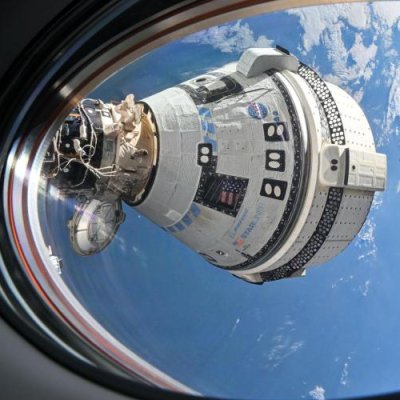
Starliner docked to ISS.
The inspector general (IG) for NASA today released a new audit report [pdf] of the agency’s management of its manned commercial crew program, specifically looking at Boeing’s Starliner capsule and its failures. Though the IG made six recommendations, mostly about management procedures to better run the program, the first was the most important:
As the [Boeing] contract allows, defer payments, including partial or advanced payments, to Boeing for any Starliner-3 milestones until the human-rating certification of Starliner is complete.
In other words, the IG doesn’t want NASA to pay Boeing anything more. Boeing’s contract for Starliner was fixed price. It is Boeing’s responsibility to deliver the product, and until it does so NASA should lay out no more cash.
More significantly, NASA’s management immediately concurred with this recommendation.
This IG report now explains much of what happened in the past few months. In February 2026 NASA officials had indicated that the agency and Boeing were considering flying an unmanned Starliner cargo flight to ISS in April 2026. According to rumors over the past year, NASA was considering treating that mission as a cargo flight, not part of Boeing’s original Starliner fixed-price deal, and thus pay it the going rate for such a flight. That way Boeing could get Starliner certified for later manned flights, without spending more of its own money. The company was already in the hole by more than $2 billion for the project.
However, that flight never happened, and when NASA announced its ISS launch schedule for the rest of the year in May there were no Starliner missions included at all. All NASA officials would say is the cargo mission was “under review.”
Then in late May NASA announced it has awarded SpaceX new contracts for from three to six manned mission to ISS through 2030, which practically eliminated any chance Starliner would ever be used for crew flights.
During all these developments NASA officials were very coy about Starliner and its future. It was always under review, and no decision had been made about a future unmanned mission.
We now know what that “review” was. NASA inspector general was putting together this new audit report of the Starliner program, and likely advised NASA management early on that its recommendations opposed NASA paying Boeing anything further, including spending money on that unmanned cargo flight. NASA management, under Jared Isaacman, quickly recognized it could not go against this recommendation, and thus that cargo mission was canceled.
Will Boeing lay out the cash to fly another unmanned Starliner demo mission? It increasingly appears it will not. And if that is the case, it means Boeing is literally out of the business of manned space exploration. It might still have some contracts on-going (such as SLS), but as those close out, so will this company’s place in America’s space future.

On Christmas Eve 1968 three Americans became the first humans to visit another world. What they did to celebrate was unexpected and profound, and will be remembered throughout all human history. Genesis: the Story of Apollo 8, Robert Zimmerman's classic history of humanity's first journey to another world, tells that story, and it is now available as both an ebook and an audiobook, both with a foreword by Valerie Anders and a new introduction by Robert Zimmerman.
The print edition can be purchased at Amazon or from any other book seller. If you want an autographed copy the price is $60 for the hardback and $45 for the paperback, plus $8 shipping for each. Go here for purchasing details. The ebook is available everywhere for $5.99 (before discount) at amazon, or direct from my ebook publisher, ebookit. If you buy it from ebookit you don't support the big tech companies and the author gets a bigger cut much sooner.
The audiobook is also available at all these vendors, and is also free with a 30-day trial membership to Audible.
"Not simply about one mission, [Genesis] is also the history of America's quest for the moon... Zimmerman has done a masterful job of tying disparate events together into a solid account of one of America's greatest human triumphs."--San Antonio Express-News
That ship has sailed. Another McDonnell Douglass fiasco. Boeing should focus their resources and money on the core business, getting 777x flying and a replacement for the 737. Leave space craft to Spacex
Boeing still has some kind of non-Starliner contract related to ISS operations but that, of course, will go when ISS de-orbits. SLS seems unlikely to outlive the 2020s. Starliner is looking increasingly as though it will be quietly buried out back of the barn some moonless night.
So, by the dawn of the 2030s, the only things space-related Boeing will have left are the X-37B, its satellite business – which is also increasingly iffy with the transition from big, expensive GEO birds to LEO constellations now well along – and its half-interest in ULA.
The satellite business will likely fall to new entrants and ULA is problematical once the initial deployment of Amazon LEO is over given all of the new semi- and fully-reusable launch vehicles soon to debut.
The X-37B will soldier on into the 2030s at least, but will need a new launcher once Vulcan and even Falcon 9 go away. By that time, the Space Force might well have something better in-hand.
Boeing would probably be well-advised to sell off its remaining space assets while they still have at least some modest market value and stick to its original business of civilian and military airframes.