
NASA’s IG: Boeing must foot the bill to get Starliner certified for manned flights
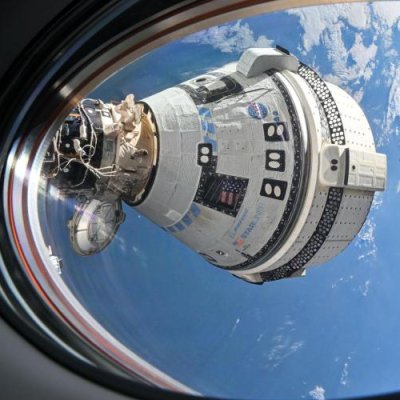
Starliner docked to ISS.
The inspector general (IG) for NASA today released a new audit report [pdf] of the agency’s management of its manned commercial crew program, specifically looking at Boeing’s Starliner capsule and its failures. Though the IG made six recommendations, mostly about management procedures to better run the program, the first was the most important:
As the [Boeing] contract allows, defer payments, including partial or advanced payments, to Boeing for any Starliner-3 milestones until the human-rating certification of Starliner is complete.
In other words, the IG doesn’t want NASA to pay Boeing anything more. Boeing’s contract for Starliner was fixed price. It is Boeing’s responsibility to deliver the product, and until it does so NASA should lay out no more cash.
More significantly, NASA’s management immediately concurred with this recommendation.
This IG report now explains much of what happened in the past few months. In February 2026 NASA officials had indicated that the agency and Boeing were considering flying an unmanned Starliner cargo flight to ISS in April 2026. According to rumors over the past year, NASA was considering treating that mission as a cargo flight, not part of Boeing’s original Starliner fixed-price deal, and thus pay it the going rate for such a flight. That way Boeing could get Starliner certified for later manned flights, without spending more of its own money. The company was already in the hole by more than $2 billion for the project.
However, that flight never happened, and when NASA announced its ISS launch schedule for the rest of the year in May there were no Starliner missions included at all. All NASA officials would say is the cargo mission was “under review.”
Then in late May NASA announced it has awarded SpaceX new contracts for from three to six manned mission to ISS through 2030, which practically eliminated any chance Starliner would ever be used for crew flights.
During all these developments NASA officials were very coy about Starliner and its future. It was always under review, and no decision had been made about a future unmanned mission.
We now know what that “review” was. NASA inspector general was putting together this new audit report of the Starliner program, and likely advised NASA management early on that its recommendations opposed NASA paying Boeing anything further, including spending money on that unmanned cargo flight. NASA management, under Jared Isaacman, quickly recognized it could not go against this recommendation, and thus that cargo mission was canceled.
Will Boeing lay out the cash to fly another unmanned Starliner demo mission? It increasingly appears it will not. And if that is the case, it means Boeing is literally out of the business of manned space exploration. It might still have some contracts on-going (such as SLS), but as those close out, so will this company’s place in America’s space future.

On Christmas Eve 1968 three Americans became the first humans to visit another world. What they did to celebrate was unexpected and profound, and will be remembered throughout all human history. Genesis: the Story of Apollo 8, Robert Zimmerman's classic history of humanity's first journey to another world, tells that story, and it is now available as both an ebook and an audiobook, both with a foreword by Valerie Anders and a new introduction by Robert Zimmerman.
The print edition can be purchased at Amazon or from any other book seller. If you want an autographed copy the price is $60 for the hardback and $45 for the paperback, plus $8 shipping for each. Go here for purchasing details. The ebook is available everywhere for $5.99 (before discount) at amazon, or direct from my ebook publisher, ebookit. If you buy it from ebookit you don't support the big tech companies and the author gets a bigger cut much sooner.
The audiobook is also available at all these vendors, and is also free with a 30-day trial membership to Audible.
"Not simply about one mission, [Genesis] is also the history of America's quest for the moon... Zimmerman has done a masterful job of tying disparate events together into a solid account of one of America's greatest human triumphs."--San Antonio Express-News
That ship has sailed. Another McDonnell Douglass fiasco. Boeing should focus their resources and money on the core business, getting 777x flying and a replacement for the 737. Leave space craft to Spacex
Boeing still has some kind of non-Starliner contract related to ISS operations but that, of course, will go when ISS de-orbits. SLS seems unlikely to outlive the 2020s. Starliner is looking increasingly as though it will be quietly buried out back of the barn some moonless night.
So, by the dawn of the 2030s, the only things space-related Boeing will have left are the X-37B, its satellite business – which is also increasingly iffy with the transition from big, expensive GEO birds to LEO constellations now well along – and its half-interest in ULA.
The satellite business will likely fall to new entrants and ULA is problematical once the initial deployment of Amazon LEO is over given all of the new semi- and fully-reusable launch vehicles soon to debut.
The X-37B will soldier on into the 2030s at least, but will need a new launcher once Vulcan and even Falcon 9 go away. By that time, the Space Force might well have something better in-hand.
Boeing would probably be well-advised to sell off its remaining space assets while they still have at least some modest market value and stick to its original business of civilian and military airframes.
From MBA School days, now almost half a century past
You owe a man a dollar and you have a creditor, you owe a man two billion dollars and you have a partner
So very sad, a great, iconic firm laid low.
Some day MBA candidates will be doing case studies about Boeng and what went wrong.
It was always explained to me that if you owe the bank $1,000 dollars it’s your problem, if you owe them a million dollars, it becomes their problem.
I tried to post something similar earlier but could not get past the authenticator. Boeing supposedly acquired McDonnell Douglas but was really captured by them. McDonnell Douglas management killed themselves and then set about destroying Boeing with the same practices. Now Boeing is getting what they deserve.
As much as I truly believe the Boeing-McDonald Douglas merger worked out badly for Boeing, I think it absurd to blame that merger on Boeing’s present state.
The merger was in 1997, three decades ago. Almost everyone involved then is certainly retired, and has been for likely more than fifteen years. Moreover, since then Boeing has had five different CEOs. It’s leadership has changed repeatedly.
The cause of Boeing’s failures in the past decade are solely due to bad decisions by the company in that decade. The poor management, bad quality control, low standards, and an inability to work within a budget did not come from McDonnell Douglas. All were grew out of Boeing’s culture and management well formed long after that merger.
”Another McDonnell Douglass fiasco.”
Starliner is not a McDonnell Douglas program. It started in Houston (early on it was well run), but management control was transferred to Huntsville in the mid-late 2010s. Huntsville was a division of Boeing Seattle and grew out of that culture.
”Boeing supposedly acquired McDonnell Douglas but was really captured by them. McDonnell Douglas management killed themselves and then set about destroying Boeing with the same practices.”
I see this repeated over and over. Where does this come from?
At the time of the merger McDonnell Douglas was highly profitable, had $3 billion in cash reserves, and was generating $1 billion a year in free cash flow. Boeing, by contrast, was burning through cash trying to increase its production rate to the then unheard of rate of 500 aircraft per year (hiring 10,000 new employees in early 1997 alone). The cash outflow to new employees and expanded suppliers was killing Boeing. The McDonnell Douglas cash saved it.
Of course, this has nothing to do with Starliner’s woes, but neither does McDonnell Douglas.
Maybe. Given that what went wrong at Boeing seems to be traceable to a superfluity of MBAs, I have my doubts any of the name-brand biz schools will take an honest look at the etiology of Boeing’s failures. That would require a hard look in the mirror – not something any part of academe seems inclined to indulge anymore.
I see this report as NASA folks’ polite way of saying, “This project needs to end now, thank you for your effort.”
IMHO, TBC needs to begin a post-mortem, internally.
Their initial reaction a couple years ago was “no more fixed contracts”
https://arstechnica.com/space/2023/10/boeing-says-it-cant-make-money-with-fixed-price-contracts/
This symptom was misunderstood as root cause.
The answer, at the time, was “we are not being paid enough money”.
It speaks to a culture that expected money for work, but not results.
A working product is the correct result.
Just an opinion, from the outside looking in.
This is a sad state of American aerospace that exemplifies the sad state of American aerospace. I don’t think this is exclusive to Boeing but that we notice it more at that company. The lesson to learn with this case of the worthless manned spacecraft is that ever since the Second World War the American government’s way of doing things has been a failure. Government took control of American advancements, not only technical but sociological. We went from citizens — the sovereigns over government — to subjects of the sovereign government. The U.S. government has become King George.
NASA was formed in order to beat a marxist adversary, but the government operated that operation in a marxist way. Rather than use the American way, bottom-up development, NASA took control of the way we would beat the Soviets to the Moon, a top-down Soviet style method of operating our technological powerhouse.
NASA’s one great achievement was Apollo’s voyages to the Moon, a quick but costly project. Some lesser achievements include probed, robotic exploration of all the planets of the solar system (yes, I include Pluto as a planet) and exploration of the sun itself. We went the way of Marx and his socialist, communist ways, in which government controls business and citizens, right down to our current medical system, sometimes called Obamacare.
It is the top-down Apollo that history will record as the great achievement. Apollo depended upon the aerospace companies of the 1960s. The Shuttle depended upon the same set of companies. By Congress’s orders, SLS-Orion also depended upon those same companies as the Shuttle depended upon.
Apollo was a resounding success, despite disaster and close calls. The Shuttle failed to live up to its billing, and SLS is an even greater disappointment. Government control is a poor way to go, and one reason is that government does not care about We the People, evidenced by the recent Artemis II mission, in which American astronauts were sent to the Moon despite the dangers of a heat shield that had demonstrated problems (normalization of deviance) and a life support system that had been untested in space (assumption of normalcy).
Now we have Boeing’s Starliner, not only a disappointment but a complete failure, whose one claim to success came astonishingly close to killing its crew. The OldSpace company, Boeing, depended upon another OldSpace company for its attitude control system — the most recent failed system aboard Starliner. Starliner is so dreadful that not only has NASA rejected it, but it appears that Boeing is about to abandon it, leaving SpaceX’s Dragon as America’s sole-source to transport men to her current and future space stations.
OldSpace was born under the post-WWII governmental system, in which it was subject to the government’s leadership. Government gave the ideas and dictated much of the methods, oftentimes taking ownership of technologies developed by OldSpace companies working under government’s contracts. This system turned into jobs programs, where the companies were paid whether or not the goal was completed. Many of us feared that Boeing would treat its fixed-price contract as a cost-plus contract, and its request for more money early in the contract supports the idea that Boeing did expect that same treatment. If it abandons Starliner, that would also support that idea.
The governance of the early United States led us to victory over the formidable Axis powers (powers which had caused the French to drop their weapons and run away), but the recent U.S.’s governance led to the American military dropping its weapons in Afghanistan and running away, Frenchman style.
OldSpace is failing us on so many fronts. Many or most things that OldSpace has touched, during the past decade, have turned into problems; perhaps Lockheed Martin’s involvement is the reason that Dream Chaser is failing, too. Blue Origin hired an OldSpace captain of industry to run the company, and the company’s forward progress came to a screeching halt for the half decade that he was in charge.
To be fair, not everything that NewSpace companies have touched has succeeded, but NewSpace has a better track record than OldSpace, right now.
A sub-lesson to learn is that an aerospace company working for the government is going to become incompetent and will fail to perform well, depending upon the continuing stream of revenue as long as the job does not get done. Boeing is an example. In recent years, its headquarters was moved close to Washington D.C. in order to help gain government contracts, now that NASA will not consider any Boeing bids for projects. Rather than improving its performance, Boeing has moved its headquarters farther from its main manufacturing facility in order to improve its political position with the government, as though showing fealty to the sovereign is what government wants from its corporate subjects. Maybe it is.
NewSpace has been saved from similar corruption by the prospect that its government-sponsored projects are free to be used for independent commercial sales, encouraging these NewSpace companies to work hard toward the commercial goal and to treat the government project as the development phase of the project. Rapid development is the key to success, for commercial sales. The technologies developed under this modern practice are not subject to confiscation by government and remain the intellectual property of the NewSpace companies that are succeeding so well.
The successful methods of the first 175 years of the Union are now shown again as successful in the 250th year. The marxist methods of the recent 75 years have been a disaster, leaving us in a worse — and degrading — position in the world. and in space. With the new paradigm in space, America starts to be America again.