February 18, 2026 Quick space links

Courtesy of BtB’s stringer Jay. This post is also an open thread. I welcome my readers to post any comments or additional links relating to any space issues, even if unrelated to the links below.

6 comments

Sorry about the lack of posts…

I feel obliged to apologize for the general low rate of posting the past few days. First I am still fighting this head cold, which though it appears to be fading it still leaves me foggy-brained at times. This situation was made worse today when the profile vanished from my Thunderbird email program. How it vanished remains a mystery, but it took me more than an hour to upload a back-up (from a week ago) and get it to work with the program. Thus I lost about a week’s emails.

Hardly a tragedy but all this has been quite exhausting. Hopefully by tomorrow things will run better.

Regardless, I want to thank my readers for their kind words and support. It is truly appreciated.

8 comments

UAE extends mission of its Al-Amal Mars orbiter

Deimos with Mars in the background
Al-Amal’s 2023 image of Deimos, the first good
picture of the moon ever taken. Click for full movie.

The United Arab Emirates (UAE) yesterday announced it is extending the mission of its Al-Amal Mars orbiter (“Hope” in English) to 2028, significantly beyond its initial planned mission of two years.

Launched in July 2020, the Hope Probe successfully entered Mars orbit in February 2021 after a seven-month interplanetary journey, marking a historic achievement as the first Arab nation to reach the Red Planet. Originally designed as a two-year mission to observe and study Marsโ€™ atmosphere, the probe has far exceeded expectations. Since reaching Mars, it has gathered around 10 terabytes of scientific data, shared through more than a dozen datasets with research institutions worldwide.

The probe itself was mostly built by American engineers and organizations, as part of a deal to train UAE students. Once in operation around Mars, the UAE and those students took over almost all operations. It orbits Mars in a very wide orbit, allowing it to study global weather and atmosphere conditions, such as dust storms.

6 comments

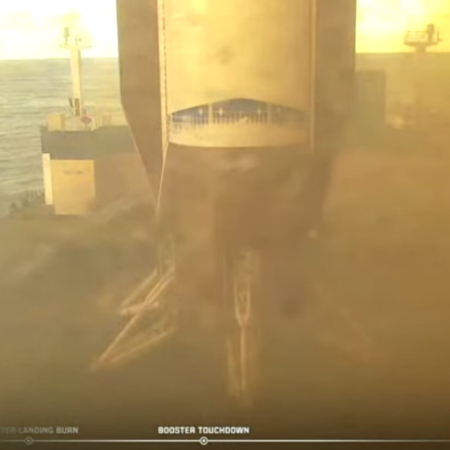
Bahamas allows SpaceX to resume Falcon 9 landings inside Bahamian waters

The Civil Aviation Authority of the Bahamas (CAAB) this week announced that it is allowing SpaceX to resume Falcon 9 landings inside Bahamian waters.

In a statement, CAAB said that one landing is scheduled for Wednesday night between 5:00 pm and 9:30 pm (local time). โ€œAll requisite regulatory and environmental reviews and clearances have been completed in accordance with established aerospace safety and operations protocols,โ€ CAAB said, reminding the population that, depending on weather and atmospheric conditions, โ€œone or more sound booms may be heard during the landing sequenceโ€.

SpaceX had completed one landing in February 2025, but the CAAB then paused further landings two months later, claiming it wanted to do a full environmental review.

There was also the issue of a SpaceX $1 million donation to the University of the Bahamas. Maybe the CAAB wanted to wait until the check cleared.

As should be expected, a fringe of anti-Musk activists began screaming “environmental disaster” and getting the full support of the propaganda press. The claim is utterly stupid, considering SpaceX has landed hundreds of Falcon 9s in the past decade harmlessly.

7 comments

February 17, 2026 Quick space links

Courtesy of BtB’s stringer Jay. This post is also an open thread. I welcome my readers to post any comments or additional links relating to any space issues, even if unrelated to the links below.

10 comments

Pluto’s floating mountains of frozen ice

Pluto's floating mountains
Click for original image.

Cool image time! The picture to the right, rotated, cropped, and sharpened to post here, was taken by New Horizons on July 14, 2015 when it made its close fly-by of Pluto.

The picture looks at the part of Pluto that was close to sunset. Hence the mountain’s long dramatic shadow. The raw image webpage provides little information, including a scale of 0.0 meters, which means nothing. My guess is that these mountains could be several hundred to several thousand feet high based on data from other New Horizon mountain images, but that is a pure guess.

What we think we know is that these mountains are likely made of ice, which at Pluto’s eternally cold environment is as hard as granite. We also think we know that they float on a layer of frozen nitrogen, but because that nitrogen can sublimate into gas when Pluto’s climate warms as its orbit brings it closer to the Sun, the foundation of these mountains is quite unstable. They can roll and drift about, even if they are the size of the Appalachian mountains in the eastern U.S.

I continue to delve into the New Horizons’ archive, and have discovered a trove of quite amazing pictures that hadn’t been featured by the science team during the fly-by. Pluto really is an alien place. Stay tuned, there is more to come!

2 comments

NASA now targeting February 19, 2026 for 2nd SLS wet dress rehearsal countdown

According to an announcement yesterday afternoon, NASA is now targeting February 19, 2026 for the second SLS wet dress rehearsal countdown.

During the rehearsal, the team will execute a detailed countdown sequence. Operators will conduct two runs of the last ten minutes of the countdown, known as terminal count. They will pause at T-1 minute and 30 seconds for up to three minutes, then resume until T-33 seconds before launch and pause again. After that, they will recycle the clock back to T-10 minutes and conduct a second terminal countdown to just inside of T-30 seconds before ending the sequence. This process simulates real-world conditions, including scenarios where a launch might be scrubbed due to technical or weather issues.

If this dress rehearsal goes off perfectly, NASA is considering the possibility of an actual launch attempt on March 6, 2026, though it admits that date is very preliminary That launch will carry four astronauts on a ten-day mission slingshot around the Moon and back to Earth, using an Orion capsule with untested life support system and a questionable heat shield.

The present launch window for this mission closes on April 6th, so NASA’s margins will shrink considerably if this second dress rehearsal has any further problems.

2 comments

A realistic plan to send a spacecraft to interstellar Comet 3I/Atlas

Scientists have devised a mission profile that could actually get a spacecraft close to Comet 3I/Atlas sometime around 2085.

…the team found that an intercept could be achieved via a Solar Oberth maneuver, but the launch would have to occur in 2035 to achieve optimal alignment between Earth, Jupiter and 3I/ATLAS. The flight duration would be 50 years (though Hibberd notes that this could be reduced marginally). “2035 is optimal because the alignments of the celestial bodies involved (i.e. the Earth, Jupiter, Sun, and 3I/ATLAS) are the most propitious to reach 3I/ATLAS with a minimum Solar Oberth propulsion requirement from the probe, a minimum performance requirement for the launch vehicle, and a minimum flight time to the target,” he said.

The Solar Oberth maneuver has the spacecraft fire its engines at the moment it is zipping past the Sun at its closest and fastest, taking full advantage of that gravitational velocity.

You can read their paper here [pdf] As they note in their conclusion, this entire mission is based on using “a Starship Block 3 upper stage fully-refuelled in Low Earth Orbit.” It assumes that by 2035 Starship will be flying routinely and cheaply, and could be purchased at a reasonable cost for such a mission.

Or maybe donated in the name of science by some billionaire who happens to care about making the human race multi-planetary. Know anyone?

Personally, I wonder it this mission profile could be adapted to reach the first known interstellar object, Oumuamua. 3I/Atlas appears to simply be a comet. Though a visit would be of value it would not Earth-shaking. Oumuamua however was not a comet, but more importantly it was strange in every way. Though astronomers in 2019 declared based on the available data that it was definitely not an alien spaceship, that conclusion remains very uncertain. As I wrote at the time:

…for anyone to assume there is any certainty to this conclusion would be a grave mistake. It is merely the best guess, based on the available but somewhat limited data. The data however does not preclude more exotic explanations. Nothing is certain.

To me this object should get top priority.

Hat tip BtB’s stringer Jay.

11 comments

Elmer Bernstein – To Kill A Mockingbird Suite

An evening pause: Performed live 2014 by the Beethoven Academy Orchestra with Sara Andon on the flute.

Some movies are made special because of their score, and I think this applies to the 1962 film, To Kill a Mockingbird. It is a superb work of art, but it rises above many comparable films due to the music that Elmer Bernstein wrote for it. His suite only gives a hint of its effectiveness, in the movie.

1 comment

February 16, 2026 Quick space links

Courtesy of BtB’s stringer Jay. This post is also an open thread. I welcome my readers to post any comments or additional links relating to any space issues, even if unrelated to the links below.

0 comments
1 49 50 51 52 53 2,928