
Australia’s Southern Launch range gets another re-entry capsule customer
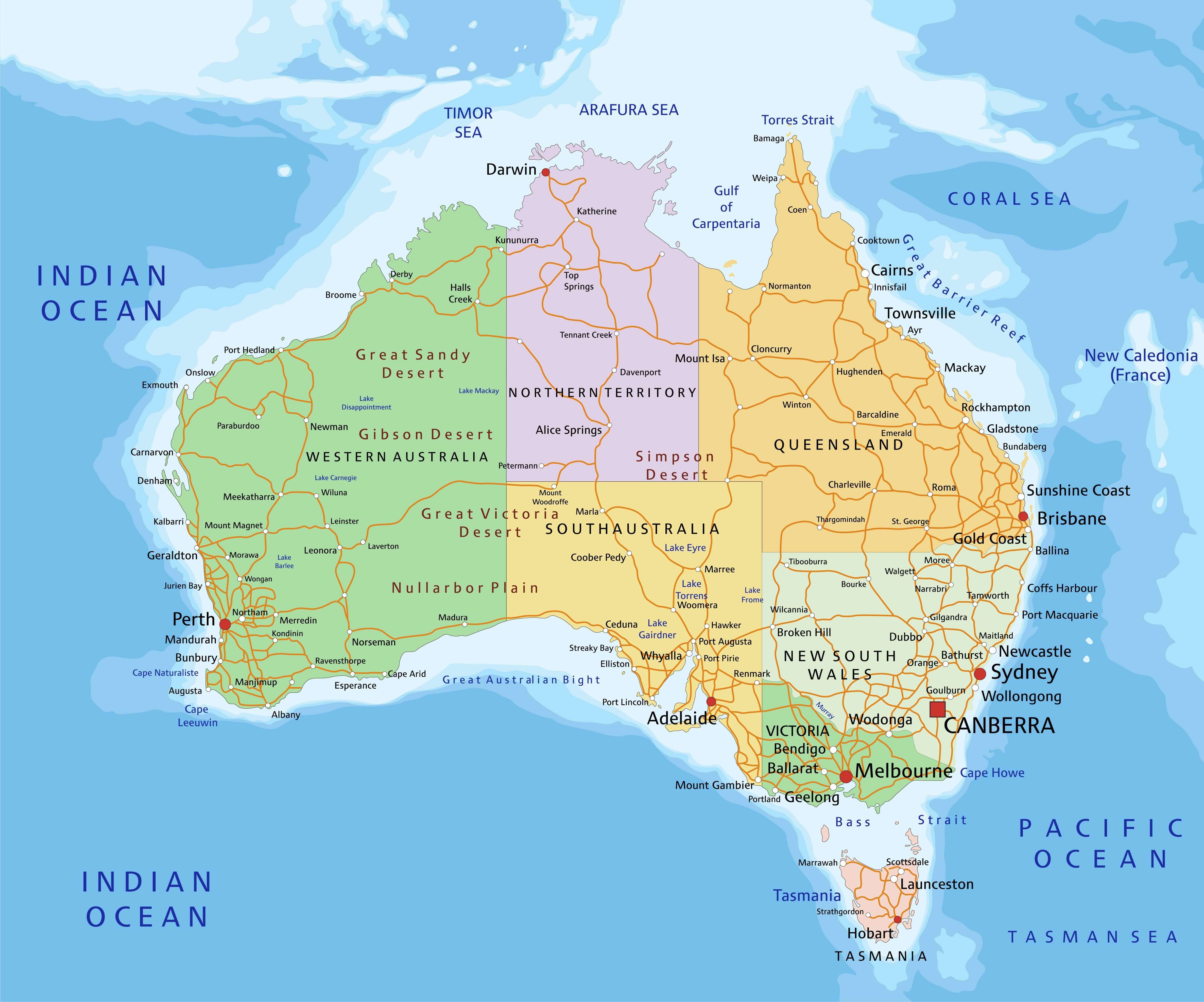
Australian spaceports: operating (red dot) and proposed (red “X”)
Click for original image.
The Australlian spaceport Southern Launch, which also controls the Koonibba Test Range where a variety of government and commercial capsules have landed since 2020, has signed another American company building its own re-entry capsules.
Southern Launch has signed a new agreement with US-based SpaceWorks Enterprises, Inc. to host multiple re-entry missions at the Koonibba Test Range in South Australia.
The agreement enables SpaceWorks to advance its growing portfolio of atmospheric Re-Entry Devices (RED) and further demonstrates confidence in the Koonibba Test Range as the leading global location for the safe and reliable return of spacecraft and high-value payloads.
This is the third American re-entry capsule company to sign with Southern Launch. Varda has already landed I think five capsules at Koonibba, and has a deal to land up to 20 through 2028. In 2025 the American startup Lux Aeterna signed a deal as well.
Two take-aways from this story: First, SpaceWorks as a re-entry capsule company appears to be a new project, joining the host of other re-entry capsule companies that have obtained investment capital since Varda demonstrated its success, including three U.S. and five European startups. It really appears the financial community sees profits here, and are committing money to this effort.
Two, the red tape by multiple U.S. government agencies in 2023 that delayed the return of Varda’s first capsule to the Air Force’s test range in Utah for six months has driven all this business out of the U.S.
That red tape was part of the Biden administration’s general policy aimed at hindering private enterprise, but it also is systematic to the existing administrative state that dominates and impedes American industry across the board. The result here is the business went elsewhere.

On Christmas Eve 1968 three Americans became the first humans to visit another world. What they did to celebrate was unexpected and profound, and will be remembered throughout all human history. Genesis: the Story of Apollo 8, Robert Zimmerman's classic history of humanity's first journey to another world, tells that story, and it is now available as both an ebook and an audiobook, both with a foreword by Valerie Anders and a new introduction by Robert Zimmerman.
The print edition can be purchased at Amazon or from any other book seller. If you want an autographed copy the price is $60 for the hardback and $45 for the paperback, plus $8 shipping for each. Go here for purchasing details. The ebook is available everywhere for $5.99 (before discount) at amazon, or direct from my ebook publisher, ebookit. If you buy it from ebookit you don't support the big tech companies and the author gets a bigger cut much sooner.
The audiobook is also available at all these vendors, and is also free with a 30-day trial membership to Audible.
"Not simply about one mission, [Genesis] is also the history of America's quest for the moon... Zimmerman has done a masterful job of tying disparate events together into a solid account of one of America's greatest human triumphs."--San Antonio Express-News
As an Australian I can only stand in open jawed amazement that the Australian authorities are allowing this.
A new way for Australia to kill you: things falling on your head (that aren’t Coke™ bottles).
Mike Borgelt: The propaganda value of taking in US companies that the US Government has regulated out of the country is large.
Heckuva note when US red tape expense exceeds the price of an Oz-to-US ride in a Quantas cargo container. The Trump administration’s deregulatory efforts obviously have some way to go yet.
I was thinking that myself. If the US wants this business back we need reform quickly. Respect to the Australian government, as it has its own issues, but evidently it’s not as anti-commercial space as the Biden administration was.
Other than government sanctioned vehicles, the FAA has not had to really consider commercial orbital reentry. Only SpaceX had done it before Varda and that was for a handful of private missions. Those missions flew one a vehicle the government had already seen in action.
We really need to get away from this need permission attitude if we are to excel in space. Instead of inventing paperwork before something unknown even flies, we should be using a, “do your best to keep it safe and we’ll allow it”. Even better would be a “try it and let’s see” approach.
The FCC has shut down a number of tiny spacecraft that could revolutionize the industry because there was limited to no known data on them. Sad.
There is also the not-so-trivial matter of the desired destinations for these small re-entry vehicles being solid ground and not water. Water landings well out to sea are familiar. Something whistling in from orbit and plopping down inside CONUS is – novel. If you’re NASA and Boeing, you can shoot for a desert landing in the middle of nowhere even if there are serious questions about the soundness of your craft, but not if you’re some start-up with no Senators in your pocket it would seem.
Every commercial airline flight must file and then fly in accordance withsaid plan under strict air traffic control. It ain’t the wild blue yonderup there
My understanding is that this is different.
Airlines file a flight plan for a pre-approved route from one city to another. The flight plan alerts the various control centers to expect the flight to pass through — that the already approved flight is taking place.
Varda’s problem was getting permission for its route in the first place (pretty close to straight down, by the time it enters controlled airspace). The airlines get this level of permission before they begin each route, then they file their flight plan for each executed flight. My understanding is that the Falcons have this level of approval for their launches and returns to launch site, and that their launches only have to coordinate with the FAA rather than get the basic authorization to launch.
It is why we keep hearing that various launch companies have received permission to increase their number of launches per year from a launch site. The FAA, the launch-base operators, and everyone else with responsibility in those launches agree that they can be authorized for an increased launch cadence. The actual dates are not specified in that basic authorization agreement but are chosen later — and may even change due to weather or equipment problems.
I do not understand why a return-from-space flight authorization would be more difficult than a launch flight authorization. There are far fewer risks and less potential damage possible than with a fully fueled rocket.
The reason, Edward, it was suddenly more difficult for Varda to get a return-from-space authorization is entirely due to when they wanted to do it, during the execrable Biden administration. The orders to all agencies was apparently to slow walk everything. The FAA, which did the slow-walking here, was especially targeted by the White House to do its dirty work.
Robert,
Your concluding paragraph was fairly clear about that: “That red tape was part of the Biden administration’s general policy aimed at hindering private enterprise, but it also is systematic to the existing administrative state that dominates and impedes American industry across the board. The result here is the business went elsewhere.”
My confusion is that there seems to have not been enough improvement to keep American companies doing business within the U.S. rather than going all the way to Australia.
Edward: Good point. I suspect Varda was burned badly, and simply doesn’t want to be burned again. “Fool me once, shame on you. Fool me twice, shame on me!” That sort of thing.
It might also apply to these other companies. The FAA’s rules for return capsules I think remain somewhat murky and unhelpful. The Air Force I think remains unenthusiastic about allowing its Utah range to be used.
“I do not understand why a return-from-space flight authorization would be more difficult than a launch flight authorization. ”
I suspect it has to do with KE=1/2mv². A rocket at launch will usually be well downrange by the time it has serious ballistic energy potential. Re-entering vehicles start with maximum energy, and can do real damage if not controlled.
Blair Ivey,
Possibly, but a lot of that kinetic energy is bled off during reentry. If reentry is not controlled (e.g. if the heat shield does not point in the right direction), then the reentry vehicle disintegrates and the remaining pieces become less harmful.
May I slightly modify your argument to: “launches occur over water or the launch pad, but reentries can bring the vehicle over populated areas?”
I think that works better, but it still has the problem of many hundreds of uncontrolled reentries that have already occurred, yet have not caused death, or to caused much harm or much damage. My recollection is that a house was hit, a few months ago, by a piece of ISS jetsam, so there has been some amount of damage from reentering manmade debris, strengthening the argument that reentry can be harmful nor undesirable. Why drop everything on Australia rather than drop them on the desolate regions of the countries that will use the goods coming back from space?
A great idea for the next Zombie movie. “It came from space”
In case anyone hadn’t noticed the current Australian government isn’t all that keen on the US. Our Prime Minister is a socialist/Marxist with the outlook of a member of the university socialist club (as well as being an all round nasty piece of work), hence my amazement. We have an aviation regulator which is immensely risk averse. They tried to tell a friend that he couldn’t fly R/C models on his own private full size airstrip just in case a passing powered aircraft had an engine failure and needed to use it.