
India takes first step to privatize its largest rocket, the LVM3 or Bahubali
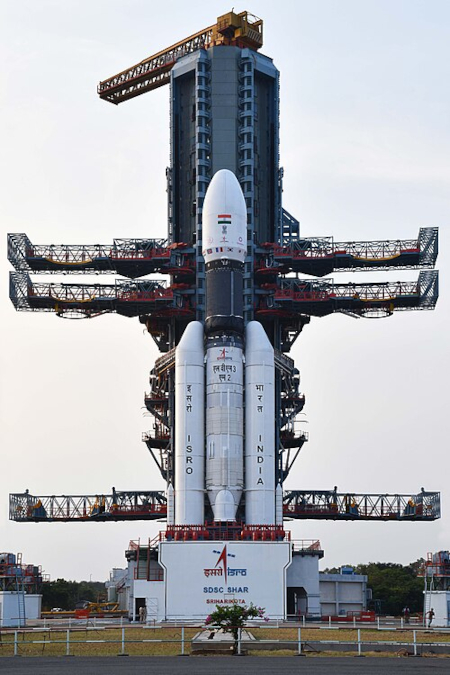
LVM3 about to launch a set of OneWeb satellites in 2022
IN-SPACe, the agency assigned the job for shifting India’s space effort away from its space agency ISRO and to the private sector, yesterday released an Expression of Interest (EOI), asking India’s private aerospace industry for bids to take over operations of ISRO’s LVM3 rocket (also called Bahubali), its most powerful rocket that ISRO plans to use for its future manned and interplanetary missions.
The invitation for EOI, released on Tuesday, invites eligible Indian private companies or industry consortia to acquire and operationalise LVM3 technology from ISRO. The LVM3, often referred to as ISRO’s ‘Baahubali’ rocket, is the agency’s heaviest operational launch vehicle and is behind key missions including Chandrayaan 2 and 3. The selected private entity will receive technology transfer and extensive support from ISRO to absorb the technology and begin manufacturing and launching LVM3 vehicles commercially.
The EOI invitation also lays down the eligibility criteria for the applicable private entities. ISRO’s handholding and infrastructure support is proposed for a defined period of 42 months or until the realisation and launch of two LVM3 vehicles by the selected entity, whichever comes earlier.
The eventual goal is for the private sector to market LVM3 for commercial purposes, outside of ISRO’s Gaganyaan and space station manned program. While ISRO will continue to operate the rocket to launch manned missions as well as the country’s proposed Bharatiya Antariksh Space Station (BAS), the private company that takes over LVM3 will sell it to the international market for profit. As this is a powerful rocket, it can compete directly with SpaceX’s Falcon 9, ULA’s Vulcan, Blue Origin’s New Glenn, and Arianespace’s Ariane-6.
IN-SPACe has already begun this process with ISRO’s smallsat SSLV rocket, transferring operations in June 2025 to Hindustan Aeronautics Limited (HAL). There are also indications it is trying to do the same with ISRO’s mid-sized PSLV rocket. If all three transfers go through, almost all of ISRO’s rockets will be operated by the private sector.
Don’t expect this transition to the private sector to happen quickly. As we have seen in the U.S., the shift away from a government-run space program to a chaotic free capitalist space industry can take many years, decades even. And its eventual success is never guaranteed, as government agencies fight hard to protect their turf, and they have the power of government coercion to back them up.

On Christmas Eve 1968 three Americans became the first humans to visit another world. What they did to celebrate was unexpected and profound, and will be remembered throughout all human history. Genesis: the Story of Apollo 8, Robert Zimmerman's classic history of humanity's first journey to another world, tells that story, and it is now available as both an ebook and an audiobook, both with a foreword by Valerie Anders and a new introduction by Robert Zimmerman.
The print edition can be purchased at Amazon or from any other book seller. If you want an autographed copy the price is $60 for the hardback and $45 for the paperback, plus $8 shipping for each. Go here for purchasing details. The ebook is available everywhere for $5.99 (before discount) at amazon, or direct from my ebook publisher, ebookit. If you buy it from ebookit you don't support the big tech companies and the author gets a bigger cut much sooner.
The audiobook is also available at all these vendors, and is also free with a 30-day trial membership to Audible.
"Not simply about one mission, [Genesis] is also the history of America's quest for the moon... Zimmerman has done a masterful job of tying disparate events together into a solid account of one of America's greatest human triumphs."--San Antonio Express-News