
New Horizons confirms: the solar wind slows as you travel outward
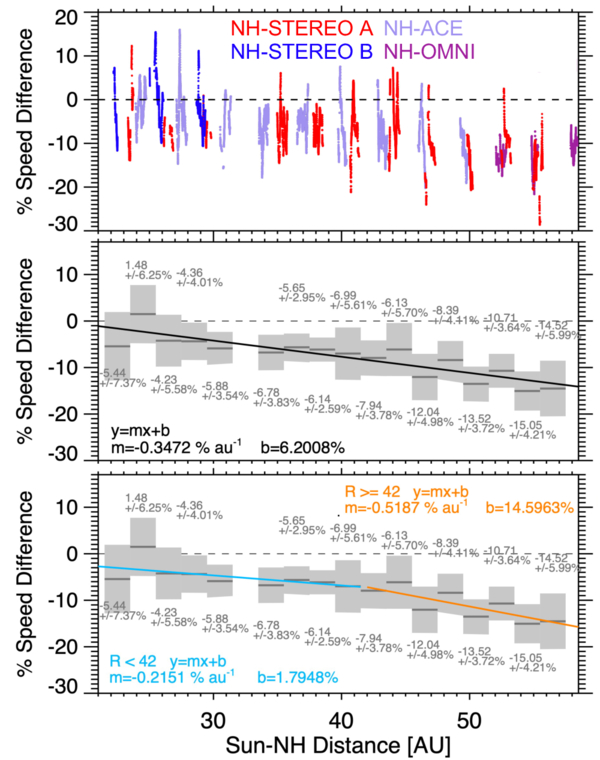
Figure 6 from the paper. Click for full resolution.
The science team for the New Horizons spacecraft, presently zipping outward towards the edge of the solar system, has confirmed earlier data from the Voyager spacecraft that the solar winds speed slows gradually as you move outward from the Sun.
You can read the paper here [pdf]. The distances are measured using astronomical units (AU), each equivalent to the distance from the Sun to the Earth, about 93 million miles.
Previously, New Horizons and Voyager 2 measurements between 30 and 43 AU indicated the solar wind was 5 to 10% slower than at 1 AU near Earth. Now, New Horizons researchers found at 58 AU that the solar wind is 13 to 15% slower than the wind at 1 AU. This gradual slowdown aligns with previous models of how interstellar material enters the heliosphere and affects the solar wind. It also demonstrates how the Sun’s influence decreases over long distances.
The scientists postulate that the slowing is caused by interaction with “interstellar neutral gas particles” that have managed to slip into the solar system. Their interaction with solar wind particles acts to slow the particles down.
New Horizons has not yet reached the termination shock that delineates the edge of the solar system. When it does, entering interstellar space, the wind speed will plummet significantly more, based on data from both Voyagers.
On Christmas Eve 1968 three Americans became the first humans to visit another world. What they did to celebrate was unexpected and profound, and will be remembered throughout all human history. Genesis: the Story of Apollo 8, Robert Zimmerman's classic history of humanity's first journey to another world, tells that story, and it is now available as both an ebook and an audiobook, both with a foreword by Valerie Anders and a new introduction by Robert Zimmerman.
The print edition can be purchased at Amazon or from any other book seller. If you want an autographed copy the price is $60 for the hardback and $45 for the paperback, plus $8 shipping for each. Go here for purchasing details. The ebook is available everywhere for $5.99 (before discount) at amazon, or direct from my ebook publisher, ebookit. If you buy it from ebookit you don't support the big tech companies and the author gets a bigger cut much sooner.
The audiobook is also available at all these vendors, and is also free with a 30-day trial membership to Audible.
"Not simply about one mission, [Genesis] is also the history of America's quest for the moon... Zimmerman has done a masterful job of tying disparate events together into a solid account of one of America's greatest human triumphs."--San Antonio Express-News
Bob, I remember reading that recent discoveries place the outer edge of the Oort Cloud unexpectedly far from Sol thus extending the limits of the solar system. It would seem the termination shock is a better method of determining the ‘outer limits’ (tip of the hat). Could explain the significance of the Oort Cloud discoveries and their impact, if any, on the solar system’s boundary? Thank you.
Some interesting news on the solar front:
Story 1
A researcher at The University of Alabama in Huntsville (UAH), a part of The University of Alabama System, has published a new study in The Astrophysical Journal suggesting that tiny charged dust grains near the sun may significantly influence how energy moves through the solar corona, the outer atmosphere of the sun. The discovery potentially rewrites how scientists understand why the corona is millions of degrees hotter than the surface of the sun itself.
Conducted using data from NASA’s Parker Solar Probe (PSP), the work shows that dust, long assumed to be largely irrelevant so close to the sun, can alter the behavior of key plasma waves that transport energy through space. By changing how these waves travel and dissipate energy, dust may help determine where and how solar heating occurs in the corona and young solar wind.
The study’s lead author, Syed Ayaz, is a graduate research assistant in the UAH Center for Space Plasma and Aeronomic Research (CSPAR).
Story 2
A new study has revealed an unexpected link between solar storms and the flux of high-energy cosmic rays arriving at Earth. The findings, made using one of the world’s largest cosmic ray detectors, could open up a new way to probe the magnetic structures inside solar storms—and potentially improve our ability to forecast their effects on Earth. The research has been published in Physical Review Letters. Ruffolo’s team suggest that cosmic rays could serve as a new remote-sensing tool for mapping the magnetic structures inside solar storms. Whereas spacecraft can only sample the plasma environment at their precise location, cosmic rays trace out much larger regions of space.
With detector arrays like LHAASO operating around the globe, scientists may soon be able to build up a fuller picture of incoming solar storms—and buy more time to prepare for their impacts on satellites, power grids and communications systems.