“A new empire has sprung into existence, and there is a new thing under the sun.”

The words I quote in the headline above were spoken during a sermon by Pastor Manasseh Cutler on August 24, 1788 at the just established settlement of Marietta, Ohio, founded only six months previously by a small group of New England pioneers, with the goal of beginning the settlement of the American west now available following the end of the war of independence against Great Britain.

The Pioneers by David McCullough

It may be emphatically said that a new empire has sprung into existence, and there is a new thing under the sun. By the Constitution now established in the United States, religious as well as civil liberty is secured.

Some serious Christians may possibly tremble for the Ark, and think the Christian religion in danger when divested of the patronage of civil power. They may fear inroads from licentiousness and infidelity, on the one hand, and from sectaries and party divisions on the other.

But we can dismiss our fears, when we consider the truth can never be a real hazard, where there is a sufficiency of light and knowledge, and full liberty to vindicate it.

Cutler’s words come from David McCullough’s 2019 history, The Pioneers, describing the effort of Cutler and a small group of New Englanders to re-create a new New England in the wilderness north of the Ohio river.

Not surprisingly, McCullough’s book is quite readable, as are all his works. What made it a revelation to me is that it revealed an aspect of this early American settlement of the west that I had been ignorant of. It wasn’t just any old Americans moving west to found new communities. At the beginning it was specifically the descendants of the Pilgrims and Puritans in New England, actually organizing consciously to repeat the same thing as their ancestors, sending a group of God-fearing religious families west to build a new city on a hill, for the future of America and for their children.

Cutler himself had been crucial in lobbying Congress to establish the laws necessary to allow these first first settlers to buy land and begin settlement. He and a group of former revolutionary soldiers from New England had worked up a plan, and sent Cutler to New York and Philadelphia to convince Congress to pass the Northwest Ordinance of 1787, establishing the legal framework for settling the vast territories now open to American north and west of the Ohio river. Cutler himself wrote much of that bill, making sure it included articles requiring freedom of religion and no slavery.

In the early spring of 1788 the first group of twenty-two settlers arrived, and within a very short time they had established a town and community. By the time Cutler arrived in the late summer, the colony was so well established that families were arriving to build their own farms.
» Read more

17 comments

Isaacman makes it official: Artemis-2 will fly manned around the Moon, despite Orion’s heat shield concerns

Orion's damage heat shield
Damage to Orion heat shield caused during re-entry in 2022,
including “cavities resulting from the loss of large chunks”

In a tweet yesterday afternoon, NASA administration Isaacman essentially endorsed the decision of the NASA managers and engineers in its Artemis program who decided they could live with the engineering issues of Orion’s heat shield (as shown in the image to the right) and fly the upcoming Artemis-2 mission around the Moon carrying four astronauts with that same heat shield design.

Isaacman’s statement however suggests to me that he is not looking at this issue as closely as he should.

Human spaceflight will always involve uncertainty. NASAโ€™s standard engineering process is to identify it early, bound the risk through rigorous analysis and testing, and apply operational mitigations that preserve margin and protect the crew. That process works best when concerns are raised early and debated transparently.

I appreciate the willingness of participants to engage on this subject, including former NASA astronaut Danny Olivas, whose perspective reflects how serious technical questions can be addressed through data, analysis, testing, and decisions grounded in the best engineering judgment available. [emphasis mine]

The highlighted sentence is fundamentally incorrect. » Read more

12 comments

The first preliminary research into landing a Mars helicopter in the Starship landing zone

Map of rotorcraft images in Starship landing zone

In early November 2025 I posted a cool image from Mars Reconnaissance Orbiter (MRO) that had the very provocative label “Characterize Possible Rotorcraft Landing Site”. While this was not the first such image taken by scientists using MRO to scout out potential landing zones for future Mars helicopter missions (see here and here), this particular image was one of several taken recently that were all within the candidate landing zone for SpaceX’s Starship spacecraft, focused specifically on the low Erebus mountain chain that sits within this part of Mars’ northern lowland plains.

In the January image download from MRO, I found another such image, taken on December 1, 2025. The map to the right shows that Starship candidate landing zone, with all the images taken for SpaceX indicated. The inset adds all the recent images taken for this “possible rotorcraft” mission, including the December image and the previous four (here, here, here, and here), with orange representing images already obtained and yellow those requested but pending.

I decided I needed to find out more, and tracked down the scientist who had requested the images, Eldar Dobrea of the Planetary Science Institute in Arizona. In response to my email, he explained:
» Read more

7 comments

The global launch industry in 2025: The real space race is between SpaceX and China

In 2025 the worldwide revolution in rocketry that began about a decade ago continued. Across the globe new private commercial rocket companies are forming, not just in the United States. And across the globe, the three-quarters-of-a century domination by government space agencies is receding, though those agencies are right now pushing back with all their might to protect their turf.

Dominating this revolution in 2025 in every way possible however were two entities, one a private American company and the second a communist nation attempting to imitate capitalism. The former is SpaceX, accomplishing more in this single year than whole nations and even the whole globe had managed in any year since the launch of Sputnik. The latter is China, which in 2025 became a true space power, its achievements matching and even exceeding anything done by either the U.S. or the Soviet Union for most of the space age.
» Read more

40 comments

The up and down tale of two rocket startups, Vector and Phantom

Jim Cantrell and cars
Jim Cantrell at Vector in 2017, shown in front of
one of his side businesses, fixing and refurbishing race
cars and rare luxury sports cars (located then at Vector).

The tales of rocket startups are often fraught with ups and downs of all kinds, often traveling in circles that no one can ever predict. This is one such tale.

In the mid-2010s there was a rocket startup called Vector, based here in Tucson, founded by a guy named Jim Cantrell. At that time Cantrell pushed the company in the style of Elon Musk, going very public for publicity and to raise investment capital.

He was remarkable successful at both. Unfortunately, his engineers were not as successful at engine building. After years of effort they all realized that their rocket engines were under-powered, and wouldn’t be able to get the rocket into orbit. In 2019 the company’s biggest investor backed out, Cantrell left the company, and new owners took over, hoping to rebuild.

Flash forward to 2021, and Jim Cantrell has reappeared with a new rocket company, Phantom Space, also based in Tucson, raising $6 million in seed capital. In the next four years he obtained a small development contract from NASA, completed two more investment rounds raising first $22 million and then around $37 million, and began development of a new orbital rocket, dubbed Daytona. The company also began work on its own small satellite constellation, PhantomCloud (more on this later).

As for Vector, there was little to report during those four years. The only update said the company was buying engines from the rocket engine startup Ursa Major, the same company Phantom was using.

It is now the end of 2025, and the fate of these two companies has once again intertwined, in a most ironic manner. Last week I learned from Jim Cantrell that Vector had closed shop, and that its last remaining assets, some of which Cantrell himself had helped develop when he headed Vector, had been bought by Phantom. This includes several unused rocket stages, the vertical rocket test stands, a lot of computers, and hardware.
» Read more

9 comments

There is little good will on the left, and the right seems eager to lose it too

Good will toward men
This is what the Christmas season stands for.

The New Testament words celebrating the birth of Jesus are clear and bright, and are repeated by everyone in these weeks before the holiday: “Glory to God in the highest, and on earth peace, good will toward men.”

The colloquial phrase people normally say this time of year is usually “Peace on Earth and good will toward men!”, with the hope that both will come to all.

It appears unfortunately that the idea of “good will” is vanishing from American society, and maybe for all of western civilization. Good will means you treat all persons with respect, even if you disagree with them. You also hope that everyone achieves the best they can in their personal lives, even your enemies. You don’t wish harm on others, only oppose anyone from doing harm to others.

Such good will once dominated American society. Just think of the 1946 film It’s a Wonderful Life! to get a taste of that American culture. In politics, there was often fierce debate, but after the Civil War especially the culture decided it was better to talk things out with good will to all then to grab guns and kill each other.

And most of all, during each year’s Christmas season the desire to promote good will was everywhere, in everyone’s hearts and minds.

This ideal now appears to be vanishing. On the left that vanishing began with the election of Donald Trump in 2016, and has accelerated since. You cannot have a reasonable or rational discussion with practically anyone on the left about Trump. He is the devil incarnate to them, and anyone who even expresses the slightest positive thought about him must be blackballed, slandered, and even killed.

Think I am exaggerating? The widow of Charlie Kirk doesn’t think so. Neither does Donald Trump, who survived two assassination attempts. Nor does someone like Elon Musk, who now readily admits he can no longer appear in public out of fear of violence because of his support of Trump in the 2024 election.

A more benign but equally ugly example of this lack of good will occurred just last week — in the midst of this year’s Christmas season — and the anger and hate didn’t just come from the left. Watch the vile behavior of this leftist woman in a Walmart when she saw an senior citizen and Target worker wearing a Charlie Kirk “Freedom” t-shirt (warning: her language is decidedly obscene):
» Read more

15 comments

New Trump executive order today guarantees major changes coming to NASA’s Moon program

Change is coming to Artemis!

The White House today released a new executive order that has the typically grand title these type of orders usually have: “Ensuring American Space Superiority”. That it was released one day after Jared Isaacman was confirmed as NASA administrator by the Senate was no accident, as this executive order demands a lot of action by him, with a clear focus on reshaping and better structuring the entire manned exploration program of the space agency.

The order begins about outlining some basic goals. It demands that the U.S. return to the Moon by 2028, establish the “initial elements” a base there by 2030, and do so by “enhancing sustainability and cost-effectiveness of launch and exploration architectures, including enabling commercial launch services and prioritizing lunar exploration.” It also demands this commercial civilian exploration occur in the context of American security concerns.

Above all, the order demands that these goals focus on “growing a vibrant commercial space economy through the power of American free enterprise,” in order to attract “at least $50 billion of additional investment in American space markets by 2028, and increasing launch and reentry cadence through new and upgraded facilities, improved efficiency, and policy reforms.”

To achieve these goals, the order then outlines a number of actions required by the NASA administrator, the secretaries of Commerce, War, and State, as well as the Director of the Office of Management and Budget (OMB) and the Assistant to the President for Domestic Policy (APDP), all coordinated by the assistant to the President for Science and Technology (APST).

All of this is unsurprising. Much of it is not much different than the basic general space goals that every administration has touted for decades. Among this generality however was one very specific item, a demand to complete within 90 days the following review:
» Read more

29 comments

A ray of hope during a weekend of horror

This past weekend was truly a weekend of horror. There were two mass murder terrorist attacks, one in Australia against Jews celebrating Hanukkah and another at Brown University in Rhode Island in a classroom. In California someone drove up to a home with a Hanukkah display, cursed the home-owners for being Jewish, and sprayed the home with bullets. And in Amsterdam masked Jew-haters attacked a Hanukkah concert.

Meanwhile, two previously popular major rightwing pundits, Tucker Carlson and Candace Owens, have gone off the deep end, falling into the same rabbit-hole of anti-Semitism and conspiracy madness based on slanders and lies. In the case of Candace Owens, that madness has her make absurd and vicious accusations against the family and friends of Charlie Kirk, claiming without evidence that they were somehow complicit in his murder.

Nor have I even scratched the surface of the ugliness and incivility and violence and barbarism that seems to have overwhelmed civilization in the past decade.

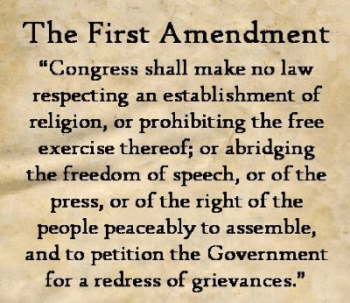
Bringing the cultural principles of the First Amendment back to America
Bringing the cultural principles of the
First Amendment back to America

And yet, buried within the horrors of this past weekend I stumbled by accident upon a ray of hope. And believe it or not, that hope comes from one of our most disgraced and for decades most biased mainstream news outlets, CBS News. It seems that outlet’s new editor-in-chief, Bari Weiss, is attempting to abandon the one-sided, 24/7 leftwing perspective that has dominated that news organization (as well as all of America’s so-called “intellectual” culture) for decades.

Instead, she is advocating openness and a willingness to let many different opinions and ideas be heard.

There had been indications she would do this when she was hired, based largely on her open approach to reporting that forced her out of her job at the New York Times and became the hallmark of her work at her own subsequent news outlet, The Free Press.

Her position was made quite clear during a CBS Mornings interview on December 12, 2025, embedded below, where she plugged a CBS News Townhall aired on December 13, 2025 in which her guest was Erika Kirk, the widow of Charlie Kirk.
» Read more

24 comments

The two American launches today set a new global annual launch record exceeding 300+

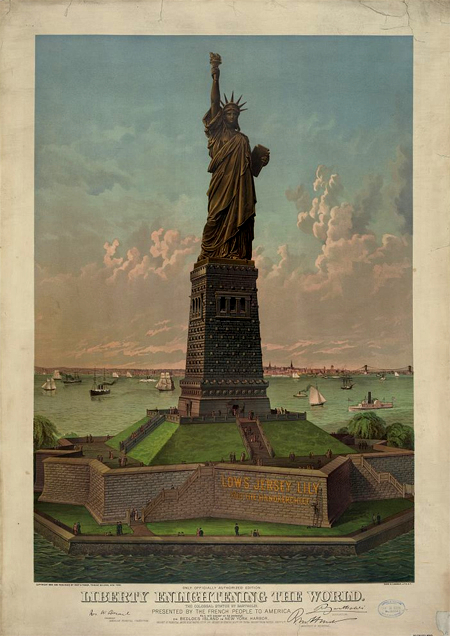
Liberty enlightens the world
Now liberty is enlightening the solar system!

Two American companies today successfully completed launches from opposite sides of the globe, and in doing so set a new global benchmark for rocket launches in a single year.

First, Rocket Lab placed a Japanese technology test smallsat into orbit, its Electron rocket taking off from one of its two launchpads in New Zealand. The satelliite, dubbed Raise-4, was built by Japan’s space agency JAXA and carries eight different experimental payloads from a variety of academic and industry entities, including a test of a new solar sail design.

SpaceX then followed, launching another 27 Starlink satellites, its Falcon 9 rocket lifting off from Vandenberg Space Force Base in California. The first stage completed its 9th flight, landing on a drone ship in the Pacific.

The leaders in the 2025 launch race:

165 SpaceX (a new record)
83 China
16 Rocket Lab (a new record)
15 Russia

SpaceX now leads the rest of the world in successful launches, 165 to 136.

More significantly, with these two launches the total number of successful orbital launches in 2025 has now exceeded 300, for a present total of 301. To put the spectacular nature of this number in perspective, until 2020 it was rare for the world to exceed 100 launches in a year, especially after the fall of the Soviet Union. Most often, the total each year ranged between 50 to 80 launches.

Those numbers are now history, and it has been competition and freedom that has made all the difference.
» Read more

8 comments

Academia makes its first comprehensive attempt to plan science missions to Mars using Starship

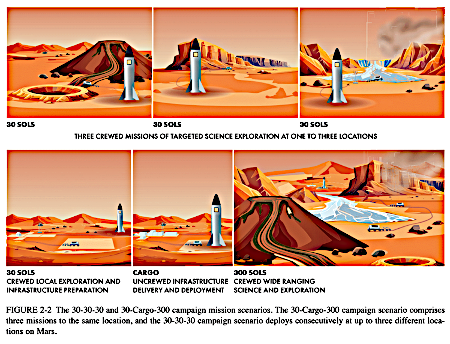
Figure 2-2 from the NAS report
Figure 2-2 from the National Academies
of Science report

A new report released today by the National Academies of Science, entitled “Highest Priority Science for the First Human Missions to Mars,” is essentially the first attempt by the planetary science community to plan its future science missions to Mars using the gigantic capabilities that SpaceX’s Starship is expected to provide them.

You can download the report here.

Even though the report made the search for life on Mars its big priority — a bugaboo that NASA and the science community trots out repeatedly to garner clicks from the ignorant propaganda press — this report is radically different then all previous similar NASA studies proposing future Mars exploration, as indicated by the graphics from figure 2-2 of the report to the right. Unlike those past studies, which were badly limited by the inadequate capabilities of any spacecraft NASA could send to Mars, this new report recognizes how much the game is changed by SpaceX’s Starship.

First, the new panel did not attempt to place any limit on any landing zones. Earlier reports had forbidden landings in the high latitudes or high altitudes because of the risks to NASA’s proposed landers. Starship overcomes much of those risks, giving researchers much greater flexibility.

Second, the focus of the missions will not be solely devoted to scientific or geological research, as had been the case for all previous similar reports by NASA and the academic community. Instead, the proposed research goals includes important engineering and human exploration requirements outside of science, including efforts to use the resources on Mars itself as well as find locations better suited for human habitation. Once again, the vastly greater capabilities of Starship influenced this change.

Even more important, the study doesn’t assume the future missions will be unmanned, as all previous NASA reports have done. In fact, it does the opposite, proposing multiple 30-day manned missions, as shown in the graphic. One set of three missions would go to three different locations, while another set of three missions would focus on one place in particular.

Much of this shift towards manned flight I think stemmed from the presence on the panel of representatives from the private companies SpaceX and The Exploration Company (a French startup), as well as an engineer from the National Academy of Engineering. Previously studies were almost always entirely dominated by planetary scientists, so the goals outlined were always focused on their interests. Now the idea of human exploration has become prevalent.

The panel’s work was clearly also influenced by the realization that SpaceX’s Starship is not only far more capable, its first flights are just around the corner. SpaceX plans sending it numerous times to Mars in the very near future, as shown in the graphic below that Elon Musk released during a presentation in May 2025.
» Read more

22 comments

SpaceX launches 29 more Starlink satellites, sets new record for Falcon 9 reuse, dominates the world in rocketry

First stage after landing for the 32nd time

SpaceX today launched another 29 Starlink satellites, its Falcon 9 rocket lifting off from the Kennedy Space Center in Florida.

The first stage of its Falcon 9 rocket (B1067) flew for its 32nd time, a new record for a Falcon 9 first stage. As shown in the rankings below of the most reused launch vehicles, this stage is now just one flight from tying the space shuttle Atlantis:

39 Discovery space shuttle
33 Atlantis space shuttle
32 Falcon 9 booster B1067
30 Falcon 9 booster B1071
29 Falcon 9 booster B1063
28 Falcon 9 booster B1069
28 Columbia space shuttle

Sources here and here.

Nor will it be long before SpaceX’s fleet surpasses all the shuttles.

Meanwhile in the 2025 launch race SpaceX’s dominance is overwhelming, as shown by the leader board:
» Read more

23 comments

The war-mongers are always those in power

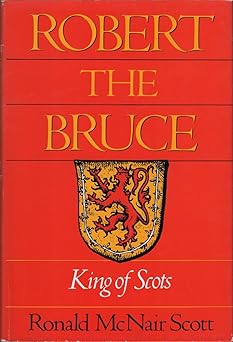
Robert the Bruce: King of Scots

After Diane and I recently watched Mel Gibson’s movie Braveheart I was intrigued to find out the real history behind William Wallace and the war between Scotland and England in the 1200-1300s. Fortunately, I stumbled upon Ronald McNair Scott’s excellent 1982 history, Robert the Bruce, King of Scots.

Not surprisingly, I learned that William Wallace played a relatively minor role in the effort of the Scots to break free from English rule than implied by the movie. The movie was reasonably accurate overall, but the real leader of that long battle was Robert the Bruce, who was descended from previous rulers and fought a long guerilla war against multiple English kings over more than three decades to establish his nation’s independence and his right to rule as king.

That fight began after the death of Scotland’s previous king, Alexander III in 1286. Alexander had for years maintained a peaceful alliance with England, as two separate nations. The problem was that when he died, his heir was still a child. His regents signed a deal with the English king, Edward I, allowing them to rule an independent Scotland as allies with England, but Edward soon realized the power vacuum in Scotland provided him an opportunity. He repudiated the treaty and began a long violent effort to conquer these northern provinces.

The result was thirty years of endless war, ravaging the countryside both in Scotland and northern England. Eventually Robert the Bruce won, getting England to acknowledge the independence of Scotland. Thus Bruce in many ways is seen as Scotland’s own version of George Washington.

What struck me as I read this book however was the plunder and devastation this long war visited upon the ordinary people in both England and Scotland. Edward would invade Scotland, wrecking havoc on local villages and castles. Bruce would respond with repeated raids into northern England, where he would destroy villages and farms, leaving the surviving inhabitants to starve.

And what was the war about?
» Read more

25 comments

THANK YOU!!

Scroll down for the most recent posts.

My November fund-raising campaign for Behind the Black is now over. As I noted at the start of the campaign, up until October 2025 had been a poor year for donations. This campaign changed that, drastically. November 2025 turned out to be the most successful fund-raising campaign in the fifteen-plus years I have been running this webpage. And it more than doubled the previous best campaign!

Words escape me! I thank everyone who donated or subscribed. Your support convinces me I should go on with this work, even if it sometimes seems to me that no one in power ever reads what I write, or even considers my analysis worth considering. Maybe someday this will change.

Either way, I will continue because I know I have readers who really want to read what I have to say. Thank you again!

This post will remain at the top of the page for the next few days, to make sure everyone who donated will see it.

15 comments

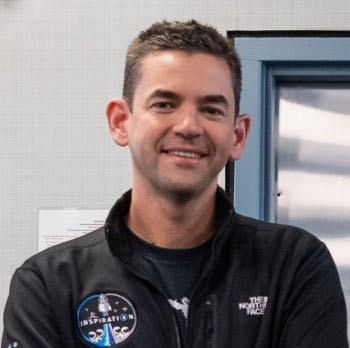
Yesterday’s Senate nomination hearing for Jared Isaacman was irrelevant; America’s real space “program” is happening elsewhere

Jared Isaacman
Billionaire Jared Isaacman

Nothing that happened at yesterday’s Senate hearing of Jared Isaacman’s nomination to be NASA’s next administrator was a surprise, or very significant, even if most media reports attempted to imply what happened had some importance. Here are just a small sampling:

To be fair, all of these reports focused on simply reporting what happened during the hearing, and the headlines above actually provide a good summary. Isaacman committed to the Artemis program, touted SLS and Orion as the fastest way to get Americans back to the Moon ahead of the Chinese, and dotted all the “i”s and crossed all the “t”s required to convince the senators he will continue the pork projects they so dearly love. He also dodged efforts by several partisan Democrats to imply Isaacman’s past business dealings with Musk and SpaceX posed some sort of conflict of interest.

What none of the news reports did — and I am going to do now — is take a deeper look. Did anything Isaacman promise in connection with NASA and its Artemis program mean anything in the long run? Is the race to get back to the Moon ahead of China of any importance?

I say without fear that all of this is blather, and means nothing in the long run. The American space program is no longer being run by NASA, and all of NASA’s present plans with Artemis, using SLS, Orion, and the Lunar Gateway station, are ephemeral, transitory, and will by history be seen as inconsequential by future space historians.
» Read more

16 comments

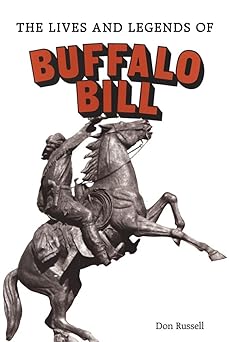
Buffalo Bill: The greatest true boy adventure story that’s never been told

The Lives and Legends of Buffalo Bill

In American popular culture, Buffalo Bill is an icon whose history we all think we know, a western showman who in the latter decades of the 19th century traveled the world with his Wild West show, enchanting heads of states as well as ordinary people with the romantic fantasy of the American west, made up of wagon trains, gunfighters, Indian attacks, and last-minute cavalry rescues.

His name inspired the name of a professional football team. His Wild West show inspired at least one musical and numerous Hollywood movies and television shows.

Yet do we really know who the man was?

I discovered recently that we do not. Our culture knows nothing about the man, whose real name was William Cody. Worse, its cartoon vision of him denigrates his unique American nature. He was not only the greatest scout the U.S. Army ever saw, his knowledge of American Indian made it possible for him to not only help make peace with those Indians who wanted it, it also helped the U.S. put down those Indians willing only to wage terrorist war. And when he shifted into the entertainment world, his show provided employment for both his many cowboy friends as well as for many of those same Indians, both friends and former enemies.

And most astonishing of all, I discovered that Buffalo Bill’s childhood was one of the most amazing boy adventure tales, far more exciting than any kid’s movie made in the last hundred years. That Hollywood has never made a movie of his youth now baffles me. It is the stuff that Hollywood craves, but more significantly, it appears it actually happened!

I discovered these facts in reading Don Russell’s wonderful biography of Bill Cody, The Lives and Legends of Buffalo Bill, published by the University of Oklahoma in 1979. Russell’s focus was to dig into the original source material in order to separate the fact from the fiction, since much of Cody’s life had been exaggerated by himself and others during his showman days, and then overblown and warped by Hollywood’s later interpretations.

In this Russell succeeds brilliantly. He describes what we know in vivid language, but also outlines what we don’t know or can’t trust about each story. In the end he describes a unique man with unique talents who always tried to do the right thing, even in difficult circumstances. In every sense Cody’s life was the epitome of an American western pioneer cowboy, pushing the unknown with courage and pluck.

But to me the most amazing part of Russell’s biography was its first few chapters, when Russell describes Cody’s childhood. The boy’s father, Isaac Cody, was a pioneer in his own right, taking his family farther and farther west until they ended up in Kansas and involved in the violent politics there preceding the Civil War. When Isaac died in 1857, he left behind a widow and three young children, who then had to find a way to survive in that difficult pioneer world.

And so, at the age of eleven Billy Cody went out to find work. And the work the boy found was truly astonishing, when compared to what we expect from kids his age today.
» Read more

33 comments

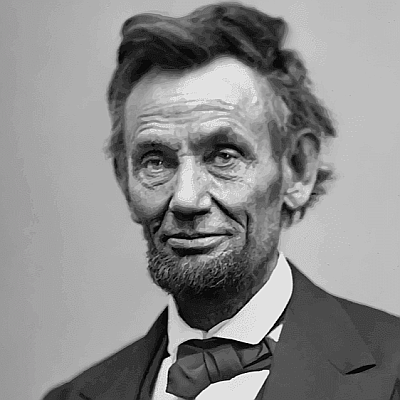
Lincoln’s Thanksgiving proclamation

Abraham Lincoln
Abraham Lincoln

As I wrote in 2023 for Thanksgiving, just six weeks after the horrible murderous massacre of innocent people by Hamas on October 7, 2023:

The date was October 3, 1863. The Civil War was at its height, with no end in sight and no clear sign yet of victory for the Union. For all anyone knew, the great American experiment in self-government, freedom, and constitutional law was about to end in failure, with one half of the nation committed to the idea that it was okay to enslave other human beings, based on their race.

In such a moment, President Abraham Lincoln did what all past leaders in America had done, call for a day of prayer to God for the future while giving thanks for the blessings still abounding. For this purpose he set aside the last Thursday of November of that year.

Since then, Americans have never stopped celebrating Thanksgiving on that day.

Though as always the world is filled with evil people and evil acts, there always remains much more to be thankful for. America still is that shining city on the hill, a beacon for freedom and the rule of law. Though many elites and their minions in our own country are no longer committed to these ideals, and are working daily to destroy them, they cannot succeed. “Government of the people, by the people, for the people,” based on “life, liberty, and the pursuit of happiness,” shall always be honored by ordinary people.

As I noted last year, Thanksgiving remains an utterly American holiday.

No other nation has anything like it. And it lives on, because deep down, all ordinary Americans — from all walks of life and political persuasions — are still hopeful and determined to build a life for themselves and their loved ones, with joy and justice and freedom at its heart.

Thus, the words of Lincoln’s 1863 Thanksgiving proclamation still rings true to us all. Let us put aside our petty factional differences and, as Lincoln asked in his proclamation below, give thanks as “one heart and one voice by the whole American People.”

» Read more

6 comments

A Midnight Repost: Farewell to America

I wrote the essay below the day before the November 2024 election, when it remained very uncertain whether it would be Donald Trump or Kamala Harris as our next president.

The essay itself did not get picked up at very many news aggregates. Nor did it garner as much traffic as would be expected, based on the aggregates that did pick it up. I believe the reason was the depressing title.

No matter, the point I made then still holds. The fundamental American culture — based on freedom, family, and the Judeo-Christian values of Western Civilization — that made this the most prosperous place ever created by humankind in its entire history no longer exists.

What will come remains unknown. We might see a resurgence of that culture, especially based on the public’s response following the murder of Charlie Kirk. Then again, we might not. As I said in the very first line of my history, Leaving Earth, societies change.

I repost this essay now, during Thanksgiving week, because I strongly believe it essential that we understand exactly where we stand, in order to make it possible for us to move forward, in the right direction. The essay is also another example of my never-ending and too often successful effort to look farther into the future than others. I think a year later this essay stands up quite well in this sense.

———————————–
Farewell to America

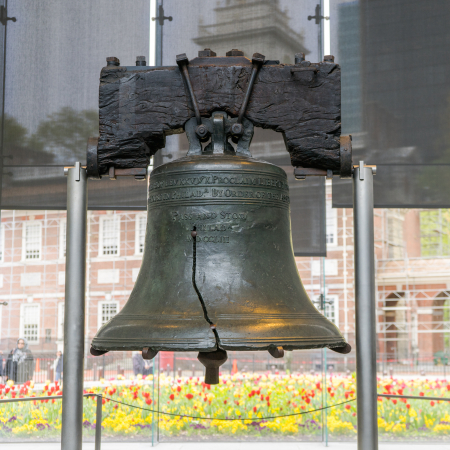
The Liberty Bell
“Proclaim liberty throughout all the land unto all
the inhabitants thereof.” Photo credit: William Zhang

Despite my headline, this essay is not intended to be entirely pessimistic. Instead it is my effort to accept a reality that I think few people, including myself, have generally been able to process: The country we shall see after tomorrow’s election will not be the America as founded in 1776 and continued to prosper for the next quarter millennium.

The country can certainly be made great again. Elon Musk’s SpaceX proves it, time after time. The talent and creativity of free Americans is truly endless, and if Donald Trump wins it is very likely that energy will be unleashed again, in ways that no one can predict.

The country can certainly become free again. There is no law that prevents the elimination of bureaucracy and regulation, no matter how immortal government agencies appear to be. The fall of the Soviet Union in 1991 proves this. Though Russia has sadly retreated back to its top-down government-ruling ways, the country did wipe out almost all its bureaucracy in 1991, resulting in an exuberant restart that even today is nowhere near as oppressive as Soviet rule.

Should Donald Trump win, we should have every expectation that he will do the largest house-cleaning of the federal government ever. The benefits will be immeasurable, and magnificent.

What however will not change, even if Donald Trump wins resoundingly tomorrow, is the modern culture and political ethics that now exist. That modern culture is fundamentally different than the America that existed during the country’ s first 200 years, and it guarantees that America can never be the country it once was.
» Read more

12 comments

Who was Cornelius Vanderbilt?

The First Tycoon

I ask the question in my headline because I am quite sure it is a question most Americans can no longer answer, with any firm knowledge. I myself didn’t know who Vanderbilt really was until I read a wonderful biography of him, The First Tycoon: The epic life of Cornelius Vanderbilt by T.J. Stiles, about two months ago.

Beforehand, all I really knew about Vanderbilt was that he had been a big deal somehow in the 1800s, and as a result there was a statue of him on the south side of Grand Central Station in New York, visible only by drivers going past on the overpass that circles the station.

What I learned from Stiles book however was astonishing. Not only did Vanderbilt build Grand Central Station, it was part of a transportation empire he created that by the end of his life covered most of the eastern United States. For Americans in the 1800s, if you needed to get from one place to another, you almost certainly rode on a Vanderbilt steamship or railroad.

Even more interesting to me however were the remarkable similarities in style, approach, and success between the Cornelius Vanderbilt of the 1800s and the Elon Musk of the 2000s. Both focused on taking new technology and making it profitable. Both built their empires on transportation.

And most of all, both focused on the product they were building to make money, not on speculating its value to make a quick buck.
» Read more

13 comments

Bigoted academia upset that Trump won’t allow them to push the racist DEI agenda

Lysenko with Stalin
Trofim Lysenko (on the left), preaching to Stalin as he destroyed
Soviet plant research by persecuting anyone who disagreed with him,
thus causing famines that killed millions. He is now the role model for
today’s entire science community.

Cue the world’s smallest violin! An article today in the journal Science proves once again that science has nothing to do with what that journal now publishes. The headline:

โ€˜This is censorship.โ€™ Conference requires abstracts to comply with Trump anti-DEI order

It seems scientists submitting abstracts to the annual Lunar and Planetary Science Conference (LPSC) in Texas are upset because the Trump administration will not allow any papers to include any mention of diversity, equity, or inclusion (DEI) as a topic.

The Lunar and Planetary Science Conference (LPSC), hosted annually by the Lunar and Planetary Institute (LPI) in Texas, last week announced a new requirement for the upcoming 2026 conference: All submitted abstracts must comply with executive orders from the administration of U.S. President Donald Trump. His 20 January executive order called DEI โ€œillegal and immoral discrimination programsโ€ and terminated both federal DEI programs as well as grant funding for DEI initiatives. The conference policy follows moves earlier this year by LPIโ€™s parent organization, the Universities Space Research Association (USRA), to scrub DEI-related contentโ€”including archived LPSC abstractsโ€”from its websites.

Researchers are fuming, saying LPSC is doubling down on its previous decisions, and prioritizing avoiding trouble with the government over intellectual freedom. โ€œThis is censorship,โ€ says planetary scientist Paul Byrne of Washington University in St. Louis. โ€œEven if the percentage of people who would normally write a DEI abstract is small, a much larger percent are pissed off.โ€

In other words, the science community wants to support DEI racial discrimination, because it is designed to favor the racial and sexual groups they favor. To them it is more important to infuse these bigoted ideas into all science, rather than actually report real research about the solar system and planets.
» Read more

7 comments

The crippling effect of “woke” on historians

As a historian who likes to read (from real books that I can pick up and feel, not digital versions that make true understanding and absorption difficult), I am routinely reading at least two histories about America’s past at any one time.

For example, I previously had read two great biographies of T.E. Lawrence (of Lawrence of Arabia fame) and Cornelius Vanderbilt (who dominated the American transportation industry in the first half of the 1800s). More about each in future essays, as I think I will start reviewing these books as I finish them.

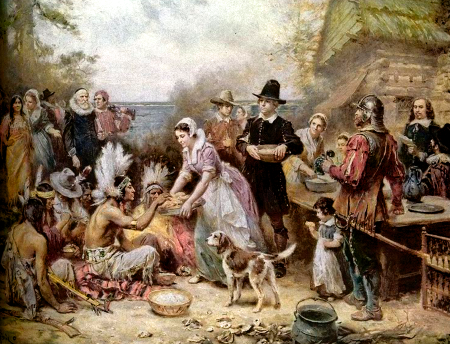
An amazingly accurate rendering of the first Thanksgiving
Believe it or not, this is actually an amazingly
accurate rendering of the first Thanksgiving

Today’s essay however is about two books I finished yesterday, both about two very different periods in American history. Both however had the exact same flaws, typical of the early 2000s when they were written, despite being very detailed and accurate efforts. The books:

The first was published in 2006, and was an attempt to describe in detail the story behind the settlement of Pilgrims in New England in first half century after they arrived in 1620.

The second was published in 2003, and was an attempt to tell the story of the defeat of Japan in World War II, achieved mostly because of the advent of the airplane in reshaping warfare. While ground troops took island after island in the Pacific, in the end it was the air war against Japan itself that eventually forced its surrender. Bradley focuses on telling us the story of the pilots and crews in that air war.

As I already noted, both books do excellent jobs detailing very accurately in vivid terms the events involved. For anyone who wishes to learn something about these significant events of our nation’s history, I recommend them highly.

However, that recommendation comes with one major caveat. In both cases, the authors were handicapped by certain modern academic paradigms that crippled their ability to see the larger context of events. Those paradigms demanded that both historians treat all the cultures involved as morally equivalent, and because of this both writers miss entirely the greater moral fundamentals that moved the Western side of both stories.

For example, let’s take Philbrick’s fascinating history of the Pilgrims.
» Read more

66 comments
1 2 3 4 5 84