MRO color images of Schiaparelli crash site

Schiaparelli crash site

The image above, cropped from a wider image released today by the Mars Reconnaissance Orbiter science team, shows the Schiaparelli impact sites in color and in very high resolution. There are also high resolution images of the heat shield and parachute/back shell. As they note in describing the above image,

Where the lander module struck the ground, dark radial patterns that extend from a dark spot are interpreted as “ejecta,” or material thrown outward from the impact, which may have excavated a shallow crater. From the earlier image, it was not clear whether the relatively bright pixels and clusters of pixels scattered around the lander module’s impact site are fragments of the module or image noise. Now it is clear that at least the four brightest spots near the impact are not noise. These bright spots are in the same location in the two images and have a white color, unusual for this region of Mars. The module may have broken up at impact, and some fragments might have been thrown outward like impact ejecta.

In other words, the lander crashed hard when it hit the ground, throwing pieces and ground material everywhere.

1 comment

SpaceX may lose a customer payload

Because of the launch delays at SpaceX, Inmarsat is considering finding another rocket company to launch its fourth Global Xpress satellite.

Inmarsat is worried that even after SpaceX resumes launches with the Falcon booster, it may not be able to make up lost time to assure its satellite is placed on orbit as scheduled. Alternatives the London-based company is considering include flying the spacecraft on the European Ariane 5 rocket, Lockheed Martin Corp.’s Atlas V, or the Russian Proton booster. Mr. Pearce said Inmarsat could stick with SpaceX if it can get an earlier launch slot.

This is all part of the competitive game. Inmarsat needs to get its satellite in orbit in order to better compete in the communications market, and the delays at SpaceX because of the September 1 launchpad explosion are not helping. This announcement puts pressure on SpaceX to move them to the front of the line or else lose the launch. It also increases their chances of finding an alternative should SpaceX not be able to do that.

2 comments

Genesis cover

On Christmas Eve 1968 three Americans became the first humans to visit another world. What they did to celebrate was unexpected and profound, and will be remembered throughout all human history. Genesis: the Story of Apollo 8, Robert Zimmerman's classic history of humanity's first journey to another world, tells that story, and it is now available as both an ebook and an audiobook, both with a foreword by Valerie Anders and a new introduction by Robert Zimmerman.

The print edition can be purchased at Amazon or any other book seller. If you want an autographed copy the price is $60 for the hardback and $45 for the paperback, plus $8 shipping for each. Go here for purchasing details. The ebook is available everywhere for $5.99 (before discount) at amazon, or direct from my ebook publisher, ebookit. If you buy it from ebookit you don't support the big tech companies and the author gets a bigger cut much sooner.


The audiobook is also available at all these vendors, and is also free with a 30-day trial membership to Audible.
 

"Not simply about one mission, [Genesis] is also the history of America's quest for the moon... Zimmerman has done a masterful job of tying disparate events together into a solid account of one of America's greatest human triumphs."--San Antonio Express-News

Virgin Galactic releases Unity test flight program

In a change from the company’s past policy, which made many promises but never revealed their upcoming schedule in any detail, Virgin Galactic today released their planned test schedule for their new Unity spacecraft.

This test will be the first of a sequence of glide test flights. These flights will cumulatively allow us to test and prove the performance of the vehicle in a variety of conditions: both heavy (e.g. simulating the full weight of a load of fuel, oxidizer, and people) and light (with empty tanks) and in between, at a variety of flight path angles and airspeeds, and so forth. This testing of the “corners of the box” is designed to demonstrate how VSS Unity will perform as it returns from space, after the feather system is retracted and the vehicle becomes a glider and lands on the runway like an airplane. In addition, this phase of flight will also demonstrate and test our abort modes – which culminate in a safe glide back to the runway.

Our team of flight test experts has developed a set of requirements for each planned test flight as well as detailing exactly what we need to test in order to be ready to proceed to the next phase of rocket powered flights. We will fly as many flights as we need to in order to achieve all these objectives.

The schedule, quite properly, does not include any dates. In the past the company and Richard Branson, would make many grand promises about when their test program would be completed without providing any details of what they planned to do during that test program. This time, Branson is quiet, they have announced no schedule dates, but have provided good information about the test program itself. This is a very good change.

0 comments

Conscious Choice cover

Now available in hardback and paperback as well as ebook!

From the press release: In this ground-breaking new history of early America, historian Robert Zimmerman not only exposes the lie behind The New York Times 1619 Project that falsely claims slavery is central to the history of the United States, he also provides profound lessons about the nature of human societies, lessons important for Americans today as well as for all future settlers on Mars and elsewhere in space.

 
Conscious Choice: The origins of slavery in America and why it matters today and for our future in outer space, is a riveting page-turning story that documents how slavery slowly became pervasive in the southern British colonies of North America, colonies founded by a people and culture that not only did not allow slavery but in every way were hostile to the practice.  
Conscious Choice does more however. In telling the tragic history of the Virginia colony and the rise of slavery there, Zimmerman lays out the proper path for creating healthy societies in places like the Moon and Mars.


“Zimmerman’s ground-breaking history provides every future generation the basic framework for establishing new societies on other worlds. We would be wise to heed what he says.” —Robert Zubrin, founder of the Mars Society.


All editions are available at Amazon, Barnes & Noble, and all book vendors, with the ebook priced at $5.99 before discount. All editions can also be purchased direct from the ebook publisher, ebookit, in which case you don't support the big tech companies and the author gets a bigger cut much sooner.


Autographed printed copies are also available at discount directly from the author (hardback $29.95; paperback $14.95; Shipping cost for either: $6.00). Just send an email to zimmerman @ nasw dot org.

Leaving Earth cover

Leaving Earth: Space Stations, Rival Superpowers, and the Quest for Interplanetary Travel, can be purchased as an ebook everywhere for only $3.99 (before discount) at amazon, Barnes & Noble, all ebook vendors, or direct from my ebook publisher, ebookit.

If you buy it from ebookit you don't support the big oppressive tech companies and I get a bigger cut much sooner.


Winner of the 2003 Eugene M. Emme Award of the American Astronautical Society.

 
"Leaving Earth is one of the best and certainly the most comprehensive summary of our drive into space that I have ever read. It will be invaluable to future scholars because it will tell them how the next chapter of human history opened." -- Arthur C. Clarke

China’s smallsat rocket scheduled for first launch in December

The competition heats up: Even as they prepare for the first launch of their largest rocket tomorrow, China today also announced that the first test launch of its low cost smallsat rocket, Kuaizhou-1, as now been scheduled for December.

Kuaizhou (speedy vessel) is a low-cost solid-fuelled carrier rocket with high reliability and short preparation period. It was designed to launch low-orbit satellites weighing under 300 kg. The rocket is launched via a mobile launch vehicle and will primarily launch satellites to monitor natural disasters and provide disaster-relief information.

Though this is obviously being touted as a competitor in the new smallsat launch industry, the military advantages of this kind of ballistic missile cannot be ignored. Essentially what China has here is an ICBM that can be launched from a moving vehicle, which means tracking it will be very difficult.

1 comment

China’s new big rocket set for launch Thursday

The competition heats up: The first launch of China’s new big rocket, Long March 5, is now scheduled for Thursday morning at 10 universal time, 5:30 am Eastern.

The Long March 5 is comparable to the most powerful active rockets in the world such as the Delta-IV Heavy, Atlas V and Ariane 5, and will launch the technology experiment satellite Shijian-17 high into to geosynchronous. At more than 800 tonnes, 53 metres in height and with a 5 metre diameter core, the Long March 5 has been designed to launch the 20-tonne modules of China’s planned space station into low Earth orbit, starting with the core module in 2018.

The countdown and fueling have begun.

1 comment

Curiosity finds a meteorite

The Curiosity science team have identified and now analyzed a nickel-iron meteorite that Curiosity spotted on October 27.

Scientists of the Mars Science Laboratory (MSL) project, which operates the rover, first noticed the odd-looking rock in images taken by Curiosity’s Mast Camera (Mastcam) at at a site the rover reached by an Oct. 27 drive. “The dark, smooth and lustrous aspect of this target, and its sort of spherical shape attracted the attention of some MSL scientists when we received the Mastcam images at the new location,” said ChemCam team member Pierre-Yves Meslin, at the Research Institute in Astrophysics and Planetology (IRAP), of France’s National Center for Scientific Research (CNRS) and the University of Toulouse, France.

ChemCam found iron, nickel and phosphorus, plus lesser ingredients, in concentrations still being determined through analysis of the spectrum of light produced from dozens of laser pulses at nine spots on the object. The enrichment in both nickel and phosphorus at some of the same points suggests the presence of an iron-nickel-phosphide mineral that is rare except in iron-nickel meteorites, Meslin said.

The find is not unprecedented but it is interesting nonetheless.

2 comments

George Carlin on language of politics

An evening pause: With the election less than a week away, I think this comedy speech by George Carlin sums up the fundamental dishonesty of the modern Washington establishment politician, from both parties. And though he is quite funny, I couldn’t help thinking of what Robert Heinlein said: “We laugh because it hurts.”

Let me also add that when we vote next week I think it most important to consider which politicians most remind you of the dishonest corrupt liars Carlin so ably describes. That should help you realize who you shouldn’t vote for.

Hat tip Frank Kelly.

3 comments

Mars rover update: November 3, 2016

Curiosity

Post updated: See last paragraph in Curiosity section.

Curiosity location 1507

For the overall context of Curiosity’s travels, see Pinpointing Curiosity’s location in Gale Crater.

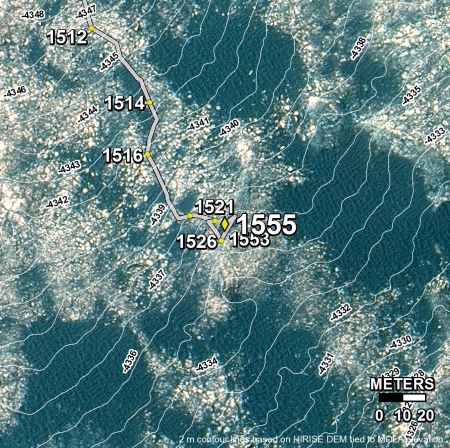
After spending almost a month on the flats south of Murray Buttes, during which the rover drilled another hole, in the past week Curiosity has finally resumed its journey south toward the slopes of Mount Sharp and the sand dune area that it must cross to get there.

Unfortunately, NASA has decided to change how it shows the rover’s progress, and these changes seem to me to be a clever and careful effort to make it more difficult for the public to make educated guesses about where the rover might be heading in the very near future. The image to the right is the cropped inset showing the rover’s recent travels that is part of a new a larger image that puts this inset in the context of the rover’s entire journey. This has replaced the wider orbital mosaic that they used to provide (see for example my September 27, 2016 rover update) that gave a very good view of the entire terrain surrounding the rover from which a reasonable estimate of its future path could be guessed.
» Read more

1 comment

China company to launch suborbital tourists by 2020

The competition heats up: A Chinese company has announced that it is building a reusable suborbital spaceship to fly suborbital tourists by 2020.

Han Qingping, president of ChinaRocket Co Ltd in Beijing, said the company first will develop a 10-metric-ton reusable spacecraft and use it to ferry three to five travelers to a height of 80 km for a new perspective on the mother planet and experience weightlessness. That is the upper part of the mesosphere, higher than jets and balloons can travel, but just below the height where satellites fly.

No prices were given. “By 2025, a 100-ton reusable spacecraft will be produced to send up to 20 passengers to an orbit as high as 140 km above the ground,” he said. That’s into the thermosphere, and is high enough to be considered space. “Furthermore, we will begin to use the 100-ton vehicle to perform intercontinental scheduled flight and long commercial spaceflight around 2030.”

The proposal is audacious, especially its promised launch date of the suborbital craft in 2020 and an orbital craft in 2025. Nonetheless, the announcement illustrates the direction that rocketry appears to be heading, reusable vehicles capable of frequent reuse at less cost.

1 comment

TMT consortium picks Canary Islands as alternative site to Hawaii

Faced with delays from protesters and an Hawaiian government slow-walking its permit process, the consortium building the Thirty Meter Telescope has announced that it will build the telescope on the Canary Islands if it continues to be blocked in Hawaii.

The article does not say when they will make this decision, but based on previous reports, they have to make their decision soon in order to begin construction no later than April 2018.

I fully expect them to abandon Hawaii, since I see no desire by the Hawaiian government to play fair during the new permit hearings. Instead, it seems to me that they are rigging this process so that it will never end.

Posted from the south rim of the Grand Canyon, where Diane and I plan a nice day hike tomorrow down the Hermit Trail.

4 comments

Modern college students think America invented slavery

The coming dark age: Modern college students not only think America invented slavery, they know even less about American history.

Before even distributing the syllabus for his courses, Pesta administered his short quizzes with basic questions about American history, economics and Western culture. For instance, the questions asked students to circle which of three historical figures was a president of the United States, or to name three slave-holding countries over the last 2,000 years, or define “capitalism” and “socialism” in one sentence each.

Often, more students connected Thomas Jefferson to slavery then could identify him as president, according to Pesta. On one quiz, 29 out of 32 students responding knew that Jefferson owned slaves, but only three out of the 32 correctly identified him as president. Interestingly, more students— six of 32—actually believed Ben Franklin had been president.

The biggest irony of all is that it was in the United States that the abolition movement was born. Until that happened, the idea of slavery had been considered morally acceptable by all nations in all previous human history.

18 comments

Saturn from above

Saturn from above.

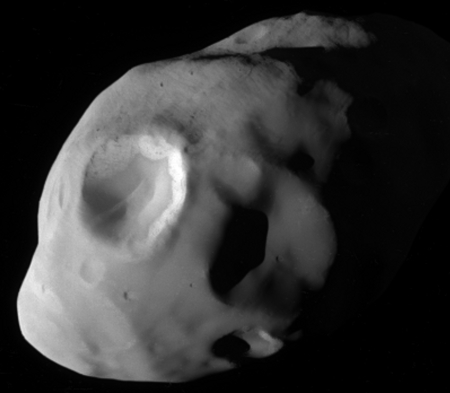
Cool image time! The image on the right, reduced in resolution to show here, shows Saturn from above as Cassini began re-positioning itself into a higher inclination orbit for its last year of orbit dives near and inside the planet’s rings.

The view looks toward the sunlit side of the rings from about 41 degrees above the ring plane. The image was taken with the Cassini spacecraft wide-angle camera on July 16, 2016 using a spectral filter which preferentially admits wavelengths of near-infrared light centered at 752 nanometers. The view was acquired at a distance of approximately 1 million miles (2 million kilometers) from Saturn. Image scale is 68 miles (110 kilometers) per pixel.

4 comments

“Academic freedom: It’s great, as long as you don’t use it.”

Academic fascism: An New York University professor who created an anonymous Twitter account so that he could express conservative opinions without risking his teaching career has been forced to take paid leave for the rest of the semester.

A 12-person committee calling itself the Liberal Studies Diversity, Equity and Inclusion Working Group, including two deans, published a letter to the editor in the same paper. “As long as he airs his views with so little appeal to evidence and civility, we must find him guilty of illogic and incivility in a community that predicates its work in great part on rational thought and the civil exchange of ideas,” they wrote. “We seek to create a dynamic community that values full participation. Such efforts are not the ‘destruction of academic integrity’ Professor Rectenwald suggests, but rather what make possible our program’s approach to global studies,” they argued.

Rectenwald likened the attack to “a Salem witch trial. They took my views personally. I never even mentioned them and I never even said NYU liberal studies program. I was talking about academia at large.”

The same day that letter was published, Rectenwald was summoned to a meeting with his department dean and an HR representative, he says. “They claimed they were worried about me and a couple people had expressed concern about my mental health,” Rectenwald told The Post. The leave has “absolutely zero to do with his Twitter account or his opinions on issues of the day,” said NYU spokesman Matt Nagel, refusing to elaborate on the reason.

Rectenwald’s real crime? He had criticized the intolerance that is poisoning the academic community.

12 comments

Virgin Galactic to begin glide tests of Unity

Virgin Galactic will begin the first glide tests of its new SpaceShipTwo, Unity, this week.

Virgin Galactic test pilot CJ Sturckow, speaking at a “Space Stories” event at The Explorers Club here Oct. 29, said the company has scheduled the first glide flight of the vehicle, named VSS Unity, on Nov. 1. That flight would come after a single “captive carry” test flight of the vehicle in September, when the vehicle remained attached to its WhiteKnightTwo carrier aircraft for its entire flight. “It’s ready to fly, and I’m really looking forward to seeing that,” he said of SpaceShipTwo’s upcoming glide flight.

That glide flight will be the first time VSS Unity has flown on its own, and will be the first in a series of glide flights before Virgin Galactic installs a hybrid rocket motor for powered flight tests.

According to the article, the new rocket motor has successfully completed several long duration test firings.

Virgin Galactic is running out of time. Their competition, Blue Origin, appears much closer to flying passengers.

1 comment
1 1,003 1,004 1,005 1,006 1,007 1,760