January 31, 2025 Zimmerman/Batchelor podcast
Embedded below the fold in two parts.
To listen to all of John Batchelor’s podcasts, go here.
» Read more
Embedded below the fold in two parts.
To listen to all of John Batchelor’s podcasts, go here.
» Read more
An evening pause: How about some math problems to fill your weekend?
Hat tip Mike Nelson.
On Christmas Eve 1968 three Americans became the first humans to visit another world. What they did to celebrate was unexpected and profound, and will be remembered throughout all human history. Genesis: the Story of Apollo 8, Robert Zimmerman's classic history of humanity's first journey to another world, tells that story, and it is now available as both an ebook and an audiobook, both with a foreword by Valerie Anders and a new introduction by Robert Zimmerman.
The print edition can be purchased at Amazon or any other book seller. If you want an autographed copy the price is $60 for the hardback and $45 for the paperback, plus $8 shipping for each. Go here for purchasing details. The ebook is available everywhere for $5.99 (before discount) at amazon, or direct from my ebook publisher, ebookit. If you buy it from ebookit you don't support the big tech companies and the author gets a bigger cut much sooner.
"Not simply about one mission, [Genesis] is also the history of America's quest for the moon... Zimmerman has done a masterful job of tying disparate events together into a solid account of one of America's greatest human triumphs."--San Antonio Express-News
Courtesy of BtB’s stringer Jay. This post is also an open thread. I welcome my readers to post any comments or additional links relating to any space issues, even if unrelated to the links below.
During confirmation hearings this week on Trump’s nominee to take over the Department of Health and Human Services Robert Kennedy, Jr., Democrat Senator Sheldon Whitehouse of Rhode Island once again demonstrated his fascist and petty dictator nature, demanding that Kennedy support “forced mandatory vaccinations” of Americans or else he will vote against Kennedy’s nomination.
Whitehouse also demanded that Kennedy promise to never again say “that vaccines are not medically safe when they in fact are.”
In other words Kennedy is to put aside his own research and knowledge, that has found some vaccines efficacy and safety are questionable, and join the government swamp to lie to Americans while forcing Americans to take drugs they might not want.
Sounds insane? If you don’t believe me then watch:
» Read more
Now available in hardback and paperback as well as ebook!
From the press release: In this ground-breaking new history of early America, historian Robert Zimmerman not only exposes the lie behind The New York Times 1619 Project that falsely claims slavery is central to the history of the United States, he also provides profound lessons about the nature of human societies, lessons important for Americans today as well as for all future settlers on Mars and elsewhere in space.
“Zimmerman’s ground-breaking history provides every future generation the basic framework for establishing new societies on other worlds. We would be wise to heed what he says.” —Robert Zubrin, founder of the Mars Society.
All editions are available at Amazon, Barnes & Noble, and all book vendors, with the ebook priced at $5.99 before discount. All editions can also be purchased direct from the ebook publisher, ebookit, in which case you don't support the big tech companies and the author gets a bigger cut much sooner.
Autographed printed copies are also available at discount directly from the author (hardback $29.95; paperback $14.95; Shipping cost for either: $6.00). Just send an email to zimmerman @ nasw dot org.
Cool image time! The picture to the right, cropped, reduced, and sharpened to post here, was taken on August 4, 2024 by the high resolution camera on Mars Reconnaissance Orbiter (MRO). It is labeled as a “terrain sample,” so it likely was taken not as part of any specific research project but to fill a gap in the schedule in order to maintain the camera’s proper temperature.
The picture shows a flat rippled plain with a handful of very small thin ridges, oriented 90 degrees from the smaller ripples and sticking up a few feet above them.
The rough surface of the small ripples suggest these are dunes of sand that have hardened into rock. The thin larger ridges suggest an underlying topography buried by the sand. The dunes however might not be dunes at all, as indicated by their location.
» Read more

Artist’s rendering of Haven-1 interior.
Click for original.
With the launch of Vast’s single module space station Haven-1 still scheduled for August, SpaceX and Vast have jointly requested research proposals (here and here) for station’s first manned mission, expected to be a four person 30-day flight soon thereafter. From the Vast press release:
Building on their established partnership, the two companies seek high-impact research projects to support humanity on Earth and advance our capacity to live and work in Earth orbit and beyond. Submitted proposals will be evaluated based on scientific and technical merit, feasibility, and alignment with mission objectives. Approved research proposals will be able to leverage the capabilities of the Haven-1 Lab, Dragon spacecraft, and/or private astronaut missions to the International Space Station (ISS).
Haven-1 is the only one of four commercial space stations being designed or built that has taken no NASA money. It also appears it will be the first to launch, thus putting it an excellent position to win the larger space station contract from NASA to build its much larger Haven-2 station.
Though neither SpaceX nor Vast are offering any funding for these proposals, they offer researchers access to space quickly and with relatively little bureaucracy (something all scientists routinely face in working with NASA). Researchers who fly on that first mission will also become well positioned to win further NASA research space station contracts later on.
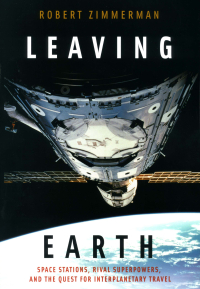
Leaving Earth: Space Stations, Rival Superpowers, and the Quest for Interplanetary Travel, can be purchased as an ebook everywhere for only $3.99 (before discount) at amazon, Barnes & Noble, all ebook vendors, or direct from my ebook publisher, ebookit.
If you buy it from ebookit you don't support the big oppressive tech companies and I get a bigger cut much sooner.
"Leaving Earth is one of the best and certainly the most comprehensive summary of our drive into space that I have ever read. It will be invaluable to future scholars because it will tell them how the next chapter of human history opened." -- Arthur C. Clarke
An official of NASA’s ineffectual and largely corrupt safety panel yesterday made another meaningless update on the work Boeing is doing to fix the thruster problems that occurred on the first manned flight of its Starliner manned capsule last summer, and as always told us absolutely nothing.
Paul Hill, a member of the Aerospace Safety Advisory Panel (ASAP), said at a Jan. 30 public meeting that the committee was briefed on the status of the investigation into Starliner’s Crew Flight Test (CFT) mission recently. That mission launched in June with NASA astronauts Butch Wilmore and Suni Williams on board, but the spacecraft returned to Earth three months later uncrewed because of agency concerns about the performance of spacecraft thrusters.
“NASA reported that significant progress is being made regarding Starliner CFT’s post-flight activities,” he said. “Integrated NASA-Boeing teams have begun closing out flight observations and in-flight anomalies.” He didn’t elaborate on the specific issues that the teams had closed out but stated that it did not include the thrusters, several of which shut down during the spacecraft’s approach to the station. The propulsion system also suffered several helium leaks. [emphasis mine]
In other words, this announcement was meaningless, because it included no information about the main problem. Hill’s comments were mostly empty blather, which is generally what this panel says in all its announcements. We still do not know when or if Starliner will fly again with astronauts on board.
Over the years the panel has bent over backwards to say positive things about Boeing, so that it missed all of Boeing’s design and construction failures from day one. At the same time it repeatedly slammed SpaceX, even though that company clearly had its act together and ended up fulfilling all of its contract obligations to NASA, even as Boeing has failed to do so.
If I was a member of Trump’s DOGE project, eliminating this safety panel would be very high on my list of things to do to make NASA’s more efficient. All it does is slow things down, often for exactly the wrong reasons.
The Malaysian state of Sabah this week announced it has partnered with a Ukrainian government agency to study the possibilities of developing its space industry, including establishing a spaceport on that state’s coast.
Initially floated in 2023, the state government signed a memorandum of understanding with Ukraine’s Yuzhnoye State Design Office – which specialises in space-rocket technology – and local defence and aerospace firm Sovereign Sengalang, to explore Sabah’s potential as a regional space launch site.
Sabah has an extensive shoreline stretching about 1,500km on its mainland, and sits close to the equator, ideal conditions for rocket launches and recovery.
Based on the map to the right, it seems the best location for a Sabah spaceport would be on the state’s eastern coast, to the south. Any other location means rockets would have to cross land or islands of other nations.

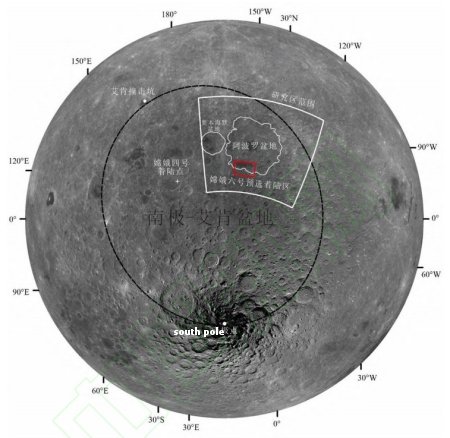
Landing sites for both Firefly’s Blue Ghost and
Ispace’s Resilience
The Japanese startup Ispace on January 29, 2025 released the first picture taken by its Resilience lunar lander, a series of images of Earth.
More important, the company reported that the spacecraft is “in excellent health.”
Though launched on the same rocket with Firefly’s Blue Ghost lunar lander, Resilience is taking a longer route to the Moon. Blue Ghost plans to land on the Moon in about six weeks. Resilience won’t get there for about four more months. Both are using the same technique, slowly over time raising the spacecraft’s Earth orbit until its high point enters the Moon gravitational sphere of influence, where each will transfer to lunar orbit. This method saves weight and fuel, as it requires a smaller rocket engine to make the trip. That Resilience is taking longer is simply because it uses an even smaller engine that can only raise that orbit in smaller increments.
Axiom this week publicly introduced the international crew and passengers for its fourth tourist flight to ISS, presently planned for this spring.
During a Thursday press conference, former NASA astronaut and Axiom commander Peggy Whitson introduced her team. Shubhanshu Shukla will pilot the fourth mission to the ISS. He has been a fighter pilot for 15 years and will be the first Indian pilot to travel to the ISS.
The private mission also carries the first astronauts from Poland and Hungary to stay aboard the space station. Sławosz Uznański-Wiśniewski is an ESA astronaut representing Poland. Tibor Kapu is a mechanical engineer who was selected as an astronaut for Hungary’s Hungarian to Orbit (HUNOR) program in May of last year.
Axiom had made deals with India, Poland, and Hungary years ago to fly astronauts in space, and this flight fulfills those deals. Launched on SpaceX’s Falcon 9 rocket, their Dragon capsule will spend 14 days in space, most of which will be docked to ISS.
An evening pause: With Doug Wamble (guitar), Ron Mcbee (percussion), and Sam Reider (accordion). The song is by Rag’n’Bone Man.
Hat tip Judd Clark.
Courtesy of BtB’s stringer Jay. This post is also an open thread. I welcome my readers to post any comments or additional links relating to any space issues, even if unrelated to the links below.