
Infrasonic detection of a near-Earth object impact over Indonesia on 8 October 2009

From a paper published on Saturday in Geophysical Research Letters, scientists describe the after the fact detection of the impact of a near-Earth object about 6 to 10 yards in diameter over Indonesia in 2009. From the abstract:

We present analysis of infrasonic signals produced by a large Earth-impacting fireball, believed to be among the most energetic instrumentally recorded during the last century that occurred on 8 October, 2009 over Indonesia. This extraordinary event, detected by 17 infrasonic stations of the global International Monitoring Network, generated stratospherically ducted infrasound returns at distances up to 17 500 km, the greatest range at which infrasound from a fireball has been detected since the 1908 Tunguska explosion. From these infrasonic records, we find the total source energy for this bolide as 8–67 kilotons of TNT equivalent explosive yield, with the favored best estimate near ∼50 kt. Global impact events of such energy are expected only once per decade and study of their impact effects can provide insight into the impactor threshold levels for ground damage and climate perturbations.
0 comments

Asteroid sample return mission on slate for 2016

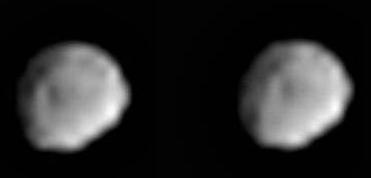
Asteroid sample return mission on slate for NASA in 2016. The asteroid chosen in 1999 RQ36, which is significant.

The space rock has been classified as a potentially hazardous asteroid, since its orbit brings it close to Earth in the year 2182. There is an extremely remote chance (a recent study pegs it at about 1-in-1000) that the 1,900-foot-wide (579-meter) asteroid could pose a threat to Earth.

0 comments

Want to go to an asteroid?

A paper published today on the Los Alamos astro-ph preprint website has taken a close look at identifying the best nearby asteroids ideal for mounting a manned mission. The conclusion: our survey of such asteroids is very incomplete (only 65 known), and due to their location in Earthlike orbits they are very difficult to study.

Ultra-low delta-v NEOs are not readily found. Their closely Earth-like orbits mean that most of the time they are in the daytime sky, as seen from the Earth, and so are effectively undetectable. As they approach within <1AU of the Earth they start to lie near quadrature, and so come into the dawn or dusk sky on Earth. The strong scattered sunlight background makes optical surveys toward the dawn or dusk much less sensitive and, in practice, surveys do not look in these directions, preferring to observe where the sky is dark, within 45 degrees, and at most 60 degrees, of the anti-Sun, opposition, direction. As a consequence the lowest delta-v NEOs are undercounted by current surveys, and the factor by which they are undercounted is not yet known.

The paper proposes building a dedicated unmanned infrared mission and placing it in a Venus-like orbit where it would be better placed to see these difficult but important objects.

1 comment

The strange egg-shaped dwarf planet Haumea is apparently also covered with ice

Truly alien: The strange egg-shaped dwarf planet Haumea is apparently also covered with crystallised ice.

“Since solar radiation constantly destroys the crystalline structure of ice on the surface, energy sources are required to keep it organized. The two that we have taken into consideration are that able to generate radiogenic elements (potassium-40, thorium-232 and uranium-238) from the inside, and the tidal forces between Haumea and its satellites,” [explained] Benoit Carry, co-author of the study and a researcher at the ESAC Centre of the European Space Agency (ESA) in Madrid (Spain).

0 comments
1 69 70 71 72 73 78