Amazon asks FCC for time extension for launching its Leo constellation

Amazon yesterday submitted a request to the Federal Communications Commission to extend the July deadline on its license for its Leo internet satellite constellation, which presently requires it to have 1,616 satellites in orbit by that date.

At present Amazon has 181 satellites in orbit, all launched in the last ten months. At that pace there is no chance the company can meet its FCC requirement. From its FCC submission:

While Amazon Leo will meet the deadline for full deployment of its constellation established by its license and the Commission’s rules, launch delays will cause it to fall short of the interim milestone requirement to deploy half of its originally authorized constellation by July 30, 2026. The Commission’s rules provide for extension of such milestones where, as here, delay arises from unforeseeable circumstances beyond an operator’s control or overriding public interest considerations favor an extension.

Because it meets both criteria, Amazon Leo respectfully requests a 24-month extension of its 50% milestone to July 30, 2028, or alternatively, a waiver of this interim requirement.

In its submission Amazon claims the delay is entirely the fault of the rocket companies it was relying on to launch the satellites, but that is a bogus claim. It initially choose to depend almost entirely on three new rockets (Blue Origin’s New Glenn, ULA’s Vulcan, and Arianespace’s Ariane-6), all of which had not launched and were still under development. To expect these to launch on time was absurd.

Furthermore, its ULA contract also called for launches using company’s already operational Atlas-5 rocket, which Amazon claims were delayed because of “unexpected anomalies and delays caused by issues with its vehicle fairings and solid rocket boosters.” I don’t buy it, and suspect the real cause was that Amazon was unable to produce the satellites on time.

Faced with these delays and a stockholder lawsuit, Amazon subsequently signed SpaceX to do three launches, which that company did quickly, in less than four months. If Amazon had truly wanted to get its Leo satellites in orbit on time, it would have given SpaceX more launches and gotten it done.

Nonetheless, it is likely the FCC will agree to Amazon’s extension request. The company has now shown it is committed to the process and intends to get its constellation in orbit. It is not sitting on its license doing nothing. I would not be surprised however if the FCC imposes some new requirements in an effort to force Amazon to launch more satellites more quickly.

8 comments

General Electric – Conquest of the Cascades

An evening pause: According to this website, this documentary was “made by General Electric between 1928 and 1929 to commemorate the completion of this monumental [8-mile-long] tunnel which took 1800 workers and three years to construct.”

Three years! Today that’s how long it would take just to get the environmental assessment written and approved.

Hat tip Blair Ivey.

10 comments

Rumors: Musk is considering merging SpaceX with xAI and Tesla

According to a bunch of unconfirmed stories today from different news outlets, Elon Musk is considering merging SpaceX with xAI and Tesla as part of the initial public offering (IPO) of SpaceX that the company is contemplating for sometime this summer.

Reuters reports that Musk wants to merge xAI — his very valuable AI company that has already merged with the company that used to be called Twitter — into SpaceX, his very valuable rocket company. And Bloomberg reports that SpaceX is also considering a merger with Tesla, citing people familiar with the matter.

The SpaceX-xAI tie-up could help Musk build data centers in space. “The combination would bring Musk’s rockets, Starlink satellites, the X social media platform and ​Grok AI chatbot under one roof,” the Reuters report says. Then again, Reuters also says it doesn’t know several key details about the theoretical deal, including “its ‌primary rationale.”

None of this is confirmed, but Musk has not denied it either. If so, this IPO would be the largest ever in the history of the stock markets, by many magnitudes. As noted at the link, xAI is raising gigantic amounts of capital. SpaceX in turn is expected to do even better in its IPO, as a single entity. Tesla is in far less demand, but this merger could be a way to reshape that company to give it a better future. It has already said it is beginning the transition from electronic cars to robots and other autonomous machines.

Whether such a merger will help SpaceX or Musk in his goal of building a Mars colony remains decidedly uncertain. A publicly traded stock company does not have the freedom of action that SpaceX now has as privately owned company.

16 comments

FAA moves forward on its environmental assessment of SpaceX’s proposal to launch Starship/Superheavy from Kennedy Space Center

Proposed Starship/Superheavy launchsites at Kennedy and Cape Canaveral
Proposed Starship/Superheavy launchsites at
Kennedy (LC-39A) and Cape Canaveral (SLC-37)

While NASA has already determined that Starship/Superheavy launches from the Kennedy Space Center in Florida will have no significant impact on the environment, the FAA has not yet completed its own environmental impact statement.

Last week it released a preliminary summary [pdf] of its impact statement, revealing that it has reduced its final options to either approving SpaceX’s request to do as many as 44 launches per year, or to reject any changes — the “no action alternative” — which would block all Starship/Superheavy launches at Kennedy.

The overall tone of this summary suggests strongly that the FAA is almost certainly going to approve SpaceX’s request, allowing as many as 44 launches per year from launchpad LC-39A, as shown on the map to the right. As it notes in describing the “no action alternative”:

SpaceX would not launch Starship-Super Heavy from LC-39A. NASA would not develop, implement, or approve agreements with SpaceX associated with Starship-Super Heavy operations at LC-39A. The No Action Alternative would not meet the purpose and need. [emphasis mine]

In other words, rejecting SpaceX’s request would not fulfill the FAA’s obligation to serve the public. It would also not fulfill the FAA’s obligation to serve a fellow government agency, NASA, which has already approved this SpaceX request in a 2019 environmental assessment.

It appears a final decision by the FAA is imminent. A nice summary of this FAA document can be found here, which notes that if approved, it will give SpaceX license approval to launch Starship/Superheavy as much as 146 times per year, from its launchpads at Boca Chica, Kennedy, and Cape Canaveral. Note too that this FAA assessment is independent of the Air Force’s environment assessment, which has already approved 76 launches per year at the SLC-37 launchpad.

6 comments

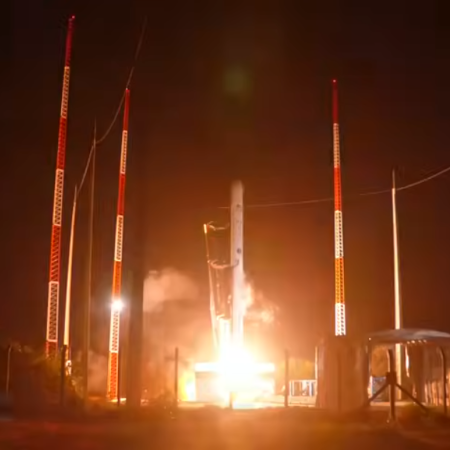
Orbex failure occurred partly because UK government withheld promised funding

Prime rocket prototype on launchpad
The prototype of Orbex’s never-launched Prime rocket,
on the launchpad in 2022

It appears the government of the United Kingdom contributed to the bankruptcy and sale of the British rocket startup Orbex in more than one way.

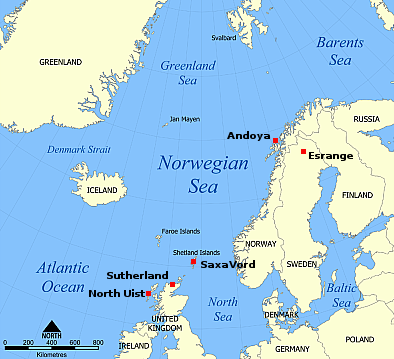
Orbex had hoped to do its first launch from the proposed Sutherland spaceport on the north coast of Scotland in 2022, but was blocked for four years because of red tape. First, the UK’s Civil Aviation Authority would not issue the spaceport and launch licenses. Second, local opposition delayed approvals as well. Those delays ate into the company’s resources, until it became entirely dependent on grants from the UK government (some through the European Space Agency) to keep it afloat.

Orbex’s problems were further compounded when it became clear in 2024 that the Sutherland spaceport would never get clearance. Orbex then switched to the Saxavord spaceport in the Shetland Islands, but this forced more delays because the company had no facilities there. It had already spent a fortune building everything for Sutherland.

A new report today says that it was finally forced to shut down and sell its assets to the French startup The Exploration Company because the UK government had withheld some of that promised funding.

News of the potential sale came just a month after a European Space Agency document confirmed that €112 million of €144 million UK government funding, earmarked for the European Launcher Challenge (ELC) scheme, was still “to be distributed”.

As a result, Orbex received just €34.9 million from the scheme – one-fifth of the €169 million awarded to each of its rivals by European governments.

That shortfall equates to about $160 million, a substantial amount of cash. While it is perfectly reasonable for the UK government to withheld these funds if it thinks the money would be badly spent, none of this government funding would not have been necessary at all if the UK government had simply issued the launch permits in a timely manner, allowing Orbex to launch and earn revenue.

As I noted early, congratulations to the United Kingdom, the place where rocket companies go to die! This is now the second such company killed by UK red tape and government incompetence, the first being Virgin Orbit.

8 comments

Two American launches this evening

Two American companies, Rocket Lab and SpaceX, successfully completed launches during the evening of January 29-30.

First, Rocket Lab today (January 30th in New Zealand) placed a South Korean test smallsat, its Electron rocket lifting off from one of its two launchpads in New Zealand. The satellite is the first of a planned mass-produced constellation to provide precise observations of the Korean peninsula.

Next, SpaceX placed another 29 Starlink satellites into orbit, its Falcon 9 rocket lifting off from Cape Canaveral in the early morning hours. The first stage completed fifth flight, landing on a drone ship in the Atlantic.

The 2026 launch race:

13 SpaceX
5 China
2 Rocket Lab

1 comment

Varda capsule successfully returns to Earth after nine weeks in orbit

Varda's W-5 capsule after landing today
Varda’s W-5 capsule after landing today

The orbiting capsule startup Varda today successfully returned to Earth its W-5 capsule after nine weeks in orbit, landing in Australia’s Koonibba Test Range, operated by the commercial spaceport startup Southern Launch.

W-5 launched in November 2025, Varda’s fourth launch last year, and spent 9 weeks in orbit. The mission was funded through the Prometheus program, a partnership between the Air Force Research Laboratory (AFRL) and commercial space entities.

…The W-5 mission is the first reentry of Varda’s in-house developed satellite bus, designed specifically to meet the rigorous demands of both long-duration orbital pharmaceutical processing and high-velocity reentry. The W-5 flight was also equipped with an in-house manufactured heatshield, made in Varda’s El Segundo headquarters from C-PICA (Conformal Phenolic Impregnated Carbon Ablator).

…The W-5 capsule carried a specialized payload for the U.S. Navy, focusing on data collection during reentry. Varda’s ability to provide fixed-cost, routine reentry offers the Department of War a unique, cost-effective platform for iterative testing of hypersonic flight characteristics. The Varda capsules endure extreme environments when they reenter at speeds exceeding Mach 25.

While previous capsules had used their time in orbit testing the manufacture of products like pharmaceuticals, this mission was used by the Air Force to test hypersonic missile sensors and equipment during the high-speed re-entry.

Varda’s earlier capsules had used a satellite bus (that provides power and control) built by Rocket Lab. With this capsule it is now capable of building its entire capsule. It is also ramping up its launch pace, with plans to launch as many as 20 capsules through ’28.

3 comments

SpaceX launches 25 more Starlink satellites

The beat goes on: SpaceX today successfully launched another 25 Starlink satellites, its Falcon 9 rocket lifting off from Vandenberg Space Force Base in California.

The first stage completed its 19th flight, landing on a drone ship in the Pacific.

It also appears on this launch SpaceX placed its 11,000th Starlink satellite into orbit. The actual number of satellites in orbit presently is much less than this, as SpaceX retires older Starlink satellites on a regularly basis. Nonetheless, the overall number is impressive, in that it was accomplished in less than seven years.

The 2026 launch race:

12 SpaceX
5 China
1 Rocket Lab

Though it is still early in 2026, note that SpaceX has now launched twice as much as the rest of the world, combined.

0 comments

New ground-based space antenna startup raises $100 million and wins $50 million Space Force contract

In a clear sign that the space industry in space now requires increased support on the ground, the ground-based space antenna startup, Northwood Space, this week announced it has raised $100 million in private investment capital even as it simultaneously won a $50 million Space Force contract.

The funding round, announced January 27, was led by Washington Harbour Partners and co-led by Andreessen Horowitz. The financing came on the heels of a $49.8 million contract that was signed with the United States Space Force to help improve the “satellite control network,” which “handles a huge variety of consequential space missions for our government,” said Bridgit Mendler, founder and CEO.

Northwood is an end-to-end ground infrastructure provider for space missions. In other words, it manufactures and deploys antennae systems, which are smaller than older models, that allow Earth to communicate with satellites in space.

Northwood was only formed three years ago, so its success is an clear indication that there is a real need for more and better ground-based facilities.

1 comment

German government hires German startup Polaris Spaceplanes to build reusable two-stage hypersonic plane

Mira-II prototype following first flight using aerospike engine
Mira-II prototype following first flight using
aerospike engine in October 2024.

The German government yesterday awarded a contract to the German startup Polaris Spaceplanes to build and fly a reusable two-stage hypersonic plane by 2027.

On 27 January, POLARIS Spaceplanes announced that it had been awarded a contract by the Federal Office of Bundeswehr Equipment, Information Technology and In-Service Support (BAAINBw) to build a fully reusable, horizontal take-off, two-stage hypersonic vehicle. The primary application of the Hypersonic Test and Experimentation Vehicle (HYTEV) will be as a hypersonic testbed for scientific and defence-related research. A variant of the vehicle with an expendable upper stage will also be capable of deploying small satellites into low Earth orbit.

According to the company, the HYTEV will be roughly the size and take-off mass of a fighter jet. The main stage will be powered by two turbofans and one of the company’s in-house developed aerospike rocket engines. The turbofans will be used for take-off and landing, and the rocket engine will accelerate the vehicle before upper-stage deployment. The upper stage will be entirely rocket-powered, with imagery accompanying the announcement appearing to show a more conventional rocket engine configuration compared with the aerospike engine equipped to the main stage. After completing its mission, it will likely be recovered under controlled glide conditions or potentially by a parachute or parafoil.

This deal appears to be an upgrade to a February 2025 German government deal with Polaris. It also follows Polaris’s successful use of an aerospike engine on a prototype test flight in 2024. While the company has shown some success, doing more than a dozen test flights with small scale prototypes (as shown in the image to the right), this program and schedule still seems quite ambitious.

3 comments

SpaceX launches GPS satellite

SpaceX last night successfully launched a GPS satellite for the Space Force, its Falcon 9 rocket lifting off from Cape Canaveral in Florida.

The Space Force had originally hired ULA to launch this satellite, but two weeks ago it switched launch provider to SpaceX. Apparently the military wanted this satellite launched now, and for some reason ULA could not do it, even though the Vulcan rocket was supposedly ready for launch.

The first stage completed its fifth flight, landing on a drone ship in the Atlantic. The two fairing halves each completed their second flight.

The 2026 launch race:

11 SpaceX
5 China
1 Rocket Lab

7 comments

Musk: Next Starship/Superheavy test launch in mid-March

According to a recent tweet by Elon Musk , the next Starship/Superheavy test launch will occur “in 6 weeks,” placing that launch sometime in mid-March.

Musk provided no other information, but this announcement suggests the company’s engineers now understand and have corrected the issues that caused two Superheavy ruptures during two different tank tests in recent weeks. It also suggests that the launchpad repairs and upgrades will soon be completed, and that a new version 3 Superheavy prototype is ready to go, replacing one that was damaged during those tank tests.

The mission specifics however remain unclear. SpaceX could repeat the flight path of the last few tests, in an orbit low enough so that the atmosphere will bring Starship down over the Indian Ocean. In such a flight the company would test refueling within Starship, restarts of its Raptor engines, and deployment of dummy or even real Starlink satellites.

It is possible however that this next test flight will go into a full orbit, and circle the Earth once or several times. SpaceX has said that in 2026 it intends to do a Starship refueling test using two Starships, launched several weeks apart. To do this more ambitious mission however it first needs to do at least one full orbital flight of Starship. Since the company has already tested on previous orbital test flights the restart of Starship’s Raptor engines — proving its capability to do a controlled re-entry — there really is no reason it can’t go for a full orbit on the next flight. There is even the possibility that Starship will come back to Boca Chica and be caught the company’s tower chopsticks, though this remains unconfirmed.

5 comments
1 21 22 23 24 25 677