Spinlaunch wins suborbital launch contract from NASA

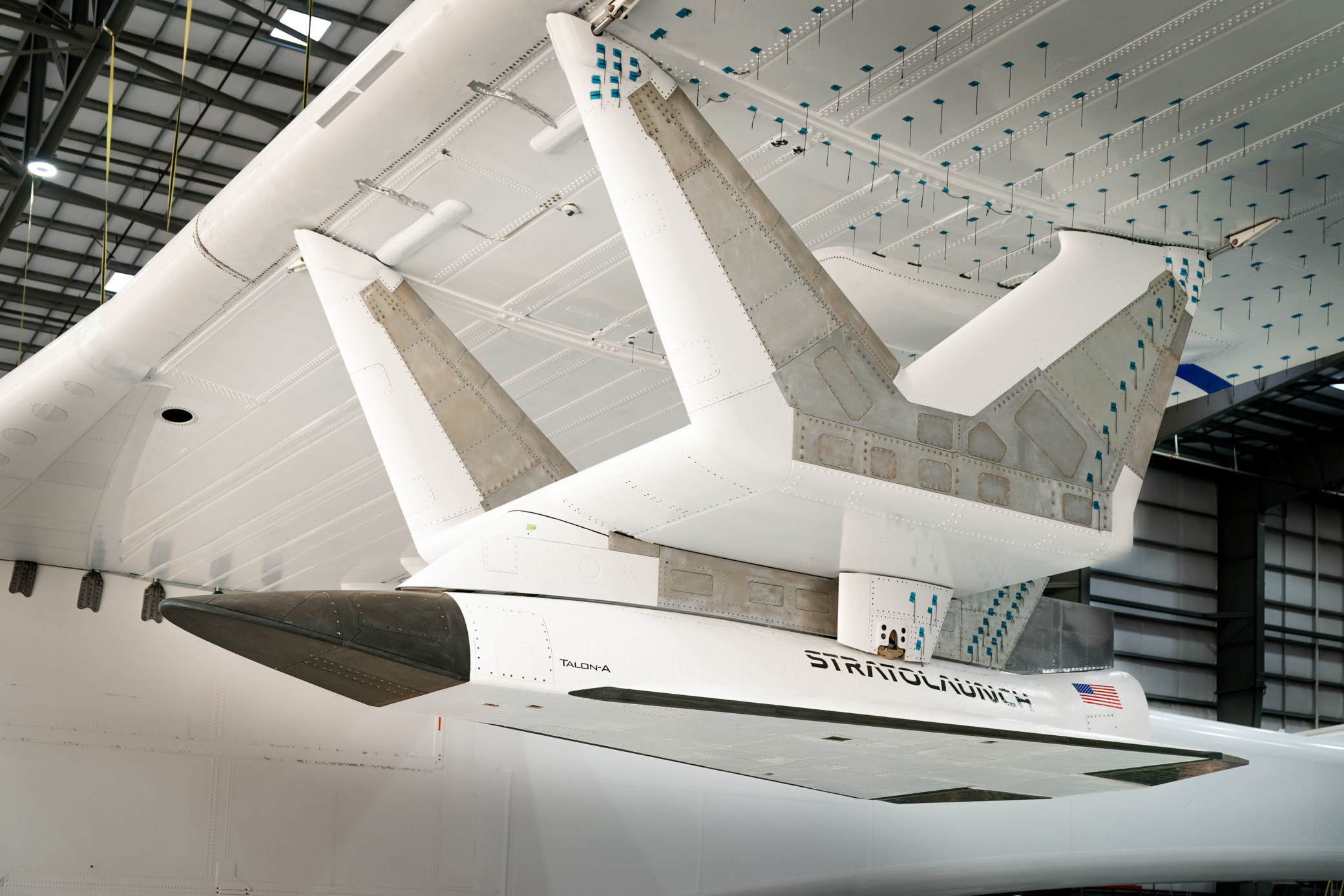
Spinlaunch prototype suborbital launcher

Capitalism in space: Spinlaunch has won a launch contract from NASA to use its rocket-tossing spin launcher, shown in the photo to the right, to place a test payload on a suborbital flight later this year.

Unlike a vertical rocket first stage, the launcher spins its upper stage to a high acceleration and flings it upward. While the G-forces are too brutal for any delicate equipment or biology, this technique could be a very cheap way to toss bulk payloads like water and oxygen into space.

Spinlaunch has already done one test flight in November ’21, and hopes to do its first orbital test flight by ’25.

8 comments

Breaking: Army Corp of Engineers suspends SpaceX’s Boca Chica permit process

We’re here to help you! According to this very short Bloomberg news report today, the Army Corp of Engineers has entirely suspended SpaceX’s Boca Chica permit process for expanding the facility.

The reason given is that SpaceX “failed to provide requested information.”

Though not yet confirmed, this permit appears to be separate from the environmental reassessment process being led by the FAA to approve Starship launches from Boca Chica. Instead, this appears to have an application to add an additional launchpad and other facilities to the site.

Assuming this distinction is true, then launches from Boca Chica of Starship might still be approved. The action however once again indicates the growing hostility to SpaceX within the federal bureaucracy, apparently aided and abetted by the Biden administration.

7 comments

China and Russia successfully launch satellites

Both China and Russia today successfully places satellites into orbit.

China used its Long March 4C rocket to place an Earth observation radar satellite into orbit. Russia in turn used its Soyuz-2 rocket to launch a military surveillance satellite. As both launched from interior spaceports, both dumped first stages and boosters on their respective countries.

The leaders in the 2022 launch race:

12 SpaceX
9 China
5 Russia
2 ULA
2 Rocket Lab

The U.S. still leads China 19 to 9 in the national rankings.

2 comments

Pioneer 2140CC Kickstarter campaign shuts down

An announcement from Aaron Jenkin, creator and producer the video game proposal, Pioneer 2140CC, based on my science fiction novel Pioneer:
————————————————————
To everyone here on Behind the Black,

We covered a lot of topics in our Kickstarter update, but I wanted to give a special thanks to you all for following us on our journey, for your helpful feedback, and for your support on Kickstarter. This isn’t the outcome we had hoped for, but we’re hopeful it’s not the end of the road in our effort to expand on the world envisioned by Mr. Zimmerman in his fast-paced, 1983 sci-fi novel Pioneer.

In the meantime, please enjoy this wallpaper featuring characters from the game and book. From left to right: Saunders Maxwell, Jane Barlow, Becky Lightman, Michael Addiono, Alex Barlow, Morgan Callahan, and Harry Nickerson.

Pioneer game wallpaper
Click for full resolution.

I’d also like to thank Mr. Zimmerman for taking a chance on us and this project. He’s built up a distinguished career and it would have been easy to brush us off. But instead he welcomed us and did everything he could to help us succeed. We really appreciate that. Hopefully one day soon we can meet face-to-face for a hike or cave trip and talk about the adventure!

One problem we faced that we mentioned before was related to other people’s fear of being blacklisted. I can imagine that’s something a lot of you here would like to hear more about, and it’s something that I’d like to talk about, so we’ll have to get into that one day.

As far as moving forward is concerned… I’m a Creative Director, but I lost my main client at the end of the year due to a merger. That ended up being a good thing at the time because I was able to focus more on Pioneer. But now with the Kickstarter not panning out, I need to pick up new work. My plan is to fall back on one of my strong skills, video editing. I’m thinking that will leave me more time to devote to whatever comes next with Pioneer. If you need a video editor, please get in touch!

Thanks again for your support, and thanks for being such a great community!
Aaron
———————————————————

From my perspective, this outcome is incredibly sad, especially because of the blackballing of Aaron and the project behind the scenes because of my politics. I have no idea if the project failed because of this blacklisting, but it certainly acted as a dead weight. Some of it was vicious. Some was simply fear, holding no animus to Aaron, the book, or my politics. Such people simply did not wish to help promote the game or participate in making it because they feared the consequences to themselves if it was learned they had worked on a project by someone with conservative values.

That such fear permeates our culture now so deeply bodes ill for the future. Very ill indeed.

22 comments

Europe to put instrument on Japanese rover being launched and landed on the Moon by India

The new colonial movement: The European Space Agency (ESA) has signed an agreement with Japan’s space agency JAXA to put a science instrument on a Japanese rover that will be launched by India to the Moon and landed there on an Indian lander.

Under the deal, ESA would provide instruments for the Japanese rover, which would be used in the exploration of the Moon’s south pole under the mission targeted for 2024. … The lunar endeavour between the Indian Space Research Organisation (ISRO) and JAXA is called the Lunar Polar Exploration Mission (LUPEX) which aims to launch an Indian lander and a Japanese rover to the Moon.

In the next three years a lot of landers and rovers are planning to land on the Moon, most built by private American companies flying NASA and private payloads, but also joined by probes being sent by Russia, China, and now this Japanese-Indian-European mission. Even if only half succeed, the exploration of the lunar surface will still be quite busy.

0 comments

Ukrainian rocket development for Nova Scotia spaceport unhindered by war

Capitalism in space: The development of a Ukrainian rocket dubbed Cyclone 4M for of any satellite customers who choose to launch from a planned Nova Scotia spaceport has not been delayed by the Ukraine war.

“Everything is stable with respect to our team in Ukraine,” said Steve Matier, president of Maritime Launch Services. “The facility there is fine, the staff is fine and at work. . . . We’re continuing to finance their development of the launch vehicle.”

The Cyclone 4M rocket Maritime Launch Services plans to use is designed and built by Ukrainian state corporations Yuzhnoye and Yuzhmash in Dnipro. Known as Space City, Dnipro is located in central Ukraine. The city of about a million people was shelled in mid-March by Russian forces and the airport runways and terminal were hit by missile strikes, according to Ukrainian government statements.

This story illustrates the strong possibility that the recent success the Ukraine has had on the battlefield has served to prevented any serious long term damage to its aerospace industry and its partners in the west. Those partnerships if anything look stronger, with the work in the Ukraine apparently able to continue as planned, with only slight delays.

1 comment

Commercial Orbital Reef space station passes NASA’s design review

Proposed Orbital Reef space station

Capitalism in space: A proposed commercial space station dubbed Orbital Reef and being built by a partnership led by Sierra Space and Blue Origin has passed its NASA’s design review, allowing for construction to now begin.

The review, conducted as part of a $130 million development contract from NASA, found no issues with the station’s design.

This commercial partnership also includes Boeing, Redwire, Mitsubishi, Genesis Engineering, and Arizona State University, and plans its launch before 2030 when ISS will be retired. This quote from the article I think is important:

“We’re going as fast as we can,” Steve Lindsey, chief strategy officer at Sierra Space, said during a panel at the Goddard Memorial Symposium March 25. “We don’t want to have a gap like we did with crew back in the last decade.”

Three other private space stations are also under construction or being planned, all hoping to be operational prior to ’30. If even two of these launch, the 2030s will be very exciting indeed.

5 comments

Rocket Lab to attempt 1st stage recovery by helicopter on next launch

Capitalism in space: Rocket Lab will attempt during its next launch later this month to become the second commercial rocket company, after SpaceX, to successfully recover a first stage for reuse.

The company will use a customized Sikorsky S-92 helicopter to rendezvous with the stage as it descends slowly using parachutes and capture it. The helicopter will then fly it back to land and safely deposit it on the ground.

This launch is now scheduled for April 19th, at the earliest.

2 comments

UAE wants to prioritize private enterprise for its space effort

Capitalism in space: According to officials of the United Arab Emirates (UAE) space agency, that nation is working to encourage the growth of a private space industry, funded initially using government money, in its effort to become a major world player in space.

“We’ve spent well over Dh1.5 billion ($408 million) on building capacity within the space industry over the last eight years and we’re more than doubling that over the next decade.”

Laws and regulations, including permits, which would allow interested companies to set up base in the UAE, are already available through a space law passed in 2019.

Companies would also have access to funding from a new initiative launched by the space agency, called Space Analytics and Solutions, which has a budget of Dh20 million. The programme aims to help start-ups build space-based applications that focus on food security, climate change, infrastructure and the oil and gas industry.

The space agency hopes that as these companies progress, they would become less reliant on government funding.

While the UAE’s Al-Amal Mars orbiter was mostly built and launched by foreign companies, it hopes its next major mission, to send an unmanned probe to seven asteroids, will be built almost entirely by companies run by UAE citizens, something they claim they have achieved with an upcoming smallsat Earth observation satellite.

The article also mentioned as an aside that the UAE has ended its 2019 agreement with Virgin Galactic to allow it to launch from the UAE. Instead, it is negotiating with Blue Origin “to set up spaceports.”

0 comments

More than 4,000 people apply to Japan’s JAXA space agency to become astronauts

In its first new recruitment effort in thirteen years, JASA has received more than 4,000 applications from people eager to become astronauts flying to ISS.

A record number of people applied as the Japan Aerospace Exploration Agency for the first time dropped the requirement that candidates have a university education. The change was made in the hope of recruiting people with a wide range of experience.

However, applicants were required to have at least three years of work experience as of late March, with some academic qualifications being considered as meeting this requirement.

It is unfortunate that the Japanese people do not have more options to get into space. They must either buy a flight from foreign private companies, or depend on a government agency to approve them.

2 comments

Rogozin proposes Russia launch modules to China’s space station

Dmitry Rogozin, the head of Roscosmos, yesterday proposed in an interview on China’s state-run press that Russia is eager to discuss the possibility of attaching its future space station modules to China’s Tiangong space station.

“As for the Chinese space station, we can discuss construction of some joint modules as well. In order to be friends in space, friendship must first be established back on Earth, and Russia and China are friends on Earth,” Rogozin said. He opined that Russia and China “can be together” in human spaceflights as well.

Whether China will agree is in some ways besides the point. The real question is whether Russia has the capability to do this. Though China and Russia already have a joint agreement to develop a permanent base on the Moon, China is carrying most of the load. Moreover, Russia’s new modules for ISS are decades behind schedule. Whether they will now even be launched to ISS is questionable. Adding these Russian modules to China’s space station will require some major engineering discussions, as neither Tiangong nor the modules were designed for such a thing.

I suspect the two countries will work out an agreement that they will announce with great fanfare. I also expect China will insist that at no time will it be dependent on Russian technology, so that if Russia is delayed or can’t get it done, China will not be hampered in any way. This is essentially their deal for building the lunar base.

0 comments

Amazon announces launch agreements with Blue Origin, Arianespace, and ULA

Capitalism in space: Amazon today announced major multi-launch agreements with Blue Origin, Arianespace, and ULA to launch its 3,000+ Kuiper satellite constellation.

According to the press release, ULA won 38 launches using its new Vulcan-Centaur rocket (not yet flown), Arianespace won 18 launches using its new Ariane-6 rocket (not yet flown), and Blue Origin won 12 launches using its new New Glenn rocket (not yet flown), with an option for 15 more. The ULA deal is in addition to a previous launch contract of nine launches using the Atlas-5 rocket.

In addition, Amazon hopes to launch two prototype satellites later this year using ABL’s smallsat RS1 rocket (not yet flown).

Overall, this Amazon launch announcement might be the largest launch contract deal ever. However, the company’s reliance on unproven rockets means it will also likely face some delays and failures in its early stages. That the press release makes no mention of any schedule for launches illustrates this fact starkly. All four rockets have already seen major delays. with the three biggest (Vulcan-Centaur, New Glenn, Ariane 6) now more than two years behind schedule, and the likelihood of their first launch occurring in 2022 increasingly unlikely.

14 comments

Rocket Lab launches two BlackSky Earth observation satellites

Capitalism in space: Rocket Lab today successfully launched two commercial BlackSky Earth observation satellites using its Electron rocket.

This was Rocket Lab’s the fourth mission for BlackSky, with each launch putting two satellites in orbit. The satellites provide high resolution imagery to commercial and government customers, imagery presently in high demand because of the Ukraine War.

The leaders in the 2022 launch race:

12 SpaceX
8 China
4 Russia
2 ULA
2 Rocket Lab

The U.S. now leads China 19 to 8 in the national rankings.

3 comments

Will XCOR’s Lynx’s spaceplane be reborn as smallsat launcher taking off from California airport?

Capitalism in space: Wagner Star Industries, a startup that now owns the unfinished Lynx spaceplane that bankrupt XCOR had intended for suborbital tourists flights, has signed a agreement with Paso Robles Municipal Airport in California to launch from there.

Wagner’s plan is to reconfigure Lynx as an unmanned first stage that would launch smallsats into orbit. It would launch and land on a runway from Paso Robles.

Wagner Star is in the process of converting the first Lynx vehicle into a drone so it can begin tests, according to the company’s website. The work involves removing life-support systems that had been installed to support the pilot and passenger and installing equipment for remote controlled operation.

Quetzalcóatl would take off from a runway, release its payload in suborbital space, and then glide back to where it took off. The company said it would be able to launch satellites from any commercial airport runway for $5 million per flight. A suborbital flight without a satellite launch would cost $3 million.

A clever plan. I have doubts about the satellite launches, but using this plane to place drones into high altitude where they could then continue to fly for great distances will almost certainly appeal to the military.

3 comments

New Shepard completes another commercial suborbital flight

Capitalism in space: Blue Origin’s New Shepard suborbital spacecraft today successfully completed its fourth manned commercial flight, carrying six passengers to a height of about 70 miles for total flight time of a little less than eight minutes.

I have embedded the live stream below the fold, cued to just before launch. Everything went almost routinely, which is a very good thing for a rocket company.

The most interesting aspect of this flight was that one of the passengers was George Nield, who had:

…previously served as associate administrator for the US Federal Aviation Administration (FAA) Office of Commercial Space Transportation from 2008 to 2018, being responsible for launch licensing and regulation for all commercial launch activities during that time.

During Nield’s term, the government worked very hard to help get launches off the ground, which laid the groundwork for the success of both SpaceX’s orbital Falcon 9 and Falcon Heavy rockets, as well as the suborbital spacecraft of Blue Origin and Virgin Galactic. His effort also helped jumpstart the new smallsat rocket industry.

Since his retirement, the FAA’s attitude toward regulation has become more oppressive, especially since the beginning of the Biden administration in 2021.

» Read more

0 comments

Europe’s deep space communications network to support India’s next two missions beyond Earth orbit

The new colonial movement: Based upon a 2021 agreement, the European Space Agency (ESA) today outlined how its deep space communications network of antennas will support India’s next two missions beyond Earth orbit.

ESA’s global deep-space communication antennas will provide essential support to both missions every step of the way, tracking the spacecraft, pinpointing their locations at crucial stages, transmitting commands and receiving ‘telemetry’ and valuable science data.

In June 2021, ESA and the Indian Space Research Organisation (ISRO) signed an agreement to provide technical support to each other, including tracking and communication services to upcoming Indian space missions via ESA’s ground stations.

The first missions to benefit from this new support agreement will enable India look to the Sun and the Moon with the Aditya-L1 solar observatory and Chandrayaan-3 lunar lander and rover, both due to launch in 2022 from the Satish Dhawan Space Centre in Sriharikota Range (SDSC SHAR), India.

Though scheduled for launch this year, ISRO (India’s space agency) has not yet announced firm launch dates for either.

This arrangement signals an effort by India and Europe to remain independent of the American Artemis program, which is NASA’s central program for manned missions beyond Earth orbit. To partner with NASA for such missions the Trump administration had demanded nations sign the Artemis Accords, though that requirement might have been eased by the Biden administration for deep space communications.

Regardless, this agreement gives both India and ESA flexibility for remaining outside the accords, at least for now. Neither India nor most of the partners in the ESA have signed, with France and Germany the most notable European nations remaining outside the accords.

0 comments

Soyuz capsule returns three astronauts safely, completing Mark Vande Hei’s 355 day mission

A Russian Soyuz capsule successfully returned three astronauts back to Earth today, thus completing Mark Vande Hei’s 355 day mission, the longest so far achieved by an American astronaut.

Vande Hei’s record is the fifth longest overall, behind four other Russians on Mir. Musa Manarov and Vladimir Titov were the first to complete a year-long flight in 1987-1988. Sergei Avdeyev’s flight of 381 days on Mir in 1998-1999 is the second longest. Valery Polyakov holds the record for the longest flight, 437 days in 1994-1995.

Now that Vande Hei is safely back on Earth, expect Dmitry Rogozin, the head of Roscosmos, to make some announcement in the next day or so further limiting cooperation at ISS. It is my expectation he will end the discussions between Roscosmos and NASA to exchange one-for-one flights on each other’s capsules. While the partnership to maintain and occupy ISS will continue, Rogozin will likely end any cooperation otherwise.

3 comments

China’s Long March 11 rocket launches three satellites

China today successfully launched what appear to be three technology test satellites using its Long March 11 rocket.

The three satellites Tianping-2A, Tianping-2B and Tianping-2C will provide services such as atmospheric space environment survey and orbital prediction model correction.

This is all we know about these satellites.

The leaders in the 2022 launch race:

11 SpaceX
8 China
4 Russia
2 ULA

The U.S. still leads China 17 to 8 in the national rankings.

0 comments

Japanese satellite startup Synspective raises $100 million

Capitalism in space: The Japanese satellite startup Synspective announced today that it has successfully raised $100 million in private investment capital.

The latest funding was led by Sompo Japan Insurance Inc. (Tokyo, Japan), Nomura SPARX Investment, Inc. (Tokyo, Japan), and Pavilion Capital Pte. Ltd. (Singapore) among others, as well as bank loans, and it is supposed to be ranked within the top ten largest startups in Japan. This puts our total funding value at US $200M (22.8 billion yen) since our founding.

The company plans to launch a constellation of 30 radar satellites by 2026, designed to do Earth resource observations.

Synspective had hoped to launch its first demonstration satellite in ’23 on a Soyuz rocket. That launch is presently threatened by Russia’s invasion of the Ukraine, though it is not clear if it has been cancelled.

2 comments
1 181 182 183 184 185 472