American astronaut seat liner shifted to Dragon temporarily

Though NASA has not issued an update, the Soyuz seat liner used by American astronaut Frank Rubio was supposed to be shifted from the leaking Soyuz capsule to Endurance today, just in case that Soyuz needs to be used as a lifeboat. From the January 13th ISS update:

On Thursday, Jan. 12, the International Space Station mission management team polled “go” to move NASA astronaut Frank Rubio’s Soyuz seat liner from the Soyuz MS-22 spacecraft to Dragon Endurance to provide lifeboat capabilities in the event Rubio would need to return to Earth because of an emergency evacuation from the space station. The seat liner move is scheduled to begin Tuesday, Jan. 17, with installation and configuration continuing through most of the day Wednesday, Jan. 18. The change allows for increased crew protection by reducing the heat load inside the MS-22 spacecraft for cosmonauts Prokopyev and Petelin in the event of an emergency return to Earth.

Once the replacement Soyuz MS-23 arrives at the space station on Feb. 22, Rubio’s seat liner will be transferred to the new Soyuz and the seat liners for Prokopyev and Petelin will be moved from MS-22 to MS-23 ahead of their return in the Soyuz.

I expect that once this work is completed tomorrow NASA will issue an update.

10 comments

The sea of dunes surrounding the Martian north pole

The sea of dunes surrounding the Martian north pole
Click for full image.

Cool image time! The photo to the right, rotated, cropped, and reduced to post here, was taken on December 5, 2022 by the high resolution camera on Mars Reconnaissance Orbiter (MRO). It shows a collection of wormlike dunes located in the giant sea of dunes that surrounds the Martian north pole ice cap.

North is to the top. The season when this picture was taken was northern winter. The Sun is barely above the horizon, only 8 degrees high, and shining from the southeast. Because it is winter it is also dust season, making the atmosphere hazy and thus making the light soft. No distinct shadows, except that the sides of the dunes facing away from the Sun are darkly shadowed.

The consistent orientation of the dunes suggests that the prevailing winds blow from the northeast to create the steep-sided alcoves. The wind however might not be the only factor to form these dunes.
» Read more

1 comment

Hakuto-R completes five of ten milestones on test flight

Ispace’s private commercial lunar lander, Hakuto-R, has now completed five of the ten milestones the company had established before launch as its goals on this first test flight to the Moon.

The first five milestones completed are:

  • Completion of launch preparations
  • Completion of launch and deployment
  • Establishment of a Steady Operation Status
  • Completion of the first orbital control maneuver
  • Completion of stable deep-space flight operations for one month

The next five milestones involve entering final lunar orbit and landing successfully, the most difficult milestones of all.

1 comment

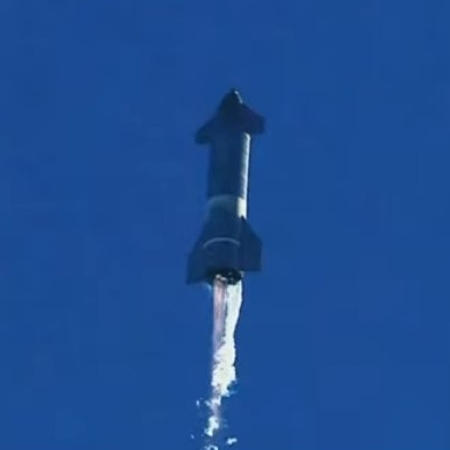
SpaceX to build five Starship/Superheavy prototypes in 2023

According to Elon Musk, SpaceX intends to build five Starship/Superheavy prototypes in 2023 for flight testing.

Assuming they can get launch permits, these five rockets should provide the company ample launch testing capability for at least the next two years, especially if it succeeds in landing these units and can consider reusing them in test flights.

At this moment, the launch permits from the federal government appears the main obstacle to getting this heavy lift reusable rocket tested and operational.

9 comments

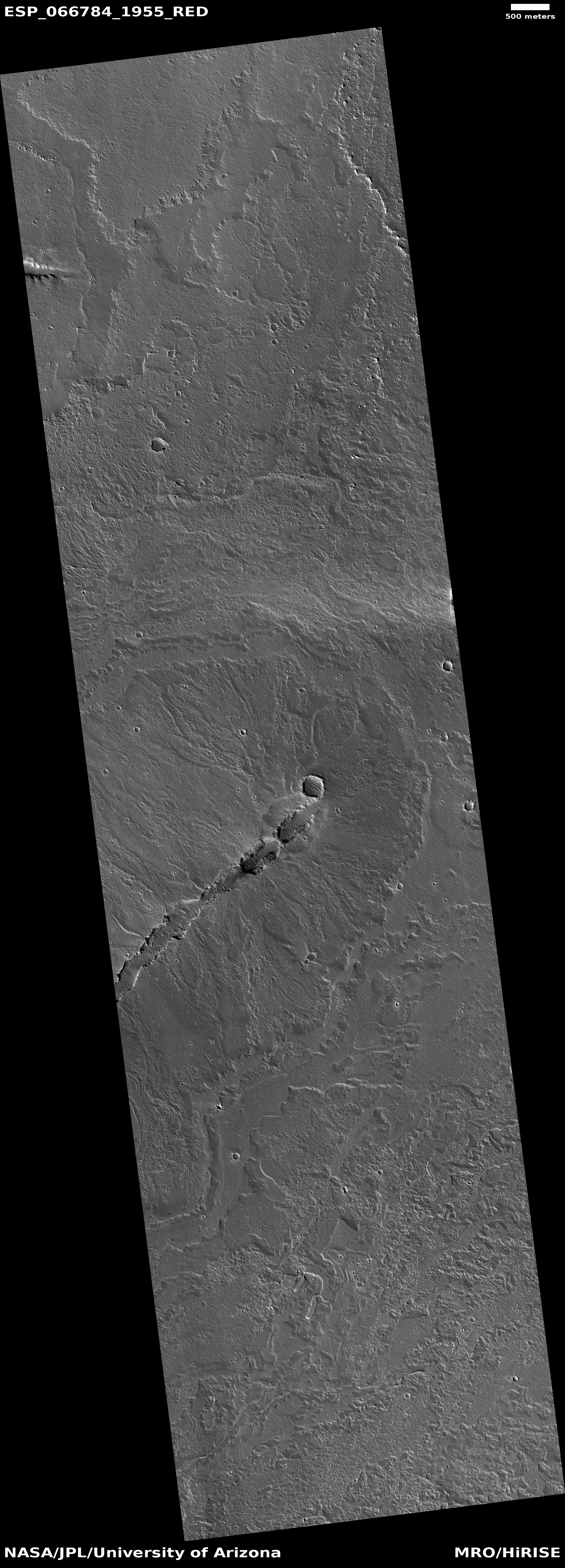
A Martian river canyon?

A Martian river canyon?
Click for full image.

Today’s cool image highlights the biggest mystery of Mars that has baffled scientists since the first good pictures of its surface were taken in the early 1970s by the Mariner 9 orbiter. The picture to the right, rotated, cropped, reduced, and sharpened to post here, was taken on October 24, 2022 by the high resolution camera on Mars Reconnaissance Orbiter (MRO), and shows a very small segment of the 400-mile-long meandering canyon on Mars called Nigal Vallis. From the Wikipedia page:

The western half of Nirgal Vallis is a branched system, but the eastern half is a tightly sinuous, deeply entrenched valley. Nirgal Vallis ends at Uzboi Vallis. Tributaries are very short and end in steep-walled valley heads, often called “amphitheater-headed valleys.”

We can see one of those short tributaries on the image’s left edge. The overview maps below provide a wider view of this entire canyon.
» Read more

5 comments

Starlink service scheduled for South Korea later this year

SpaceX will begin offering Starlink service in South Korea by the spring of this year.

The article, from a South Korea news outlet, is generally negative about Starlink’s possibilities, mostly because its cost is much higher than that already available with coverage that includes 80% of the country. Nonetheless, Starlink will still be an option to those regions not yet served.

2 comments

SpaceX’s Falcon Heavy successfully launches Space Force satellites

SpaceX’s Falcon Heavy rocket today successfully launched a Space Force communications satellite plus a secondary military payload.

The two side boosters completed their second flight, landing at Cape Canaveral. The core stage was not recovered, as planned. Actual deployment of the satellites will not occur for another six hours.

At this moment China leads SpaceX 5 to 3 in the 2023 launch race. No one else has as yet launched successfully.

16 comments

Russia delays three planned lunar probes because of sanctions

The research division that is building Russia’s Luna 26, Luna 27, and Luna 28 probes to the Moon announced today that these missions will likely be delayed up to two years because many needed components are no longer obtainable due to the international sanctions imposed on Russia because of its invasion of the Ukraine.

“Previously, we designed equipment using foreign components that we could buy from our foreign colleagues. Now that the sanctions have been imposed, we will [be switching to] Russian-made components,” Mitrofanov explained. According to him, researchers have to change design solutions amid the Western restrictions.

Some of these components cannot be so easily replaced by Russian versions. Assuming the Ukraine war does not end soon, expect even longer delays for these unmanned lunar missions.

5 comments

Stratolaunch’s Roc airplane completes 2nd captive-carry test flight

Stratolaunch’s giant Roc airplane, the largest in existence, successfully completed its second captive-carry test flight, carrying a Talon-A (TA-0) hypersonic test vehicle under its central fuselage during take-off and landing.

The flight set a new duration record lasting a total of six hours and reached a maximum altitude of 22,500 ft., representing another important step forward in the company’s near-term goal of completing separation testing with TA-0. Primary test objectives included flight outside of the local Mojave area for the first time and evaluation of the separation environment. Roc and TA-0’s onboard data systems provide critical information on the aerodynamic loads and moments prior to release of TA-0, helping to ensure safe separation of the vehicle from Roc. The flight team also practiced chase formation and communication sequencing for the upcoming separation test.

The company has a contract with the Air Force to use the operational Talon-1 spacecraft, released from Roc, to do hypersonic test flights, hopefully in the first half of 2023.

0 comments

Sweden cuts ribbon on Esrange spaceport

Sweden yesterday officially inaugurated a new commercial launch site at the Esrange spaceport that the ESA had used previously for suborbital tests.

The site is an extension of the Esrange Space Centre in Sweden’s Arctic, around 40 kilometres (25 miles) from the town of Kiruna. Around 15 million euros ($16.3 million) have been invested in the site, which is expected to serve as a complement to Europe’s space hub at Kourou in French Guiana. It will also provide launch capabilities at a time when cooperation with Russia and the Baikonur launch site in Kazakhstan has been curtailed by the war in Ukraine.

Esrange’s state-owned operator, the Swedish Space Corporation (SSC), aims to launch its first satellite from the site “in the first quarter of 2024”, a spokesman told AFP on Friday.

At this moment, there are three commercial rocket spaceports racing to complete the first orbital launch from Europe. Esrange in Sweden and the two UK spaceports, Spaceport Sutherland in Scotland and SaxaVord in the Shetland Islands. Cornwall in the UK is an airport, so it can only launch rockets that use an airplane, which essentially limits its launch customers to Virgin Orbit.

5 comments

Touring the largest organ in the world

An evening pause: Specifically, this tour takes us from the bottom to the top of the largest pipe, and then shows us what comes out when you play it.

Hat tip Judd Clark, who provides this additional information:

Constructed between May 1929 and December 1932, the Main Auditorium Organ is the “Poseidon”, built by the Midmer-Losh Organ Company, and is the world’s largest pipe organ. Also included in this organ are pipes operating on 100 inches of pressure, the Grand Ophicleide being the loudest and also most famous. The instrument has an estimated 33,113 pipes and requires approximately 600 horsepower (450 kW) of blowers to operate.

17 comments
1 365 366 367 368 369 1,353