Orion testing goes on
Despite the program’s budget uncertainties, testing by NASA of the Orion capsule continues.
For the fifth time in two years Mars Reconnaissance Orbiter has gone into safe mode because of a computer reboot.
Here’s a good inside look, with pictures, at the preparations for the October 23 launch of the second Falcon 9 rocket.
An evening pause: Though this sequence of shots from a 1922 Kodak test of Kodachrome film (possibly the earliest in existence) is hardly the stuff of drama, it is fascinating nonetheless, as it gives as an honest glimpse into the culture of its time. As you watch the different women pose for the camera, ask yourself: Has anything changed?
The second Falcon 9 rocket passes fuel test in anticipation of an October 23 launch.
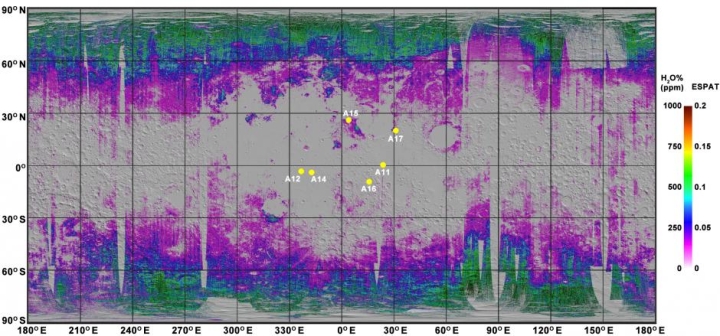
Europe to the Moon! The U.S. may no longer have a coherent lunar exploration program, but Europe sees that water at the Moon’s south pole and wants it, awarding contracts today to begin the work of getting a lunar lander there.
The U.S. is doing its own satellite maneuvers, placing for the first time a spacecraft into the Earth-Moon L1 and L2 points.
China is continuing the mysterious maneuvers of the two satellites that might have actually touched earlier this month. Key quote:
The maneuvers, which appear to involve rendezvous operations between the SJ-06F satellite and the more recently launched SJ-12 craft, could amount to practice for space station dockings or coordinated satellite observations from orbit. Few folks would have a problem with that. But they also could be aimed at developing the expertise for lurking near someone else’s satellte and eavesdropping, or even knocking that satellite out of commission in the event of a crisis. That’s the worrisome part.
University of Arizona scientists have built a hydroponic lunar vegetable garden on Earth. More information here. Key quote:
The membrane-covered module can be collapsed to a four-foot-wide disk for interplanetary travel. It contains water-cooled sodium vapor lamps and long envelopes that would be loaded with seeds, ready to sprout hydroponically.
The federal government’s very expensive and probably unnecessary project to build a high speed railroad line between two cities in Wisconsin — using stimulus money — is having a significant influence on the elections there. Key quote:
With the U.S. economy in shambles and our national debt strangling the country, it doesn’t bode well for Feingold that he supported the wildly unpopular health-care bill, which [challenger] Johnson wants repealed, as well as last year’s big clunker, the stimulus bill. Feingold’s support for the unfunded and bottomless money pit of [high speed rail] doesn’t appear to be working for him either. If an entrenched insider like Feingold loses, it could have serious ramifications for the future of high-speed rail across the country. [emphasis mine]
The harsh environment of space, normally hostile to most materials, acts beneficially to cure certain epoxy resins. Key quote:
“You don’t have to take it up there in the shape that you eventually want,” said University of Sydney physicist Marcela Bilek, a co-author of the new study. “You can take something in a packaged form, all folded up, and then inflate it in space and have it cure into a mechanically solid structure.”
Read the research paper here.
The number one injury reported by astronauts appears to be fingernail and hand injuries resulting from the use of spacesuit gloves. Key quote:
A previous study of astronaut injuries sustained during spacewalks had found that about 47 percent of 352 reported symptoms between 2002 and 2004 were hand related. More than half of these hand injuries were due to fingertips and nails making contact with the hard “thimbles” inside the glove fingertips. In several cases, sustained pressure on the fingertips during EVAs caused intense pain and led to the astronauts’ nails detaching from their nailbeds, a condition called fingernail delamination.
All systems go! The project engineer of the Dawn mission has posted a very detailed update (as of August 30), describing the spacecraft’s status in its journey to the asteroid Vesta.
Good news for private space! Scaled Composites put WhiteKnightTwo back in the air today, only three weeks after one of its landing gears failed during a landing. You can read the test flight logs here.
Engineers are reviewing the life expectancy of the International Space Station, in light of the desire of politicians to keep it operating through the 2020s. Intriguing quote:
Airlines and airplane contractors commonly inspect aircraft for such fractures, but with the space station out of reach more than 200 miles up, engineers rely on complex models to predict their growth in orbit.
Boeing, which is now building its own private space capsule, and Space Adventures, the company that flies tourists to space, are apparently teaming up. More details will be announced at a press conference is scheduled for next week.
Scientists develop first tractor beam, although it can only move tiny objects less than two yards. Worse, “because this technique needs heated gas to push the particles around, it can’t work in the vacuum of outer space like the tractor beams in Star Trek.”
Launchpad 39B, where 53 shuttle launches took place, is about to be torn down.
The reason the Danish privately funded suborbital rocket did not launch on Sunday was because the power had accidently been cut off to an ordinary hair dryer, purchased at a Danish supermarket and installed in the rocket to keep the valve from freezing.
An evening pause: One week ago today the rocket company ATK test fired the first stage solid rocket motor of the Ares I rocket. At the moment, no one knows if this rocket will even be built, as the Obama administration opposes it while Congress argues a variety of options. Regardless, watch this video of the test and you will understand why it is fun ito build rockets.
The first test launch of that privately funded Danish suborbital rocket had to be scrubbed on Sunday when a valve jammed.
That test flight of a Danish privately built suborbital rocket has been delayed from today till tomorrow due to weather, with tomorrow’s flight having a 70% chance.
‘
NASA managers have decided to defer that spacewalk to finish up the work items leftover from the spacewalks to repair the station’s cooling system, leaving the work to the space shuttle astronauts during the upcoming the November shuttle flight.
South Korea and Russia fighting over rocket construction.
The solid rocket first stage of the Ares I rocket successfully completed its second test fire yesterday.
It appears that the Chinese have successfully maneuvered two unmanned satellites to a rendezvous in space. It is even possible that they might have touched!
Because yesterday’s hike up Eagle Creek to Tunnel Falls (see picture below) was particularly long, 12.5 miles, I took a break from posting when I got home. Today (Monday), however, was a more easy-going day, as we did more ordinary tourist stuff, driving from place to place with only short strolls at each stop.

The most fascinating tourist stop of the day was by far Bonneville Dam. Just as the security guard at the gate let the car in front of us through, her phone rang. When she was finished and came up to our car, she explained that we would have to wait about a half hour before going to the visitor center, as they needed to open the swing bridge so that a barge could go through the locks. At first I thought this was very unfortunate timing. In the end, it turned out to be fortuitous indeed. We parked at the viewing area above the locks and watched five barges, tied tightly together as a unit and pushed upstream by a tug, slide gently into the lock with barely inches on either side. Neither Diane or I could believe how little spare room the tugboat captain had to pilot this massive object. The gigantic downstream doors then closed (while I quipped that music from Star Wars should be playing) and the lock was quickly filled with water, raising the barges/tugboat up almost a hundred feet. The upstream doors than opened and the barge headed out. All told, the whole operation took less than 45 minutes.


We then took a tour of the dam’s first power station, with its ten turbines all in a row. Unfortunately, none were operating at the moment. Nonetheless, whenever I see places like this (such as when I visited Hoover Dam back in 2005), I can’t help but be reminded of the scene from the science fiction movie Forbidden Planet, when Walter Pigeon gives us a tour of the Krell underground machine. Unlike the Krell, however, it didn’t take millions of years for us to learn how to build such breath-taking big dams and power stations. We did it less than 150 years after the discovery of electricity!

This guy is thinking ahead: a paper extolling the scientific benefits of interstellar space travel (published in a 2009 issue of the Journal of the British Interplanetary Society) was made available today on the Los Alamos astro-ph website. Fun quote from the abstract:
Significant benefits are identified in the fields of interstellar medium studies, stellar astrophysics, planetary science and astrobiology. In the latter three areas the benefits would be considerably enhanced if the interstellar vehicle is able to decelerate from its interstellar cruise velocity to rest relative to the target system. Although this will greatly complicate the mission architecture, and extend the overall travel time, the scientific benefits are such that this option should be considered seriously in future studies.
A four person team of NASA scientists are heading to Chile to aid in the mine rescue efforts.
SpaceX has requested from the launch range Oct 23 as its next Falcon 9 test launch date. In this test they will give their Dragon capsule its first test flight.