SpaceX launches 24 more Starlink satellites

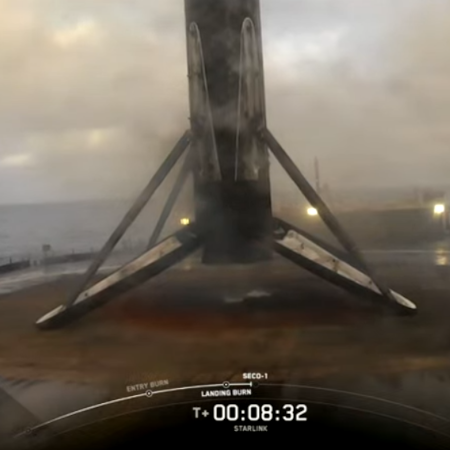
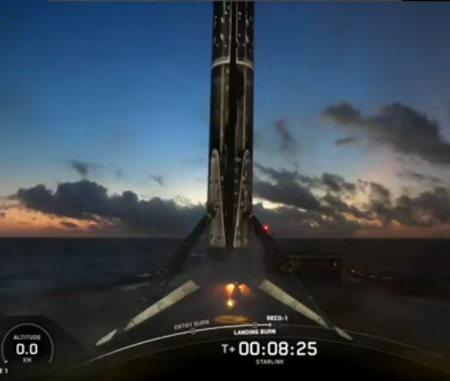
SpaceX today successfully launched another 24 Starlink satellites, its Falcon 9 rocket lifting off from Vandenberg Space Force Base in California.

The first stage completed its third flight, landing on a drone ship in the Pacific.

The 2026 launch race:

16 SpaceX
7 China
2 Rocket Lab
1 Russia

These numbers will definitely change in the next 24 hours, as there are launches planned from China, Russia, Europe, and ULA tomorrow, and a SpaceX Dragon manned launch to ISS the next day.

0 comments

China and SpaceX complete launches

The pause in launches in the past week has now ceased, completely for SpaceX and partly for China.

Yesterday China completed its first launch in more than a week and only its second since it had two launch failures on January 17, 2026. It successfully launched its Shenlong X-37B copycat mini-reusable shuttle on its fourth mission, its Long March 2F rocket lifting off from its Jiuquan spaceport in northwest China.

No word on how long Shenlong will remain in orbit. All China’s state-run press would reveal is that it is performing “technological verification” in orbit. That state-run press also said nothing about where the rocket’s lower stages, using very toxic hypergolic fuels, crashed inside China.

SpaceX today resumed launches after its own weeklong pause, caused as the company investigated why the upper stage on the February 2nd launch did not complete its de-orbit burn as planned. The company has released no information on the results of that investigation, but apparently it was satisfied with the results to resume launches. It successfully placed 25 more Starlink satellites in orbit today, its Falcon 9 rocket lifting off from Vandenberg Space Force Base in California.

The first stage completed its 13th flight, landing on a drone ship in the Pacific.

The 2026 launch race:

15 SpaceX
7 China
2 Rocket Lab
1 Russia

1 comment

Has the FAA officially approved Starship launches for Kennedy Space Center in Florida?

Proposed Starship/Superheavy launchsites at Kennedy and Cape Canaveral
Proposed Starship/Superheavy launchsites at
Kennedy (LC-39A) and Cape Canaveral (SLC-37)

It appears that though the FAA’s preliminary summary that it issued on January 30, 2026 only suggested it was leaning to approve Starship/Superheavy launches at SpaceX’s LC-39A launchpad at the Kennedy Space Center in Florida, it now appears that SpaceX is treating it as an official approval, and has begun work re-configuring LC-39A from the launchpad used for manned Falcon 9 launches to a facility for launching both Falcon Heavy and Starship/Superheavy.

The launch pad has seen a pause in action due to SpaceX working to finalize the Starship tower and launch pad on the site. Then on Wednesday, Feb. 4, a crane appeared next to the Falcon 9 launch tower, attaching to the crew access arm.

“For our manifest going forward, we’re planning to launch most of our Falcon 9 launches off of Space Launch Complex 40. That will include all Dragon missions going forward,” said Lee Echerd, senior mission manager of Human Spaceflight Mission Management at SpaceX during the Crew-12 prelaunch press briefing. “That will allow our Cape team to focus 39A on Falcon Heavy launches and hopefully our first Starship launches later this year.”

This Space News article today claims the FAA has issued a final approval for Starship/Superheavy at LC-39A, but it links to that preliminary summary from January 30th, which as far as I can tell is still preliminary and does not include an official approval.

Not that it matters. The FAA appears quite prepared to okay Starship/Superheavy launches at LC-39A, and it now appears SpaceX is proceeding under that assumption.

2 comments

Falcon 9 upper stage has issue preventing de-orbit burn; SpaceX pauses launches

According to a SpaceX tweet yesterday afternoon, the upper stage of the Falcon 9 rocket that successfully launched 25 Starlink satellites “experienced an off-nominal condition” when it was preparing to do its final de-orbit engine burn.

During today’s Falcon 9 launch of @Starlink satellites, the second stage experienced an off-nominal condition during preparation for the deorbit burn. The vehicle then performed as designed to successfully passivate the stage. The first two MVac burns were nominal and safely deployed all 25 Starlink satellites to their intended orbit.

Teams are reviewing data to determine root cause and corrective actions before returning to flight

It appears that SpaceX has temporarily paused its launch schedule while it reviews this incident, shifting a launch that was supposed to occur last night back three days to February 5th. While the launch itself was successful, the company likely wants to get a handle on what went wrong before resuming launches.

0 comments

Amazon buys ten more launches from SpaceX to place its Leo satellites in orbit

Amazon Leo logo

Hidden in Amazon’s submission last week to the FCC, requesting more time to launch its Leo internet constellation, was this tidbit:

Less than two years after the Commission granted its authorization, Amazon Leo announced the largest commercial launch procurements in history to deploy its initial constellation. It has since added to this launch capacity, and today has contracted for 102 launches across four providers: 18 launches on Arianespace’s Ariane 6, 24 launches on Blue Origin’s New Glenn, 38 launches on ULA’s Vulcan Centaur, 9 launches on ULA’s Atlas V, and 13 launches on SpaceX’s Falcon 9. [emphasis mine]

The highlighted phrases indicate the significant changes. In my initial post last week I was focused solely on whether the FCC would grant Amazon the time extension to get its constellation in orbit. At the moment it has only 180 satellites operating in orbit, and to meet its license requirement it must have 1,616 launched by July.

Thus, I didn’t look closely at these launch contract numbers. While the number of launches for Arianespace (18) and ULA (47) appears to match Amazon’s contract numbers from its original 2022 announcement, Blue Origin’s total has dropped by three launches, 27 to 24.

SpaceX in turn has gained another ten launches, on top of its original already completed 2023 three-launch contract. (In 2023, faced with a stockholder lawsuit for ignoring SpaceX’s Falcon 9, the only operational rocket among all of these at the time and by far the cheapest, Amazon’s management quickly signed SpaceX to that three-launch contract.)

The submission last week tells us that sometime recently Amazon signed SpaceX to a new contract for ten more launches. The numbers also suggest that the company took three launches away from Blue Origin’s New Glenn. Apparently, Amazon is not happy with Blue Origin’s launch pace, and signed SpaceX to help get more satellites in orbit. Without question, SpaceX will get these ten additional launches off faster than ULA, Arianespace, or Blue Origin combined. In fact, I bet it gets all ten done before the middle of this year, assuming Amazon can deliver it the satellites.

6 comments

SpaceX launches 25 more Starlink satellites; uses 1st stage for 31st time

SpaceX this morning successfully placed another 25 Starlink satellites into orbit, its Falcon 9 rocket lifting off from Vandenberg in California.

The 1st stage (B1071) completed its 31st flight, landing on a drone ship in the Pacific. Though this number set no records, it moved that booster closer to catching the records for the most reused launch vehicle, presently held by the shuttle Discovery:

39 Discovery space shuttle
33 Atlantis space shuttle
32 Falcon 9 booster B1067
31 Falcon 9 booster B1071
30 Falcon 9 booster B1063
29 Falcon 9 booster B1069
28 Columbia space shuttle

Sources here and here.

The 2026 launch race:

14 SpaceX
6 China
2 Rocket Lab

This list is likely inaccurate, as Russia had a Soyuz-2 launch of a classified payload planned just prior to SpaceX’s launch, but as yet there been no confirmation of its success. SpaceX also has another launch schedule for this evening. I will include both when I update then.

3 comments

Two American launches this evening

Two American companies, Rocket Lab and SpaceX, successfully completed launches during the evening of January 29-30.

First, Rocket Lab today (January 30th in New Zealand) placed a South Korean test smallsat, its Electron rocket lifting off from one of its two launchpads in New Zealand. The satellite is the first of a planned mass-produced constellation to provide precise observations of the Korean peninsula.

Next, SpaceX placed another 29 Starlink satellites into orbit, its Falcon 9 rocket lifting off from Cape Canaveral in the early morning hours. The first stage completed fifth flight, landing on a drone ship in the Atlantic.

The 2026 launch race:

13 SpaceX
5 China
2 Rocket Lab

1 comment

SpaceX launches 25 more Starlink satellites

The beat goes on: SpaceX today successfully launched another 25 Starlink satellites, its Falcon 9 rocket lifting off from Vandenberg Space Force Base in California.

The first stage completed its 19th flight, landing on a drone ship in the Pacific.

It also appears on this launch SpaceX placed its 11,000th Starlink satellite into orbit. The actual number of satellites in orbit presently is much less than this, as SpaceX retires older Starlink satellites on a regularly basis. Nonetheless, the overall number is impressive, in that it was accomplished in less than seven years.

The 2026 launch race:

12 SpaceX
5 China
1 Rocket Lab

Though it is still early in 2026, note that SpaceX has now launched twice as much as the rest of the world, combined.

0 comments

SpaceX launches GPS satellite

SpaceX last night successfully launched a GPS satellite for the Space Force, its Falcon 9 rocket lifting off from Cape Canaveral in Florida.

The Space Force had originally hired ULA to launch this satellite, but two weeks ago it switched launch provider to SpaceX. Apparently the military wanted this satellite launched now, and for some reason ULA could not do it, even though the Vulcan rocket was supposedly ready for launch.

The first stage completed its fifth flight, landing on a drone ship in the Atlantic. The two fairing halves each completed their second flight.

The 2026 launch race:

11 SpaceX
5 China
1 Rocket Lab

7 comments
1 3 4 5 6 7 124