France’s space agency awards ArianeGroup contract to build methane-fueled engine

France’s space agency CNES this week awarded ArianeGroup, the rocket partnership between Airbus and Safran that builds the Ariane-6 rocket a contract to develop a more powerful methane-fueled rocket engine.

Aiming to reach between 200 and 300 tons of thrust, the new engine will be twice as powerful as the current Vulcain 2.1 main stage engine that propels Ariane 6.

No details about cost or time schedule were released.

The significance of this deal isn’t the engine, but that it was issued directly to ArianeGroup by France’s space agency, instead of through the European Space Agency’s (ESA) Arianespace commercial arm, as has been routine for the past three decades. The deal illustrates how the ESA is essentially beginning to break up. Rather than go through it, its individual nations are now going it alone, each providing support and funding to their own commercial private space startups. Germany began this process, encouraging the development of three new rocket companies (Rocket Factory Augsburg, Isar, and Hyimpulse). Spain and Italy soon followed with their own new rocket companies, (PLD and Avio respectively). France, which until recently lobbied to keep the old government model alive in ESA, has in the past year shifted strongly to the capitalism model.

This contract only underscores this shift.
1 comment

ESA partners with French company to build space plane “demonstrator”

The European Space Agency (ESA) and the French company Dassault Aviation yesterday announced a partnership for building a space plane “demonstrator” that will lay the groundwork for developing a family of such spacecraft dubbed Vortex.

The ESA press release is here. Both this release and the Dassault release linked to above provided little detailed information, other than the demonstrator will be a small scale suborbital testbed for eventually developing the full scale orbital vehicle. Neither a budget nor time schedule were even hinted at.

ESA has funded a number of these demonstrators in the past decade — Themis and Callisto come to mind — all of which are behind schedule and have as yet not flown. It will be interesting to see if this project fares better, as it seems it is being led by a single commercial company rather than the government run mishmashes of the other projects.

8 comments

France government invests big in Eutelsat-OneWeb

According to the satellite company Eutelsat-OneWeb, the French government has now committed more than a billion dollars in investment capital to the company, doubling its stake to almost 30%.

France would more than double its stake in Eutelsat to nearly 30% as part of a $1.56 billion capital raise backed by multiple shareholders, bolstering the French operator’s plans to refresh its OneWeb constellation amid Starlink’s growing dominance.

The funds would be raised in two parts before the end of the year, Eutelsat announced June 19, a day after the French military agreed to buy OneWeb services over 10 years in a deal potentially worth up to one billion euros ($1.15 billion).

OneWeb itself almost went bankrupt until it was saved by cash from a major Indian investor and the government of the United Kingdom. This new deal means that the merged company is largely controlled by France, the UK, and India.

1 comment

Monaco-based startup unveils its proposed European-built lunar rover

Capitalism in space: The Monaco-based startup Venturi Space, this week unveiled its own proposed European-built lunar rover, dubbed Mona Luna. and offered it to both the European Space Agency (ESA) and France’s CNES space agency.

Venturi has received some support from ESA for key technologies needed for the rover. The company is hoping to win support for a rover development project at ESA’s ministerial conference in late November, when member states will decide on funding for agency programs for the next three years. Antonio Delfino, Venturi’s director of space affairs] argued a rover like Mona Luna fit a gap in Europe’s exploration plans. Mona Lisa is designed to be delivered to the lunar surface on ESA’s Argonaut lander, which would launch on an Ariane 64.

The company has said it is willing to commit some of its own investment capital to develop the rover, should either ESA or CNES decide to buy it. Whether ESA or CNES agree to build this rover however will likely depend on whether either has a program to land on the Moon. At the moment the status of NASA’s Artemis program is unclear, and it was that program that Europe was relying on to get to the Moon.

1 comment

France’s space agency agrees to let Spanish rocket startup PLD establish its own launch site at French Guiana

Though France’s space agency CNES had initially attempted to place many rules and restrictions on the commercial operations of new independent private rocket companies at its spaceport in French Guiana, it has now backed off those demands in agreeing to let the Spanish rocket startup PLD establish its own launch site there at the decommissioned launchpad used by France’s Diament rocket in the 1970s.

This new contract greenlights the implementation of the infrastructure project designed by PLD Space with technical support from CNES and grants legal use of land in the ELM-Diamant area, where the MIURA 5 Preparation Zone and Launch Zone will be located. Construction will begin with the start of the dry season in French Guiana, expected in the summer months of 2025.

In September 2024 CNES said it wished to standardize the launch site for the seven different European rocket startups (Avio, HyImpulse, Isar Aerospace, MaiaSpace, PLD Space, Rocket Factory Augsburg, and Latitude) it had approved to use it. At the time I sensed there was opposition from these companies to this policy, since each rocket was different and would not function with this standardized design.

At a minimum that policy apparently delayed PLD’s plans, as it originally hoped to start its launchpad construction in October 2024 and launch in 2025. That schedule went by the wayside.

It now appears PLD will proceed with development as it wishes, for its rocket, and the others will have to figure out how fit their rockets to that design. Or maybe CNES is going to open up further sites at French Guiana to avoid this conflict.

1 comment

French startup The Exploration Company launches its own recovery ship

The French startup, The Exploration Company, has now launched its own ship designed to recover its next prototype test cargo capsule, set to launch on a Falcon 9 on June 21, 2025.

In an 11 June update, The Exploration Company announced that the recovery vessel tasked with retrieving the Mission Possible capsule after splashdown had departed the previous day from a harbour in Alaska. The vessel, named Makushin Bay, is a 40-metre salvage and rescue ship owned and operated by US-based maritime logistics company Resolve Marine. Two members of The Exploration Company’s team will accompany the vessel on its mission. Over the next week, it will make its way to the expected splashdown zone in the central Pacific Ocean. According to The Exploration Company, current weather conditions appear favourable for both splashdown and recovery operations.

The company aims to provide cargo to the commercial space stations under development using its proposed Nyx capsule. As part of its own development program it has flown a smaller prototype already on the first launch of Europe’s Ariane-6 rocket, but was unable to test its re-entry capability because of a failure in that rocket’s upper stage. This second larger prototype will try again, and this time has a better shot at completing its test because it if flying on SpaceX’s very reliable Falcon 9. Thus, the launch of this recovery vessel.

0 comments

Rocket startup MaiaSpace picks Polish institute to build its rocket’s upper stage engine

The smallsat rocket startup MaiaSpace has selected Poland’s Łukasiewicz Research Network’s Institute of Aviation to develop the engine that will power its Maia rocket’s top stage, used to put satellites into their final orbit.

In a 23 April update, the Łukasiewicz Research Network’s Institute of Aviation (Łukasiewicz–ILOT) announced that it had been selected by MaiaSpace to develop a rocket engine to power Maia’s Colibri kick stage. According to the announcement, the engine will be based on technology developed by Łukasiewicz–ILOT as part of its Green Bipropellant Apogee Rocket Engine (GRACE) initiative, a project financed by the European Space Agency under the Future Launchers Preparatory Programme.

Each new engine will be capable of producing 420 newtons of thrust, with a cluster of these engines powering the Colibri kick stage. However, the update did not specify how many engines would make up the cluster

MaiaSpace had previously indicated it was building its own Colibri kick stage engine. It appears that it has now decided to hire Lukasiewicz to do it instead.

The significance here is not this specific decision, but how it involves two different European commercial entities with no managerial input from the European Space Agency or any government agency. It really does appear that Europe’s aerospace industry has completely freed itself from the dictates of those government apparachiks.

MaiaSpace hopes to complete the first launch of Maia in 2026.

3 comments

After a decade of development, ESA finally starts testing a part of its Callisto grasshopper

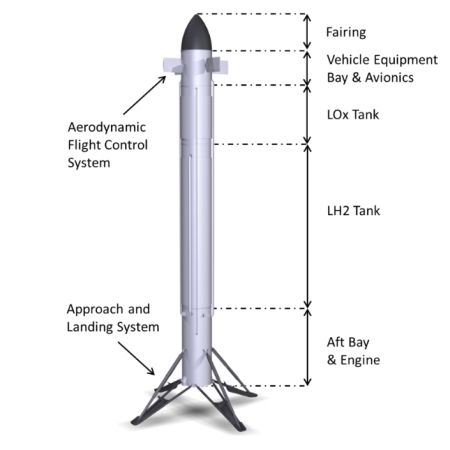
Callisto's basic design
Callisto’s basic design

My heart be still! First proposed in 2015 as Europe’s answer to SpaceX’s Falcon 9, the European Space Agency, in partnership with Japan, has finally begun acoustical testing of just one part of its Callisto grasshopper-type reusable test prototype, as shown on the right.

Callisto consists of five main sections: the Aft Bay, which includes the engine and landing legs, the LH2 Tank, the LOx Tank, the VEB, and the Fairing. The VEB houses much of the demonstrator’s electronics, including its onboard computer, avionics, and a reaction control system that uses H2O2 propellant. Its distinctive features include a pair of control fins.

In addition to confirming that the VEB had been transported to the CNES facilities in Toulouse, the 4 March Institute of Space Systems update also revealed that the acoustic test campaign for the key Callisto module had commenced last week. The acoustic test campaign simulates the intense sound vibrations the demonstrator will experience during flight to ensure structural integrity and component reliability.

The whole project has a budget of $100 million. The first test hop won’t occur until 2026, eleven years after the project began, and six years behind its original launch date. In that same time, SpaceX has completed several hundred commercial landings of its Falcon 9 first stage, reusing those stages up to two dozen times.

Nor is Callisto part of any program to develop a similar reusable rocket. It is a typical dead-end government project, with ESA having no clear goal to apply it commercially. The best Europe can hope for is that the engineering lessons from its tests will be given freely to the new European commercial rocket startups, so that they can use it someday.

2 comments

French official lauds Ariane 6 launch; demands Europe have its own launch capability

Philippe Baptiste, France’s Minister for Higher Education and Research, yesterday loudly touted the second successful launch of Ariane 6 rocket, even though it occurred years late and costs far more than any other rocket on the market today.

Baptiste did so even as he insisted the Europe must continue to have its own launch capability so that it need not depend on rockets from other countries.

Europe must have sovereignty in space and “not yield to the temptation of preferring SpaceX or another competitor that may seem trendier, more reliable, or cheaper,” Baptiste [said]. “This first commercial launch of Ariane 6 is not just a technical and one-off success. It marks a new milestone, essential in the choice of European space independence and sovereignty. In the labyrinth of the global space race, Ariane 6 is the guiding thread of our strategic autonomy for the years to come.

“We must also collectively advance, as Europeans, on the governance of Europe’s space ambitions. We must ask ourselves all the questions, without taboos. For Europe in space, I am convinced that the European Union must fully assume its role as the political leader in this matter. The challenges are immense, no one knows this better than we do.”

Note Baptiste’s focus on having the European Union (EU) run things, with a focus on Ariane-6, despite its high cost. He was previously head of France’s space agency CNES, which for years has used the EU and the European Space Agency’s (ESA) partners help pay for France’s space program by requiring that all rocket launches be run by ESA’s commercial division, Arianespace.

That situation is now changing, with other ESA nations (Germany, Italy, Spain, and the United Kingdom) all breaking free from Arianespace and instead encouraging the development of competing private rocket startups independent of ESA or Arianespace. Moreover, these ESA partners have aggressive reduced Arianespace’s areas of control. It no longer runs the French Guiana spaceport. Its management of the Vega-C rocket has been transferred back to the Italian company Avio, which builds it. All it now has is Ariane-6, which has limited value because it is so expensive.

So while Baptiste desire for European autonomy matches the efforts of these European countries, his apparent desire to keep all control within the continent’s centralized government authority has been rejected. Europe has a chance to compete, but only because it is freeing its rocket startups from government control.

6 comments

France opens public comment period for adapting old French Guiana launchpad for commercial rockets

CNES, France’s space agency that now runs the French Guiana spaceport, is now running public meetings for the public to comment on its plans for adapting the old, long-abandoned Diamant rocket pad there for use by a number of commercial rocket startups.

On 17 February, the first of four public consultation sessions into the construction of the new Multi-Launcher Launch Complex (ELM1) at the Guiana Space Centre was held at Kourou Town Hall. This process allows local residents, stakeholders, and organizations to review the project and provide feedback before construction begins. A second session was completed on 23 February, with the remaining two sessions set for 10 and 18 March.

The construction of ELM1 will include common structures like the nodal building, guard post, offices, and storage areas, as well as more specific structures like assembly and preparation buildings, roads, and fences. The project is subject to a building permit, a unique environmental authorization under the regulations for Classified Installations for Environmental Protection, the Water Law, and a request for exemption from the prohibition on the destruction of protected species.

CNES in 2024 approved seven rocket startups to use the site. It later announced its plan to standardize the launchpad so that all users will have to arrive with identical engineering, something that these startups did not like. This comment period will allow them to voice those objections, and likely get the standardization minimized to only those places where it really matters. For example, the impression initially given was that the assembly and preparation buildings would require matching systems from all companies, something that makes no sense.

0 comments

French startup The Exploration Company wins major contract from Germany

Germany’s space agency, DLR, announced today that it has signed a major contract with the French startup The Exploration Company to use its Nyx reusable capsule, still under development, for in-orbit weightlessness research.

On 20 February, during its DLR TecDays in Bonn, the German aerospace agency announced that it had signed a contract with The Exploration Company and would serve as an anchor customer for its microgravity research service. The contract secures space for 160 kilograms of scientific payloads aboard the inaugural flight of the Nyx Earth capsule in 2028. “We are supporting a startup that provides services that will be particularly valuable in a post-ISS era,” explained Dr. Walther Pelzer, Head of the German Space Agency at DLR.

Nyx’s main customer base was originally to serve as a cargo freighter for all of planned commercial space stations, having already been chosen by the European Space Agency as one of two European companies (the other being Thales-Alenia) to fly cargo demonstration missions to ISS in 2028.

This new contract illustrates the wider possibilities for profit for these capsules that has appeared in the past two years. If you can launch a returnable capsule to bring cargo, why not launch it to do in-orbit research and manufacturing? Varda in the U.S. has already demonstrated this possibility. Others apparently are now recognizing it as well.

0 comments

French rocket startup signs Spanish rocket engine startup to provide attitude thrusters

The French rocket startup MaiaSpace, a subsidiary of Airbus, has awarded the Spanish rocket engine startup Arkadia Space a contract to provide the small attitude thrusters used to maintain the rocket’s course.

MaiaSpace hopes to do its first test orbital launch of its smallsat rocket in 2026, launching from a new commercial launchpad at French Guiana.

Arkadia’s thrusters are somewhat radical.

Arkadia Space, founded in 2020 in Castellón, Spain, develops hydrogen peroxide-based propellant systems for satellites and platforms with a mass of more than 50 kilograms. “The hydrogen peroxide-based propellant offers exceptional performance while significantly reducing cost and environmental impact compared to traditional hydrazine-based Reaction Control Systems,” according to the news release.

Hydrazine thrusters, while practical and lightweight, have the problem that the fuel is very toxic, and requires safety precautions to prevent injury to employees or the public. Using hydrogen peroxide instead likely reduces this issue significantly.

0 comments

France to resume suborbital launches at French Guiana

Now that France’s space agency CNES has taken the management of its French Guiana spaceport back from the European Space Agency’s Arianespace government company, it has been moving to make the spaceport more attractive to multiple future launch customers. Previously it announced that it is offering launchpads to multiple new rocket startups. Now it has announced that has signed a contract with the French startup Optus Aerospace to reopen its closed suborbital launchpad for the first time in decades.

Officially inaugurated in 1968, the Ensemble de Lancement Fusées-Sondes (ELFS) launch complex hosted the Guiana Space Centre’s first launch on 9 April 1968, with a Véronique sounding rocket that reached an altitude of 113 kilometres. Between 1968 and 1992, more than 350 sounding rockets were launched from the facility.

On 25 November, CNES announced that it had signed a contract with Opus Aerospace to use the ELFS facility for the launch of its Mésange rocket.

In other words, under the control of a government entity, Arianespace, which also controlled all European launches for decades, the variety of launches declined. As soon as control was lifted from this government monopoly however the possibilities expanded quickly.

4 comments

European cargo capsule startup raises $160 million in private investment capital

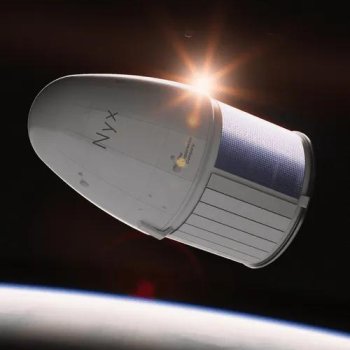
The Exploration Company's proposed Nyx cargo capsule
Artist rendition of the proposed Nyx cargo capsule,
taken from The Exploration Company’s website

The French cargo capsule startup The Exploration Company (TEC} announced today that it has raised an additional $160 million in private investment capital, bringing the total raised by the company to $230 million.

Venture capital firms Balderton Capital and Plural were the lead investors in the round which also included French government-backed investment vehicle French Tech Souveraineté and German government-backed fund DeepTech & Climate Fonds.

TEC’s core product is Nyx, a capsule that can be launched from rockets into space carrying passengers and cargo. Nyx is reusable so once it has dropped its payload, it can re-enter the Earth’s atmosphere and be used for the next mission.

The company hopes to do its initial test flight of Nyx in 2028. It flew a demonstrator prototype on the first Ariane-6 launch in July 2024, but was unable to test that prototype’s re-entry capabilities (its prime mission) because of a failure in Ariane-6’s upper stage. It hopes to fly a second demonstrator in 2025 on a Falcon 9.

At the moment company officials say they already signed $800 million in cargo contracts, 90% of which are with the commercial space station companies Axiom Space, Vast, and Starlab. The rest are government contracts.

3 comments

French rocket startup signs deal to use Australian spaceport

Australian commercial spaceports
Australia’s commercial spaceports. Click for original map.

The French rocket startup Sirius Space has signed a lease agreement with the Australian spaceport Equatorial Launch Australia (ELA) for launching its rockets.

On 18 September, the company announced that it had concluded an agreement with ELA during World Space Business Week in Paris to secure its Australian launch facility. The company will take up residence at Arnhem Space Centre’s Launch Complex Number 3, which the company has renamed “Le Mans.”

Construction will begin next month, with the first launch in 2026. The company is developing three different rockets of different sizes, with the two largest, Sirius 13 and Sirius 15, intended to be reusable. At the moment however it has launched nothing.

0 comments

France’s space agency aims to standardize its French Guiana commercial launchpad

France’s space agency CNES has announced a project to standardize its French Guiana commercial launchpad, which France owns and CNES now manages, for many different customers.

Launch facilities and launch pads in particular are generally specifically built for a single rocket. This will, however, not be the case with the Guiana Space Centre’s new commercial launch facility. As a result, a set of standardized ground systems will be utilized to ensure that the facility can manage a number of different rockets.

At the moment, those rockets include seven different European rocket startups — Avio, HyImpulse, Isar Aerospace, MaiaSpace, PLD Space, Rocket Factory Augsburg, and Latitude — none of which has yet launched a rocket. CNES is telling them all that if wish to use French Guiana, they must design their rocket to fit its facilities.

This project will accomplish two things. First, it will limit use of the pad to these European companies. CNES is essentially establishing French Guiana as a European-only facility. Second, like China’s commercial launchpads — run by that government so that all its pseudo-companies are dependent on it for launches — CNES (and France) is attempting to establish some control and power over these new independent and competing rocket companies, most of which have no facilities or operations in France. Three are German (Hyimpulse, Isar, and Rocket Factory), one is Spanish (PLD), and one is Italian (Avio). Only two are French-based (Latitude and MaiaSpace), with MaiaSpace a subsidiary of ArianeGroup which means it has facilities in many places in Europe. This project will force all these companies to cater their designs to the demands of France.

The American approach I think is far better. Government spaceports lease specific launchpads to specific companies, which then build the facilities to their needs, not the government’s. They can then each work fast and efficiently without consultation with others. CNES’s effort here will likely slow development in Europe, as all these companies will have to meet with CNES and work out some common engineering.

0 comments

PLD targets October to begin construction of launch facilities in French Guiana

The Spanish rocket startup PLD is now targeting October to begin construction of its launch facilities in French Guiana, using the long abandoned launch site of France’s first rocket.

PLD Space plans to start building launch facilities for its Miura 5 rocket in October from the Diamant site at Guiana Space Centre, cofounder and chief business development officer Raúl Verdú told SpaceNews. Diamant has been dormant for decades after once being used for the French rocket of the same name, and “in the area where we are there is nothing,” Verdú said, “we have to do everything from scratch.”

The company hopes to do its first orbital launch in 2025.

Control of the French Guiana spaceport reverted back from Arianespace to the French space agency CNES (which has always owned it) in 2022, and since then CNES has signed deals with seven European rocket startups. PLD appears to be moving the fastest towards the first private commerical launch there.

0 comments

First flight of government-built hopper to test vertical landings delayed two years

Callisto's basic design
Callisto’s basic design

This story about a first stage government-built Grasshopper-type rocket designed to demonstrate and test vertical landing has instead become a perfect demonstration of why governments should not design, build, and own anything.

It appears the first test flight of the Callisto test rocket, first proposed in 2015 and being built by a joint partnership of the German (DLR), French (CNES), and Japanese (JAXA) space agencies, has now slipped from 2024 to 2026.

Earlier this month, CNES deployed a refreshed website. Prior to that deployment, the agency’s Callisto project page had stated that the rocket’s first flight would occur in 2024. The new Callisto project page has a more detailed timeline, stating that the detailed design phase will be completed by the end of 2024. Vehicle integration in Japan is then expected in 2025, followed by a first launch from the Guiana Space Centre between 2025 and 2026. This revision outlines an approximate two-year slip in the project’s timeline. [emphasis mine]

These three agencies took almost a decade to simply conceive and design the project. Apparently they not yet even built anything. This despite a budget of slightly less than $100 million carved out of the entire budget for creating the Ariane-6 expendable. Compare that with SpaceX, which conceived its Grasshopper vertical test prototype in 2011, began flying that year, and resulted in an actual Falcon 9 first stage landing in 2015.

Will Callisto ever fly? Maybe, but don’t expect it to produce a rocket that is financially competitive with SpaceX. Instead, expect these three government agencies to subsidize its cost in order to make its price competitive on the open market. More likely Callisto will fly a few times, but will likely result in no new orbital rocket. Instead it will be superseded by the private rocket startups worldwide that are now building actual orbital rockets and will likely make them reuseable before Callisto even leaves the ground.

3 comments

PLD pushes for first orbital launch from French Guiana in 2025

The Spanish rocket startup PLD announced last week that it has invested more than $10 million in developing its own launchpad and assembly facility at France’s French Guiana spaceport, and is targeting 2025 for the first orbital launch of its Miura-5 rocket.

The launcher company PLD Space has announced today an investment of 10 million euros in MIURA 5 Launch Complex at Guiana Space Center (CSG), Europe’s spaceport in Kourou (French Guiana), owned by the French Space Agency (CNES) and the European Space Agency (ESA). With the first launch of its rocket at the end of 2025, PLD Space will become the first non-institutional launch operator that will go to orbit from this historical base.

The company is reconfiguring the launchpad used by France to launch its Diamant rocket back in the 1960s and 1970s. It will include “its own launch zone and a preparation area, comprising an integration hangar, a clean room, a control center, and both commercial and work offices.”

Right now it appears that PLD along with several other European rocket startups are going to bypass a number of American rocket startups that had had a significant headstart, but also appear to be stalled in the last year or so because of a new regulatory framework at the FAA.

0 comments

France awards contract to French startup to launch two robotic satellite servicing missions

Capitalism in space: France has awarded the French startup Infinite Orbits a contract to launch two robotic satellite servicing missions, one to attach itself to a still-unnamed satellite to extend its life, and a second to test rendezvous and proximity maneuvers near a defunct and thought-to-be tumbling weather satellite.

The key tidbit however is that the contract award is part of a French government program to encourage commercial space:

The France 2030 initiative is a €54 billion investment programme that aims to transform sectors of the French economy with technological innovation.

I was unaware of this French government program. It appears it signals a shift in financial support from the European Space Agency’s commercial entity Arianespace to new competitive French companies. If so, this is a very good sign for its aerospace industry.

2 comments
1 2 3 4 5