Spanish rocket startup PLD raises the budget for its launch facilities in French Guiana to €35 million

French Guiana spaceport
The French Guiana spaceport. The ELM-Diamant launch site
is labeled “B.” Click for full resolution image. (Note: The
Ariane-5 pad is now the Ariane-6 pad, and the now destroyed
Soyuz pad is now controlled by rocket startup MaiaSpace.)

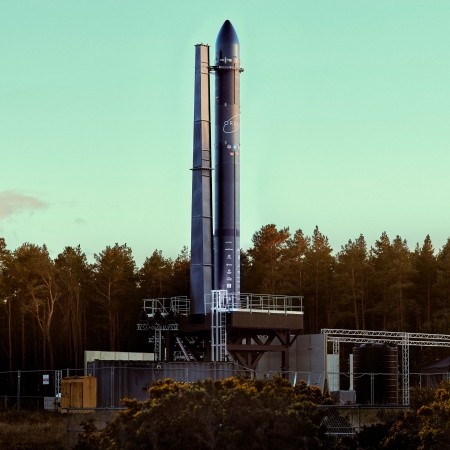
The Spanish rocket startup PLD, preparing for the first orbital launch of its Miura-5 rocket before the end of this year, has significantly raised its investment in its leased launch facilities in France’s spaceport in French Guiana, from about €11 to €16 million to €35 million, with much of the planned construction aimed at shared facilities that other European rocket startups can use.

PLD Space, an international space transportation company, has announced a €35 million investment in the development and deployment of its Launch Complex at the Guiana Space Centre (CSG) in Kourou (French Guiana) over the 2025-2026 period. This investment positions PLD Space as the first private operator to deploy capital expenditure at this scale at the ELM-Diamant site, contributing to the diversification and strengthening of Europe’s historic spaceport.

Of the total investment, €22 million is being executed within the French industrial ecosystem, with €13 million directly allocated to more than 20 companies based in French Guiana, including a significant number of SMEs. This approach reinforces PLD Space’s commitment to embedding its industrial activity within the local territory and strengthening the regional space ecosystem beyond established players.

France, which owns French Guiana, decided in 2024 to refurbish the long-abandoned ELM-Diamant launch site as a common pad for the many small European rocket startups. It appears it has strong-armed PLD to pay for much of that joint infrastructure. “You want to launch first? Then pay for this work that others will use.” It is possible PLD will be able to recover this investment from those other companies, but its press release does not say so.
0 comments

France buys two manned missions from space station startup Vast

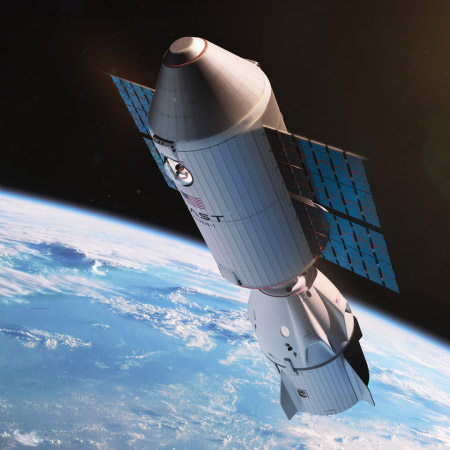
Haven-1 with docked Dragon capsule
Artist rendering of Haven-1 with docked
Dragon capsule

In a major deal that solidifies its future space station plans, the space station startup Vast yesterday announced that the French government had agreed to fly two Vast manned missions, first to ISS and then to its Haven-1 single module space station scheduled for launch in 2027.

Today at the Choose France Summit, created by the President of the French Republic, Emmanuel Macron, Vast announced its commitment to establish its European headquarters in Paris and an agreement with the Government of France, for two missions involving two French astronauts: the sixth private astronaut mission to the International Space Station and the Haven-1 test flight, the first crewed mission to Vast’s Haven-1 commercial space station scheduled to launch in 2027.

…Both missions are expected to last approximately two weeks and are planned for 2027, with transportation provided by SpaceX on a Dragon spacecraft launched aboard a Falcon 9 rocket.

For the ISS mission, the astronaut will be rookie Arnaud Prost. For the Haven-1 mission, the astronaut will be veteran Thomas Pesquet, who has flown twice to ISS with a cumulative total of just under 400 days in space.

Vast had previously signed preliminary deals with Lithuania, Colombia, Uzbekistan, Japan, the Czech Republic, and the Maldives, but none of those deals had committed to a manned mission. I had speculated that these nations were waiting for Haven-1 to launch and be declared operational. France has decided not to wait.

This deal is also a major coup for Vast over its space station competitor Starlab, which had previously signed a deal with the European Space Agency and Airbus in an effort to position itself as Europe’s future space station. That deal however had not included any actual missions.

UPDATE: Vast appears to have also signed an agreement with the United Kingdom to fly one of its astronauts to Haven-1. And in this case the astronaut, John McFall, is a former paralympian who lost one leg in a motorcycle accident. This would would make him the first person with disabilities ever to fly in space.

My present ranking of the five stations under development, with Vast now in the lead and Starlab and Axiom tied for second.
» Read more

7 comments

France’s space agency CNES gives ESA 5-year extension at French Guiana spaceport

French Guiana spaceport
The French Guiana spaceport. The Diamant launchsite is labeled “B.”
Click for full resolution image. (Note: The Ariane-5 pad is now the
Ariane-6 pad, and the Soyuz pad is now controlled by rocket startup
MaiaSpace.)

France’s space agency CNES and the European Space Agency (ESA) yesterday announced a new five year agreement extending ESA’s operations at France’s French Guiana spaceport.

The contract covers all activities required to operate Europe’s Spaceport that is on French territory and so falls under the responsibility of the French government represented by CNES. The contract includes both daily operations and running of the facilities and continuous upgrades to adapt the Spaceport to changes taking place in the space sector, including the arrival of new rockets and launch services.

The signature covers three years of operations, renewable for a further two years, including a total investment of over €1 billion with €635 million funded by the European Space Agency – showing the agency’s central role in supporting the operation of Europe’s Spaceport. In support of the transformation of the space sector, the contract takes new launch operators into account as well as sharpening safety requirements even more – ensuring launches from Europe’s Spaceport are reliable, safe and competitive.

While the deal is not surprising — neither ESA nor CNES have any reason to end this arrangement — there is one aspect of the deal that is significant: Nowhere in the press release or agreement is there any mention of Arianespace, ESA’s commercial division. For decades Arianespace ran French Guiana for ESA and France. It is now gone, eliminated as an unnecessary middle-man as Europe shifts to the capitalism model.

At the moment, ESA has reduced Arianespace’s role to just one task, marketing and launching the Ariane-6 rocket. At the same time numerous European nations are doing whatever they can to encourage the development of competing independent rocket companies, all aimed at replacing Ariane-6 eventually, and as soon as possible. While that effort will take at least a decade, it is definitely happening.

1 comment

Cargo Dragon docks with ISS

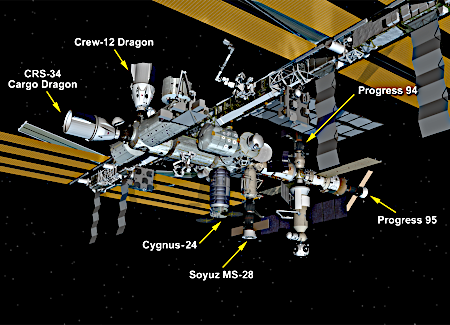
Spacecraft presently docked to ISS
The spacecraft presently docked to ISS.

The unmanned Dragon capsule that SpaceX launched on May 15, 2026 successfully docked with ISS early this morning, bringing with it almost 6,500 pounds of cargo to the station.

In addition to cargo for the crew aboard the space station, Dragon will deliver several new experiments, including a project to determine how well Earth-based simulators mimic microgravity conditions, a bone scaffold made from wood that could produce new treatments for fragile bone conditions like osteoporosis, and equipment to help researchers evaluate how red blood cells and the spleen change in space. The Dragon spacecraft also will carry a new instrument to study charged particles around the Earth that can impact power grids and satellites, an investigation that could provide a fundamental understanding of how planets form, and a instrument designed to take highly accurate measurements of sunlight reflected by Earth and the Moon.

It also delivered a French-made spacesuit prototype to be tested by French astronaut Sophie Adenot to see if its design will allow her to get in and out of the suit in under two minutes. Based on what Adenot reports, engineers will use this prototype to develop “a new prototype” for further ground testing. (I wonder if this project is like most European space projects: After this second prototype is tested, they will build a third prototype, followed by a fourth and fifth, with the real article not actually going into operation for decades hence.)

2 comments

Soyuz launch site destroyed at French Guiana

As promised, the Soyuz-2 launch site at France’s French Guiana spaceport was destroyed in a controlled explosion yesterday.

I have embedded video of the explosion below.

The remaining infrastructure at the site—including the assembly and testing complex, railway lines, liquid oxygen storage facilities, and fueling systems—will be transferred to MaiaSpace, a French startup affiliated with Arianespace. The company plans to reuse up to 80% of the existing infrastructure for its own launch vehicle program.

MaiaSpace is not “affliated with Arianespace.” It is a wholly owned subsidiary of ArianeGroup, the company that makes the much larger rocket Ariane-6. The company hopes MaiaSpace’s smaller Maia rocket can capture some of the smallsat business presently owned by Rocket Lab and SpaceX.

The Russians had almost a dozen launches scheduled from this launchpad, worth more than a billion dollars in revenue, when Putin decided to invade the Ukraine in 2022. Russia immediately became a pariah to the rest of the work. That revenue instantly vanished and the companies found other launch providers.

Europe meanwhile gave control of French Guiana back to France, which owns it. France in turn has now been leasing out the unused launchpads there to new rocket startups. Though some pie-in-the-sky academics lobbied to preserve the Soyuz launchpad for “historical reasons”, the French had no desire to do so. Better to make money.
» Read more

5 comments

French startup The Exploration Company completes first splashdown tests of Nyx capsule prototype

The French cargo capsule startup, The Exploration Company, has successfully completed the first splashdown tests of a smallscate prototype model of its proposed Nyx capsule.

On 5 February, The Exploration Company announced that it had successfully completed a splashdown test campaign at the National Research Council’s Institute of Marine Engineering (CNR-INM) in Rome.

A 1:4-scale mockup of Nyx, with a mass of around 135 kilograms, was built for the test campaign by Poli Model, a small Turin-based model builder. For reference, the full-scale capsule will be 4 metres wide and stand at 7 metres tall. The subscale model’s exterior was fitted with pressure sensors, accelerometers, and a gyroscope.

The tests were conducted in the CNR-INM facility’s Umberto Pugliese towing tank, a 470-metre-long pool measuring 13.5 metres across and 6.5 metres deep. Between 13 and 28 January, a total of 20 drops were conducted at varying heights and speeds in calm water, which the company explained maximised repeatability.

The company hopes to fly a fullscale demo mission to ISS in 2028, and wants to upgrade Nyx to manned capabilities in the 2030s.

2 comments

Commercial changes at France’s French Guiana spaceport

French Guiana spaceport
The French Guiana spaceport. The Diamant launchsite is labeled “B.”
Click for full resolution image. (Note: The Ariane-5 pad is now the
Ariane-6 pad.)

Once France’s space agency CNES regained control of its spaceport in French Guiana several years ago from the European Space Agency’s (ESA) commercial pseudo-company Arianespace, it has moved aggressively to make that spaceport attractive to the new European rocket startups.

Beginning in 2022, it began to sign deals with every one of those rocket startups to allow them to establish launch facilities at the spaceport using several long abandoned pads, including the French Diamant rocket site not used for decades as well as the Soyuz launch site unused due to Russia’s invasion of the Ukraine.

CNES decided to standardize Diamant for multiple rocket companies, while leasing the Soyuz site to one.

In a news story today, it appears the startup MaiaSpace, a wholly owned subsidiary of the much larger aerospace company ArianeGroupk, has shifted its launch plans at French Guiana. Initially it was going to launch its rocket from the Diamant pad. In 2024 however it won the contract to use the Soyuz pad, and it has now withdrawn its plans to use Diamant entirely.

CNES has therefore put out a call to the European rocket industry to fill this slot at Diamant. At present Isar Aerospace, PLD Space, Rocket Factory Augsburg, and Latitude have agreements to use Diamant, though only Latitude and PLD had done any development work on their facilities there.

As far as I know, these companies comprise the entire cadre of new European rocket startups, so I don’t know what other users CNES hopes to find. Furthermore, CNES had wanted to standardize the launch site for everyone, and the companies had balked at that idea. PLD got a deal to use its own pad at Diamant. I suspect the reason Isar and Rocket Factory have done little there is because they want their own facilities as well.

Either way, French Guiana is moving the direction of supporting competitive commercial operations, and that is a very good thing.

4 comments

French smallsat rocket startup Latitude targeting a first launch in early ’27

In a long interview released yesterday, the CEO of the French smallsat rocket startup Latitude revealed that they expect to do the first launch its Zephyr rocket no later than early ’27, and that launch will not take place in French Guiana, where it is presently developing facilities for launches.

The spaceport at French Guiana is developing a single launchpad designed to serve multiple rocket companies, and so it can’t handle Latitude’s planned launch rate. Thus the company is presently negotiating with other spaceports for its first launch, to give it more flexibility.

Zephyr will also not be reusable, as the company has determined that it isn’t profitable for small rockets.

Latitude has deliberately chosen not to pursue first-stage reusability for Zephyr, a decision Maximin defended with detailed economic analysis. “Our calculations show that with that size, it is not economically viable,” he stated, noting that even with parachute recovery, the maintenance costs and performance penalties outweigh manufacturing savings for a rocket of Zephyr’s class. He pointed to Rocket Lab’s paused reusability efforts as validation: “They have stopped it, despite having done everything. I think it’s not that profitable, if not at all.”

If the company upgrades to a larger rocket in the future it plans to revisit this issue.

Video of the interview is available here.

0 comments

French startup The Exploration Company negotiating purchase of UK rocket startup Orbex

Prime rocket prototype on launchpad
The prototype of Orbex’s never-launched Prime rocket,
on the launchpad in 2022

In what appears to be a direct consequence of British red tape blocking Orbex from launching in the past four years, it is now in negotiations to sell its assets to the French startup The Exploration Company.

On 21 January, Orbex published a brief press release stating that a letter of intent had been signed and that negotiations had begun. The company added that all details about the transaction remain confidential at this stage. A statement from Orbex CEO Phil Chambers suggests that the company’s financial position factored into its decision to pursue a buyer. “Our Series D fundraising could have led us in many directions,” said Chambers. “We believe this opportunity plays to the strengths of both businesses, and we look forward to sharing more when the time is right.”

Let me translate: In 2022 Orbex had set up a factory close to the proposed Sutherland spaceport on the north coast of Scotland, had signed a 50 year lease with that facility to launch its Prime rocket there, had built a launch platform and tested a prototype of the rocket, and was poised to do its first launch. All it needed was license approvals from the United Kingdom’s Civil Aviation Authority (CAA).

And then it waited, and waited, and waited, and waited. By 2024 it gave up on Sutherland, because the authorities (local and national) kept rejecting its spaceport license for environmental and political reasons. It switched its launch site to the SaxaVord spaceport on the Shetland Islands, pushing back that first launch to 2026. Along the way the UK gave it a $25 million grant, likely to keep the company above water because the UK was blocking its ability to launch.

All for naught. It is very clear Orbex has run out of cash waiting, and is now looking to salvage its work by selling everything to the French company, which so far has focused on building a cargo capsule to supply the upcoming commercial space stations.

If the sale goes through, do not be surprised if Orbex’s assets exit the UK entirely. And at that point, the CAA’s red tape can be given credit for destroying a second rocket company, following Virgin Orbit.

5 comments

France and U.S. militaries complete rendezvous maneuvers in orbit

According to a statement by France’s military, the U.S. and France have successfully completed planned rendezvous maneuvers by two of their satellites in orbit.

These operations also apparently included the United Kingdom.

While the neither the US nor its allies have made public the satellites involved in any of the joint RPOs, the private space tracking firm COMSPOC said Sept. 19 that the maneuvers with the UK involved a US Geosynchronous Space Situational Awareness Program (GSSAP) neighborhood watch bird. The GSSAP satellite, USA 271, began moving on Sept. 5 and on Sept. 12 stopped just 13 kilometers (8.1 miles) from the UK’s SKYNET 5A military communications bird, the firm explained.

COMSPOC also watched the Franco-American pas-de-deux, which a company spokesperson told Breaking Defense involved another GSSAP, USA 324, and France’s SYRACUSE 3A. The satellites performed three sets of maneuvers: Nov. 11-14; Nov. 22-23; and Nov. 28-29, according to COMSPOC’s observations. “In all these movements, SYRACUSE 3A seems to lead and USA 324 seems to follow as the maneuvers performed by USA 324 is lagged by a day,” the spokesperson said, with the closest approach being about 25.1 kilometers (15.6 miles). [emphasis mine]

I have highlighted the distances above because these military maneuvers are actually quite unimpressive when compared with similar recent commercial rendezvous and proximity tests in orbit. The just completed Impulse/Starfish test for example got within 1.25 kilometers. And in 2024 Japan’s Astroscale did proximity operations within 50 meters of an old abandoned upper stage.

I suspect the best thing these militaries could do is to stop wasting money trying to do this themselves, and just hire the commercial companies instead. They’d do much better.

3 comments

French startup The Exploration Company now building an in-orbit servicing spacecraft

The French startup The Exploration Company, which has been developing an unmanned cargo spacecraft called Nyx to supply the commercial space stations under development, has now also gotten funds from the European Space Agency (ESA) to build an in-orbit spacecraft designed to provide refueling and servicing capabilities as well.

More information here.

In a 25 November update on its progress with an ESA-funded project, the company revealed that it is also working on a spacecraft called Oura, designed to refuel satellites in orbit, thereby extending their operational lifespan.

…As part of the 25 November update, the company announced that it had been awarded a Phase B2 contract for the InSPoC-1 programme. The Phase B2 development of the project will include activities up to Technology Readiness Level 6, which represents the development of a prototype and its demonstration in a relevant environment.

Once again, this contract from ESA is radically different than its past policy of building and owning everything itself. Instead, it is hiring this French company to develop this capability, which this French company will then own and be able to sell for profits to others.

2 comments

France’s space agency CNES found liable for environmental damage at French Guiana spaceport

French Guiana spaceport
The French Guiana spaceport. The Diamant launchsite is labeled “B.”
Click for full resolution image. (Note: The Ariane-5 pad is now the
Ariane-6 pad.)

France’s space agency CNES, which has taken back management from Arianespace of the French Guiana spaceport it owns, has now been found liable for destroying a protected habitat as it began construction to upgrade the old abandoned Diamant rocket launch site into a pad for several of Europe’s new commercial rocket startups.

In March 2022, the regional environmental authority of French Guiana (DGTM) formally informed CNES that it could not begin demolition or earthworks at the Diamant site without first securing the legally required species and water-law authorisations. Despite this, the agency leveled the area in the preceding weeks, with the environmental NGO CERATO discovering the destruction in April 2022.

In August 2022, the DGTM carried out an unannounced inspection of the Diamant site and found further destruction of protected habitats linked to the agency’s PV2 solar farm project. In October 2022, the PV2 project manager informed DGTM that CNES had known about the presence of protected species on the PV2 site since 1 July 2022, yet began earthworks anyway.

In response to repeated flouting of DGTM procedures, the Prefect of French Guiana, the top regional authority, issued a stop-work order requiring CNES to halt all works at both sites.

It appears this stop-work order has contributed to delays in construction. The news now is that the case appears to have been settled.

The agency has been ordered to repair the damage within three years or face a fine of €50,000. It will also be required to finance ecological compensation actions elsewhere on the grounds of the Guiana Space Centre. The conclusion of the lawsuit will allow the agency to fully resume construction at the site, which it had been ordered to stop in late 2022.

In other words, CNES has been told to spend money elsewhere at the spaceport to make the local environmental authorities happy. It remains unclear how these delays have or even will impact the plans of the Spanish rocket startup PLD, which hopes to do the first orbital launch of its Miura-5 rocket from this site in 2026. PLD expects the first flight-worthy Miura-5 to be delivered to French Guiana early next year, so the delays in French Guiana have not yet effected its plans. That might now change if the site won’t be ready as planned.

This whole story however does indicate a fundamental problem within all of Europe’s space regulatory infrastructure that in the future is likely to hinder the development of its new commercial space industry. Europe’s leadership likes its red tape, and has done nothing to reduce it as it has shifted from the government-run model (where it controls and owns everything) to the capitalism model (where it buys what it needs from an independent competing private sector).

2 comments

France’s president puts forth a new national space policy

Capitalism in space: In a speech yesterday France’s president Emmanuel Macron proposed a new national space policy with increased spending for defense and an increased focus on encouraging France’s private space sector. According to his speech, the strategy has five main goals:

  • Maintaining autonomous access to space – ensuring France and Europe retain the independent capability to launch and operate missions without external reliance.
  • Reassessing the industrial and commercial model – promoting competitiveness, public–private cooperation, and the growth of dual-use technologies. [emphasis mine]
  • Expanding strategic and defence capabilities – reinforcing surveillance, secure communications, and the protection of orbital assets against emerging threats.
  • Adopting a more assertive approach to science and exploration – increasing participation in international research missions and developing new exploration technologies.
  • Revitalising European space cooperation – through enhanced competitiveness, a “European preference” in procurement, and new models of governance.

The highlighted point is the most important. Macron clearly wants France’s aerospace industry to lead Europe in space, and to do so he is now officially abandoning his country’s long reliance on doing everything cooperatively through the European Space Agency (ESA) and its commercial arm, Arianespace.

This change has been on-going for the past two years, but Macron has now made it official. France will now do what NASA has been doing for the past fifteen years, shift from the government-run model to the capitalism model, where instead of having ESA and Arianespace build and own everything for France, France will buy what it needs from private European companies, with a emphasis on giving those contracts to French companies.

To do this Macron proposed a 30% increase in spending on civilian space projects through 2030, and a 70% increase in France’s defense budget for that same time period.

France has always had the strongest aerospace industry in Europe, but it has been shackled badly by Europe’s desire to do everything in partnership through a government-run agency, just as America’s space industry was shackled by NASA prior to 2010. If Macron follows through with this policy change, expect some great things from France in space in the coming decade.

2 comments

Luxembourg capsule startup Space Cargo signs partnership deal with French startup

The Luxembourg capsule startup Space Cargo today announced it has signed a partnership deal with the French startup Comat to work together to develop Space Cargo’s Bentobox orbital platform for in-space manufacturing, “which offers a pressurized and thermally controlled autonomous environment in orbit to operate industrial payloads and return them to Earth.”

COMAT, an experienced space equipment manufacturer, will provide extensive engineering and manufacturing capabilities in space systems, mechanical structures, and payload equipment to design and produce high-performance hardware for in-space manufacturing activities.

Bentobox is not a fully operational capsule. Its design up to now required it to be launched as part of another company’s returnable capsule. It appears this deal with Comat will provide Bentobox greater capabilities, though it is unclear whether it will allow it to return to Earth on its own.

0 comments

France startup wins contract to build Starlink competitor

France’s space agency CNES has awarded a €31 million contract to France startup Univity to build a demo satellite to demonstrate internet and phone-to-satellite capabilities, as part a longer term plan to build a constellation that can compete with both SpaceX’s Starlink and AST SpaceMobile constellation, both already launched and in operation.

Founded in 2022 under the name Constellation Technologies & Operations, UNIVITY aims to develop a very low Earth orbit constellation to provide global high-speed, low-latency internet services. A prototype of the company’s regenerative 5G mmWave payload was part of a 23 June SpaceX Falcon 9 rideshare mission, hosted aboard the D-Orbit SpaceBound ION mission. The company expects to launch a pair of prototype satellites in 2027, followed by the deployment of its full constellation between 2028 and 2030.

This deal likely puts the final nail in the coffin of the European Space Agency’s (ESA) own government IRIS satellite constellation, which has been delayed, is expected to be very expensive and take a long time to get launched, and has already faced disinterest from many partners in ESA. That France is now going it alone likely ends any chance that IRIS will be funded.

0 comments

Avio gets 10-year lease from France to launch its Vega-C from French Guiana

The Italian rocket company Avio has now signed a 10-year lease with France to continue to launch its Vega-C from that nation’s French Guiana spaceport.

In a press release published on 19 August, the French Ministry of the Economy, Finance, and Industrial and Digital Sovereignty confirmed that, in line with the Seville agreement, Avio had been granted a ten-year licence.

…Avio will make use of the ELV launch complex at the Guiana Space Centre for the launch of its Vega C rockets. The pad was previously used for the original Vega rocket, which was officially retired in September 2024.

This deal is part of Europe’s move away from its centralized government-run Arianespace operations to the capitalism model. It has already shifted control of French Guiana from Arianespace back to France’s space agency CNES, which has begun to sign multiple similar deals with other European rocket startups. It is now in the process of shifting control of the Vega-C from Arianespace back to its builder, Avio, a shift that should be completed by the end of this year.

At that time, Avio will market the rocket commercially worldwide. Arianespace will no longer be a government middleman. This launchpad deal solidifies its access to a launch site, which it also plans to use for its next Vega upgrade, the Vega-E.

0 comments

France’s military awards orbital tug startup contract for transporting its “inspector” satellites

France’s Directorate General of Armament (DGA) has awarded the orbital tug startup Infinite Orbits a $58.3 million contract to develop a tug that can transport its military “inspector” technology to geosynchronous orbit when it can rendezvous and inspect other satellites.

Under the PALADIN framework agreement, Infinite Orbits will develop a dedicated spacecraft capable of delivering the geostationary orbit inspection and monitoring service that will be utilized by the country’s Commandement de l’Espace (CDE – Space Command). The spacecraft is expected to be ready for launch as early as 2027 and will be based on Infinite Orbits’ Orbit Guard offering.

Infinite Orbits is based in France, though it also has offices in the U.S. and Singapore. It has also flown one demo mission of its Orbit Guard tug, and won a contract for a later mission from France’s space agency CNES. It is also developing a satellite servicing robot dubbed Endurance.

Overall, Europe (and France surprisingly) has latched onto the capitalism model with amazing enthusiasm in the past two years, to a point that it might actually be doing it better than NASA. Europe doesn’t have a giant money-sucking government program like Artemis (though it is partnering on Artemis). Thus, it can spend its money in buying many different but needed space products from its private sector. And it has more money available for these purposes.

NASA can’t do this as effectively, because a much larger portion of its budget is trapped financing the ineffective SLS rocket and Orion capsule.

4 comments

Dassault lobbies ESA to fund its Vortex reusable mini-shuttle

Dassault's proposed Vortex mini-shuttle
Dassault’s proposed Vortex mini-shuttle. Click for original.

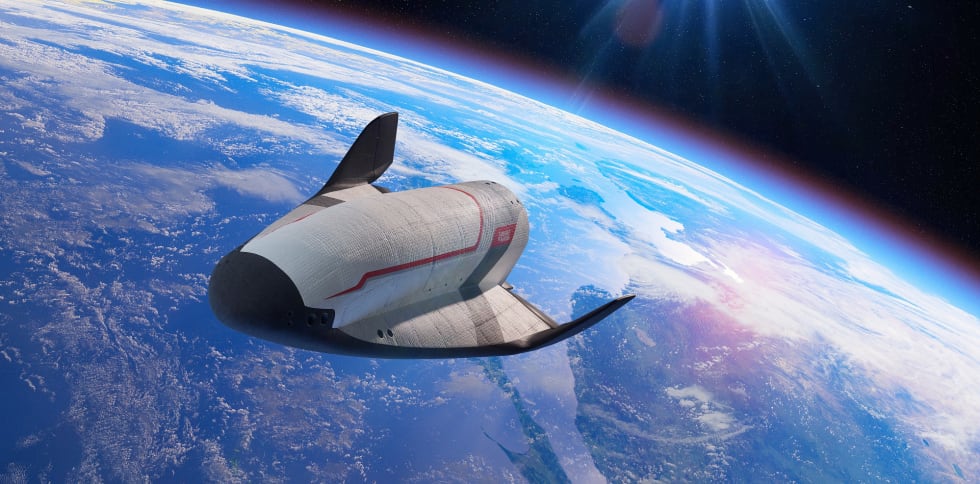
The French aerospace company Dassault is now lobbying the European Space Agency to help finance its proposed Vortex reusable mini-shuttle, comparable in concept to Sierra Space’s Dream Chaser spacecraft.

The company had first announced this project in June.

While the June announcement included few details, a 25 June hearing of the French National Assembly’s Committee on National Defence and the Armed Forces revealed that the mission is expected to be launched in 2027 aboard a Rocket Lab Electron rocket. The hearing also disclosed that the demonstration mission has a total budget of €70 million, with Dassault providing more than half of the funding and the remainder coming from the French government.

Dassault is now attempting to get more funding from ESA. In June it had signed an agreement with ESA to partner on building a demonstrator, but it was not clear that agreement included funding. It certainly did not include funding for the full scale operational mini-shuttle.

Overall, the structure of funding and the design of the project is good, and demonstrates again Europe’s sharp shift to the capitalism model in the past two years. Dassault will design, build, and (most importantly) own the shuttle, allowing it to market it to many customers. It is also committing a significant amount of its own funds to the project. The funding from France and possibly ESA appears mostly that of a customer buying the services of this product from the company.

7 comments

French startup Latitude to spend $9.3 million on building its French Guiana launch facility

French Guiana spaceport
The French Guiana spaceport. The Diamant launchsite is labeled “B.”
Click for full resolution image. (Note: The Ariane-5 pad is now the
Ariane-6 pad.)

The French rocket startup Latitude has announced it will spend $9.3 million to build its own launchpad at the spaceport in French Guiana, where hopes to launch its Zephyr rocket in 2026.

In a 23 June update, Latitude confirmed the Guiana Space Centre as the launch site for the inaugural flight of its 19-metre-tall, two-stage Zephyr rocket, which is designed to deliver payloads of up to 200 kilograms to low Earth orbit. The site was one of two under consideration, with the company also having committed to developing launch infrastructure at SaxaVord Spaceport in Scotland. When that partnership was announced in March 2022, Latitude, then known as Venture Orbital Systems, aimed to carry out its first launch from SaxaVord in 2024.

Construction of the ELM-Diamant shared launch facility began in 2025 and is expected to be completed by 2026. According to Latitude’s 23 June update, the company will work with CNES and the European Space Agency in the coming months to implement its dedicated launch infrastructure at the site. This will be followed by the inaugural launch of its Zephyr rocket in 2026.

It is not clear exactly how that ELM-Diamant launch site will be shared. France’s space agency CNES (which operates French Guiana) had previously said it wanted all the new European rocket startups that wanted to launch from there to use a common launch infrastructure, thus requiring them to share technology as well as redesign their rockets to fit CNES’s requirements. The rocket startups objected, but it now appears two startups, Latitude and PLD, and come to an agreement of some sort.

This deal also suggests that Latitude is shifting away from using the Saxavord spaceport in the United Kingdom, possibly because it has seen the difficult regulatory hurdles required there and has decided French Guiana is a better option.

2 comments

2nd test flight of French cargo capsule prototype “partial success”

According to an update today from the French cargo capsule startup The Exploration Company, its Mission Possible capsule prototype launched yesterday on SpaceX’s Falcon 9 had a “partial success (partial failure)” during its return to Earth.

The capsule was launched successfully, powered the payloads nominally in-orbit, stabilized itself after separation with the launcher, re-entered and re-established communication after black out. But it encountered an issue afterwards, based on our current best knowledge, and we lost communication a few minutes before splash down. We are still investigating the root causes and will share more information soon.

This was the second prototype test flown by the company, the first launched on the inaugural flight of the Ariane-6 rocket. That test was unable to complete its mission because of a problem with the rocket’s upper stage, which prevented it from completing its de-orbit burn, which would have then permitted the prototype to be released and return to Earth for flight testing. Instead, no test was done.

The company had initially only planned two test flights of these smaller prototypes before moving on to test flights of its full scale Nyx cargo capsule, designed to garner commercial cargo business to and from the space stations presently under development. The update today suggests it might now do another test flight with a smaller prototype.

3 comments
1 2 3 5