Continuing our tour of Uranus’ five biggest moons: Ariel

In preparing my cool image last week focused on the best Voyager-2 image of Uranus’ moon Miranda, I came to a realization that was somewhat startling. Voyager-2 is the only time a human spacecraft has gotten close to Uranus, and it was only close for a few days. Thus, the data and images it obtained of the gas giant and its moons is remarkable more sparse than I had ever realized.

You see, when these images were first released in 1986 they were exciting because they gave us that first look. Suddenly, a light was shined on something that had always been shrouded in darkness. It was a flood of data that needed processing.

It is now forty years later. No spacecraft has been there since, and thus we have gotten no more close-up information about Uranus or its moons. Data from Hubble and Webb has helped increase our knowledge of the planet itself, but of the moons nothing really new has been gleaned from this distance.

Uranus' five biggest moons

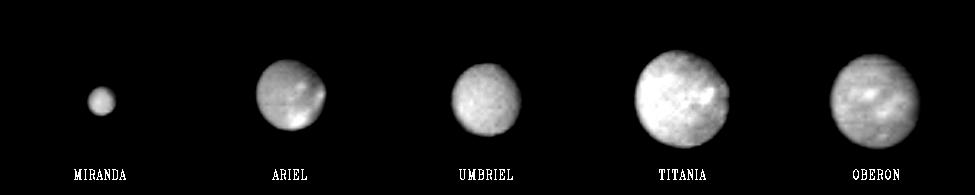
And so, to highlight how little we know, for the rest of this week I am going give my readers a tour of the few images Voyager-2 gave us of Uranus’ five biggest moons, the five that early astronomers had discovered prior to the space age and shown in the five pictures above, taken by Voyager-2 as it was approaching Uranus from a distance of about three million miles. They are, in order going from closest to farthest from Uranus, Miranda, Ariel, Umbriel, Titania and Oberon, with the images above designed to show their approximate relative sizes.

I already highlighted the strange, patchwork surface of Miranda last week, the smallest of these moons. Below is a mosaic made from the four highest resolution images of 720-mile-wide Ariel, the next out from Uranus, taken from a distance of about 80,000 miles.
» Read more

3 comments

Who fired “the shot heard round the world”?

Paul Revere's Ride

In just a few months we will be celebrating the 250th anniversary of the signing of the Declaration of Independence. That signing occurred because a little over a year previously a troop of British soldiers went into the heart of Massachusetts to seize weapons and ammunition that the British government did not want Americans to possess, and ended up getting involved in a firefight with the local militia in the town of Lexington, what became known as “the shot heard round the world. That shot started the American Revolution, and eventually forced the members of the Continental Congress to declare their independence from that British government.

As with all history, though that firefight sparked vast changes in politics, history, and culture across the globe and across centuries, the event itself was the act of just one or a few individuals, in a specific moment and place, under very specific circumstances created by those greater movements of politics, history, and culture.

One man fired the gun. A few others fired back. And then a war started.

But who was that man?

In one of the best histories I have ever read, historian David Hackett Fischer attempts to answer this question. His 1994 book, Paul Revere’s Ride, centers the story on Paul Revere and that man’s actions to warn the citizens throughout Concord and Lexington of the British invasion, so that they could be prepared to fight, if necessary.
» Read more

10 comments

The American Revolution, as seen from across the Atlantic

The First Salute by Barbara Tuchman

As this year is the 250th anniversary of the signing of the Declaration of Independence, it seems fitting to review a history about the Revolutionary War. In fact, I intend to do a few more such reviews in the coming months.

Let’s start however with a book that looks at that Revolution from a very different perspective.

Historian Barbara Tuchman is most well known for her early classic, The Guns of August, a book that was made famous when John Kennedy repeatedly referred to it during the Cuban missile crisis. Kennedy’s recommendation not only brought the book to the attention of the general public, it made Tuchman’s career. From that day forth, her work has always been received with accolades and enthusiasm and uncritical respect.

I am here however to break that bubble, though only partly. I just finished reading The First Salute, Tuchman’s 1988 history of the Revolutionary War. Rather than tell the tale from the point of view of the Americans, as done by most historians, Tuchman’s work looks at the war from the point of view of Europe, and thus gives us a much larger and very worthwhile context.

For this I compliment Tuchman highly. Though it is well known that the arrival of the French fleet off the coast of Virginia was crucial in forcing the British army to surrender to Washington at Yorktown, the background behind that arrival has generally been given short shrift by historians. Tuchman does not, describing in detail the political maneuvering necessary between the American envoys in France and France’s government to make that fleet happen. She also describes the attitudes of the Dutch and Spain to the war, and how and why they eventually moved to support America, even though there were many reasons for them to stay out.

Her book also gives us the British perspective, revealing the amazing and continuous failures of its government and generals to wage the war with any enthusiasm or skill. It appears almost from the start that the British had no great desire to win, and that malaise and overconfidence more than anything resulted in their eventual defeat.

For example, the British never took Washington or his army seriously. » Read more

25 comments

Early notes of Galileo discovered in margins of Ptolemy’s most famous book

A researcher reviewing the text of a 16th century printing of Claudius Ptolemy’s most famous book, The Almagest (in which he outlined his theory that the Earth stood at the center of the universe), was astonished this January to discover previously unidentified notes in the handwriting of Galileo in the book’s margins.

As [historian Ivan Malara flipped through the pages, he spotted something out of place. Someone had transcribed Psalm 145 on an otherwise blank page—in handwriting reminiscent of a very, very famous Tuscan astronomer.

That book, Malara came to realize, had been extensively annotated by none other than Galileo Galilei. Malara’s discovery, described in a paper now under review at the Journal for the History of Astronomy, promises new insights into one of the most famous ideological transitions in the history of science: the moment when Earth was thrust from the center of our universe.

The article at the link tries to makes the absurd and false claim that “many historians’ typical portrayal of Galileo as being motivated by philosophy or even political savvy, not careful math. ‘He has been presented as a big-picture sort of guy—not interested in the nitty-gritty technical details of astronomy,’ says James Evans, a historian of astronomy at the University of Puget Sound.” The article does this to suggest these newly discovered notes will profoundly change that interpretation.

That interpretation is wrong however. Anyone who has read any histories or biographies of Galileo (as I have) knows this portrayal is false. It is very clear from all his work that Galileo was very evidence-based, focused on the data and facts — the nitty-gritty technical details — to determine the larger picture. And these newly discovered notes confirm this:

Galileo’s notes, perhaps written around 1590, or roughly 2 decades before his groundbreaking telescope observations of the Moon and Jupiter, reveal someone who both revered and critically dissected Ptolemy’s work. And they imply, Malara argues, that Galileo ultimately broke with Ptolemy’s cosmos because his mastery of the traditional paradigm’s reasoning convinced him that a heliocentric system would better fulfill Ptolemy’s own mathematical logic.

Fascinating stuff. I can’t wait to read the final paper.

0 comments

New analysis suggests Moon’s magnetic field shifted multiple times from weak to strong to weak

The uncertainty of science: A new analysis of Apollo lunar samples suggests that the Moon’s magnetic field actually shifted back and forth from strong to weak, with it being weak most of the time.

The problem scientists have had since the Apollo missions is that the Apollo samples, which all came from the relatively flat mare regions, tended to exhibit evidence of a strong past magnetic field, even though the Moon’s size and make-up suggested its field should have always been weak. This new research offers a solution:

The research team analysed the chemical makeup of a type of lunar rock – known as the Mare basalts – and found a new correlation between their titanium content and how strongly magnetised they are. Every lunar sample which had recorded a strong magnetic field also contained large amounts of titanium – and the samples containing less than 6 wt.% titanium were all associated with a weak magnetic field.

This suggests that the formation of high-titanium rocks and the generation of a strong lunar magnetic field are linked. The researchers believe that both were caused by melting of titanium-rich material deep inside the Moon, temporarily generating a very strong magnetic field.

Because the Mare basalts were an ideal landing site for the Apollo missions, due to being relatively flat, the astronauts brought back far more of the titanium-rich basalts (containing evidence for a strong magnetic field) than are representative of the lunar surface. As a result, large numbers of these rocks have been analysed by scientists back on Earth, and this was previously interpreted to mean that the lunar magnetic field was strong for long periods of its history.

Instead, the limited number of samples, all from the same regions, biased the conclusions. The scientists predict that future missions to more places on the Moon will confirm their findings.

2 comments

Abraham Lincoln – a tragic and heroic life

An evening pause: To celebrate the birthday today one of America’s greatest man, a short biography.

The video below does a really fine job in a very short time. Lincoln’s life was filled with heart-breaking tragedy, far more than most Americans today realize. Yet the man endured, so that he ended up changing his nation so that it finally honored fully its founding documents. As he said so eloquently in 1863:

It is for us the living, rather, to be dedicated here to the unfinished work which they who fought here have thus far so nobly advanced. It is rather for us to be here dedicated to the great task remaining before us – that from these honored dead we take increased devotion to that cause for which they gave the last full measure of devotion – that we here highly resolve that these dead shall not have died in vain – that this nation, under God, shall have a new birth of freedom – and that government of the people, by the people, for the people, shall not perish from the earth.

2 comments

What life was really like in the American wild west

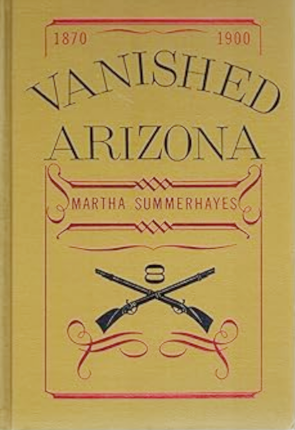
Vanished Arizona by Martha Summerhayes

Though I read a lot of good, detailed, and well-researched histories, I repeatedly find that if I really want to get a sense of the reality of times past, it is necessary to read something that was written by a person who lived at the time, and was an actual witness to great events.

When you do this you instantly cut through the political narratives that color all histories, whether sincere or not. Historians writing generations later bring their own viewpoint to the subject, colored by subsequent history shaped by what the original players did. So, to really understand those original players fairly, you really need to hear their side of the story, from their own lips.

Thus, I was thrilled recently when I came across a used copy of Vanished Arizona: Recollections of the Army life of a New England Woman by Martha Summerhayes. The book covers her memories from 1870 to 1900 as the wife of Jack Summerhayes, an officer in the American military stationed in the western United States, with the bulk of the story centered in Arizona.

This is an amazingly readable book. More important, it tells this story of army life from the perspective of the women who lived it. Most histories cover the battles and important events that Summerhayes’s husband Jack participated in, from defeating the Apaches and Geronimo to establishing the first settlements in early Arizona. Martha Summerhayes instead tells the story from her perspective as a woman living in an isolated fort in the hot desert wilderness of Arizona. The story is riveting, and revealing as well.

In reading her work now, 150 years later during the first half of the 21st century, I noted two important things.
» Read more

19 comments
1 2 3 4 91