India’s Mars orbiter mission ends after eight years

After eight years in orbit around Mars, India’s Mars orbiter mission, Mangalyaan, has run out of fuel for controlling its orientation, ending its mission.

The Rs 450 crore Mars Orbiter Mission was launched onboard PSLV-C25 on November five, 2013, and the MOM spacecraft was successfully inserted into Martian orbit on September 24, 2014 in its first attempt. “Right now, there is no fuel left. The satellite battery has drained,” sources in the Indian Space Research Organisation (ISRO) told PTI. “The link has been lost”.

There was, however, no official word from the country’s national space agency, headquartered here.

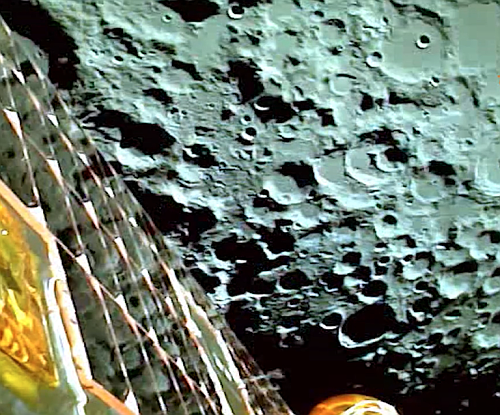
During its mission it produced more than a thousand images, though the mission’s primary objective was technological, proving that India itself could design, build, launch, and manage a planetary mission to another world. For India, Mangalyaan was thus an unqualified success.

Indian smallsat rocket startup hopes to complete 1st launch this year

The new colonial movement: A new Indian private commercial rocket startup, Agnikul, now hopes to complete the first launch of its Agnibaan rocket before the end of 2022.

Whether or not this launch happens this year, the important thing is the existence of this private independent rocket company in India. Up until now, India’s government space bureaucracy in ISRO, and in its new commercial arm, NSIL, has controlled all of that country’s commercial market share. Like NASA before 2008, it has worked aggressively to keep independent players out.

Agnikul’s existence suggests the Modi government’s effort to emulate the U.S. and create an independent private space industry is beginning to bear fruit. If so, expect big things over the next decade from India in space.

India’s space agency successfully tests prototype for controlling descent of spent 1st stages

IAD by ISRO

India’s space agency ISRO on September 3, 2022 successfully used a suborbital sounding rocket to test a prototype of an inflatable airbag, which it dubs an Inflatable Aerodynamic Decelerator (IAD), that can inflate at the top of a 1st stage and slow and control its descent back to Earth after launch.

The graphic to the right was adapted from the mission brochure [pdf]. According to ISRO:

The IAD was initially folded and kept inside the payload bay of the rocket. At around 84 km altitude, the IAD was inflated and it descended through atmosphere with the payload part of sounding rocket. The pneumatic system for inflation was developed by LPSC. The IAD has systematically reduced the velocity of the payload through aerodynamic drag and followed the predicted trajectory. This is first time that an IAD is designed specifically for spent stage recovery. All the objectives of the mission were successfully demonstrated

ISRO claims this design can not only facilitate the reuse of first stages, it can also be used for science payloads to Mars and Venus.

I look at this and wonder, wouldn’t parachutes or parasails, already developed and used numerous times in similar applications, do the same job? In fact, Rocket Lab has already successfully used parachutes to control the re-entry of its Electron first stages. Meanwhile, SpaceX uses simple and lightweight grid fins to control the descent of its Falcon 9 first stages, and simply fires that stage’s engines twice to slow it down for landing.

While there may be engineer advantages to this airbag design, the whole thing smacks of many of NASA’S complex test programs that never made it past prototype tests. The ideas always looked good, but they never were practical or cost effective.

Indian rocket startup raises $51 million in private investment capital

Capitalism in space: The Indian rocket startup Skyroot has just raised $51 million in private investment capital for the development of its smallsat rocket, Vikram-1.

Operating as a private aerospace manufacturer and commercial launch service provider in the country, the Hyderabad-headquartered startup has been working on its flagship Vikram series of small-life launch vehicles. The first among them, the Vikram 1, is slated to take to the skies by the end of the year and launch small satellites to space.

The $51 million is the most any private aerospace commercial company from India has ever raised in a single funding round.

Though the Modi government has publicly encouraged the development of a private, independent, commercial aerospace industry, India’s bureaucracy has generally acted to block this effort. In 2019 it convinced the government to create New Space India Limited (NSIL), a wholly government-owned entity which is designed to retain as much control over commercial market share as possible. As recently as one month ago, the NSIL webpage described itself as aiming to “capture” that commercial market. That revealed its purpose too obviously, so the website was rewritten to now say its goal is to “spur” the Indian aerospace sector.

Because NSIL gets government money and has full control over all of India’s already developed government rockets and space facilities, it has an enormous advantage, which acts to discourage investment in new private companies such as Skyroot. This is a similar situation that existed in the U.S. for more than a half century following Apollo. NASA had the resources, controlled all launches, and thus made private investment for independent companies hard to obtain.

This only changed when NASA began awarding contracts to private companies in 2008, whereby the rockets and spacecraft produced were not owned or designed by NASA. And NASA was only forced to do so because Elon Musk happened to have enough of his own money to finance SpaceX himself.

When ISRO (India’s agency) or NSIL begin awarding contracts like this, then company’s like Skyroot will begin to blossom.

OneWeb lost $229 million when Russia canceled its launches and confiscated its satellites

On September 1, 2022, OneWeb revealed that Russia’s cancellation of the last six or so OneWeb launches as well as Russia’s confiscation of 36 satellites cost the company $229 million.

Russia’s actions were the response by then head of Roscosmos, Dmitry Rogozin, to sanctions imposed on Russia by the west because of its invasion of the Ukraine. Rogozin’s petty response ended up shooting his space agency in the foot, because it ended up losing billions of dollars in foreign launch business, business that is not likely to return for decades.

OneWeb has since signed contracts with SpaceX, ISRO (India’s space agency), and Relativity for future launches. None of these have been firmly scheduled, though the first by SpaceX is tentatively planned for sometime before the end of the year.

Indian company delivers Gaganyaan fairing and high altitude launch abort motor to ISRO

Capitalism in space: The Indian private company, Hindustan Aeronautics Limited, yesterday delivered to India’s space agency ISRO the fairing and high altitude launch abort motor that will be used in Gaganyaan, that nation’s first manned spaceflight.

Though the article at the link does not say so, the fairings and abort motor will likely be used in one of two unmanned launch abort test flights ISRO intends to do before the actual manned mission, now set for sometime in ’24.

Hindustan Aeronautics is also a space company in India that will require watching. It not only built these major components for Gaganyaan, it also has built major components for India’s PSLV and GSLV rockets. It would not surprise me if the company eventually decides to build its own rocket, assuming the India government loosens the stranglehold it presently has over space and lets private companies compete against its government space operations. It was a similar stranglehold by NASA from the 1970s to the 2000s that squelched competition and innovation from the American private aerospace industry. When that ended, the renaissance in commercial space finally could begin.

UPDATE: It appears I was in error assuming Hindustan Aeronauts was a private company, as it is owned by the Indian government. I have edited the post above to reflect this. It appears the stranglehold the government has over India’s aerospace industry is no closer to loosening.

India’s new SSLV rocket fails on first launch attempt

Delayed years because of India’s panic over the Wuhan flu, the first launch of that country’s new Small Satellite Launch Vehicle (SSLV) failed today when the rocket’s fourth stage apparently did not fire its engines properly.

The problem appeared to be the SSLV’s terminal stage, called the velocity trimming module (VTM). According to the launch profile, the VTM was supposed to have burnt for 20 seconds at 653 seconds after launch. However, it burnt for only 0.1 seconds, denying the rocket of the requisite altitude boost. Two satellites onboard the rocket – the primary EOS-2 Earth-observing satellite and the secondary AzaadiSAT student satellite – separated from the vehicle after the VTM burnt.

As a result, the two satellites were put in an orbit that was too low, which quickly decayed, destroying both.

Since this launch failed, I do not count it in the launch totals for 2022.

Considering that this was SSLV’s first launch, it was in that sense a test, and a failure therefore is not unexpected. India’s real problem is that the launch was delayed so long because of the Wuhan panic, thus allowing other competitors to catch up and pass India. While it is certain ISRO will try again, and eventually succeed, it will not get the market share it would have had, had it launched in 2020 as originally planned.

India inaugurates its own space debris tracking facility

ISRO, India’s government space agency, today inaugurated its own space debris tracking facility, designed to track space junk much as the Space Force does in the U.S.

A new facility dubbed the System for Safe & Sustainable Operation has been inaugurated in Bengaluru that will deal with emerging threats from space debris.

The new facility will help India achieve its Space Situational Awareness (SSA) goals by providing comprehensive and timely information about the space environment. The system will alert the agency about probabilities of in-orbit collisions, fragmentation, atmospheric re-entry risk, space-based strategic information, hazardous asteroids and space weather forecasts.

Though China might have its own comparable facility, I am unsure. Even if it does, the U.S. military has been for decades the only nation that does this tracking and then provides the data to the world, at no cost. That India is now developing its own capability signals that nation’s desire to chart its own path in space that does not depend on the resources of others.

This facility also signals the shift in ISRO’s job. Before, this government agency built and owned India’s rockets, flying commercial missions for profit. Now, the Modi government wants to transfer those tasks to India’s private sector, with ISRO merely acting as a customer if it needs such services. This change however will reduce ISRO’s influence, something that factions within India’s government are resisting. By giving ISRO the new task of tracking space debris, the Modi government gives ISRO new responsibilities to replace the ones it is losing. This will ease the turf war and speed the transition to a competing commercial industry.

ISRO chief: India’s manned mission will be delayed

The new colonial movement: The head of India’s space agency ISRO revealed during a press conference following yesterday’s PSLV launch that he is delaying by one or two years Gaganyaan manned mission.

Indian Space Research Organisation (Isro) Chairman S Somanath on Thursday said the launch of the ambitious Gaganyaan mission, the country’s first manned space flight, cannot happen this year or next year as the agency is keen to ensure that all safety systems are in place.

Somanth’s comments confirm an earlier report. It appears he wants the agency to do at least two unmanned tests of the spacecraft’s crew abort system. He also want further tests of the GSLV rocket that will launch the manned capsule.

Somanth also indicated that India’s next attempt to land a rover on the Moon, Chandrayaan-3, might also be delayed from the presently scheduled August ’22 target launch as they review the lander’s systems.

OneWeb to resume satellite launches this year, complete constellation by mid-2023

Capitalism in space: According to one OneWeb official at a conference yesterday, the company now expects to resume launching its satellites on SpaceX and Indian rockets by the fourth quarter of this year and will complete its constellation by the second quarter of next year.

Launches were suspended when Russia refused to do a launch — and confiscated the 36 satellites — after Europe imposed sanctions in response to the Russian invasion of the Ukraine.

Speaking at the Fourth Summit for Space Sustainability by the Secure World Foundation and the U.K. Space Agency, Maurizio Vanotti, vice president of space infrastructure development and partnerships at OneWeb, said new launch agreements with SpaceX and NewSpace India Ltd. (NSIL) would allow the company to launch the remaining satellites of its first-generation system by the second quarter of 2023.

“Our plan is to be back on the launch pad in quarter four, after the summer, and to complete deployment of the constellation by quarter two next year,” he said. It will take several months after that final launch for the satellites to move to their operational orbits, he added. “We’re going to be in service with global coverage, 24/7, by the end of next year,” he said.

At present OneWeb has not revealed the breakdown of launches from the two companies.

India’s first private satellite manufacturing facility opens

Capitalism in space: At a ceremony today that included officials from the government, the private commercial company ANANTH opened India’s first private satellite manufacturing facility.

Located at Karnataka Industrial Area Development Board Aerospace Park, Bengaluru, the new establishment is equipped with clean rooms for spacecraft sub-systems manufacturing and is large enough to cater to four spacecraft simultaneously.

This unveiling is part of India’s effort to transition from a government-built space effort to one run by the private sector. In the past all satellite construction in India was designed, managed, and owned by India’s space agency ISRO. This facility will now take over that function, and do so not only for ISRO but for any private company that wishes to have a satellite built.

India’s press: End the endless launch delays at ISRO

The new colonial movement: An op-ed yesterday in one of India’s major news outlets demanded that its space agency ISRO end the launch delays that have now gone for more than two years since the beginning of the Wuhan panic, and get a number of military satellites into orbit.

The details are not really that important. What this op-ed suggests is that India’s press, and possibly its public, is now beginning to lose patience with ISRO’S reluctance to resume launches. It also suggests their own fear of the Wuhan flu has subsided.

The bottom line is that India has lost a lot of business in the past two years by its refusal to launch, especially in the smallsat market, and the only chance it has to regain that business is to resume launches, with a vengence.

India delays launch of manned mission to do two abort tests first

The new colonial movement: India’s space agency ISRO has decided to delay the launch of its Gaganyaan manned orbital mission at least one more year (until ’24) in order to do two abort tests of the capsule.

“The first Test Vehicle for this purpose is ready and we will launch it in September this year. The human capsule will be sent up 15 kilometres, we will simulate an abort and then the capsule will be safely brought down by parachutes into the sea,’’ Somanath, who is also Secretary, Department of Space, said.

The second Test Vehicle will be launched in December this year, sent to a greater height and then brought back after a similar simulation is carried out.

The mission had originally been scheduled to launch in ’22, but was delayed significantly by India’s panic over Wuhan.

ISRO successfully tests human-rated solid rocket booster

India’s space agency ISRO announced on May 13, 2022 that it had successfully tested the man-rated version of the solid rocket strap-on booster used on its GSLV Mark 3 rocket that will launch its first manned mission into space.

The 20 m long and 3.2 m diameter booster is the world’s second-largest operational booster with solid propellant. During this test, about 700 parameters were monitored and the performance of all the systems was normal.

Launch of the Gaganyaan manned mission is now targeting ’23.

OneWeb signs deal to launch additional satellites using India’s GSLV rocket

Capitalism in space: OneWeb yesterday announced that it has signed a contract with New Space India, the commercial arm of India’s space agency, to launch additional satellites using that nation’s GSLV rocket.

From the company’s press release:

The first launch with New Space India is anticipated in 2022 from the Satish Dhawan Space Centre (SDSC) SHAR, Sriharikota. The launches will add to OneWeb’s total in-orbit constellation of 428 satellites, 66 per cent of the planned total fleet, to build a global network that will deliver high-speed, low-latency connectivity.

The company refused to release any additional details. The deal however clearly indicates two things. First, OneWeb wants an alternative to using SpaceX for launching the satellites that the Russians had been previously contracted to put in space. This gives it flexibility should one or another company have issues. For example, SpaceX simply might not have the immediate capacity to launch all these satellites as quickly as OneWeb wants. This second deal distributes that capacity across two launch vendors.

Second, it is likely in the long run that India is going to get a lot of business from OneWeb. This gain for India is Russia’s total loss. The deal will also help get India out of its extended panic over the Wuhan flu. Since the arrival of COVID India’s space industry has ground to a halt, completing few launches. The OneWeb deal might force it to come back to life.

ISRO hires company to build future PSLV rockets

Capitalism in space: For the first time, India’s space agency ISRO is about to hire a private company to build five PSLV rockets, rather than supervise the construction in-house.

Hindustan Aeronautics Limited (HAL) and L&T consortium has emerged as the lowest bidder to make 5 Polar Space Launch Vehicles (PSLVs) for ISRO. “The company is the lead partner with L&T sharing the work. Other vendors too will be involved with the consortium in the manufacturing of the launch vehicles (LVs). However, the contract is yet to be formalised/ awarded,” HAL said in a statement.

If all goes as planned, the first rockets will be delivered late in ’24.

This contract changes less than it seems, though it is a step in the right direction. ISRO has for years hired private subcontractors to build its rockets and components. What is different now is that it appears that HAL is now the lead contractor, not ISRO. HAL however does not appear to own the rockets it builds, and thus will not be able to build more to sell launches to others. Until this happens, India’s space industry will remain wholly government run.

ISRO once again delays first launch of its new SSLV rocket

India’s space agency ISRO today announced that it is once again delaying the first launch of its new Small Satellite Launch Vehicle (SSLV) rocket.

This rocket, designed to launch cubesats and compete with private companies like Rocket Lab, Virgin Orbit, and Astra, was first going to launch in the summer of 2019. That launch was delayed until 2020, only to be blocked entirely for two more years because of India’s panic over the Wuhan flu.

Last month ISRO announced the successful completion of static fire tests of the rocket’s solid rocket first stage, suggesting a spring launch in ’22 would occur. That has now been delayed again, now targeting early summer.

The delays have cost India a great deal in market share. Had SSLV launched in 2020, it would have been well positioned to garner business now captured by Rocket Lab, Virgin Orbit, and Astra, the latter two of which were not yet operational at that time. Now India trails all these companies, with other American companies (Firefly, Relativity, ABL) on the horizon as well.

Europe to put instrument on Japanese rover being launched and landed on the Moon by India

The new colonial movement: The European Space Agency (ESA) has signed an agreement with Japan’s space agency JAXA to put a science instrument on a Japanese rover that will be launched by India to the Moon and landed there on an Indian lander.

Under the deal, ESA would provide instruments for the Japanese rover, which would be used in the exploration of the Moon’s south pole under the mission targeted for 2024. … The lunar endeavour between the Indian Space Research Organisation (ISRO) and JAXA is called the Lunar Polar Exploration Mission (LUPEX) which aims to launch an Indian lander and a Japanese rover to the Moon.

In the next three years a lot of landers and rovers are planning to land on the Moon, most built by private American companies flying NASA and private payloads, but also joined by probes being sent by Russia, China, and now this Japanese-Indian-European mission. Even if only half succeed, the exploration of the lunar surface will still be quite busy.

ISRO pinpoints cause of August ’21 failure of India’s GSLV

India’s space agency ISRO has completed its investigation of the failure of the third stage of its GSLV rocket during an August ’21 launch, identifying a leaky valve as the cause.

The leakage in the Vent and Relief Valve is being attributed to the damage in the soft seal that could have occurred during the valve operations or due to contamination and valve mounting stresses induced under cryogenic temperature conditions.

“The committee has submitted comprehensive recommendations to enhance the robustness of the Cryogenic Upper Stage for future GSLV missions, which includes an active LH2 tank pressurization system to be incorporated to ensure sufficient pressure in the LH2 tank at the appropriate time before engine start command, strengthening of Vent & Relief Valve and associated fluid circuits to avoid the possibility of leakage along with the automatic monitoring of additional cryogenic stage parameters for giving lift-off clearance,” Isro said.

India entire space industry almost completely shut down for two years due to its panic over the Wuhan flu. This launch was part of its effort to resume launches, and the failure only added to that shutdown.

OneWeb and Arianespace scramble to find a rocket to launch satellites

Capitalism in space: With the cancellation of the last six Soyuz-2 launches for OneWeb and Arianespace due to Russia’s invasion of the Ukraine, the two companies are struggling to find an alternative rocket to launch the remaining 216 satellites that would complete OneWeb’s satellite constellation.

OneWeb has already paid Arianespace for the launches, so the responsibility to get the satellites in orbit is at present Arianespace’s. The problem is that its flight manifest for both the Ariane-5 (being retired) and the new Ariane-6 rocket are presently full.

Going to another rocket provider is problematic, even if a deal could be negotiated. The flight manifest for ULA’s Atlas-5 and Vulcan rockets is also filled. Though SpaceX’s Falcon 9 could probably launch the satellites, that company’s Starlink satellite constellation is in direct competition with OneWeb, which makes it unlikely the two companies could make a deal.

There have been negotiations with India to use its rockets, but it is unclear at present whether this will work.

One other option is to buy a lot of launches from the smallsat rockets of Rocket Lab, Virgin Orbiter, and Astra. This will likely cost more because more launches will be required, and that would required a complex negotiation between all parties.

India successfully tests solid rocket booster for its Small Satellite Launch Vehicle

The new colonial movement: India yesterday successfully completed a ground test of the solid rocket booster to be used in its Small Satellite Launch Vehicle (SSLV).

SSLV was originally scheduled for launch in 2020 but was put on hold for two years when India panicked over the Wuhan flu. ISRO, India’s space agency, hopes now to complete the first launch in the next two months.

The two-year delay cost ISRO significantly in the international smallsat market. While American private companies like SpaceX, Rocket Lab, Virgin Orbit, and Astra continued to launch throughout the epidemic and thus garner business from the smallsat market, India’s market share shrunk. Whether it can recover that share once SSLV begins flying remains to be seen. India’s willingness to shut down so easily will I think make satellite companies hesitate before buying its services.

ISRO to launch Chandrayaan-3 lunar lander mission in August

The new colonial movement: India’s space agency ISRO today announced that it has scheduled the launch of its Chandrayaan-3 lunar lander mission for August 2022.

The launch date was revealed by a government official, who also said that this launch will be one of eight total by India in 2022. If that number is completed, it would be the most India has ever accomplished in a single year, topping the seven launches that lifted off in 2018. It would also signal that India has finally put aside its fear of COVID that has shut down its aerospace industry for the last two years.

India gets a new head of its space agency

The new colonial movement: The Modi government of India has put a new person in charge of its space agency ISRO, scientist Dr S Somanath.

As he takes over as the 10th ISRO chairman, succeeding K Sivan, that will be one of the biggest challenges before Somanath — putting the agency’s human space flight programme back on track following setbacks due to launch failures, the Covid-19 outbreak, and a general slowdown since the failure of the Chandrayaan 2 robotic moon landing mission in September 2019.

As director of the Vikram Sarabhai Space Centre since 2018, and as head of the Liquid Propulsion Systems Centre, Somanath has been closely associated with developing the key rocket technology that will go into the mission.

He was the project director and mission director for the development of the GSLV Mk-III rocket that will be used for the programme. He has also been involved in making it usable for human flight in recent days.

Like Sivan, Somanath’s appointment is for a limited period of time, presently set for three years. Sivan’s had been extended a year during the Wuhan panic. Whether the almost complete shut down of India’s space effort during that panic, plus several launch failures, were a factor in this change is unclear, though they likely played a part in the decision. If all had gone as originally planned, Sivan’s appointment might have been renewed.

Somanath’s extensive background as a rocket engineer however appears to make him ideal for heading ISRO in the next few years, when it attempts its first manned launch.

In related news, ISRO today announced that it has successfully completed a 720 second qualification test of the cryogenic engine to be used in that manned flight.

India outlines new schedule for lunar and manned missions

According to press statements by India’s Minister for Science & Technology, Jitendra Singh, the schedule for that country’s next unmanned lunar lander/rover and its first manned missions have now been firmed up.

First, Singh announced that the lunar lander/rover, Chandrayaan-3, is now aiming for a launch to the Moon in the second quarter of ’22. The mission is essentially a rebuild of Chandrayaan-2, which got within a few hundred feet of the lunar surface before losing control and crashing in 2019. Chandrayaan-3 had initially been scheduled for launch in late 2020, but the COVID panic essentially shut down India’s entire space industry in both ’20 and ’21.

Second, Singh announced that India’s manned orbital Gaganyaan mission is now scheduled for launch in ’23.

Jitendra Singh said that the major missions like Test vehicle flight for the validation of Crew Escape System performance and the 1st uncrewed mission of Gaganyaan (G1) are scheduled during the beginning of the second half of 2022. This will be followed by a second uncrewed mission at the end of 2022 carrying “Vyommitra” a spacefaring human robot developed by ISRO and finally the first crewed Gaganyaan mission in 2023.

Like Chandrayaan-3, Gaganyaan was delayed significantly by the panic in India over COVID. It was originally scheduled for launch in December ’21, but the panic caused all work to stop for most of ’20 and ’21. During that time period India’s planned annual launch pace of 6 or more launches per year shrank to a mere three launches over two years, with little sign yet that ISRO is ready to resume launches.

Hopefully, these announcements are a signal that India will fully return to flight in ’22. Stay tuned.

OneWeb to use India’s rockets for satellite launches

Capitalism in space: OneWeb today announced that it has signed a deal with India to use its rockets for satellite launches.

Low Earth orbit (LEO) satellite communications company OneWeb has announced its plans to collaborate with the commercial arm of the Indian Space Research Organisation (ISRO), NewSpace India Limited (NSIL), to utilise indigenously built Polar Satellite Launch Vehicle (PSLV) and the heavier Geosynchronous Satellite Launch Vehicle (GSLV-MkIII) as likely platforms to launch OneWeb’s satellites in India from next year.

This is not good news for either Russia or Arianespace. Up to now these entities pretty much were launching all of OneWeb’s satellites. Now some of that business is being shifted to India.

The deal was revealed at a press conference that announced the formation of an Indian commercial trade organization, the Indian Space Association (ISpA), that partnering with the government will use the government’s space assets to develop private commercial space resources.

The Indian Space Association (ISpA) will be headed by Jayant Patil, senior executive vice president – Defence, L&T-NxT as its chairman, and Bharti Airtel’s chief regulatory officer Rahul Vatts as its vice-chairman, while Lt Gen. A.K. Bhatt (Retd.) has been appointed as the director-general of the association.

Among its early members include Bharti Airtel, Larsen & Toubro, Nelco (Tata Group), OneWeb, Mapmyindia, Walchandnagar Industries and Ananth Technology Limited.

Bharti is the company that invested $500 million to bring OneWeb out of bankruptcy, partnering with the United Kingdom.

The key question is whether these private companies will invest in developing private rockets, or will simply continue to launch using ISRO’s rockets. Based on this announcement, it appears the latter, but since the whole goal here of the Modi government of India appears to be to encourage a private sector, this could soon change.

Wuhan panic continues to shut down India’s space agency

While most private companies and many nations, such as China and Russia, have been launching continuously since the advent of the coronavirus panic last year, India’s space agency ISRO continues to be shut down, completing few launches with a story today suggesting that the three remaining planned launches for 2021 will likely be delayed until next year.

There have only been two launches this year – the purely commercial PSLV C-51 launch in February carrying Brazil’s earth observation satellite Amazonia-1 and the GSLV-F10 mission in August carrying an Indian earth observation satellite EOS-03 that failed.

To be sure, the space agency has plans for three more missions before the end of the year, including the first development flight of the SSLV [Small Satellite Launch Vehicle]. The other two will use India’s workhorse PSLV to launch two earth observation satellites EOS-04 and EOS-06.

“The three planned missions appear unlikely this year,” a senior scientist at the agency said on condition of anonymity.

Worse, before the year began ISRO had reduced its targeted number of missions for ’21 from 16 to 5.

The article makes believe the epidemic has shut down other programs, such as Artemis, in the same way, but that is false. NASA’s Artemis program might have lost a few months in ’20 due to the agency’s panic over COVID, but since then it has been moving as fast as it can, considering the cumbersome nature of its engineering. Even Rocket Lab, which has been badly hampered by New Zealand draconian Wuhan rules, has managed to launch eleven times since January 2020, compared to the four launches attempted by India during that same time.

Whatever has caused the shut down at ISRO, it really hasn’t been the epidemic. Something about the agency’s management and its bureaucratic culture has prevented them from resuming flights. And as they remained stalled, the private commercial companies in the U.S. and China are grabbing their customers.

India’s GSLV rocket fails in first launch since 2019

India’s attempt today to resume launches of its large GSLV rocket, stalled because of the Wuhan panic since its last launch in 2019, failed today when something went wrong with the third stage.

This entirely Indian-built rocket is the one they plan to use for their manned missions. This failure will certainly set that program back, already delayed significantly because of the shut down of their entire launch industry because of COVID-19.

The satellite, also Indian-built, is also a big loss. It was to be the first in a series of Earth observation satellites.

India begins countdown for 1st GSLV rocket launch since 2019

India today began the countdown for its first GSLV rocket launch in more than two years, since it launched the lunar orbiter Chandrayaan-2 with the lunar rover/lander that crashed onto the surface shortly thereafter.

The launch is targeted for 8:13 p.m (Eastern) tonight.

The long gap in GSLV launches was almost entirely because of India’s panic over the Wuhan flu. For the past year and a half its space agency ISRO has completed three just launches, all of which were delayed until late in 2020 because of the panic. Prior to that panic, India had hoped to launch as many as 8 to 12 times in ’20 and ’21 each. Instead, their space industry shut down, and the commercial business they hoped to capture went to American private companies instead.

1 3 4 5 6 7 10