
Problems discovered in new Japanese H3 rocket engine

Engineers at Mitsubishi have discovered technical problems in the engine for Japan’s new H3 rocket, forcing its first test launch to be delayed into 2021.

The Japanese space agency JAXA told SpaceNews that problems were found with the new LE-9 engine’s combustion chamber and turbopump. “Fatigue fracture surfaces were confirmed in the apertural area of the combustion chamber inner wall and the FTP blade of the turbo pump,” according to a JAXA spokesperson.

JAXA and Mitsubishi Heavy Industries (MHI), the prime contractor for the H3, were aiming to hold the inaugural launch by the end of 2020 before the discovery of issues in May. However engineers testing the LE-9 cryogenic liquid hydrogen and liquid oxygen engine for the H3 first stage encountered a potential issue back in May. This led JAXA to announce in September that the first flight would slip to some time in Japanese fiscal year 2021, beginning April 1, 2021. The rocket’s second launch likewise slipped to Japanese fiscal year 2022.

The H3 is intended as a cheaper and more competitive version of Mitsubishi’s H2 rocket, which has failed to garner much business outside of Japanese government launches because of its cost. That the H3 isn’t being built to be reusable however means it will likely not achieve that goal, as it will not be able to lower it enough to compete with SpaceX.

This launch delay further weakens its ability to compete, as it gives more time for other cheaper alternatives to hit the market.
1 comment

Mercury probe BepiColombo probe flies past Venus

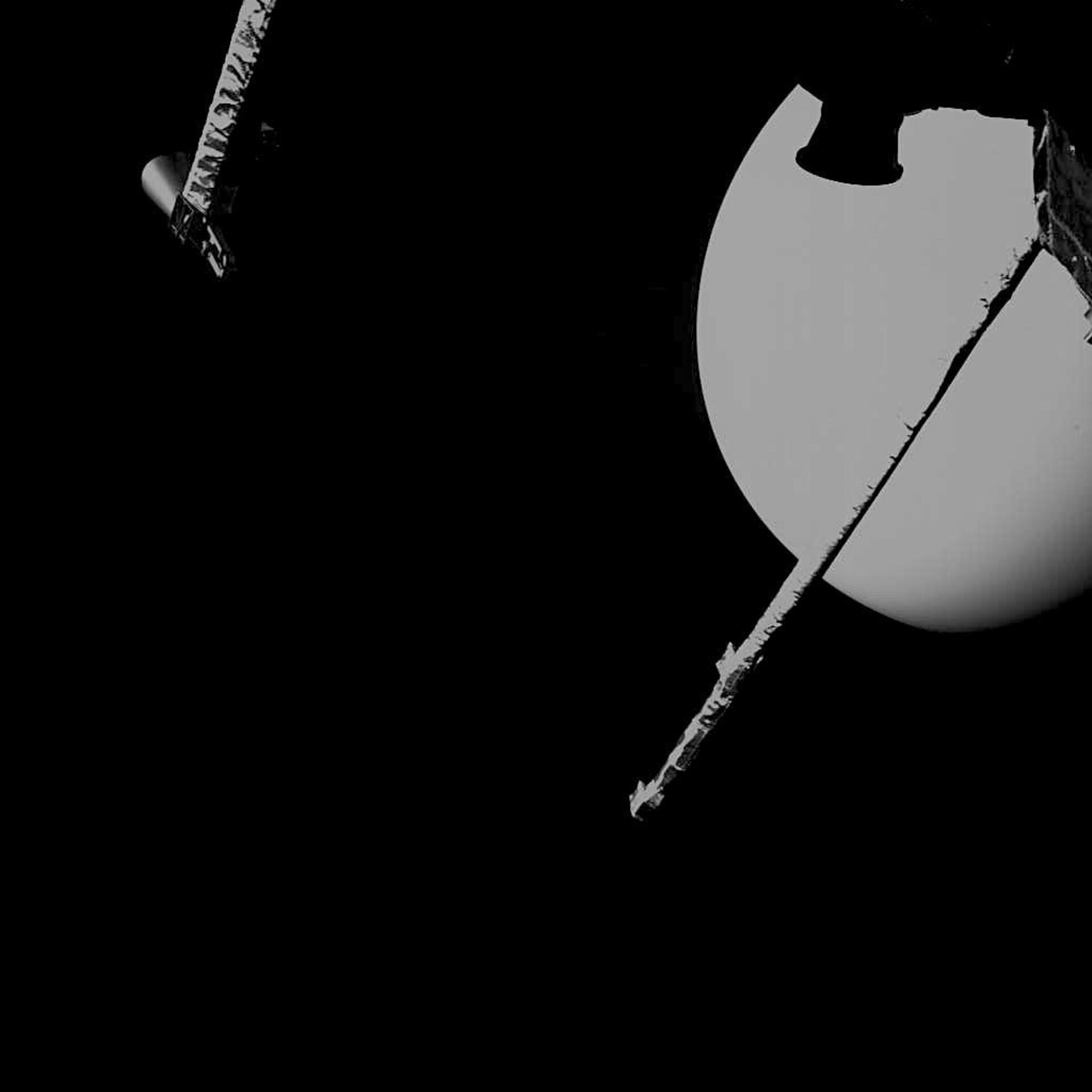
Venus during BepiColombo fly-by
Click for full image.

The two-pronged European and Japanese probe BepiColombo today has completed its first of two fly-bys of Venus on its way to an arrival at Mercury in 2025.

The image to the right is one of 64 taken during the fly-by. The science team has created a movie from those images, showing Venus slide past as the spacecraft slewed to view it. During the fly-by the instruments on board its Japanese and European orbiters, both of which will separate and operate independently once they reach Mercury, gathered data of Earth’s sister planet.

The spacecraft still needs one more Venus fly-by plus six past Mercury to get it on a trajectory that will put it in orbit around Mercury. It has also already completed one fly-by past Earth in this complicated route.

0 comments

Japan delays launch of new rocket one year

Capitalism in space: Because of a problem discovered in the development of its new first stage engine, Japan has now delayed the first launch of its new H3 rocket one year, to ’21.

Mitsubishi is building the rocket for Japan’s space agency JAXA, Since you design and build your rocket around your rocket engines, having a problem with that rocket engine puts a serious crimp on construction. Thus, identifying and dealing with such engine issues early in development is wise.

Still, Japan continues to lag behind the other space-faring nations in the development of its space industry.

0 comments

Launch delays for SpaceX and UAE

The launches planned for tomorrow by SpaceX and Japan’s space agency JAXA have both been postponed, for different reasons.

The SpaceX launch of a South Korean military satellite was postponed in order to swap out equipment in the Falcon’s upper stage. No new launch date has yet been announced.

The JAXA launch, using Mitsubishi’s H-2A rocket, was to launch the United Arab Emirates’ Mars orbiter Hope. It was postponed due to bad weather. Their next launch window is July 16, but they have not yet announced a new launch date. Like Perseverance, they must launch this summer or they will have to wait two years for the next launch window to Mars to reopen.

0 comments

Japan tests new engine for new rocket

Capitalism in space: Mitsubishi has successfully tested the new engine it will use in the new rocket, the H3, that it is building for Japan’s space agency, JAXA.

JAXA reports that the engine fired for the planned duration of 240 seconds (4 minutes) at the space agency’s Tanegashima Space Center. It was the seventh hot fire of the new engine, which is powered by liquid oxygen and liquid hydrogen.

JAXA plans H-3’s first test launch by the end of the nation’s 2020 fiscal year, which began on April 1 and will end on March 31, 2021. It is not known whether work slow downs resulting from the coronavirus (COVID-19) pandemic will affect the schedule.

The two-stage H3 is intended to be a more affordable and flexible replacement for the H-IIA and H-IIB boosters now in use. The new rocket is designed to place payloads weighing 4,000 kg (8,818 lb) or more into sun-synchronous orbit at 500 km (310.7 miles) or 6,500 kg (14,330 lb) into geosynchronous transfer orbit.

I do wish JAXA or Mitsubishi would give this rocket a more interesting name. It would help their woeful marketing attempts to sell it to other customers.

3 comments

Mitsubishi IDs cause of launchpad fire, reschedules launch

Mitsubishi, the Japanese company that builds the H-2B rocket for Japan’s space agency JAXA, has identified the cause of the dramatic launchpad fire that broke out only about three hours before the launch of their HTV unmanned ISS cargo freighter.

MHI announced Friday that officials believe the fire started near an “exit hole” on the mobile launch platform. Investigators believe the blaze was most likely caused by static electricity, and exacerbated by a flammable oxygen-rich environment inside the mobile launch platform.

Low winds at Tanegashima during the Sept. 10 countdown allowed oxygen vapors to build up at the launch pad in higher concentrations than previous countdowns, officials said. Super-cold oxygen is used as an oxidizer in both stages of the H-2B rocket, and also flows through the first stage’s twin LE-7A main engines during pre-launch “chilldown” conditioning procedures.

“As a result of the investigation, it was confirmed that there was a high possibility that the fire spread due to the static electricity generated by the oxygen dripping from the engine exhaust port during the propellant filling operation, which continued to blow on the heat-resistant material in the exit hole at the movable launch pad,” MHI said in a statement. “We have taken corrective measures and have confirmed normal functioning of the rocket and facility,” MHI said.

They have rescheduled the launch for September 26. Initially they were aiming for September 24, but rescheduled because there might be an orbital conflict between their rocket’s second stage and the launch of a Soyuz to ISS that same day.

5 comments

Toyota and JAXA to work together to build lunar rover

Capitalism in space? Toyota and and Japan’s space agency JAXA announced yesterday that they have signed an agreement to build lunar rover.

The rover “will be an important element supporting human lunar exploration, which we envision will take place in the 2030s”, JAXA Vice President Koichi Wakata told a symposium in Tokyo. “We aim to launch such a rover into space in 2029.”

The rover is still in the conceptual stage, but an illustration in the news release showed a six-wheel vehicle that somewhat resembled an armored personnel carrier.

A spokesman for Toyota, which plans to ramp up fuel-cell cars as a zero-emission alternative to gasoline vehicles, said the project would give the company a chance to test its technologies in the moon’s harsh environment and improve them. [emphasis mine]

Ten years to build a rover? That’s not capitalism, that’s a government jobs program whose only goal is to spend money and never accomplishes anything.

Japan continues to disappoint. Even as India and China forge ahead aggressively with new space technology and exciting projects, Japan seems unable to harness its considerable private resources to bring life to its aerospace industry. Their unmanned planetary program, as illustrated by Hayabusa-2, is right now having some success, but the pace of achievement has tended to be slow and laborious. This rover project seems to continue that trend.

3 comments

Hayabusa-2 to grab asteroid samples in February

The Hayabusa-2 science team has decided that it will make their first attempt to land and grab samples from the asteroid Ryugu in February.

“The time has finally come,” JAXA senior project member Takashi Kubota said at a news conference on Jan. 8. “Two candidate landing spots have their own advantages and drawbacks, but we will robustly try to collect samples.” The two sites are near the equator of the asteroid. JAXA said it will pick one by early February.

Between Feb. 18 and Feb. 23, the Hayabusa 2 will start descending from its “home position” at an altitude of 20 kilometers from the asteroid. JAXA will use “target markers,” which will be dropped on Ryugu beforehand, to guide the probe.

Hayabusa 2 is scheduled to make three touch-and-go landings.

There are clearly risks here, since the asteroid is strewn so completely with rocks and boulders.

0 comments

Images of Mascot by Hayabusa released

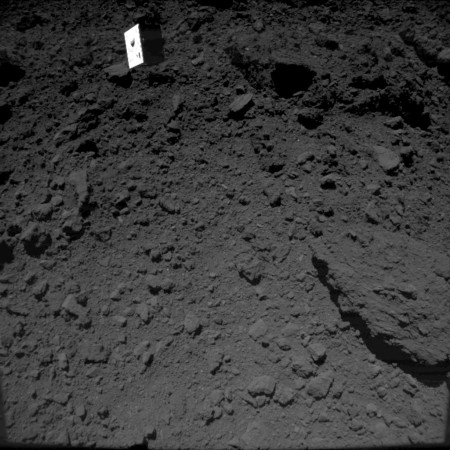
MASCOT descending towards Ryugu

The Hayabusa-2 science team today released images taken of MASCOT as it descended to the surface of Ryugu, including images showing where it landed.

In the image on the right, reduced slightly to post here, you can see MASCOT as it slowly moves downward towards the asteroid shortly after its release from Hayabusa-2. At the link there is another image showing the mini-lander as a white dot when it was still about 115 feet above the surface. Other images show its location on the surface where it operated for seventeen hours and completed three hops.

The next big event from Hayabusa-2 will be the spacecraft’s own landing, sometime later this month.

0 comments

ISS’s international partners express interest in extending station’s life

While NASA has been considering the end of ISS, this week its international partners all expressed interest this week in extending its life beyond 2024.

During an Oct. 1 press conference at the 69th International Astronautical Congress (IAC) here, representatives of three ISS partner agencies said they were open to extending the station’s operations to 2028 or 2030 in order to maximize the investment they’ve made in the facility as a platform for research and preparation for exploration activities beyond Earth orbit.

Jan Woerner, director general of the European Space Agency, said the issue could come up at the next triennial meeting of the ministers of ESA’s member nations, scheduled for late 2019. “At the ministerial meeting next year, the ministerial council, I will propose to go on with ISS as well as the lunar Gateway,” he said. “I believe that we will go on.”

At a separate briefing Oct. 2, Woerner emphasized the use of the station as a research platform and encouraged greater commercial activities there. “I believe we should use the ISS as long as feasible,” he said. “I always thought 2024 was the end, but now I learned it is 2028, and yesterday I learned it’s 2030. So, I will try to convince the ESA member states that ESA should be a partner in the future.” However, he noted that ESA could defer the decision on a post-2024 ISS extension until its following ministerial meeting in 2022.

Hiroshi Yamakawa, president of the Japanese space agency JAXA, also emphasized the importance of making the most of the station. “I’d like to make the most of the present ISS,” he said. “We have to maximize the output of the ISS. Whenever the deadline comes to the ISS, we would like to participate in the ISS and maximize output.” He added, though, that there was not a pressing need for Japan to decide on an ISS extension. “JAXA is requesting budgets annually, so I think in that sense JAXA is quite flexible.”

Dmitry Loskutov, head of international relations at the Russian state space corporation Roscosmos, said Russia already expected an extension. “We anticipate the continued functioning until 2028 or 2030,” he said.

While I can see many benefits for extending ISS, leaving it as a wholly government-run operation will reduce its effectiveness while increasing its cost. I also suspect all these agencies are lobbying for funding. If they can get money for both ISS and Gateway, it will increase their footprint in space significantly.

1 comment

Second Japanese official indicted in JAXA bribery scandal

Japanese authorities have now indicted a second government official for taking bribes in connection with space work by the country’s space agency JAXA.

Kazuaki Kawabata, 57, the former director-general for international affairs at the ministry, allegedly received bribes worth about 1.5 million yen ($13,570) in the form of wining and dining.

Koji Taniguchi, 47, who served as an executive of a medical care consulting company, was also indicted on Aug. 15 on a charge of providing the bribes to Kawabata. Taniguchi had already been indicted in a different scandal on a charge of helping another education ministry official, Futoshi Sano, receive bribes from Tokyo Medical University executives.

According to the announcement by the Special Investigation Department of the Tokyo District Public Prosecutors Office, Kawabata was on loan to JAXA from August 2015 to March 2017, where he worked as a vice president. During the period, he was wined and dined more than 20 times in return for giving favors to the consulting company. The lavish drinks and dining totaled 1.5 million yen, including taxi fares.

None of this is really news. It is standard operating procedure at the higher levels of most government operations. These guys simply weren’t smart enough to disguise their corruption very well.

0 comments
1 6 7 8 9 10