Launches galore in the past twelve hours

The past twelve hours was quite busy at spaceports worldwide, with two American companies completing three different launches from three different spaceports, while China added one of its own.

First China launched two radar-mapping satellites, its Long March 2C rocket lifting off from its Jiuquan spaceport in northwest China. No word on where its lower stages, that use very toxic hypergolic fuels, crashed inside China. Though this launch was first, it actually took place in the early morning of November 25th, in China.

Next, Rocket Lab completed two launches, though one was not an orbital flight. First it completed its second of four planned launches of its HASTE suborbital version of its Electron rocket, lifting off from Wallops Island in Virgina. HASTE had been quickly improvised by the company when it realized there was a real market for hypersonic suborbital testing, and Electron could be refitted for that purpose. This launch actually occurred prior to the Chinese launch.

Then Rocket Lab launched five more satellites for the satellite company Kineis, the third of five, its Electron rocket lifting off from one of its two launchpads in New Zealand.

Finally, SpaceX in the early morning of November 25th launched 23 Starlink satellites, its Falcon 9 rocket lifting off from Cape Canaveral in Florida. The first stage completed its thirteenth flight, landing on a drone ship in the Atlantic.

The leaders in the 2024 launch race:

121 SpaceX
54 China
14 Russia
13 Rocket Lab

American private enterprise now leads the rest of the world combined in successful launches 140 to 81, while SpaceX by itself leads the entire world, including American companies, 121 to 100.

4 comments

ESA and JAXA sign agreement to increase cooperation and accelerate development of Ramses mission to Apophis

The new colonial movement: The European Space Agency (ESA) and Japan’s own space agency JAXA on November 20, 2024 signed a new cooperative agreement to increase their joint work on several missions, the most important of which is the proposed Ramses mission to the potentially dangerous asteroid Apophis during its 2029 close fly-by of Earth.

Two agencies agreed to accelerate to study potential cooperation for ESA’s Rapid Apophis Mission for Space Safety (RAMSES) which aims to explore the asteroid Apophis that will pass close to our planet on 13 April 2029, including but not limited to provision of thermal infrared imager and solar array wings as well as possible launch opportunities.

The two countries are already working together on two different planetary missions, the BepiColombo mission to Mercury and the Hera mission to the asteroid Dymorphos. Both are on their way to their targets. This new agreement solidifies the commitment of both to make sure Ramses is funded, built, and launched in the relatively short time left before that 2029 Earth fly-by. At the moment the ESA has still not officially funded it fully.

0 comments

NASA once again gambling on the lives of its astronauts for political reasons

Orion's damage heat shield
Damage to Orion heat shield caused during re-entry in 2022,
including “cavities resulting from the loss of large chunks”

NASA this week began the stacking one of the two strap-on solid-fueled boosters that will help power SLS on the Artemis-3 mission, still officially scheduled for September 2025 and aiming to send four astronauts around the Moon.

A NASA spokesperson told Ars it should take around four months to fully stack the SLS rocket for Artemis II. First, teams will stack the two solid-fueled boosters piece by piece, then place the core stage in between the boosters. Then, technicians will install a cone-shaped adapter on top of the core stage and finally hoist the interim cryogenic propulsion stage, or upper stage, to complete the assembly.

At that point the rocket will be ready for the integration of the manned Orion capsule on top.

The article at the link sees this stacking as a good sign that NASA’s has solved the Orion capsule’s heat shield issue that occurred during the unmanned return from the Moon on the second Artemis mission. The image to the right shows that heat shield afterward, with large chunks missing. Though it landed safely, the damage was much much worse than expected. At the moment NASA officials have said it has found the root cause, but those officials also refuse to say what that root cause is, nor how the agency or Orion’s contractor Lockheed Martin has fixed it.
» Read more

19 comments

The next two Vulcan launches for the Pentagon slip to 2025

Both the Space Force and ULA have now admitted that the next two Vulcan launches, which both had hoped to launch before the end of this year, have now been delayed until 2025, and that Vulcan remains uncertified as yet by the military for its launches.

The United Launch Alliance’s Vulcan will not be able to conduct two planned national security missions on its launch manifest for this year after delays with certifying the heavy-lift rocket. The comments came hours after a Space Force official cast doubt that the missions could be completed before the end of 2024.

ULA launched its second certification flight in October, roughly a month behind schedule, following a first flight in January that was nearly four years behind schedule. The Space Force is still assessing data from the October launch in partnership with ULA.

The military had said if ULA completed two Vulcan successful launches it would approve Vulcan for these launches. Though the second launch got its payload to its correct orbit, during launch the nozzle on one of its strap-on solid-fueled boosters fell off. Though officials keep saying they expect certification anyway, that certification has not happened. It appears right now that the military won’t do so until the investigation into the problem is completed and a fix is installed.

At the moment the only rocket company that can launch large payloads for the Pentagon is SpaceX. Though that company has not gouged the military in bidding (though it it could) this is not a good situation. The military wants options and redundancy, not simply to save money, but to give it flexibility. It needs ULA and Blue Origin to finally deliver their rockets.

2 comments

If ordinary people don’t show up at those upcoming FAA Starship/Superheavy public meetings they WILL be screwed

Starship splashing down vertically
Starship splashing down vertically in the
Gulf of Mexico on November 19, 2024

Yesterday radio host Robert Pratt sent me a news story from a Texas newspaper, the Texas Tribune, which attempted quite surprisingly to capture fairly the local response to the most recent Starship/Superheavy test launch out of Boca Chica on November 19, 2024.

The reporter, Bernice Garcia, clearly made it a point to talk to a lot of people, especially those who came out to see the launch. As a result, she showed that in general, no matter what people felt about Donald Trump or Elon Musk, the local population was almost entirely in favor of SpaceX’s efforts there. For example:

Sanchez was slightly concerned about [the rocket’s sonic booms] but believed the benefits of jobs created by SpaceX was worth the risk. “They know what they’re doing,” Sanchez said.

But his favorable opinion of Musk’s company did not extend to Trump. A naturalized citizen who gained amnesty under the Reagan administration, Sanchez didn’t view Trump’s immigration policies as logistically sound. “If you throw those people out, who’s going to work?” Sanchez said. “You don’t see a white man laboring out in the sun. On the other hand, Mexicans, foreigners, people from other countries –– that’s why they come here, to work.”

While the story found locals with a whole range of opinions about Trump, both positive and negative, it only quoted one person who was hostile to SpaceX, and that quote and person tells us a great deal about the bankrupt nature of that opposition:
» Read more

7 comments

ESA gives its big space rocket company, ArianeGroup, a big subsidy

On November 19, 2024 I noted that in awarding four new rocket startups development contracts worth a total of 44 million euros, the European Space Agency (ESA) had not given any of that grant money to its biggest and most established rocket company, ArianeGroup, which not only owns and builds the Ariane-6 rocket but also has a subsidiary called MaiaSpace that is developing its own smallsat partly reusable rocket, in direct competition with those four small startups.

The exclusion of ArianeGroup in that announcement suggested to me that ESA had decided ArianeGroup’s smalsat rocket subsidary could manage without any additional aid, since its owner is a well-financed big space contractor.

I was wrong. Today the ESA awarded ArianeGroup a much big pile of cash, totaling 230 million Euros, to further finance the development of a reusable demonstration rocket, dubbed Themis, that also uses ArianeGroup’s Prometheus rocket engine. The Themis hopper project has been under development since 2018 initially under the management of Arianespace, has seen many delays in that time, and is now three years behind schedule.

Because of these delays, ESA pulled it from Arianespace in 2022 and gave full control of the project to the builder, ArianeGroup. This new contract award appears to be cementing this new arrangement, and is in addition to previous awards for this project exceeding 224 million euros.

The award also apparently includes funds for ArianeGroup’s MaiaSpace smallsat rocket startup, though the exact amount has not been specified.

The bottom line is that ESA is still dumping lots of cash to its older big space companies. Despite its clear shift to promoting independent rocket startups instead of a single government-controlled commercial entity (Arianespace), it is still favoring the big space contractors like ArianeGroup it has used for decades under that old Soviet-style system.

It will be interesting to see how this unbalanced system plays out in the coming years. Europe might get a competitive rocket industry of many companies, but then it might not, considering its space agency is putting its thumb on the scale to favor the already-established players.

3 comments

The space agencies of India and Australia agree to cooperate in recovering Gaganyaan

India’s space agency ISRO yesterday announced that it has signed an agreement with the Australian Space Agency (ASA) to work together in doing ocean recovery of India’s Gagayaan manned capsule.

The IA [Implementation Agreement] enables the Australian authorities to work with Indian authorities to ensure support for search and rescue of crew and recovery of crew module as part of contingency planning for ascent phase aborts near Australian waters.

Apparently ISRO anticipates the possible need for capsule ocean recovery near Australia should there be a launch abort shortly after liftoff.

0 comments

Russia and SpaceX complete launches

Both Russia and the American company SpaceX successfully completed launches this morning. First, Russia sent a new Progress freighter on its way to ISS, its Soyuz-2 rocket lifting off from the Baikonur spaceport in Kazakhstan. The cargo ship is planned to dock with ISS in two days.

Next SpaceX put another 24 Starlink satellites into orbit, its Falcon 9 rocket lifting off from Cape Canaveral in Florida. The first stage completed its 20th flight, landing on a drone ship in the Atlantic.

The leaders in the 2024 launch race:

119 SpaceX
53 China
14 Russia
12 Rocket Lab

American private enterprise now leads the rest of the world combined in successful launches 137 to 80, while SpaceX by itself leads the entire world, including American companies, 119 to 98.

0 comments

French rocket startup wins multi-launch contract

Capitalism in space: The French rocket startup Latitude yesterday announced that it has gotten a multi-launch contract from the German startup Atmos Space Cargo, which is developing its own returnable cargo capsule.

In a deal announced at Space Tech Expo Europe here Nov. 19, Atmos will buy a minimum of five launches a year of Latitude’s Zephyr rocket between 2028 and 2032. Terms of the deal were not disclosed.

Each launch will place a Phoenix spacecraft into very low Earth orbit, or VLEO. The spacecraft are designed to accommodate payloads for microgravity research in fields like pharmaceuticals and manufacturing, returning them to Earth.

Both companies have raised private investment capital, with Latitude raising $30 million and Atmos $1.4 million. Both are part of the sudden burst of new independent space companies that have emerged in Europe in only the last three years, even as many new American space startups have fallen by the wayside due to technical problems and government red tape.

0 comments

Part 3: Fixing our bloated federal government and the administrative state is going to take decades

The lion now is roaring, quite loudly
The lion now is roaring, quite loudly.
Photo by Travis Jervey.

In part 1 of this series I described how it appears the American public today is no longer asleep and is instead very aggressively participating in the political and cultural debate in ways it has not in many decades, noting how this shift suggests we are experiencing a much more fundamental societal change than a mere shift in voting demographics.

In part 2 of this series I described how this fundamental shift has begun to express itself within the courts and politics in ways unheard of only five years ago. This expression illustrates the bottom-up nature of America, whereby the citizen is sovereign and our so-called leaders can only resist what those citizens want for only so long. And when those citizens become energized, as they now are, that resistance will evaporate with amazing speed.

In part 3 today I am going to take a more pessimistic view, based not on recent events but on the longer view I take naturally as a historian. I do this all the time in my histories. In Genesis: the Story of Apollo 8, in describing the political background behind that mission, I could not help noting how that mission changed America and its social goals significantly, for both good and ill. In Leaving Earth, I opened the book like so:

Societies change. Though humans have difficulty perceiving this fact during their lifetimes, the tide of change inexorably rolls forward, sometimes for better, sometimes for worse.

I then documented in detail the space efforts by both Russia and the United States in the decades after the Apollo landing and the politics behind those programs, with both providing a great window into how both societies changed in the second half of the 20th century. As I concluded, “They were like ships passing in the night.”

Similarly, the major cultural and political shift away from big government and the regulatory state that I think we are now experiencing in the United States is not going to change our country overnight. These things take time. People who firmly believe it is a good idea to “gender affirm” confused little kids by cutting off their breasts or castrating them are not going to change their minds easily. People who believe in big government — especially those who benefit from it — are not going to meekly allow that big government and those benefits to vanish without a fight.

The left’s long march through the institutions
» Read more

12 comments

FAA approves revised launch rate for Boca Chica; schedules public meetings

The FAA today announced that it has issued a revised draft environmental assessment [pdf] of SpaceX’s operations at Boca Chica in which the agency approves the company’s request to increase its Starship/Superheavy launch rate from 5 to 25 launches per year.

This does not mean that SpaceX can now launch that many times in 2025. The draft still has to go through more red tape, including public meetings and a comment period, then reviewed again by the FAA. In this announcement the FAA rescheduled those public meetings, as follows:

  • Tuesday, January 7, 2025; 1:00 PM–3:00 PM & 5:30 PM–7:30 PM CDT at the Texas Southmost College, Jacob Brown Auditorium, 600 International Boulevard, Brownsville, TX 78520
  • Thursday, January 9, 2025; 1:00 PM–3:00 PM & 5:30 PM–7:30 PM CDT at the Port Isabel Event & Cultural Center, Queen Isabella Room, 309 E Railroad Avenue, Port Isabel, TX 78578
  • Virtually on Monday, January 13, 2025; 5:30 PM–7:30 PM CDT. Registration Link: https://us02web.zoom.us/webinar/register/WN_6f5su5mtTne_vBr8MqJOLA
    Dial-in phone number: 888-788-0099 (Toll Free),
    Webinar ID: 879 9253 6128, Passcode: 900729

I strongly suggest that local businesses and citizens in the Brownsville area organize to show up en masse at these meetings to express their approval of SpaceX, because I can guarantee that the fringe anti-Musk activists groups SaveRGV, Sierra Club, the Friends of Wildlife Corridor, and the fake Indian Carrizo/Comecrudo Nation of Texas (which never existed in Texas) are organizing to be there to demand SpaceX be shut down.

3 comments

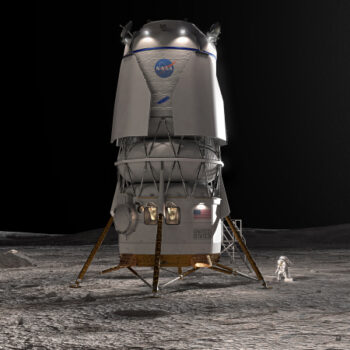
NASA to award SpaceX and Blue Origin contracts to deliver cargo to the Moon

Capitalism in space: NASA yesterday announced that is planning to award both SpaceX and Blue Origin contracts to use their manned lunar landers as cargo freighters to deliver supplies to its planned lunar base.

NASA expects to assign demonstration missions to current human landing system providers, SpaceX and Blue Origin, to mature designs of their large cargo landers following successful design certification reviews. The assignment of these missions builds on the 2023 request by NASA for the two companies to develop cargo versions of their crewed human landing systems, now in development for Artemis III, Artemis IV, and Artemis V.

…NASA plans for at least two delivery missions with large cargo. The agency intends for SpaceX’s Starship cargo lander to deliver a pressurized rover, currently in development by JAXA (Japan Aerospace Exploration Agency), to the lunar surface no earlier than fiscal year 2032 in support of Artemis VII and later missions. The agency expects Blue Origin to deliver a lunar surface habitat no earlier than fiscal year 2033.

The contracts however have not been issued. This is merely an announcement of NASA’s intent to do so, which suggests to me that NASA management has already recognized that the entire Artemis program is facing a major restructuring and wants to indicate it will support such a change. That does not mean these contracts won’t be issued — both rely on the privately owned rockets of both companies — but that NASA now realizes that its manned program — which now relies on SLS/Orion — will likely to be changed significantly, likely by the elimination of SLS/Orion and its replacement by private rockets and private manned spacecraft.

Because of this looming restructuring, NASA management probably intended this press announcement — which really announces little that is new — as a signal of its support for such a change, because the announcement focuses on these private companies rather than NASA’s government-built rocket.

0 comments
1 91 92 93 94 95 838