ULA’s new management predicts it will achieve 18-22 launches in 2026

Before Tory Bruno resigned as CEO of the United Launch Alliance (ULA) to go work for Blue Origin, he had predicted in August last year that ULA was primed to complete two launches per month for the rest of ’25 and throughout ’26.

That prediction did not happen, as the company was only able to do four launches in the last five months of 2025, and no launches so far in 2026.

Yesterday the new management of ULA insisted that Bruno’s prediction was still reasonable, and that the company will complete between 18 to 22 launches before the end of this year.

Speaking during a virtual media roundtable on Feb. 10, Gary Wentz, ULA’s vice president of Atlas and Vulcan Programs, said the company aims to launch two to four Atlas 5 missions and 16 to 18 Vulcan missions. He said the Vulcan rockets will be split between pad 41 at Cape Canaveral Space Force Station and pad 3 at Vandenberg Space Force Base. “It’s a balance. We’re working with our customers to determine specific priorities and order of missions and in the case of Space Force and NRO (National Reconnaissance Office), to determine which missions they wan to get off with higher priority,” Wentz said. “And as we finalize that over the next about six to eight months out of the mission, then we’ll assign whether or not its going to be an Atlas mission or a Vulcan mission.”

John Elbon, the interim CEO following the departure of Tory Bruno in December, said that the company has a “strong commitment” from their commercial and government customers, citing a backlog of more than 80 missions.

That backlog is mostly split between ULA’s big contract to launch Amazon’s Leo satellites and a variety of different agencies in the Pentagon. Both are desperate to get their satellites into space, and it appears ULA is struggling to figure out how to do it. In its early years (from 2007 to 2016) the company was generally able to average about one launch a month, but since then that launch rate as been less than half that. To not only return to those launch rates from a decade ago but to almost double them will be challenging, to say the least.

12 comments

OHB Italia wins $96 million contract to build Ramses probe to visit the asteroid Apophis

Apophis' path past the Earth in 2029
A cartoon (not to scale) showing Apophis’s
path in 2029

The European Space Agency (ESA) yesterday announced that it has awarded the aerospace company OHB Italia a $96 million contract to build Ramses probe to rendezvous with the potentially dangerous asteroid Apophis when it makes its next close fly-by of Earth in 2029.

This contract is in addition to the $75 million development contract awarded OHB Italia in 2024. According to the company’s press release here:

The launch is scheduled for April 2028, with a rendezvous with Apophis planned for February 2029, approximately two months before its close approach to Earth. The spacecraft will accompany the asteroid until August 2029, in order to observe in detail how Earth’s tidal forces modify its shape, rotation, orbit and surface characteristics.

The initiative also benefits from strong international cooperation. The Japan Aerospace Exploration Agency (JAXA), drawing on its well-established expertise in asteroid science, will contribute by providing launch service onboard an H3 rocket, the spacecraft’s solar arrays and a Thermal Infrared Imager, further reinforcing the project’s global dimension.

In addition, two cubesats will be launched with Ramses and deployed once the spacecraft reaches Apophis.

This schedule is very tight, which places great pressure on OHB, especially because European space projects are traditionally built slowly after years of planning. ESA almost never does things fast like this.

At the moment, Osiris-Apex (formerly Osiris-Rex) is the only spacecraft that is on its way to Apophis.

1 comment

British rocket startup Orbex goes under

Prime rocket prototype on launchpad
The prototype of Orbex’s never-launched Prime rocket,
on the launchpad in 2022

After waiting four years to get the necessary launch licenses from the United Kingdom’s Civil Aviation Authority (CAA), delays that forced it to abandon its preferred spaceport in Sutherland to go to the SaxaVord spaceport in the Shetland Islands, the British rocket startup Orbex today announced its effort to find a buyer or new financing had failed and it is going into receivership with the goal of selling off its assets.

Orbex has filed a notice of intention to appointment Administrators and will continue trading while all options for the future of the company are explored, including potential sale of all or parts of its business or assets. The notice provides short-term protection and allows the business time to secure as positive an outcome as possible for its creditors, employees and wider stakeholders.

The funding required for Orbex to remain a viable business was sought from a variety of public and private investors during its Series D funding round, which has ultimately failed. Several merger and acquisition opportunities have also been explored, with none resulting in a favourable outcome.

To repeat this company’s sad story, Orbex had hoped to do its first launch from the proposed Sutherland spaceport on the north coast of Scotland in 2022, but was blocked for four years because of red tape. First, the UK’s Civil Aviation Authority would not issue the spaceport and launch licenses. Second, local opposition delayed approvals as well. Those delays ate into the company’s resources, until it became entirely dependent on grants from the UK government (some through the European Space Agency) to keep it afloat.

By 2024 Orbex realized launching from Sutherland was impossible, and it then switched to the Saxavord spaceport in the Shetland Islands. This forced more delays because the company had no facilities there. It had already spent a fortune building everything for Sutherland.

There will be many who will blame this failure on the difficulty of rocket science, but it appears the fault almost entirely lies with the UK government and its odious regulatory regime. Neither Sutherland nor SaxaVord have been able to get anything off the ground, and it appears right now that rocket companies are going everywhere else to find launch sites. New rockets must launch and fail so that they can eventually succeed. The sense I get from the CAA is that it is treating every launch not as a test but as an operational launch that must succeed. Orbex couldn’t meet that standard.

Nor can any other rocket startup. At the moment SaxoVord has only one customer planning to launch, the German startup Rocket Factory Augsburg, but after a static fire explosion in 2024 blocked the launch nothing has happened since. I suspect the company is having problems getting new launch approvals from the CAA.

17 comments

China completes launch abort test of Mengzhou capsule; also vertically lands Long March 10A 1st stage in ocean

Long March 10A 1st stage splashing down softly on test flight
Click for source.

China today completed a major test for its future manned lunar program. In launch for the first time the first stage of its new Long March 10A, it not only succeeded in completing a launch abort of its next generation Mengzhou manned capsule — intended not only for its space station but for its manned lunar program — the first stage successfully completed a vertical soft splashdown in the ocean.

The uncrewed vessel took off from the Wenchang Satellite Launch Centre on the southern island of Hainan aboard a Long March-10 prototype test rocket at 11am on Wednesday.

The Mengzhou vessel separated from the rocket shortly after launch, before splashing down in the ocean at its designated landing spot, according to the China Aerospace Science and Technology Corporation (CASC).

The first stage of the Long March-10 rocket also safely splashed down in its designated ocean landing spot, CASC said. The state-owned aerospace contractor developed both the rocket and the crewed spacecraft.

Courtesy of BtB’s stringer Jay, video of the launch can be seen here. Jay also found two additional images, one showing the stage just before splashdown standing vertical (as shown in the picture to the right) and the other of the stage floating in the water just before it was picked up by a recovery vessel. According to comments at these tweets, it is speculated that the interstage unit that connected the capsule to the stage was either ejected at landing or was torn off when the stage hit the water.

This is a major achievement for China. It gets it closer to being able to use Mengzhou for longer missions to places like the Moon.

The modular Mengzhou spacecraft has two variants: a seven-astronaut near-Earth model designed to support the country’s Tiangong space station and a model with a smaller crew capacity for missions to the moon. The latter is expected to work in tandem with the Lanyue lunar surface lander, designed to carry two astronauts to the moon’s surface.

The soft splashdown of the Long March 10A first stage also gets China closer to its first reuse of a rocket.

I must note that this success is part of a larger story about China’s space industry that is not so hopeful.
» Read more

3 comments

First Vulcan rocket arrives at Vandenberg for launch later this year

ULA has now delivered parts of a Vulcan rocket to Vandenberg Space Force Base in California as it prepares for that rocket’s first launch from that spaceport later this year.

ULA’s RocketShip recently docked at the harbor on the South Base with the Vulcan rocket components stowed inside the huge cargo vessel. … Crews spent several days offloading the hardware while mindful of tides that could have delayed the delivery.

…On the first day, workers removed the Vulcan’s Centaur upper stage from the RocketShip, followed by the booster the next day. “We tried to take off the payload adapter and the interstage adapter and, unfortunately, the swells were pretty bad,” Fortson said. After pausing the unloading chores for two days, the swells cooperated so the team didn’t have to wait for the next opportunity for suitable tides a couple of weeks away.

ULA hopes to get the launch off by June 2026, but that schedule will depend on whether the launchpad conversion from the Atlas-5 rocket can be completed. It also depends on whether the payload is ready on time. It appears this launch will be one of ULA’s seven national security launches for the Pentagon, though this is not confirmed.

8 comments

Starfish gets a second satellite servicing contract from Pentagon

The orbital tug startup Starfish has now won a second major satellite servicing contract from the military to use its Otter tug to either service or de-orbit defunct military satellites.

The first contract, announced in late January, was from the Space Force’s Space Development Agency (SDA) for $52.5 million. Under that deal, Starfish would fly an Otter in 2027 to dock with a satellite and then de-orbit it.

The new contract, announced February 7, 2026, is with the Pentagon’s APFIT program, designed to encourage “innovative technologies”. It is for an additional $54.5 million, and calls for Otter to dock with a satellite in 2028 and service it rather than de-orbit it.

The Otter is designed to autonomously dock with and maneuver national security satellites, maximizing their operational capabilities while supporting SSC’s [Space Systems Command] need for sustained space maneuver. The spacecraft leverages autonomous rendezvous, proximity operations, and docking technology, allowing it to service satellites that were not originally designed for servicing.

As I noted in January when the first de-orbit contract was announced, while a number of contracts have been issued in the U.S., Europe, and Japan to demonstrate de-orbit technology, that was the first operational de-orbit contract. As for servicing, Northrop Grumman has already succeeded several times in prolonging the life of defunct commercial geosynchronous satellites with its Mission Extension Vehicle (MEV).

Starfish’s Otter however has only successfully demonstrated rendezvous and proximity capabilities on two missions, with a third a failure. As for docking, its Otter Pup tug has flown two missions, with the first failing in 2023 when both spacecraft began spinning unexpected. The second mission is presently ongoing, and was supposed to achieve a docking by now. After completing rendezvous maneuvers in September Starfish has provided no new updates. As far as we know, the docking never occurred or was a failure.

These contracts however suggest it has succeeded. Why else would the military suddenly issue more than $100 million in contracts to the company?

0 comments

Has Roscosmos gotten its Baikonur Soyuz-2 launchpad fixed already?

According to a short sentence added today at the end of Anatoli Zak’s ongoing report on the damaged Soyuz-2 launchpad in Baikonur, Russia’s space agency Roscosmos has completed repairs on that pad early.

According to rumors from Baikonur, the new service platform was installed at Site 31 by Feb. 10, 2026.

That’s it. No other information. Furthermore, this follows the last report from a Roscosmos official in late January where he said repairing the pad by March was facing difficulties due to winter weather and delays in getting replacement parts.

The launchpad had become unusable following the last launch in November when a platform used to prepare the rocket fell into the pad’s flame trench. It had not been attached properly.

As this report is based on rumors and very limited information, it must be treated with caution.

4 comments

Voyager wins four-year $24.5 million ISS management contract from NASA

The space station startup Voyager Technologies yesterday won a four-year $24.5 million contract from NASA to apparently manage the agency’s missions to ISS.

Under the task-order contract, Voyager will deliver end-to-end mission services spanning payload integration, mission operations, safety and compliance, and post-mission closeout. NASA may add options that extend the scope and value of the agreement over its life, providing Voyager with a multi-year framework for recurring mission execution. Voyager anticipates onboarding three payload missions over the next quarter, reflecting near-term demand and a steady pipeline of task orders supporting ongoing ISS operations.

The company has been doing similar ISS work for NASA at the Johnson Space Center in Texas, though this contract appears to expand that work considerably. This deal provides the company further experience operating space station missions, crucial for the Starlab station that Voyager is listed as the consortium’s lead company.

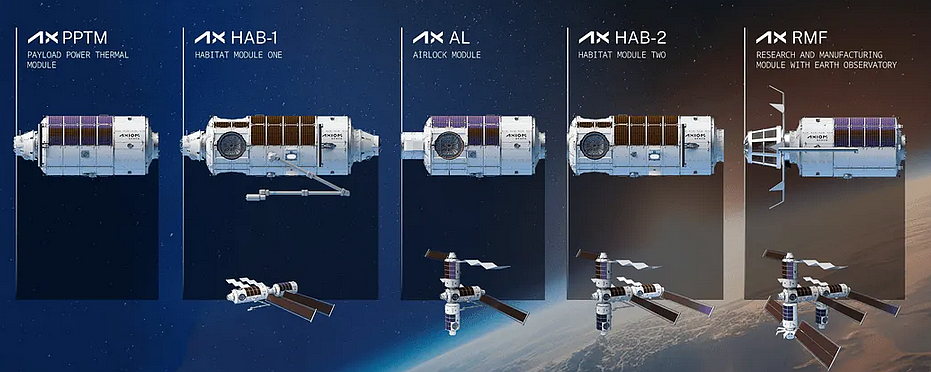
Of the five stations under development, Axiom has run tourist missions to ISS to demonstrate this capability, Vast is launching its own demo single module station to demonstrate this capability, and now Voyager is doing this work for NASA to demonstrate this capability.

Max Space, which only entered this race late last year, has no such contract or experience, but it has recently partnered with Voyager in other work, and plans to launch its own demo station module in ’27.

The last proposed space station, Orbital Reef, has no such deal as far as I know. Led by Blue Origin (partnered with Sierra Space), this station project continues to show no progress of any kind.

0 comments

What life was really like in the American wild west

Vanished Arizona by Martha Summerhayes

Though I read a lot of good, detailed, and well-researched histories, I repeatedly find that if I really want to get a sense of the reality of times past, it is necessary to read something that was written by a person who lived at the time, and was an actual witness to great events.

When you do this you instantly cut through the political narratives that color all histories, whether sincere or not. Historians writing generations later bring their own viewpoint to the subject, colored by subsequent history shaped by what the original players did. So, to really understand those original players fairly, you really need to hear their side of the story, from their own lips.

Thus, I was thrilled recently when I came across a used copy of Vanished Arizona: Recollections of the Army life of a New England Woman by Martha Summerhayes. The book covers her memories from 1870 to 1900 as the wife of Jack Summerhayes, an officer in the American military stationed in the western United States, with the bulk of the story centered in Arizona.

This is an amazingly readable book. More important, it tells this story of army life from the perspective of the women who lived it. Most histories cover the battles and important events that Summerhayes’s husband Jack participated in, from defeating the Apaches and Geronimo to establishing the first settlements in early Arizona. Martha Summerhayes instead tells the story from her perspective as a woman living in an isolated fort in the hot desert wilderness of Arizona. The story is riveting, and revealing as well.

In reading her work now, 150 years later during the first half of the 21st century, I noted two important things.
» Read more

19 comments

NASA provides update on Artemis-2 repairs for future dress rehearsal countdown

NASA late last night posted an update describing the fuel leak repair work taking place in advance of a second dress rehearsal countdown prior to the launch of the manned ten-day Artemis-2 mission around the Moon.

While teams continue evaluating the cause of the leak, reconnecting the interfaces is expected to be complete on Monday, Feb. 9. Testing is planned to occur at NASA’s Stennis Space Center in Bay St. Louis, Mississippi, to evaluate additional dynamics of the plates. Engineers are reviewing options to test the repair work prior to the next wet dress rehearsal to ensure the seals are performing as expected.

NASA also will update several operations for the next wet dress rehearsal to focus on fueling activities. The Orion crew module hatch will be closed prior to the test, and the closeout crew responsible on launch day for assisting the Artemis II crew into their seats and closing Orion’s two hatches will not be deployed to the launch pad. The crew access arm will not be retracted during the next rehearsal, after engineers successfully demonstrated the ground launch sequencer can retract it during the final phase of the countdown.

Additionally, NASA has added 30 minutes of extra time during each of two planned holds in the countdown before and after tanking operations to allow more time for troubleshooting, increasing the total time of the countdown by one hour. The additional time will not affect the crew’s timeline on launch day.

In other words, the next rehearsal will focus almost entirely on fueling to make sure these issues are resolved.

The agency however has not set a date for that countdown rehearsal. To launch in March, as presently planned, it must occur sometime in the next three weeks, and go perfectly. Otherwise that launch will slip again, and begin to bump up against the end of the launch window on April 6th.

Right now I am betting that second rehearsal will not go perfectly, as this was SLS’s track record leading up to November 2022 first launch. It took five countdowns before the agency was able to get the rocket off the ground without issues.

And if it does go perfectly and Artemis-2 is launched manned, it is essential to note again that it will be flying a manned capsule with a questionable heat shield and an untested life support system.

0 comments

China and SpaceX complete launches

The pause in launches in the past week has now ceased, completely for SpaceX and partly for China.

Yesterday China completed its first launch in more than a week and only its second since it had two launch failures on January 17, 2026. It successfully launched its Shenlong X-37B copycat mini-reusable shuttle on its fourth mission, its Long March 2F rocket lifting off from its Jiuquan spaceport in northwest China.

No word on how long Shenlong will remain in orbit. All China’s state-run press would reveal is that it is performing “technological verification” in orbit. That state-run press also said nothing about where the rocket’s lower stages, using very toxic hypergolic fuels, crashed inside China.

SpaceX today resumed launches after its own weeklong pause, caused as the company investigated why the upper stage on the February 2nd launch did not complete its de-orbit burn as planned. The company has released no information on the results of that investigation, but apparently it was satisfied with the results to resume launches. It successfully placed 25 more Starlink satellites in orbit today, its Falcon 9 rocket lifting off from Vandenberg Space Force Base in California.

The first stage completed its 13th flight, landing on a drone ship in the Pacific.

The 2026 launch race:

15 SpaceX
7 China
2 Rocket Lab
1 Russia

1 comment

Isaacman issues directive to shift power back to NASA and away from private sector

Jared Isaacman, in announcing this directive

NASA administrator Jared Isaacman yesterday issued a major three-part directive which he claimed would save more than a billion dollars at NASA while allowing the agency to “regain its core competencies in technical, engineering, and operational excellence”.

The plan could actually backfire, however, as it appears to shift power and control back to NASA and away from private sector.

First, Isaacman wants to eliminate much of the outside contracting NASA now relies on, bringing that work back into the agency itself. Second, he wants eliminate “restrictive clauses that prevent us from doing our own work and addressing intellectual property barriers that have tied our hands.” Third, he wants to “restore in-house engineering,” having more work done by NASA engineers instead of depending on outside contractors.

To some extent, there is value in all these changes, because in many cases NASA employees use the policy of using contractors to outsource their entire work load, so they can sit and do practically nothing.

Overall however this directive could very well squelch the present renaissance in commercial space, because it will put NASA much more in control of everything. Rather than simply being a customer buying the products built and owned by the private sector (ie, the American people) — the capitalism model — the directive demands that NASA run things, the centralized Soviet-style top-down government model.

This aspect is best illustrated by the second part of his directive. Many contractors, such as SpaceX, do not wish to reveal everything about their product designs to NASA, because then it becomes public and can be stolen by their competitors. By requiring companies to release all proprietary data, those companies will no longer own that data, and thus will no longer be as easily able to benefit from its development. This will discourage private investment. It will also once again centralize development at NASA. Rather than getting multiple ideas and innovation from multiple companies, everything will funnel into the ideas NASA managers and engineers come up with.

Isaacman has come to this directive after spending his first two months as administrator delving into how the agency is operating. But he has gotten the solution entirely backwards. Rather than centralize and expand the work done inside NASA, thus justifying its large workforce that Isaacman has found isn’t doing much, wouldn’t it be better to simply eliminate those government jobs entirely? Trim NASA down to its essentials, and let the American people, not the government, come up with what they need and want in space.

Isaacman is not doing this however. Instead, he is apparently working to rebuild the NASA empire, so that it can once again design all, own all, and control all. That was how things were during the shuttle era, and the result was that for almost a half century, America went nowhere in space.

My doubts and concerns about Isaacman and his priorities, which started during his first nomination hearings, have only increased. Despite being a man who made billions in the free private sector, he increasingly appears to be someone eager to build a government empire to laud over everyone.

31 comments
1 15 16 17 18 19 988