Hayabusa-2 has begun approach to Ryugu

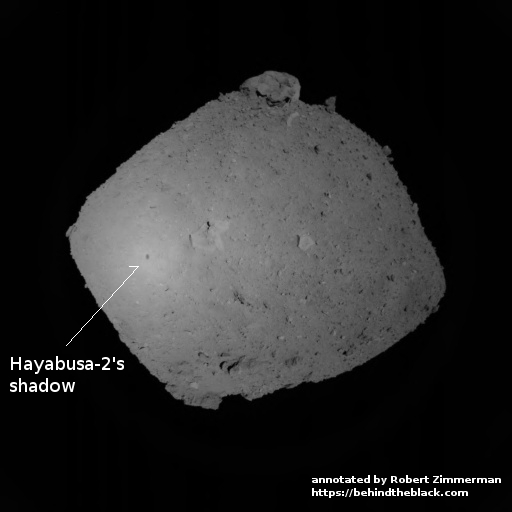
Ryugu during approach

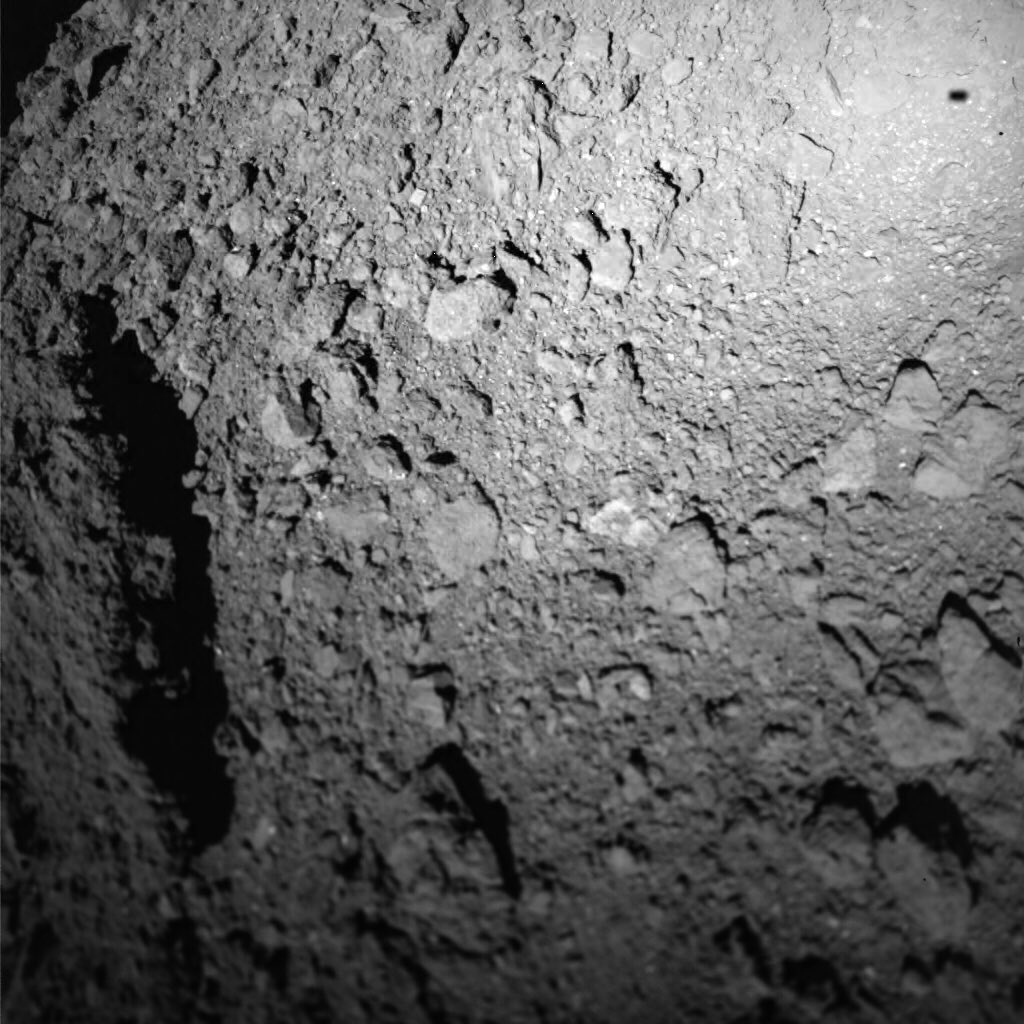
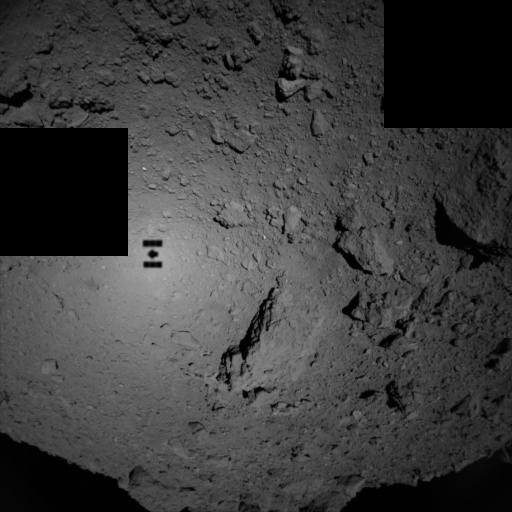
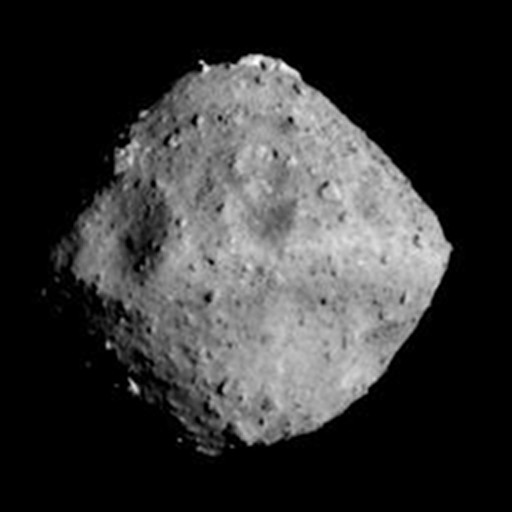
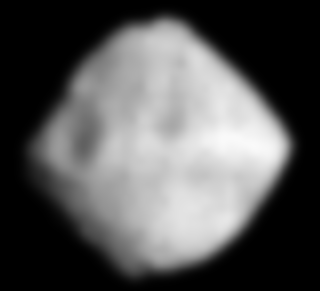
Hayabusa-2 has begun its approach to the man-made impact site on Ryugu in order to drop a reflective reference target there in preparation for a later touch-and-go landing.

The link provides real time delivery of the images taken by the spacecraft’s navigation camera, released approximately once every thirty minutes. The image on the right, brightened slightly to post here, is the most recent image as I write this post.

The approach will take almost twenty-four hours, so viewing the changes at the link will be somewhat equivalent to watching paint dry. I suggest returning every few hours to see the closer images of the asteroid.

0 comments

Hayabusa-2’s second approach to artificial crater scheduled

Ryugu impact site
Click for full image.

Based on images obtained during the aborted early May close-in approach to the asteroid Ryugu, the Hayabusa-2 science team was able to get better imagery of the location of their man-made impact site,, and this has allowed them to both reschedule to May 28-30 the next close approach, as well as more accurately aim the spacecraft at that artificial crater.

The image on the right shows the artificial crater as the dark area inside the box labeled C01, their new target site. The S01 box was the target location for the mid-May aborted approach.

The goal of these close-in approaches is to drop a reflective target at the site, giving them a very precise reference point for the touch-and-go sample grab to follow. They were unable to make the drop on the aborted close-in approach, and will attempt it again in this week’s second attempt.

The second link above provides a detailed minute-by-minute outline of this week’s approach. As before, you can watch it happen with the live download of navigation images every thirty minutes or so. A link to that real-time image delivery will be found here.

0 comments

Hayabusa-2 aborts close-in drop of visual marker on Ryugu

Japan’s asteroid probe Hayabusa-2 automatically aborted a planned drop of a visual markee on the asteroid Ryugu at the site where the probe created a crater in April.

Thursday’s mission was to observe the targeted area in detail and drop a marker from an altitude of 10 meters. But officials say the probe automatically suspended the operation after it descended to about 50 meters above the surface. It then headed toward its standby position of 20 kilometers above Ryugu. Hayabusa2 is designed to automatically abort its landing if it detected any irregularity. The agency is looking into the cause of the arrested descent.

Once the marker is eventually in place, they will use it for guidance during a a second touchdown to grab further samples, this time hopefully of material churned up by the explosion that created the crater.

0 comments

The new man-made crater on Ryugu

Man-made crater on Ryugu

The Hayabusa-2 science team has released before and after images of the spot on Ryugu where the spacecraft’s explosive projectile caused the creation of a small crater.

On the left above is the before, with the new crater indicated by the circle on the right. Note the rocks in both pictures, some now partly covered with debris. They did not give a scale, but this is a very small area, probably less than a few feet across.

They now need to analyze whether they can safely touchdown at this spot and grab a sample.

1 comment

Hayabusa-2 confirms man-made crater on Ryugu

In a planned fly-over of Ryugu yesterday Hayabusa-2 took its first direct images of the location where it had fired an explosive projectile and thus confirmed the creation of a man-made crater by that projectile.

“The asteroid’s terrain has clearly been altered,” said Yuichi Tsuda, an associate professor at the Japan Aerospace Exploration Agency.

Hayabusa2, which began its descent toward the asteroid Wednesday afternoon, captured images of its surface to determine the existence of the crater after it successfully shot a metal projectile at Ryugu on April 5 in an experiment deemed the first of its kind.

According to the JAXA, the probe photographed the area hit by the projectile from a distance of 1.7 km. The agency compared images of the asteroid’s surface before and after the shooting of the projectile to determine the presence of a man-made crater.

They have not yet released any of these images. They will use them however for planning a touchdown and sample grab within this crater in next few months.

0 comments

Hayabusa-2 has begun close fly-in of man-made crater

Hayabusa-2 has begun its fly-in of Ryugu to make its first close observation of the man-made crater it created on the asteroid’s surface on April 4.

The link takes you to the images downloaded in real time from the spacecraft’s navigation camera. New images appear approximately every thirty minutes. The approach has only just begun, so Ryugu remains somewhat small in the images. This will change as the day proceeds.

4 comments

April 25 set for Hayabusa-2’s first observations of artificial crater

The Hayabusa-2’s science team has scheduled their first observations of the artificial crater the spacecraft made on the surface of the asteroid Ryugu for April 25.

The probe will observe the crater, which was generated during an impact experiment on April 5, from a height of 1.7 kilometers. JAXA will collate the data with photographs of the surface taken near the impact point to measure the size and location of the crater. It will also examine the dispersion of rocks and judge whether Hayabusa2 can land to take samples.

This is only their first assessment. Once they feel comfortable about getting closer, they will then plan the spacecraft’s second touchdown and sample collection, this time hopefully from within that crater.

0 comments

Hayabusa-2’s successfully bombs Ryugu

impact on Ryugu

Japan’s Hayabusa-2 probe yesterday successfully impacted an explosive charge on the surface of the asteroid Ryugu, creating a crater for observing the interior geology.

The image to the right was taken by a camera that has separated from Hayabusa-2 and stayed closer to the impact. It shows material flying off the asteroid’s surface, at the horizon line.

Hayabusa-2 — which moved to the other side of the asteroid to stay clear of any ejecta — will next arc around and get close to this impact site to study it. They first need to make sure the ejecta has cleared.

4 comments

Hayabusa-2 to take close look at planned explosive impact point on Ryugu

Flight plan for Hayabusa-2's rehearsal

Beginning today Hayabusa-2 will do a two-day close approach of Ryugu in order to get good baseline images of the point on the surface where they will fire an explosive projectile in the first week in April. As they note:

Currently, we have scheduled the small carry-on impactor operation (SCI operation) for the first week in April. The purpose of the SCI operation is to create a crater on the surface of Ryugu, and it is important to be able to compare the asteroid surface before and after the SCI operation.

The graph on the right shows the flight plan. I expect they will do the same for this maneuver as they have done with previous close approaches, and provide real-time images as they happen.

0 comments

Confirmed: Ryugu is a rubble pile

Close-up of Ryugu's surface
Click for source paper [pdf].

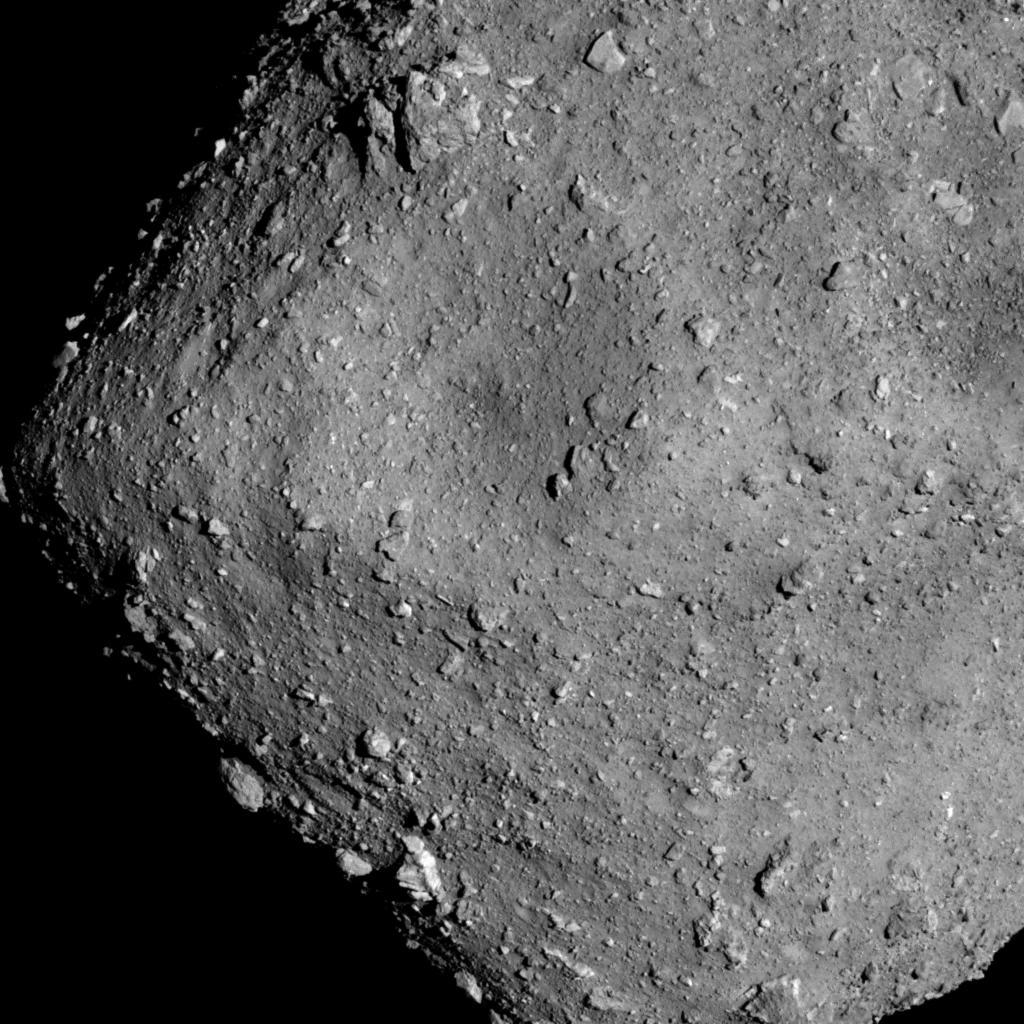
At a special session today dedicated to results from the Hayabusa-2 probe to the asteroid Ryugu at the 50th Lunar and Planetary Science Conference in Texas, scientists confirmed from numerous data and images that the asteroid has a low density, is covered with boulders and pebbles, is very porous, and is thus a rubble pile that is held together by gravity, barely.

From their lead presentation [pdf]:

The estimated total porosity is even higher than that of rubble-pile asteroid Itokawa (44 ยฑ 4%), indicating that asteroid Ryugu is also a rubble pile. This is consistent with a theory arguing that all Solar System bodies with diameter of ~1 km should be rubble piles and might have formed from reaccumulation of fragments generated by catastrophic disruption events of ~100-km sized parent bodies.

They also posit that the asteroid’s diamond shape is caused by the asteroid’s 3.5 hour rotation, which causes its weak rubble pile structure to be easily pulled to the equator, and then outward.

Another paper [pdf] did crater counts, and found that there are fewer large craters than one would expect.

The density of large craters (D>100 m) on Ryugu is lower than the empirical saturation level and its slope is steeper than that of the saturated distribution, suggesting that craters larger than 100 m are not saturated and the size distribution reflects the crater production function. However, craters smaller than 100 m are significantly under-saturated, suggesting that some crater erasure processes such as seismic shaking and armoring effect are active on the Ryugu surface. Based on cratering chronology model for the main belt, the surface age of Ryugu is estimated to be 5โ€“200 [million years] from the sizeโ€“frequency distribution of craters larger than 100 m.

In other words, this rubble pile is constantly being shaken by its rotation and time and later impacts, which steadily rewrites the surface.

If this asteroid was headed to Earth, I imagine the only safe solution to prevent disaster would be to slowly and gently deflect it so it only flies past. To do this will require an arrival far in advance of the schedule impact, to give time for the deflection process to work.

5 comments
1 3 4 5 6 7 9