More Webb budget troubles

According to its manager, the budget troubles of the James Webb Space Telescope will likely keep it on the ground until 2016.

This is terrible news for space-based astrophysics. Until Webb gets launched, NASA will have no money for any other space telescope project. And since all the space telescopes presently in orbit are not expected to be operating at the end of the decade, by 2020 the U.S. space astronomy program will essentially be dead.

Then again, there is the private sector, as Google Lunar X Prize is demonstrating.
0 comments

A potential landing site for next Mars rover

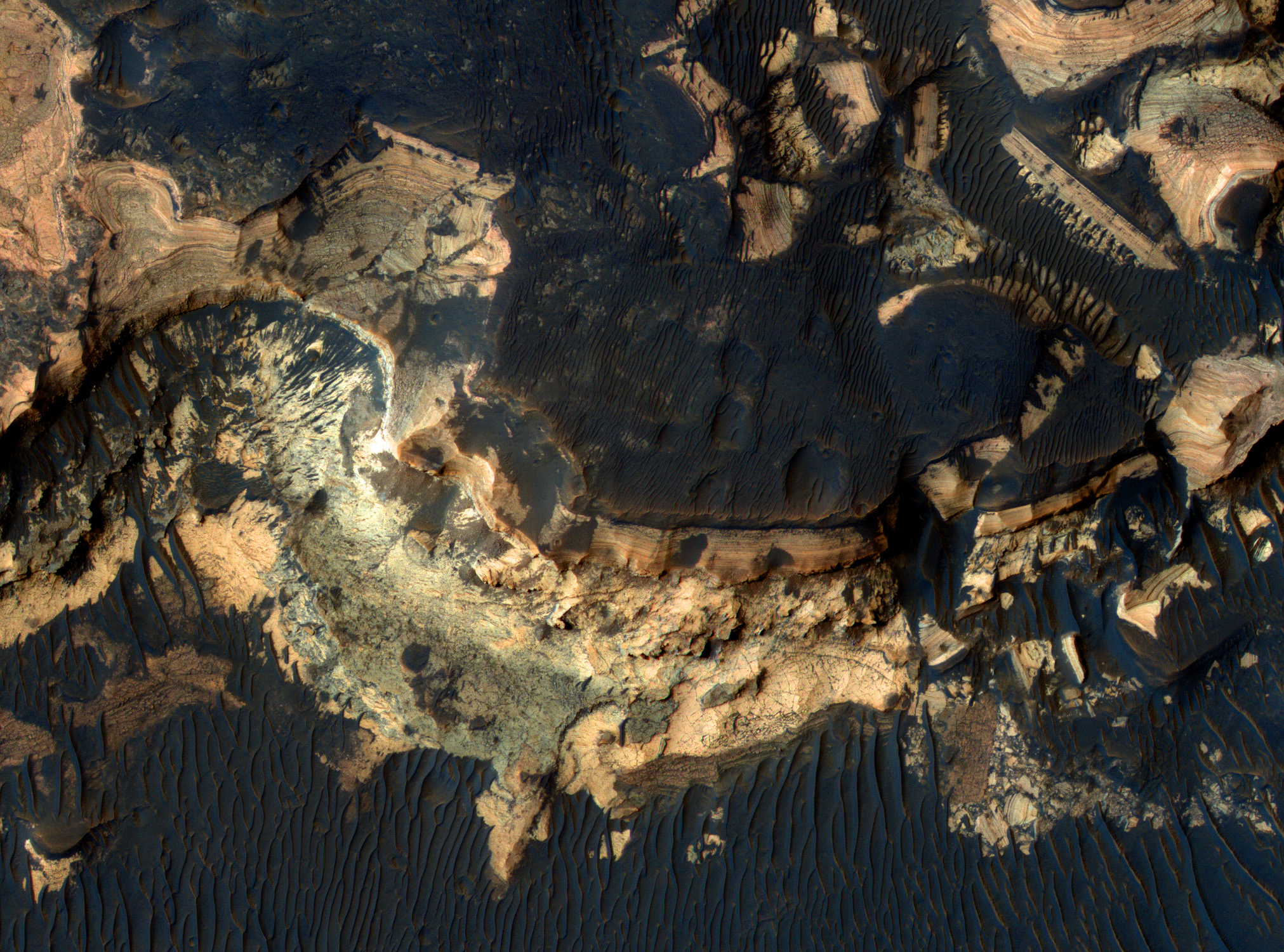
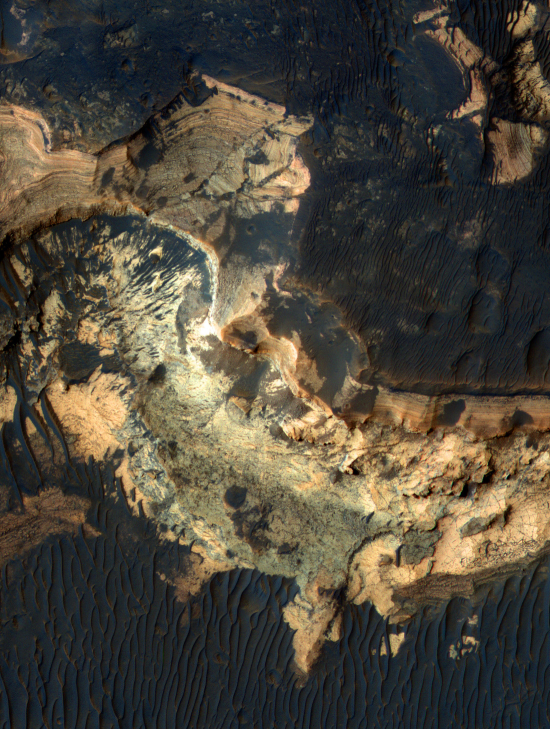
This week’s release of cool images from Mars Reconnaissance Orbiter included the color image below of a region on the floor of Holden Crater, one of the four possible landing sites for Curiosity, the Mars Science Laboratory planned for launch later this year. (If you want to see the entire image at higher resolution, you can download it here.)

Two things that immediately stand out about this image (other than this looks like an incredibly spectacular place to visit):

Holden Crater canyons

» Read more

1 comment

Study predicts one meter sea level rise by 2010

Wanna bet? A new study predicts the sea will rise by one meter by 2100.

How they come up with this number is a mystery to me, as every study I have read, including every IPCC report, says the sea has been rising about 1 to 2 millimeters per year for the last few centuries. At this rate, it will take between five hundred and a thousand years to get a rise of one meter.

3 comments

Stardust images of comet locate crater from Deep Impact’s impact

More news from Stardust: scientists have now identified what they think is the crater produced by Deep Impact’s impact in 2005. Key quote:

The images revealed a 150-metre-wide crater at the Deep Impact collision point that was not present in 2005. The crater is a subtle feature in the images, but it appears consistently in multiple views from the spacecraft. “So I feel very confident that we did find the [impact] site,” said mission member Peter Schultz of Brown University in Providence, Rhode Island, at a press briefing on Tuesday. The crater’s features are “subdued” rather than sharply defined, like those of craters made in hard materials like rock. “The message is: This surface of the comet where we hit is very weak,” said Schultz. The crater also has a small mound in its middle, indicating that some of the material thrown up by the impact was drawn by the comet’s gravity back down into the crater, he said: “In a way, it partly buried itself.”

0 comments

Researchers discover a new set of deep-sea volcanic vents in the south Pacific

Researchers have discovered a new set of deep-sea volcanic vents in the south Pacific, suggesting these vents are more common than previously believed. Key quote:

Using an underwater camera system, the researchers saw slender mineral spires about 10 feet tall, with hot water gushing from their peaks, and white mats of bacteria coating their sides. The vents are at a depth of 1,706 feet in a newly discovered seafloor crater close to the South Sandwich Islands, a remote group of islands about 310 miles southeast of South Georgia.

1 comment
1 684 685 686 687 688 729