
It came from another galaxy
It came from another galaxy.
It came from another galaxy.
Astronomer and comet/asteroid tracker Brian Marsden has died. Marsden was the kind of gentleman that makes writing astronomy articles so much fun. Even when I was a newby science writer back in the early 90s he was always willing to answer any of my questions, and give me blunt and honest answers to boot. R.I.P.
Some cogent thoughts from James Delingpole about climate politics on the one year anniversary of the release of the climategate emails and the refusal of the elite ruling class to address the issue. Key quote:
And why is this so? In part, at least, it is because of the abject, ongoing failure of our Mainstream Media to report environmental issues with the robust scepticism that ought to be the natural tack of responsible journalists. Too many environmental reporters are still regurgitating press releases handed to them by activist organisations like the WWF, Greenpeace and Friends Of The Earth. In the MSM, as in government, it’s like Climategate never happened.
Almost literally, the probe Deep Impact flew through a snowstorm when it flew past Comet Hartley 2 on November 4. Below is one of the best pictures from the moment. More images can be found here. Key quote:
[The images] revealed a cometary snow storm created by carbon dioxide jets spewing out tons of golf-ball to basketball-sized fluffy ice particles from the peanut-shaped comet’s rocky ends. At the same time, a different process was causing water vapor to escape from the comet’s smooth mid-section. This information sheds new light on the nature of comets and even planets.
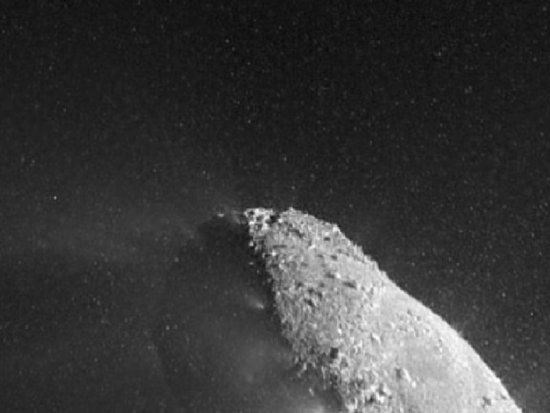
Note that all the close-up images taken by Deep Impact are going to be slightly out of focus, as the camera was launched with a defect.
The dying stars that look like jellyfish.
For the first time scientists succeed in trapping atoms of anti-matter. Key quote:
The team know the trap worked because they made about 10 million antihydrogen atoms which promptly obliterated themselves. Then they turned off their new trap and saw 38 more obliterations — meaning those 38 antihydrogens stuck in the trap.
Despite the howls of panic over the Gulf of Mexico oil spill this past summer, sea life is flourishing in the gulf. Key quote:
A comprehensive new study says that in some of the most heavily fished areas of the Gulf of Mexico, various forms of sea life, from shrimp to sharks, have seen their populations triple since before the spill. Some species, including shrimp and croaker, did even better. [emphasis mine]
What a difference a year makes! Tomorrow will the one year anniversary of the release of the climategate emails.
Astronomers have identified a dozen new binary star systems, where the two stars are tiny white dwarfs. Of even more interest is that a half dozen are spiraling into each other and will eventually merge, the ensuing collision likely producing a supernova explorsion.
At 10:44 pm (Eastern) tonight a ten foot wide asteroid will zip by the Earth at a distance of only 24,000 miles.